

Table of Contents
ToggleFearless wildlife, volcanic landscapes and some of the most extraordinary nature on earth — the Galapagos Islands are a bucket-list destination where the animals steal the show. But with distinct seasons and different natural events through the year, knowing the best time to visit the Galapagos helps you see exactly what you came for.
The great news is that there’s no bad time to go — the wildlife is spectacular year-round. What changes is the weather, the sea and which events you’ll witness, from whale sharks and booby courtship dances to nesting turtles and baby sea lions.
This guide breaks the Galapagos down by season and month, with the best times for snorkelling, diving and specific wildlife, plus how long to go, cruise versus land-based, how to get there and what to pack. Let’s find your perfect time to visit.
✈️ TripToGo Travel Deals
Get notified about great travel deals
Hand-picked flight, hotel and destination deals, straight to your inbox. No spam, unsubscribe anytime.
🎉 Thank you for subscribing!
You’re all set — the best travel deals are on their way.
Key Takeaways
- There’s no bad time to visit the Galapagos — wildlife is superb year-round.
- Warm season (Dec–May): hot, sunny, calm warm seas — best for snorkelling and gentler sailing.
- Cool season (Jun–Nov): cooler, mistier, choppier seas but peak marine life, including whale sharks and the best diving.
- For fewest crowds and best value, go September to early November (or May).
- You fly via Quito or Guayaquil in Ecuador; book cruises and hotels far ahead, as visitor numbers are capped.
Best Time to Visit the Galapagos at a Glance
The best time to visit the Galapagos at a glance, by what you want.
| You want... | Best time | Notes |
|---|---|---|
| Calm, warm water & snorkelling | Dec–May | Warm season; sunniest, gentlest seas |
| Whale sharks & best diving | Jun–Nov | Cool season; far north (Wolf & Darwin) |
| Blue-footed booby dances | Jun–Aug | Courtship season |
| Baby sea lions | Aug–Nov | Pupping season |
| Fewest crowds & value | Sep–early Nov, May | Quiet, excellent wildlife |
| Green landscapes | Dec–May | Warm/wet season |
The Galapagos Has Two Seasons (and Great Wildlife Year-Round)
Here’s the good news: there is no bad time to visit the Galapagos Islands. Straddling the equator 600 miles off Ecuador, the archipelago is a wildlife wonderland every month of the year — the animals are famously fearless and always present. What changes with the seasons is the weather, the sea conditions and which natural events you’ll witness.
The year splits into two seasons. The warm/wet season (December to May) brings hotter, sunnier days, calmer seas and warmer water — ideal for snorkelling and swimming. The cool/dry ‘garúa’ season (June to November) is cooler and mistier with rougher seas, but delivers the richest marine activity, from whale sharks to feeding frenzies. This guide breaks down the best time to visit by what you want to see. Official resource: the Galapagos Conservancy.
Planning a Galapagos trip?
Our partner Voyada’s trip planning AI builds a day-by-day plan with flights, hotels and a real total cost for your dates — in about a minute, free.
Plan trip with AIThe Warm/Wet Season (December to May)
The warm season is the most popular time to visit, and it’s easy to see why. Despite the ‘wet’ label, days are mostly sunny with brief afternoon showers, the air is hot, and the sea is calm and warm (around 25°C/77°F) — perfect for snorkelling with sea lions, turtles and rays, and gentler on those prone to seasickness on cruises.
It’s also a time of new life: sea turtles nest, land birds are breeding and in full colour, and marine iguanas turn bright for mating season. The landscape is greener and more lush. Peak demand falls over the Christmas–New Year and Easter holidays, so book those far ahead.
The Cool/Dry Season (June to November)
The cool season is prime time for marine life. The nutrient-rich Humboldt Current arrives, cooling the water (to around 21°C/70°F, a wetsuit helps) and triggering an explosion of ocean activity: this is when whale sharks cruise the northern islands (Wolf and Darwin), penguins and sea lions are most active, and seabirds feed in dramatic numbers.
The skies are often overcast with a fine mist (the garúa) and the sea can be choppier, but wildlife-watching is at its best, and it’s a fantastic time for diving. July and August are busy with summer holidaymakers, while September to early November is one of the quietest, best-value windows — with superb wildlife.
Galápagos Month by Month
Here’s a closer look at what to expect in each month — the weather, the sea, the wildlife highlights and who each month suits best:
January
Warm and sunny with short, heavy afternoon showers; air around 26°C and a warm sea (~25°C/77°F) with excellent visibility. The islands turn green, land birds nest, green turtles come ashore to lay eggs, and marine iguanas blaze with colour for mating on Española. Best for: warm-water snorkelling and nesting wildlife.
February
One of the hottest, wettest months, but gloriously warm underwater with calm seas and top visibility. Flamingos nest on Floreana and marine iguanas nest on Santa Cruz, while the landscapes stay lush and green. Best for: prime snorkelling and photographing the islands at their greenest.
March
The hottest month (~29–31°C), humid with brief downpours, and the seas are at their calmest and clearest. Waved albatrosses begin returning to Española, marine iguana colours peak, and frigatebirds display. Best for: the smoothest sailing of the year — ideal if you’re prone to seasickness.
April
A real sweet spot — warm, calm and clear as the rains ease off. Waved albatrosses arrive in force on Española and begin courting, green turtle eggs hatch, and blue-footed boobies dance on North Seymour. It’s quieter and often better value. Best for: arguably the best all-round month.
May
Warm and green, with the water just starting to cool but visibility still excellent and seas calm. Blue-footed booby courtship is in full swing, sea turtles and land iguanas hatch, and albatross courtship continues on Española. Best for: fantastic wildlife with warm-season comfort and shoulder-season value.
June
The cool Humboldt Current arrives, bringing nutrient-rich water and the first misty ‘garúa’ drizzle; the air cools and a slight sea chop begins. Giant tortoises migrate, and humpback whales and dolphins appear in the west. Best for: a brilliant shoulder month — cooler, quieter and rich underwater.
July
Cool and breezy (air in the low-to-mid 70s°F) with rougher seas, so a wetsuit helps for snorkelling. Flightless cormorants court on Fernandina, sea lions begin pupping, and whales and dolphins gather near Isabela. It’s the northern-summer high season. Best for: peak marine action — but book early and pack for cooler water.
August
Among the coolest months (sea ~19–20°C/66–68°F) with rougher seas, strong winds and grey but dry garúa skies. Sea lion pupping peaks, penguins are lively and flamingos court. Best for: marine wildlife and diving — bring a wetsuit and seasickness remedies.
September
Cool, windy and the roughest — but also the quietest and often cheapest month. Sea lion breeding and penguin activity peak, especially around Bartolomé. Best for: the best value of the year and top marine encounters, if you don’t mind lively seas.
October
Winds ease and visibility improves; cool and dry with calmer water returning. Fur seals mate, blue-footed booby chicks hatch, giant tortoises lay eggs, and whale sharks still cruise Darwin and Wolf. Low-season prices linger. Best for: great value with returning calm and big-animal diving.
November
Warming up again, with seas calming and the water creeping back toward 22–24°C. Playful new sea lion pups lounge on the beaches and approach snorkellers, and booby chicks fledge. It’s quiet before the December rush. Best for: a lovely, underrated shoulder month with adorable sea lion pups.
December
The warm season returns with sunny days and brief showers, and the sea warms to about 25°C with great visibility. Young albatrosses fledge, green turtles begin mating displays, and giant tortoise hatchlings emerge. Prices jump over the Christmas–New Year peak. Best for: warm, festive and wildlife-rich — but book well ahead and expect crowds.
Galapagos Wildlife Month by Month
For many travellers, the ‘best’ time comes down to a specific animal or event. Here are the highlights through the year:
| Months | Season | Wildlife highlights |
|---|---|---|
| Dec–Feb | Warm/wet | Green landscapes, sea turtle nesting begins, warm calm water, baby sea lions later |
| Mar–May | Warm/wet | Marine iguanas breeding (bright colours), albatross return to Española (Apr), calm seas |
| Jun–Aug | Cool/dry | Whale sharks arrive north, blue-footed booby courtship, whales & dolphins, cooler water |
| Sep–Nov | Cool/dry | Peak marine activity, sea lion pups, penguins active, quietest & best value |
When to Go for Specific Experiences
- Snorkelling & warm calm water: December to May.
- Whale sharks & the best diving: June to November (especially Jul–Oct, far north).
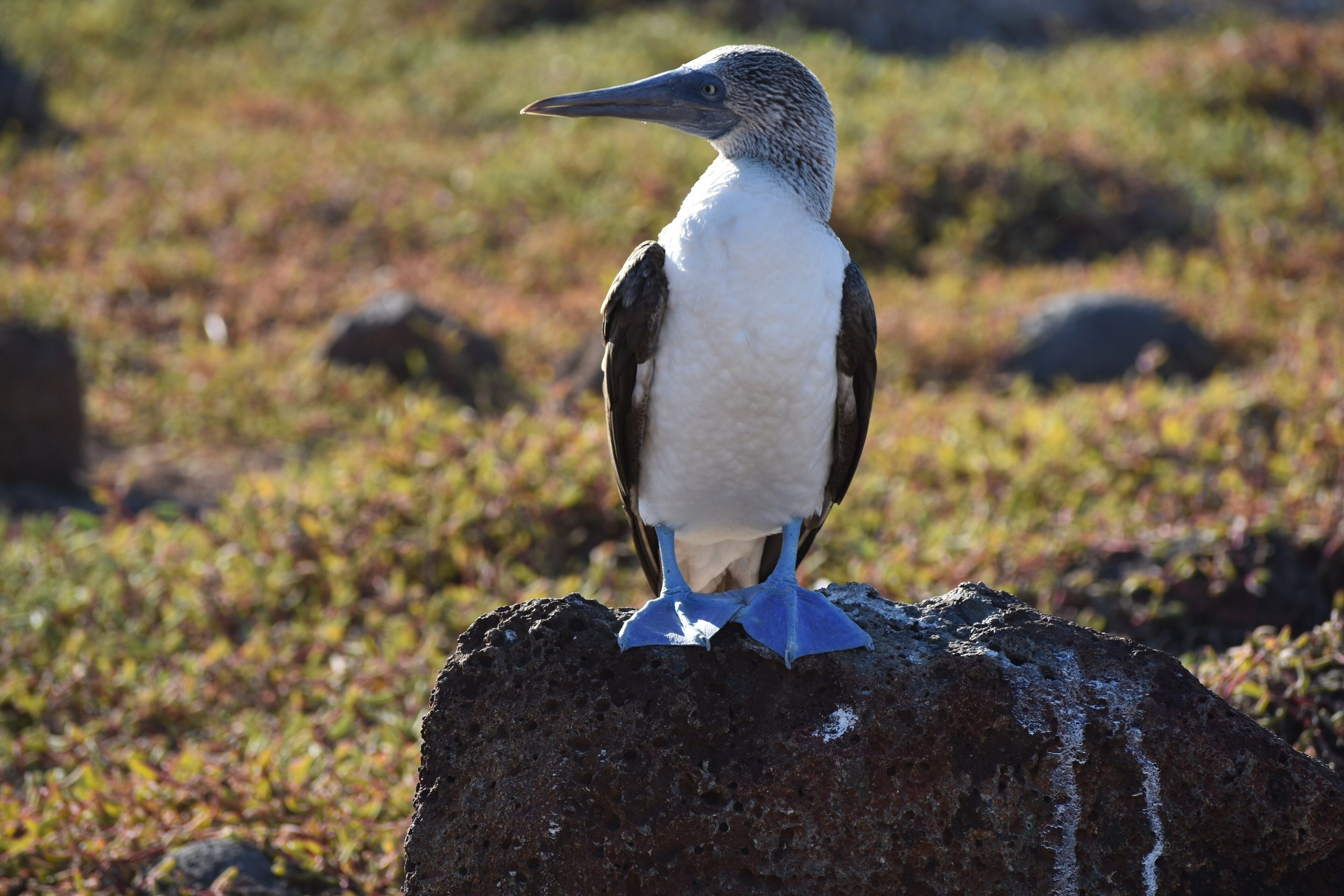
- Blue-footed booby mating dances: June to August.
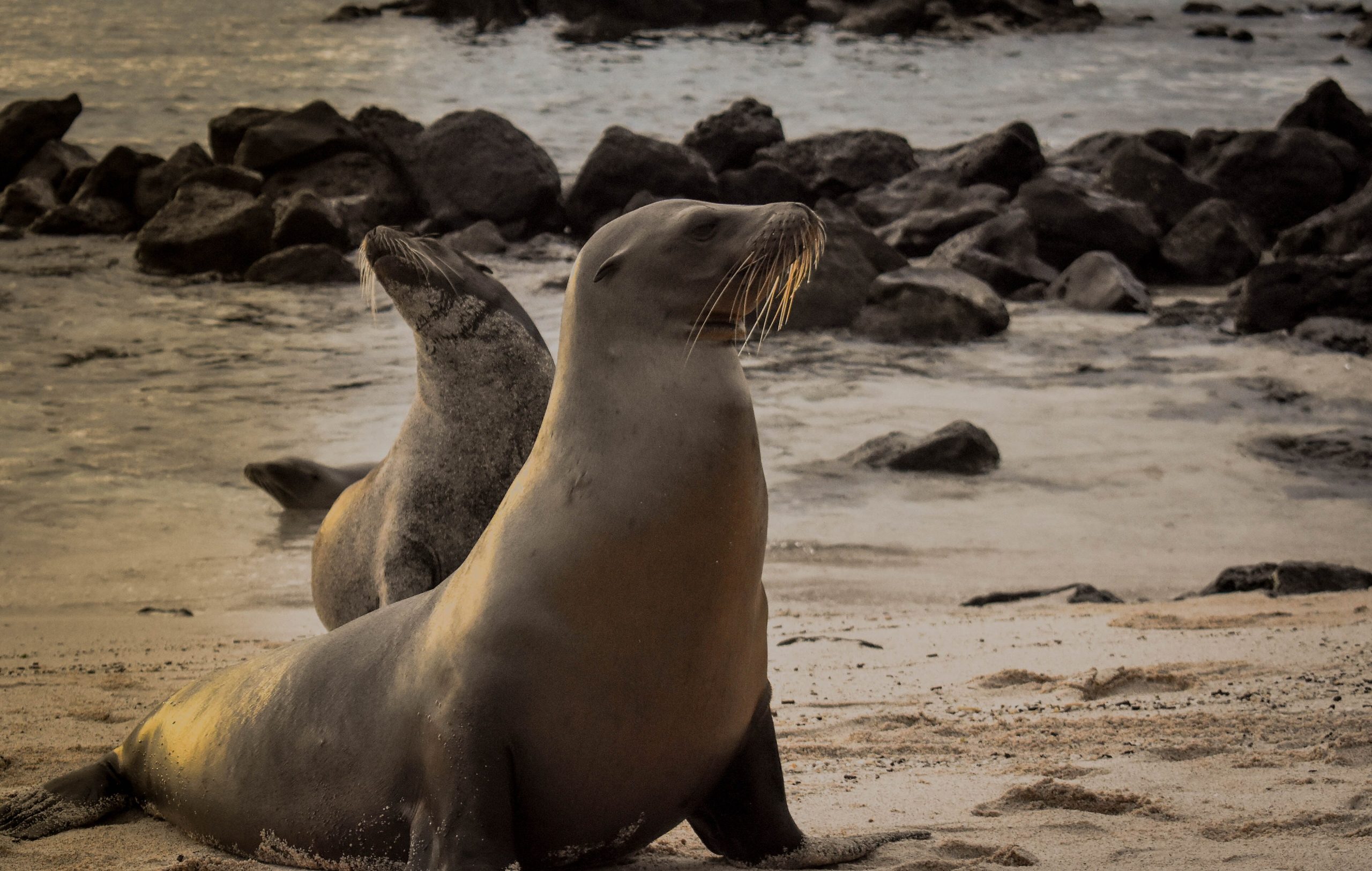
- Baby sea lions: August to November.
- Waved albatross on Española: April to December.
- Fewest crowds & best value: September to early November, and May.
- Giant tortoises & land birds: superb year-round.
How Many Days & Cruise vs. Land-Based
Most visitors spend 4 to 8 days in the islands. A cruise (small ship or yacht) is the classic way to see the most, reaching remote islands and multiple sites with a naturalist guide — ideal for wildlife but pricier and subject to sea conditions. A land-based trip, staying on inhabited islands (Santa Cruz, San Cristóbal, Isabela) with day tours, is more flexible and budget-friendly, and lets you avoid rough seas in the cool season. Either way, book well ahead, as visitor numbers are strictly capped to protect the park.
How to Get There
There are no international flights to the Galapagos. You fly first to mainland Ecuador — Quito (UIO) or Guayaquil (GYE) — then take a roughly two-hour flight to the islands, landing at Baltra (GPS) near Santa Cruz or San Cristóbal (SCY). On arrival you pay the national park entrance fee and a transit card. Because the trip involves international and domestic flights plus a cruise or island hotels that book up early, it helps to plan it as a whole — an AI planner can line up the flights, timing and stays for your dates in about a minute.
What to Pack & Practical Tips
Whatever the season, bring layers: it’s hot in the sun but cool on the water and in the garúa season. Pack reef-safe sunscreen, a hat, a light rain jacket, sturdy shoes for lava terrain, and a swimsuit and (in the cool season) consider a wetsuit for snorkelling. Motion-sickness remedies are wise for cruises, especially June–November. Respect the strict park rules — stay on trails, keep two metres from wildlife and never touch the animals. Give yourself time in Quito too, a beautiful UNESCO-listed city.
Related Guides
The Cheapest Time & Avoiding the Crowds
The Galápagos is a once-in-a-lifetime trip and not a cheap one, so timing can save money and hassle:
- Peak and priciest: mid-December to mid-January and mid-June to August, when cruises book out and prices are highest.
- Better value & quieter: the shoulder months — roughly February to May (outside Easter) and September to November — often bring lower prices and fewer people.
- Wildlife is a constant: the animals are famously fearless and abundant all year, so an off-peak visit means great value without sacrificing the experience.
- Book cruises well ahead whenever you go, as the best boats and cabins sell out months in advance.
Sea Conditions & Seasickness
Most Galápagos trips are cruises, so how the ocean behaves really matters:
- Calmest seas: the warm season (December to May), and especially February to April, offers the smoothest sailing.
- Roughest seas: August and September, when the Humboldt Current and trade winds churn up the water.
- If you’re prone to seasickness: favour the warm season, choose a larger, more stable vessel, and pack motion-sickness remedies.
- Itinerary matters too: the long open-water crossings to the remote northern islands are the bumpiest — central-island routes stay calmer.
Diving & Snorkelling: When the Water's Best
Your underwater plans should steer your timing as much as the wildlife calendar:
- Warm season (December–May): warmer water (around 24–27°C/75–80°F), calm seas and the best visibility — ideal for casual snorkellers and families.
- Cool season (June–November): cooler water (around 19–22°C/66–72°F, so bring or rent a wetsuit), but nutrient-rich currents mean far more marine action, and those same currents can be strong and change quickly, so snorkel only where your licensed naturalist guide directs and stay within sight of the boat.
- For divers: the cool season is prime — whale sharks and schooling hammerheads gather at the remote Darwin and Wolf dive sites from about June to November, peaking July to October.
- The trade-off: warm season for comfort and clarity, cool season for big marine life — and cooler, murkier water.
Best Time to Visit by Island
The Galápagos isn’t one place but an archipelago, and different islands peak for different wildlife — so the ‘best time’ can depend on where your cruise or itinerary goes:
- Española: the only island to see the waved albatross, present roughly April to December (they vanish January to March); also Nazca and blue-footed boobies and vivid red-and-green marine iguanas.
- North Seymour: dramatic frigatebird courtship, when males inflate their scarlet throat pouches, alongside blue-footed booby dances — most active around March to June.
- Genovesa (‘Bird Island’): red-footed boobies, frigatebirds and storm petrels year-round — a birdwatcher’s paradise.
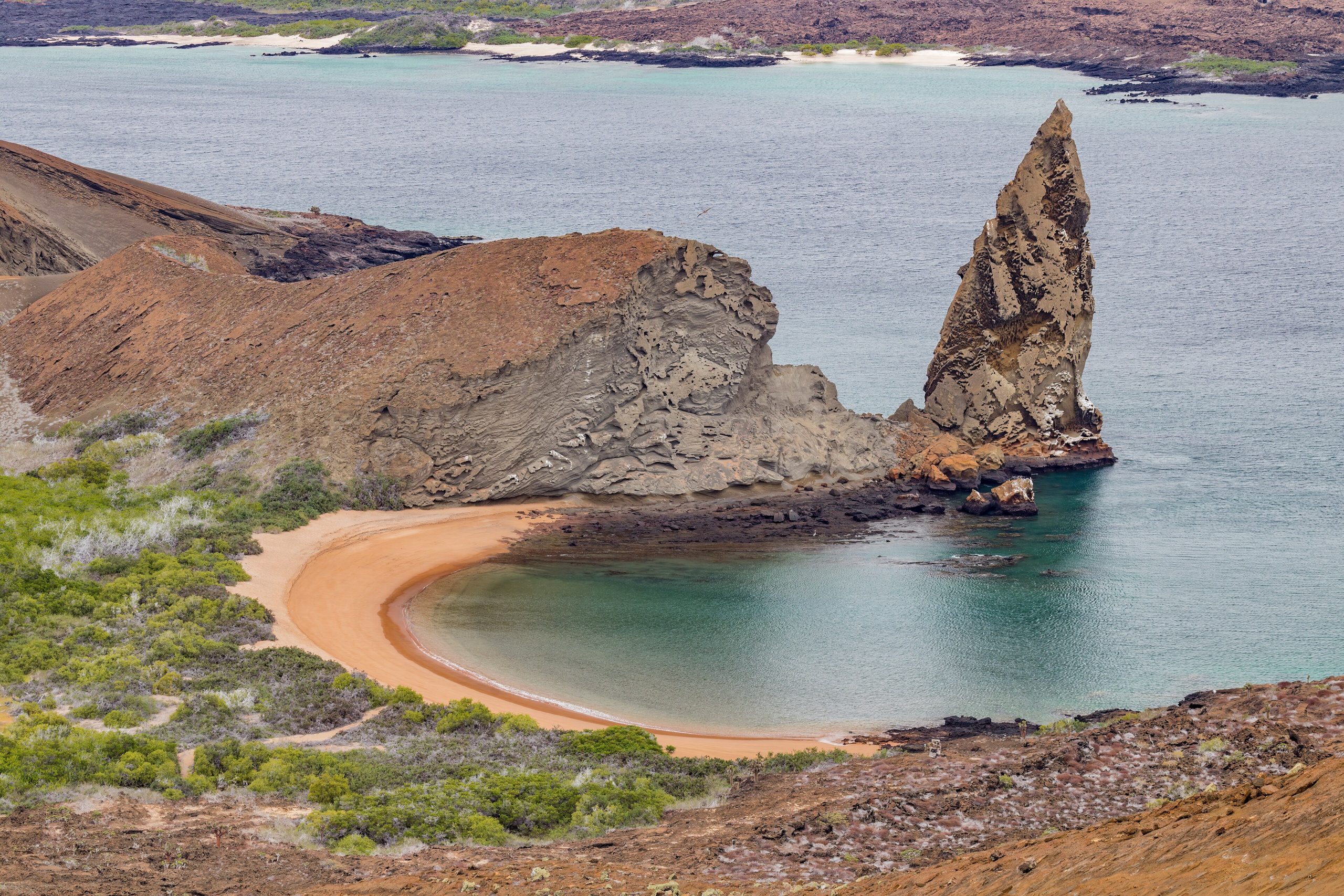
- Bartolomé: the iconic Pinnacle Rock view, with Galápagos penguins darting around its base, best in the cool season.
- Fernandina & western Isabela: flightless cormorants, marine iguanas, penguins, and whales and dolphins drawn to the nutrient-rich western waters from June to November.
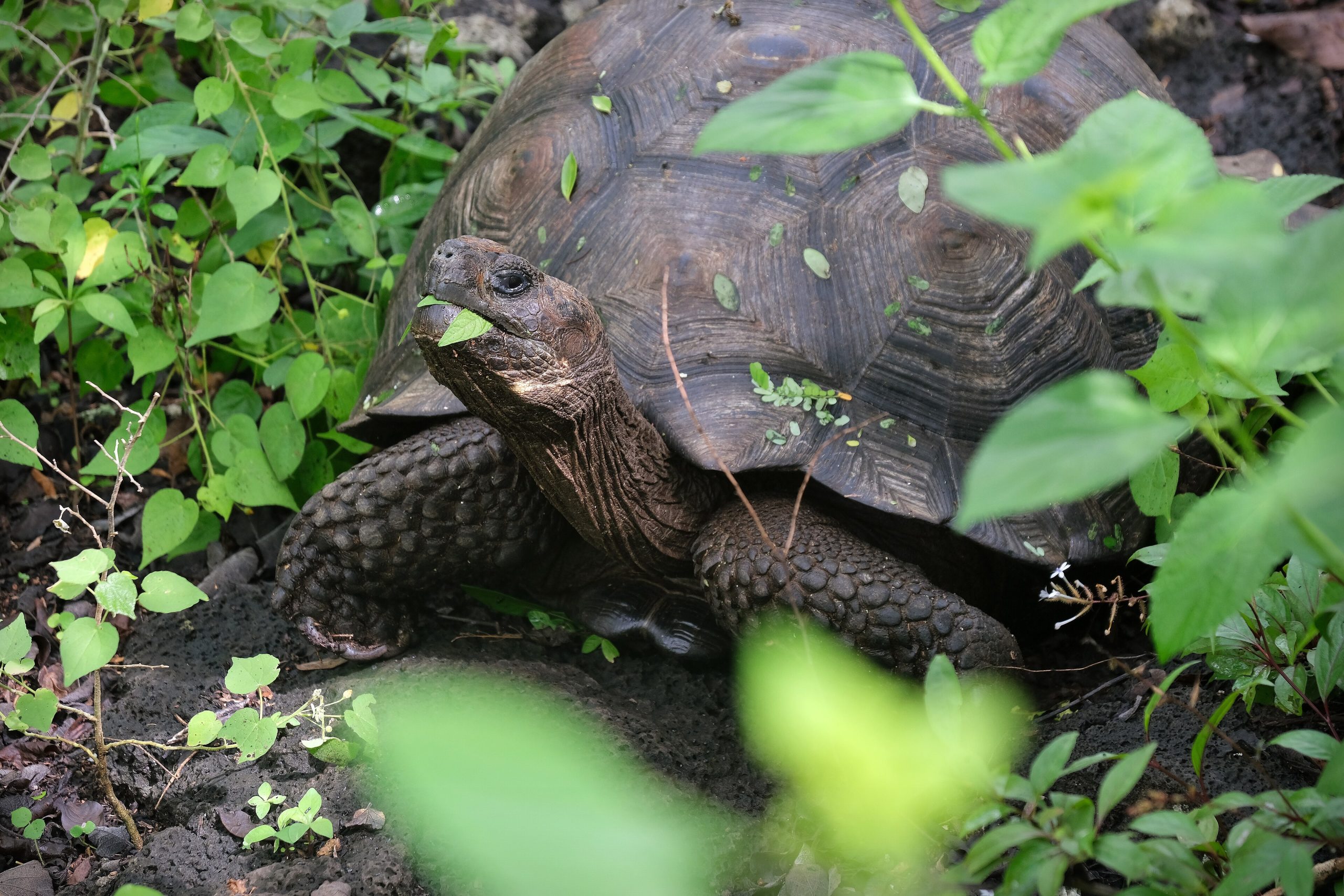
- Santa Cruz: giant tortoises roam the misty highlands year-round, and it’s home to the Charles Darwin Research Station.
- San Cristóbal: beaches carpeted with colonies of playful sea lions.
- Floreana: flamingos on its lagoons, and snorkelling at Devil’s Crown, which is now reachable only on licensed expedition cruises rather than day tours.
The Wildlife Calendar, Species by Species
If a particular animal is top of your list, here’s when each Galápagos star is at its best:
- Waved albatross: April to December on Española, with courtship and chicks; entirely absent January to March.
- Blue-footed boobies: present year-round, with their comical courtship dance peaking around May and June.
- Frigatebirds: males inflate their red throat pouches to court, most visibly from March to June.
- Flightless cormorants: courtship and nesting on Fernandina and Isabela around July to October.
- Galápagos penguins: resident all year, but most active in the cool season when the water is rich with fish.
- Giant tortoises: visible in the Santa Cruz highlands year-round, migrating and nesting through the cool, dry months.
- Marine iguanas: nest around January to March and turn brightly coloured for mating, especially on Española.
- Green sea turtles: nest from December to February, with hatchlings emerging around April.
- Sea lions & fur seals: pups are born mainly August to November, and by October and November the pups are playful with snorkellers.
- Whale sharks, hammerheads & mantas: gather at the remote Darwin and Wolf dive sites in the cool season, roughly June to November.
- Whales & dolphins: most numerous June to November in the western islands, though present year-round.
Warm Season vs Cool Season: How to Decide
There’s genuinely no bad time to visit — but the two seasons suit different travellers. Use this to choose:
- Pick the warm/wet season (December–May) if you want: warmer, calmer seas; the clearest, most comfortable snorkelling; sunny days; nesting birds and hatching turtles; and a smoother cruise if you’re prone to seasickness.
- Pick the cool/dry season (June–November) if you want: the biggest marine action (whale sharks, hammerheads, whales), the most active seabird colonies, cooler and more comfortable hiking, and lower prices in September–October.
- The trade-offs: the warm season has occasional showers and higher peak-holiday prices; the cool season brings cooler water (bring a wetsuit), rougher seas and grey ‘garúa’ skies.
- Still torn? The shoulder months of June and November blend the best of both — decent weather, good wildlife and fewer crowds.
El Niño, La Niña & Year-to-Year Variation
The Galápagos climate is driven by ocean currents, so no two years are identical — it’s worth understanding why:
- El Niño years: warmer water brings heavier rain and lush, green islands — great for land birds and plants, but tougher on marine life like penguins, sea lions and marine iguanas as fish become scarcer.
- La Niña years: cooler, nutrient-rich water supercharges the marine food chain, boosting seabirds, sea lions and underwater life.
- The takeaway: the seasons are a reliable guide, but nature doesn’t follow the calendar exactly, so stay flexible and lean on your naturalist guide’s local knowledge.
Park Fees, Permits & Booking Ahead
A few practicalities shape when — and how far ahead — you should plan:
- Getting there: there are no international flights to the islands; you fly from Quito or Guayaquil on mainland Ecuador to Baltra or San Cristóbal.
- Transit Control Card: buy this INGALA card at the mainland airport before you fly to the Galápagos.
- National Park entrance fee: paid on arrival at the islands (recently increased) — bring cash in US dollars.
- Biosecurity: luggage is inspected to keep out invasive species, so don’t pack seeds, fresh fruit or plants.
- Book early: the best cruises, cabins and guides sell out many months ahead, especially for the Christmas–New Year and June–August peaks.
Responsible Travel & Protecting the Islands
The Galápagos is a fragile, strictly protected ecosystem, so how you visit matters as much as when:
- Keep your distance: stay at least two metres from wildlife, and never touch or feed any animal.
- Stay on the trails: exploring the national park requires a licensed naturalist guide, and you must keep to marked paths.
- Choose responsible operators: favour cruises and lodges with genuine conservation and sustainability credentials.
- Tread lightly: use reef-safe sunscreen, take all your rubbish with you, and follow your guide’s rules — they protect you and the wildlife alike.
Combining the Galápagos with Mainland Ecuador
Since you route through the mainland anyway, it’s well worth building in time for Ecuador itself:
- Quito: one of the world’s best-preserved colonial old towns, a UNESCO site, with the equator monument nearby.
- The Andes: the ‘Avenue of the Volcanoes’, towering Cotopaxi and the emerald Quilotoa crater lake.
- The Amazon: rainforest lodges reachable from Quito for a completely different side of the country.
- Otavalo: the famous Andean craft market, one of the largest in South America.
- Why bother: a few mainland days turn a Galápagos cruise into a richer, two-in-one adventure.
Frequently Asked Questions
What is the best month to visit the Galapagos?
There’s no bad month, but many consider March–May (calm, warm seas and great wildlife) and September–November (peak marine life, fewer crowds, best value) the sweet spots. Choose by whether you prioritise warm-water snorkelling or maximum marine activity.
What are the two seasons in the Galapagos?
The warm/wet season (December to May) brings hot, sunny days, calm and warm seas, and good snorkelling. The cool/dry ‘garúa’ season (June to November) is cooler and mistier with rougher seas but the richest marine life, including whale sharks.
When can you see whale sharks in the Galapagos?
Whale sharks are most reliably seen from June to November (peaking July–October) around the remote northern islands of Wolf and Darwin, which are reached on liveaboard diving cruises. It’s one of the world’s premier whale-shark experiences.
When is the cheapest time to visit the Galapagos?
September to early November is typically the quietest and best-value window, with excellent wildlife and fewer visitors. May is another good-value shoulder month. Avoid the Christmas–New Year and Easter peaks, when prices and demand are highest.
How many days do you need in the Galapagos?
Most visitors spend 4 to 8 days. A shorter 4–5 day trip covers the highlights, while 7–8 days lets you reach more remote islands and see more wildlife. Add a couple of days on mainland Ecuador for Quito and the flights.
Is a Galapagos cruise or land-based trip better?
A cruise reaches the most (and most remote) sites with a naturalist guide, ideal for wildlife but pricier and subject to sea conditions. A land-based trip staying on inhabited islands is more flexible, budget-friendly and avoids rough seas — a great option in the cool season.
What is the cheapest time to visit the Galapagos?
The shoulder months — roughly February to May (avoiding Easter) and September to November — tend to offer the best value, with lower cruise prices and fewer visitors. The most expensive and busiest times are the mid-December to mid-January holidays and the mid-June to August peak, so avoid those if budget is a priority.
Is there a bad time to visit the Galapagos?
Not really — the islands are a superb wildlife destination year-round, and the animals remain abundant and fearless in every season. Each season simply offers something different: the warm, wet months bring calmer seas and nesting activity, while the cool, dry season delivers rich marine life for snorkelling and diving.
When is the best time for snorkeling in the Galapagos?
The warm season from December to May is prime for snorkelling, when calm, clear seas and warmer water make it most comfortable, while June to November is the season for diving with the biggest marine life (a wetsuit helps). For warmer water and calmer, clearer conditions, the December-to-May warm season is more comfortable.
What is the water temperature in the Galapagos?
It varies noticeably by season. In the warm season (December to May) the sea sits around 24–27°C (75–80°F), comfortable for snorkelling in a shortie or even without a wetsuit. In the cool season (June to November), the Humboldt Current drops it to around 19–22°C (66–72°F), when a wetsuit is strongly recommended.
When is the best time for diving in the Galapagos?
The cool, dry season from June to November is prime for diving, when nutrient-rich waters draw whale sharks and schooling hammerhead sharks to the remote Darwin and Wolf dive sites, peaking around July to October. The water is cooler and visibility lower than in the warm season, so it’s a trade-off of big marine life against comfort and clarity.
When are the seas roughest in the Galapagos?
August and September bring the roughest seas, when the cool Humboldt Current and strong southeast trade winds churn up the water — something to bear in mind if you’re prone to seasickness. The calmest sailing is in the warm season from December to May, particularly February through April.
Which Galápagos island is best for wildlife?
It depends on the species. Española is unbeatable for the waved albatross and boobies (April to December), Genovesa is a birdwatcher’s dream, the western islands of Fernandina and Isabela are best for penguins, cormorants and whales, and Santa Cruz is the place for giant tortoises. Most cruise itineraries are designed to combine several islands for the widest range of wildlife.
Do you need a wetsuit in the Galápagos?
In the cool season (June to November), yes — the water drops to around 19–22°C (66–72°F), so a wetsuit makes snorkelling far more comfortable, and most boats provide them. In the warm season (December to May), the sea is a balmy 24–27°C (75–80°F) and many people snorkel in just a rash guard or shortie.
How far in advance should you book a Galápagos trip?
Book as early as you can — ideally six months to a year ahead, and even further for peak dates like Christmas, New Year and the June-to-August high season. The best cruise ships, cabins and naturalist guides sell out well in advance, and early booking also gives you the widest choice of itineraries and better prices.
Is there a national park fee for the Galápagos?
Yes. All visitors pay a Galápagos National Park entrance fee on arrival at the islands, which was recently increased, plus a small INGALA Transit Control Card bought at the mainland airport before flying. Both are typically paid in cash (US dollars), so budget for them on top of your flights and tour.
Final Thoughts: Timing Your Galapagos Adventure
Whenever you go, the Galapagos will astonish you. Choose the warm season (December–May) for calm, warm water and the best snorkelling, or the cool season (June–November) for whale sharks, peak marine life and the best diving — and aim for September to early November or May if you want fewer crowds and better value. Decide which wildlife moments matter most, pick cruise or land-based to match your style and budget, book well ahead, and pack for both sun and sea. Do that, and these enchanted islands will deliver the trip of a lifetime.
Before you go: turn this guide into a day-by-day plan. Our partner Voyada is a free itinerary creator that builds the trip with flights, hotels and a real total cost for your dates — in about a minute.
Build a travel itinerary →