
Table of Contents
ToggleKey Takeaways
- The Algarve splits into three coasts: the central cliffs (the postcard beaches), the wild western surf coast, and the calm eastern sandbar islands.
- The must-sees are Praia da Marinha, the Benagil sea cave, and Lagos’ cliff coves — Camilo and Dona Ana — all on the central coast.
- You can no longer freely swim into the Benagil cave; visit it by boat, kayak or stand-up paddleboard tour.
- For surf and wide-open space go west (Amado, Bordeira); for warm, shallow, family-friendly water go east (Ilha de Tavira, Praia do Barril).
- The season is May to October; June and September are the sweet spots for warm weather without the peak crowds and prices.
- The water is cool Atlantic, not Mediterranean — the eastern coast is warmest, the western the coolest and wildest.
The Best Algarve Beaches at a Glance
| Beach | Coast | Best for |
|---|---|---|
| Praia da Marinha | Central | The iconic cliff-and-arch view |
| Benagil | Central | The famous sea cave (by boat/kayak) |
| Praia do Camilo | Central (Lagos) | Photogenic staircase cove |
| Praia Dona Ana | Central (Lagos) | Golden cliffs, easy from town |
| Carvoeiro | Central | Fishing-village beach + cliff boardwalk |
| Vale Centeanes | Central | A quieter cove nearby |
| Praia da Rocha | Central | Big, lively resort beach |
| Praia da Falésia | Central | 6km of striped-cliff walking beach |
| Praia da Luz | Central | Families, Blue Flag, calm |
| Praia do Amado | West | Surf & surf schools |
| Praia da Bordeira | West | Vast, wild, dune-backed |
| Arrifana / Monte Clérigo | West | Cliff-cradled surf coves, sunsets |
| Salema | West | Old, quiet fishing-village Algarve |
| Ilha de Tavira / Barril | East | Warm, calm sandbar island |
| Cacela Velha | East | Off-radar lagoon beach |
✈️ TripToGo Travel Deals
Get notified about great travel deals
Hand-picked flight, hotel and destination deals, straight to your inbox. No spam, unsubscribe anytime.
🎉 Thank you for subscribing!
You’re all set — the best travel deals are on their way.
The Algarve’s Three Coasts: Which One to Base On
The Algarve isn’t one beach scene — it’s three, and knowing them is the key to choosing where to stay:
- The Central Algarve (Lagos to Albufeira) is the postcard: golden limestone cliffs, sea caves, natural arches and cove beaches reached by wooden staircases. The most famous, most photographed and most developed stretch.
- The Western Algarve & Costa Vicentina is wild and windswept — big Atlantic surf, vast dune-backed beaches and protected natural park. Cooler water, fewer crowds, surfer country.
- The Eastern Algarve (around Tavira and Faro) trades cliffs for warm, calm sandbar islands in the Ria Formosa lagoon — the mildest water and the most low-key, local feel.
The Central Algarve: Cliffs, Caves & Cove Beaches
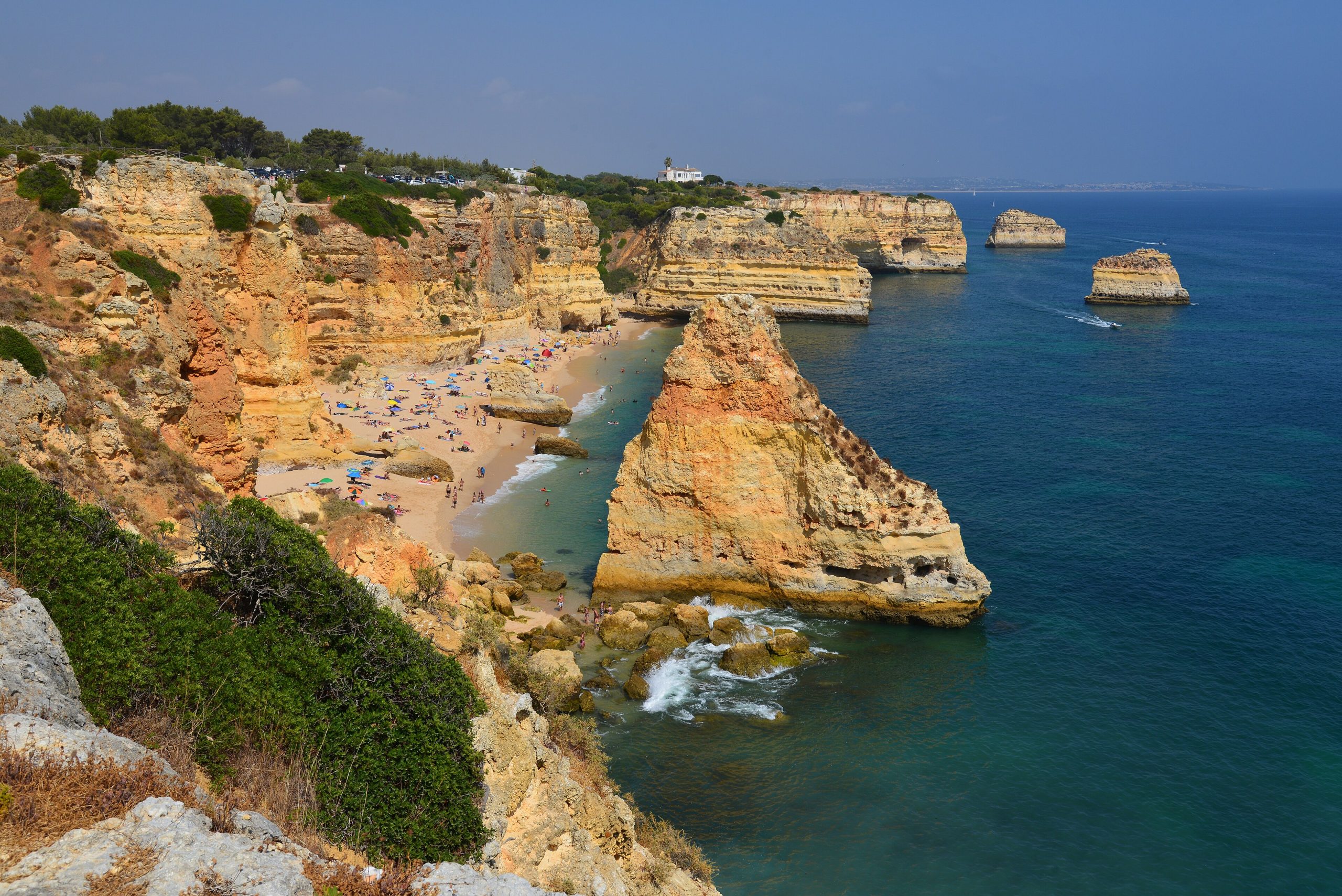
Praia da Marinha
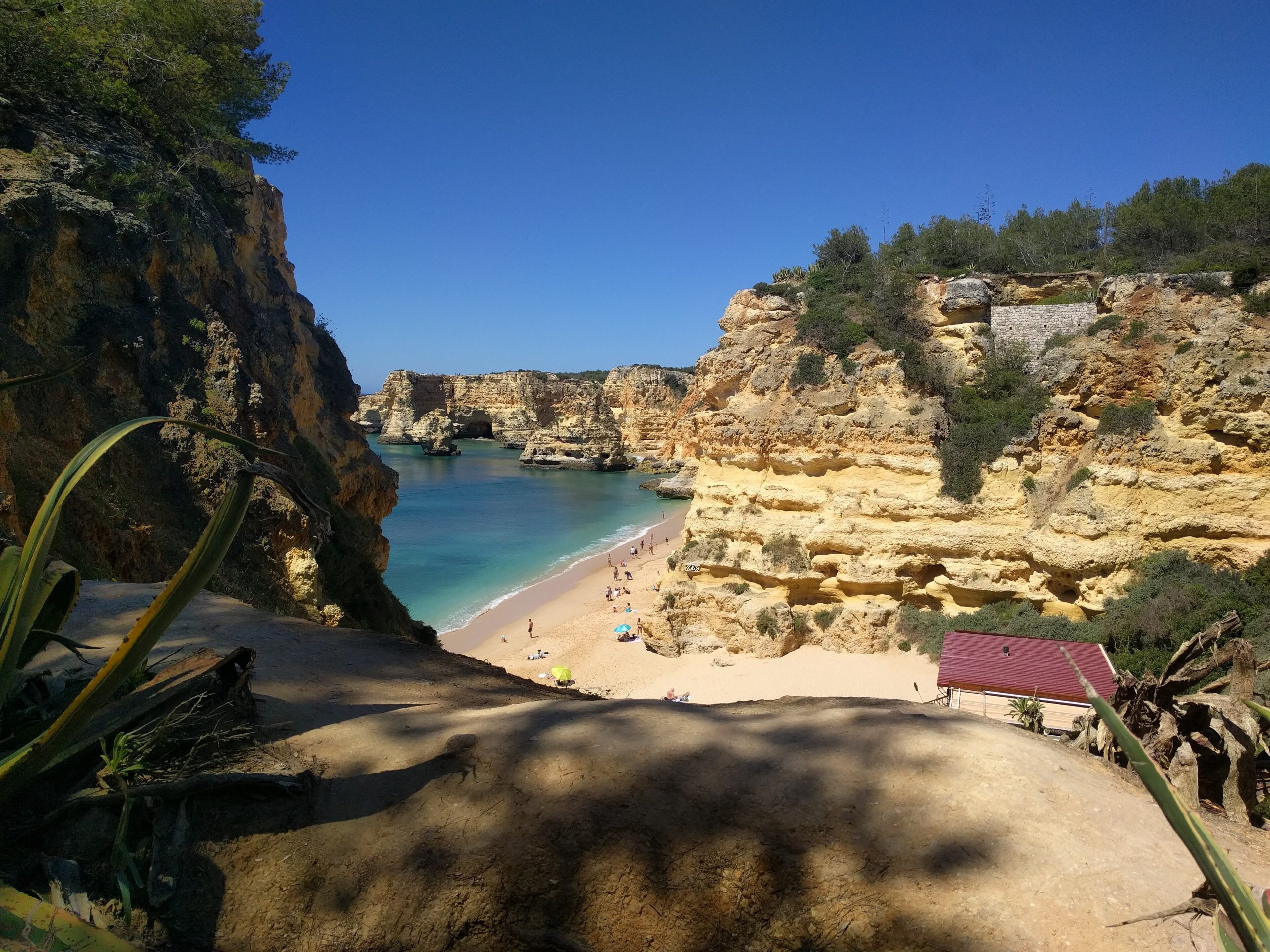
The Algarve’s icon and regularly rated one of Europe’s most beautiful beaches: a cove framed by ochre cliffs and twin natural arches, with the view from the clifftop — along the Seven Hanging Valleys trail — even better than the sand itself. Steep steps down keep the crowds honest. Go early.
Benagil Beach & Sea Cave
Home to the world-famous Benagil cave — a vast sea grotto with a circular hole open to the sky (the “eye”). You can no longer freely swim inside for safety, so visit by boat, kayak or stand-up paddleboard tour from the little beach or nearby Portimão and Carvoeiro. The most bucket-list swim-and-paddle on the coast.
Praia do Camilo & Praia Dona Ana (Lagos)
Two of Lagos’ showpieces: Camilo descends a photogenic 200-step wooden staircase to a tiny cliff-wrapped cove, while Dona Ana is a broad golden beach beneath dramatic sculpted cliffs — one of the most photographed in Portugal. Both are walkable from lively Lagos town.
Carvoeiro & Vale Centeanes
Carvoeiro is a pretty beach tucked into a whitewashed fishing village, with the clifftop Passadiços boardwalk running east to the Algar Seco rock formations. Just around the headland, Vale Centeanes is a quieter, cleaner cove for when Carvoeiro fills up.
Praia da Rocha & Praia da Falésia
For big, easy sand: Praia da Rocha in Portimão is a wide, lively resort beach with a promenade, watersports and nightlife, while Praia da Falésia near Albufeira and Vilamoura runs six kilometers beneath striped ochre-and-white cliffs — a spectacular walking beach with room for everyone.
Praia da Luz (Best for Families)
A gently shelving, Blue Flag beach fronting the relaxed resort village of Luz, near Lagos — calm, sandy and lined with cafes, with watersports and easy parking. The Central Algarve’s most reliable family choice.
Planning an Algarve beach trip?
Our partner Voyada’s trip planning AI builds a day-by-day plan with flights, hotels and a real total cost for your dates — in about a minute, free.
Plan trip with AIThe Western Algarve: Wild Surf & Big Skies
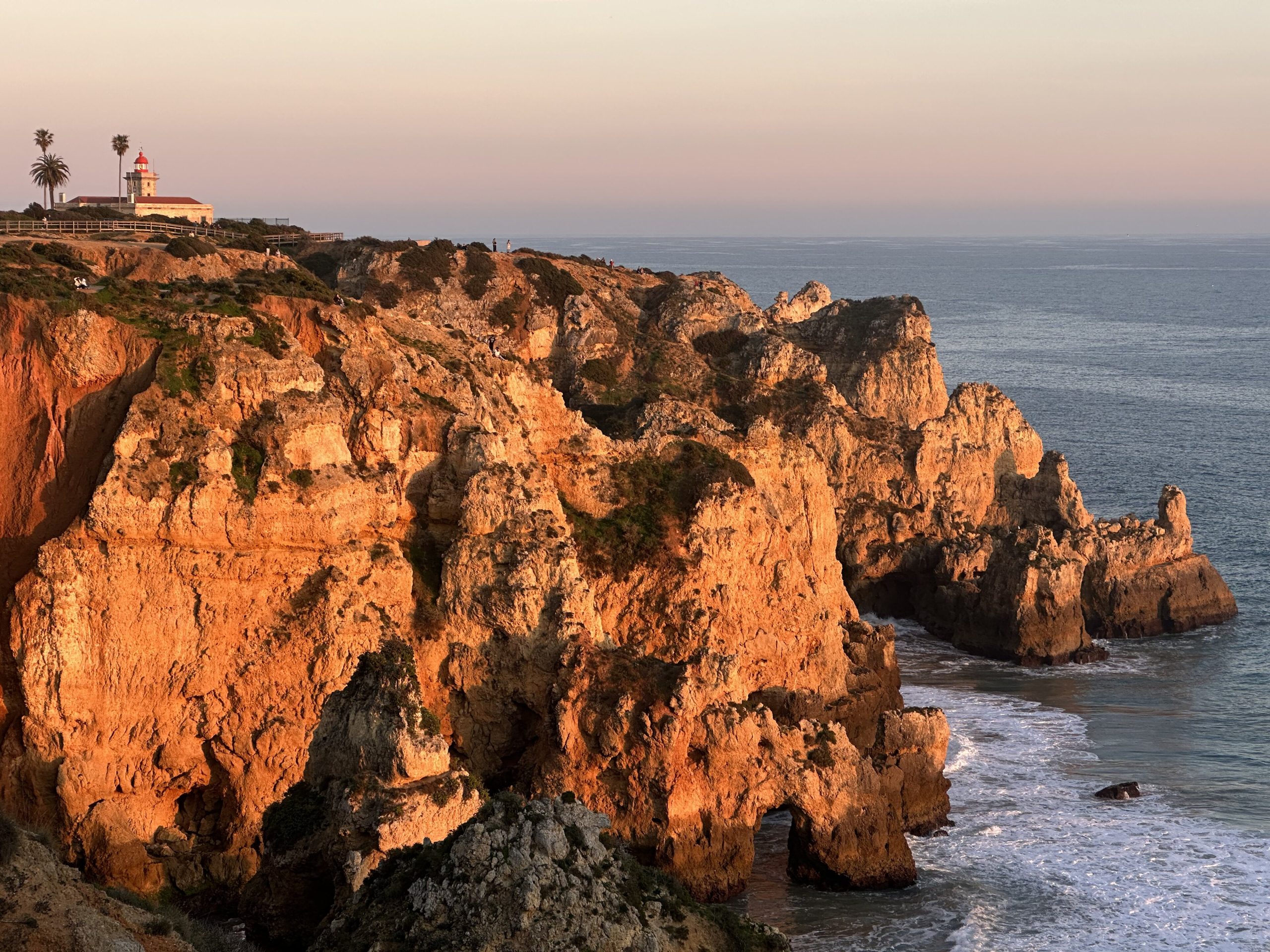
Round the southwest tip and everything changes: the coast faces the open Atlantic, the water turns cooler and livelier, and the beaches get vast and wild inside the Costa Vicentina natural park.
Praia do Amado & Praia da Bordeira
Amado is the Algarve’s surf capital — consistent waves, surf schools and a laid-back vibe — while neighboring Bordeira (Carrapateira) is a huge, dune-backed expanse of sand and boardwalks that feels gloriously empty even in summer.
Arrifana, Monte Clérigo & Salema
Arrifana and Monte Clérigo near Aljezur are cliff-cradled surf coves with dramatic sunsets, while back toward the south coast, tiny Salema is a laid-back fishing village beach (with dinosaur footprints on the rocks) for travelers who want the old, quiet Algarve.
The Eastern Algarve: Warm Sandbar Islands
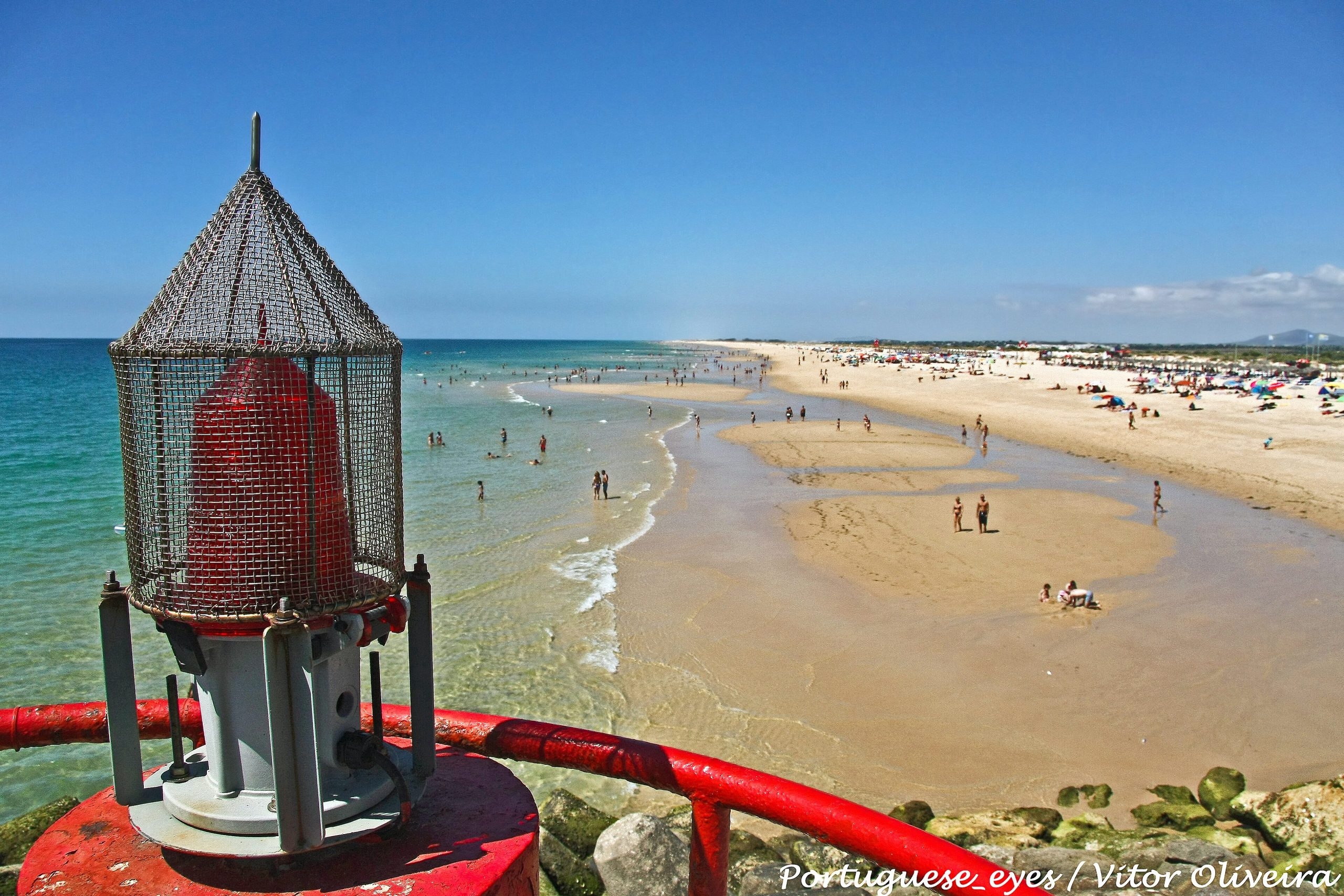
East of Faro the cliffs give way to the Ria Formosa — a lagoon of barrier islands with the region’s warmest, calmest water and a slow, local feel.
Ilha de Tavira & Praia do Barril
Reached by a short ferry (or a miniature train across the marshes), Ilha de Tavira is a long sandbar island of soft sand and shallow, bath-warm water — Praia do Barril, with its poignant anchor cemetery among the dunes, is the standout. Effortlessly relaxed, and a world from the central-coast bustle.
Cacela Velha & the Ria Formosa
Below the whitewashed hilltop hamlet of Cacela Velha, a pristine lagoon beach (Praia da Fábrica) is reached by wading or a quick boat at low tide — a favorite for oysters, birdlife and a genuinely off-radar swim. The wider Ria Formosa islands off Faro offer more of the same calm, warm water.
The Best Algarve Beach for You
Match the beach to the day you want:
| If you want… | Go to | Coast |
|---|---|---|
| The iconic photo | Praia da Marinha, Dona Ana | Central |
| The Benagil sea cave | Benagil (by boat/kayak/SUP) | Central |
| A family beach | Praia da Luz, Praia do Barril | Central / East |
| Surf & wild scenery | Amado, Bordeira, Arrifana | West |
| Warm, calm, shallow water | Ilha de Tavira, Cacela Velha | East |
| A lively resort beach | Praia da Rocha, Albufeira | Central |
| Seclusion & space | Bordeira, Vale Centeanes | West / Central |
When to Go & How to Get Around
The Algarve’s beach season runs May to October, with 300-plus days of sun a year. July and August are hottest, busiest and priciest — June and September are the sweet spots, with warm weather and thinner crowds, and the clifftop trails are far more pleasant out of peak heat. Note the water is cool Atlantic, not Mediterranean: the east coast is the warmest (around 22°C in summer), the west the coolest and wildest. Faro airport is the gateway; a rental car is easily the best way to reach the coves and hop between the three coasts, though Lagos, Portimão, Albufeira and Tavira are all on the regional train line. For the full seasonal picture, see our best time to visit Portugal guide.
Related Guides
The Benagil Cave: How to Visit It Now
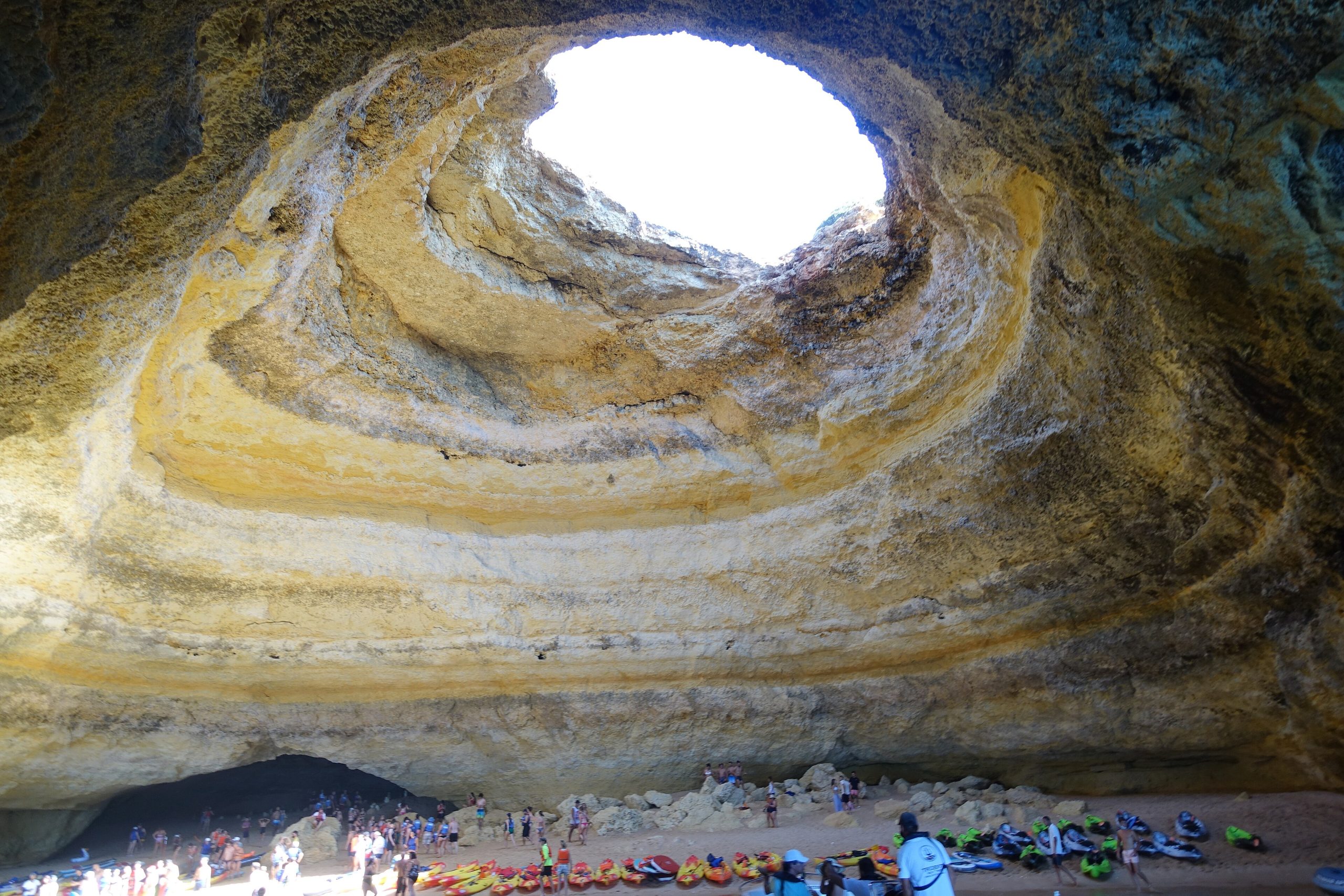
The Benagil sea cave — a golden dome with a circular skylight and a private beach inside — is the Algarve’s most photographed spot, but visiting it has changed. Swimming into the cave is now restricted for safety, and boats can enter but not land, so the best ways in are by guided kayak or stand-up paddleboard from neighbouring Praia de Benagil, or a small-boat tour that pauses inside. Go early morning for calm seas, light in the skylight and fewer crowds. Conditions and rules shift year to year, so check locally before booking; when the swell is up, tours are cancelled.
The Seven Hanging Valleys Coastal Trail
To see the central Algarve’s cliffs at their best, walk the Seven Hanging Valleys Trail (Percurso dos Sete Vales Suspensos). This roughly 6km clifftop path between Praia da Marinha and Praia de Vale Centeanes strings together the coast’s greatest hits — ochre rock stacks, hidden coves, the Benagil area and jaw-dropping sea views at every turn. It’s mostly easy but exposed, so go early with water, sun protection and decent shoes, and take care near the unfenced edges. Widely rated one of Europe’s finest coastal walks, it’s the perfect way to earn your beach afternoon.
Beyond the Sand: Lagos, Silves & Tavira
The Algarve is more than beaches. Lagos pairs its coves with a lively historic centre, cobbled squares and a marina, making it many visitors’ favourite base. Inland, Silves was the Moorish capital of the region and is crowned by a wonderfully preserved red-sandstone castle and a Gothic cathedral. In the east, genteel Tavira straddles a river with a Roman bridge, churches and a slow, elegant charm, and serves as the gateway to the sandbar islands. Weaving a town or two into a beach trip adds welcome history, dining and atmosphere on cloudier days.
Sagres & Cape St Vincent: The End of Europe
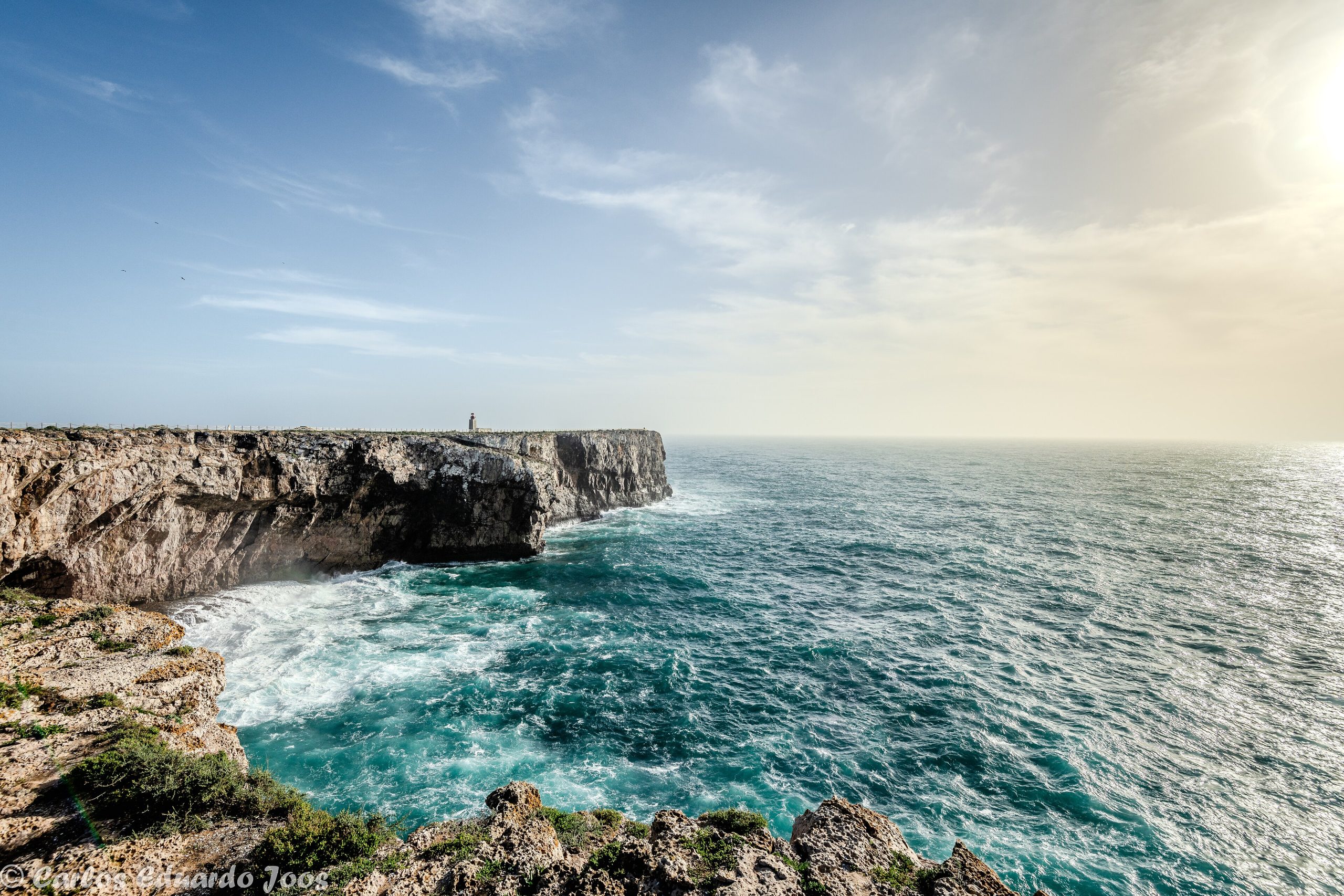
At the Algarve’s wild southwestern tip, Sagres and Cape St Vincent mark the dramatic edge of Europe — once believed to be the end of the known world. Windswept cliffs drop into the Atlantic beneath a lonely lighthouse, and the clifftop Fortaleza de Sagres is linked to Henry the Navigator and Portugal’s age of exploration. It’s a raw, elemental contrast to the manicured central resorts: powerful sunsets, big surf and a frontier feel. The surrounding Costa Vicentina natural park protects some of Portugal’s most beautiful, undeveloped coast.
Beyond Swimming: Dolphins, Surf & Kayaks
The Algarve’s warm, clear water is made for activity. Dolphin-watching boat trips out of Lagos, Albufeira and Portimão have high success rates and sometimes spot whales. The wild west coast around Sagres and Arrifana is a premier surfing region with schools for all levels, while the sheltered central coves are ideal for kayaking and SUP among the caves and stacks. Boat tours, coasteering, and stand-up paddle at sunrise all show the coastline from a fresh angle. Booking a half-day on the water is one of the best ways to break up pure beach time.
Algarve Food & Where to Eat
The Algarve’s cuisine is built around the sea. The signature dish is cataplana, a seafood stew steamed in a copper clam-shaped pot, while grilled fresh sardines and sea bass, clams à bulhão pato, and piri-piri chicken are staples. Inland comes hearty pork and the famous medronho firewater, and everywhere you’ll find almond-and-fig sweets and custardy pastries. Eat where the fishing boats land — Olhão, Portimão’s riverside and the backstreets of Lagos — rather than the beachfront tourist strips. A long lunch of just-caught fish with a glass of Algarve wine is a holiday highlight in itself.
Nightlife & Family Fun: Albufeira to Vilamoura
The central Algarve caters to every holiday style. Albufeira is the party capital, its ‘Strip’ buzzing with bars and clubs, while the old town keeps a more traditional feel. Glossy Vilamoura offers a smart marina, golf and upscale dining. Families are well served with water parks (Slide & Splash, Aquashow, Zoomarine), gentle resort beaches like Praia da Luz, and easy boat trips. The region is one of Europe’s top golf destinations too. Whether you want raucous nights, refined marinas or kid-friendly days, basing in the central Algarve puts it all within easy reach.
A First-Timer’s Algarve Plan
For a first visit, a week works beautifully. Base in or near Lagos or Carvoeiro for the central Algarve’s greatest hits — Praia da Marinha, Benagil, Dona Ana and the Seven Hanging Valleys trail. Add a day trip west to Sagres and Cape St Vincent, and if you like a slower pace, spend a couple of nights east around Tavira for the sandbar islands of the Ria Formosa. Rent a car to reach the best coves, travel in the shoulder months of May–June or September for warm seas without peak crowds, and check the official Portugal tourism site for events.
Frequently Asked Questions
Which part of the Algarve has the best beaches?
The central Algarve, between Lagos and Albufeira, has the famous cliff-and-cove beaches like Praia da Marinha and the Benagil cave. The west (Amado, Bordeira) is best for wild surf and space, and the east (around Tavira) for warm, calm, family-friendly sandbar-island beaches.
What is the most beautiful beach in the Algarve?
Praia da Marinha is the most celebrated — regularly rated among Europe’s most beautiful, with its twin natural arches and clifftop views. Dona Ana in Lagos and the Benagil cave are close rivals.
Can you still visit the Benagil cave?
Yes, but you can no longer freely swim inside for safety reasons. Reach it by boat, kayak or stand-up paddleboard tour from Benagil beach, Carvoeiro or Portimão — the classic way to see the famous hole in its roof.
Which Algarve beaches are best for families?
Praia da Luz near Lagos and Praia do Barril on Ilha de Tavira are ideal — gently shelving, calm, warm water with facilities nearby. The eastern sandbar islands in general have the mildest, shallowest water in the Algarve.
When is the best time to go to the Algarve?
May to October, with over 300 days of sun a year. June and September are the sweet spots — warm and sunny with fewer crowds and lower prices than peak July and August. The Atlantic water is cool, warmest on the eastern coast.
Is the Algarve safe to visit?
Yes, the Algarve is one of the safer regions in Europe, with low rates of violent crime and a well-developed, tourist-friendly infrastructure. The main risks are sunburn, strong Atlantic currents at some beaches, and petty theft from cars or beach bags left unattended, rather than anything more serious. Normal beach-holiday precautions cover most visitors’ needs.
Is the Algarve safe from wildfires?
The resort coastline itself is low risk, but the forested hills inland — around Monchique, Silves and the Serra behind Loulé and Tavira — do see wildfire activity most summers, including maximum fire-danger warnings in 2026. If you plan to hike or drive into the interior hills in July or August, check the local fire-risk index first; the beaches and main towns are unaffected.
Is the Algarve safe for families and children?
Yes, the Algarve is one of Europe’s most popular family beach destinations, with calm, shallow beaches on the eastern coast, lifeguard-patrolled Blue Flag sands, and plenty of shallow pools and resorts geared toward children. The main things to watch are stronger currents and undertow on the wilder western beaches, and the midday sun, which is intense in summer, so plan beach time around it.
Is the Algarve worth visiting in November?
Yes, if you do not need to swim — early November can still be mild (highs around 19-20C/66-68F) with the sea still swimmable in the first week or two, but conditions cool and rain becomes more likely as the month goes on. Crowds and prices drop sharply from October, and it is a good time for coastal walks, golf and the Benagil boat trips with far fewer people around.
Is the Algarve worth visiting in December?
Yes, for a different kind of trip — December is mild by Northern European standards (highs around 16-17C/61-63F) but it is the region’s wettest month, and too cool to swim. It suits coastal walking, golf and relaxed sightseeing rather than beach days, and hotel prices are at their lowest of the year outside a few busy Christmas and New Year dates.
Is the Algarve worth visiting in February?
Yes — February is popular with Northern European visitors for winter sun and golf breaks, with mild days (around 16-17C/61-63F), the region’s famous almond blossom in bloom, and low hotel prices. It is still too cold for swimming and rain is common, but clear days are genuinely pleasant for walking the coastal paths and exploring towns without any crowds.
Is the Algarve worth visiting in March?
Yes — March marks the start of spring, with warming days (typically 18-19C/64-66F), wildflowers along the coastal paths, and noticeably fewer crowds than the peak summer months. The sea is still too cold for most people to swim comfortably, and some seasonal beach bars and restaurants have not yet reopened, but it is a good month for hiking, golf and sightseeing at low-season prices.
Is the Algarve expensive to visit?
No, not by Western European standards — the Algarve is generally affordable, with mid-range hotels, restaurants and rental cars costing noticeably less than similar coastal destinations in France or Italy. A budget traveller can manage on around €70-90 a day outside peak summer, while a comfortable mid-range trip runs around €130-200 a day; prices in August and around the main resort towns like Albufeira and Vilamoura climb well above that.
Is the Algarve more expensive than Spain?
Generally, the Algarve is a little cheaper than Spain’s comparable coastal resorts, though the price gap has narrowed in recent years as Portugal’s tourism has boomed. Restaurant meals, wine and mid-range hotels tend to cost somewhat less in the Algarve than on Spain’s Costa del Sol, but the busiest Algarve resort towns in August can rival Spanish prices at the peak of the season.
Is it expensive to eat out in the Algarve?
No — eating out in the Algarve is good value, especially away from the main resort strips. A simple grilled fish lunch with a drink typically costs around 12-18 euros, and a proper sit-down dinner with wine runs roughly 20-35 euros per person. Restaurants right on the beachfront or in the busiest parts of Albufeira and Vilamoura charge noticeably more than those a short walk inland.
How many days do you need in the Algarve?
Around five to seven days is enough to see the highlights of one coast — the central cliffs around Lagos and Albufeira, say — without rushing. If you want to properly cover all three coasts, the wild west, the central cliffs and the calm eastern islands, plan for ten days to two weeks, since driving between them takes real time and each has a distinctly different character.
How much sunshine does the Algarve get?
Around 3,000 hours of sunshine a year, roughly 300 sunny days, among the highest totals in Europe — it is the region’s biggest selling point. July averages around 12 hours of sunshine a day, while December drops to roughly 5 hours, still mild compared with most of Northern Europe. The eastern Algarve, around Faro and Tavira, tends to be marginally sunnier and calmer than the windier western coast.
How much rain does the Algarve get?
Around 500 millimetres (20 inches) a year, concentrated almost entirely between November and February — December is the wettest month. The region has a distinct dry season from May to September, when rain is genuinely rare, so anyone visiting in summer can expect close to guaranteed dry weather, while a winter trip should pack for occasional wet days.
How much does food cost in the Algarve?
A coffee costs around 1-1.50 euros, a simple lunch around 10-15 euros, and a sit-down dinner with wine roughly 20-35 euros per person at an average restaurant. Supermarket self-catering is noticeably cheaper still, which is why so many Algarve stays come with a kitchen or kitchenette. Prices climb in beachfront restaurants and the busiest resort towns in peak summer.
How much do taxis cost in the Algarve?
A short trip within a resort town typically costs around 5-10 euros, while an airport transfer from Faro to a central Algarve resort like Albufeira or Vilamoura runs roughly 30-50 euros, more to Lagos or Tavira at the coast’s far ends. Ride-hailing apps including Uber operate in Faro and the main resort towns and are often a little cheaper than a taxi rank fare.
When is the best time to see dolphins in the Algarve?
Dolphin-watching boat trips run out of Lagos, Albufeira and Vilamoura year-round, but sightings of the resident common bottlenose dolphins are most reliable from around April to October, when calmer seas and better visibility make spotting easier. Trips typically head a few kilometres offshore and last one to two hours; most operators offer a repeat trip free if you do not see any dolphins.
What should you wear in the Algarve?
Light summer clothing and swimwear from May to September, when daytime highs regularly reach the high 20s to low 30s Celsius (80s-90s F), plus a light jacket for occasionally breezy evenings on the coast. In the cooler months, from November through March, pack layers, a warm jacket and a waterproof, since days can be mild but evenings and any rain turn genuinely cool. Comfortable shoes are essential for the cliff-path walks between beaches.
Planning Your Algarve Beach Trip
Before you go: turn this guide into a day-by-day plan. Our partner Voyada is a free itinerary creator that builds the trip with flights, hotels and a real total cost for your dates — in about a minute.
Build a travel itinerary →