

Table of Contents
ToggleIn 2020, despite the global pandemic, South Korea and Japan welcomed over 15 million international tourists. This number shows the growing interest in these two East Asian countries.
Travelers often face a dilemma when planning a trip to East Asia. They must choose between South Korea and Japan. Both are known for their unique mix of traditional culture and modern attractions.
From Seoul’s vibrant streets to Kyoto’s peaceful landscapes, each country offers a distinct experience. These experiences cater to a wide range of interests.
Key Takeaways
- Both South Korea and Japan offer rich cultural experiences.
- Travelers can enjoy a mix of modern and traditional attractions.
- Cuisine in both countries is a highlight, with popular dishes to try.
- Landscapes range from mountains to coastal scenery.
- Tourist infrastructure is well-developed in both countries.
Choosing Between Japan or Korea: An Overview
Choosing between Japan and South Korea for your next trip is a tough decision. Both countries offer a mix of traditional and modern attractions. They are both sophisticated and futuristic, with cultural similarities due to their close geography and shared history.
Cultural Similarities and Differences
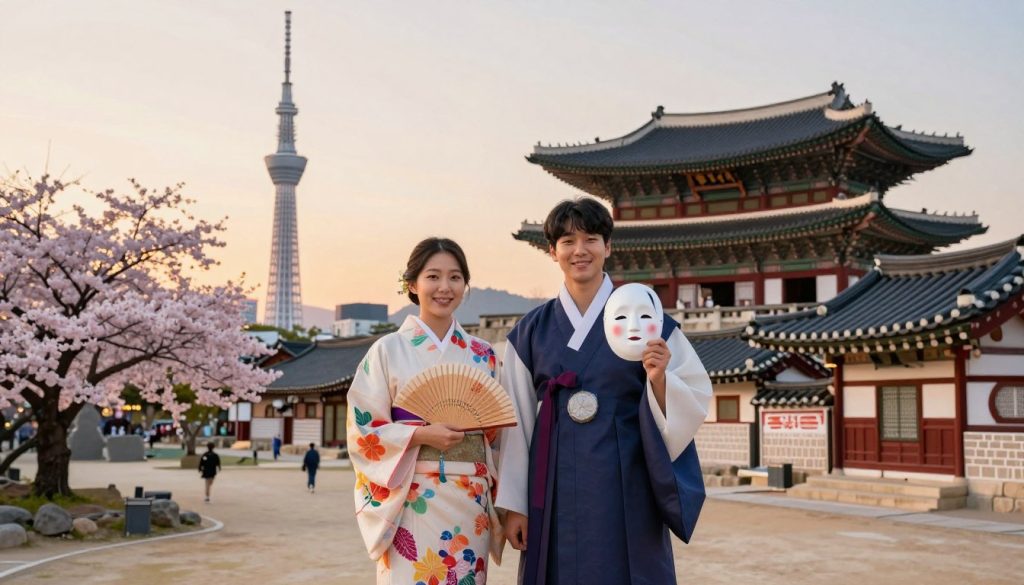
Japan and South Korea share a rich cultural heritage, influenced by Buddhism, Confucianism, and Shintoism. Yet, each country has its distinct cultural identity. Japan values respect and politeness, evident in its etiquette and traditional tea ceremonies. Korea, on the other hand, is vibrant and expressive, with a strong focus on community and family.
Their culinary traditions, festivals, and daily life also show distinct differences. Japanese cuisine is renowned for sushi, ramen, and tempura. Korean cuisine, known for kimchi, bibimbap, and bulgogi, is equally diverse. Knowing these cultural nuances helps travelers pick the experiences that align with their interests.
Geographical Proximity and Travel Combinations
Traveling to Japan or South Korea is advantageous due to their close proximity. The distance between major cities like Tokyo and Seoul is under 3 hours by flight. This makes it easy to explore both countries in one trip, experiencing Japan’s neon cities and Korea’s historic palaces.
First Impressions for American Travelers
American travelers find both Japan and South Korea captivating. The initial impression is often the modernity of cities like Tokyo and Seoul, with their advanced technology and architecture. Yet, the traditional aspects, such as ancient temples and traditional clothing, offer a glimpse into their rich history and culture.
The choice between Japan and South Korea depends on personal preferences and interests. Whether you’re drawn to Japan’s serene landscapes and technology or Korea’s vibrant culture and history, both countries offer unforgettable experiences.
Cultural Experiences: Traditions and Modern Life
Japan and South Korea showcase a captivating cultural spectrum, blending ancient traditions with modern advancements. This unique fusion offers travelers a memorable experience, highlighting the best of both worlds.
Japanese Cultural Highlights
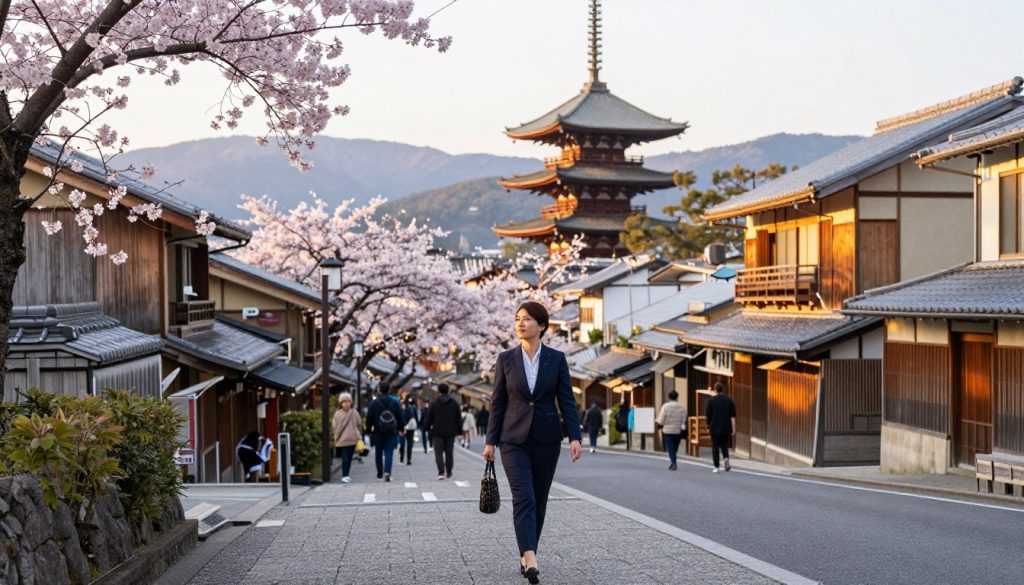
Japan’s cultural landscape is rich and varied, featuring traditional ryokan inns, serene gardens, and historic temples. Visitors can immerse themselves in the tranquility of a traditional tea ceremony or the vibrant energy of a matsuri festival.
Modern Japan, with its cutting-edge technology and innovative robotics, is equally captivating. Cities like Tokyo and Osaka embody the future, with their high-tech gadgets and fashion trends. This modern culture is a major attraction for many.
Korean Cultural Experiences
South Korea offers a mix of modern cities and traditional hanok villages. Cultural experiences range from historic palaces and temples to the lively shopping districts of Seoul.
Trying on traditional hanbok clothing, participating in a Korean barbecue, and exploring the demilitarized zone (DMZ) are all part of Korean cultural experiences. Modern Korean culture, including K-pop and K-dramas, has gained international fame, enriching the country’s cultural appeal.
Both Japan and Korea provide a wide range of cultural experiences, appealing to various interests. Whether you’re interested in traditional heritage or modern pop culture, these countries offer something special.
Food and Culinary Adventures
Culinary adventures in Japan and South Korea promise to delight your senses with unique flavors. Both countries are renowned for their distinct culinary traditions. These traditions are shaped by their cultural heritage and geographical characteristics.
Japanese Cuisine Essentials
Japanese cuisine is celebrated for its emphasis on fresh ingredients, seasonality, and simple preparation methods. Sushi, sashimi, and tempura are among the most popular dishes. They showcase the country’s love for seafood and precise culinary techniques.
For a truly authentic experience, try tonkatsu, a breaded and deep-fried pork cutlet, or yakitori, grilled chicken skewers flavored with salt or teriyaki sauce. Don’t miss the opportunity to sample ramen, a rich and savory noodle soup that has gained worldwide popularity.
Korean Food Must-Tries
Korean cuisine is known for its bold flavors, spices, and variety. Bibimbap, a mixed rice bowl dish topped with an assortment of vegetables and often meat, is a staple. Bulgogi, thinly sliced marinated beef, is another favorite, typically grilled at the table.
For those who enjoy spicy food, kimchi stew (kimchi jjigae) is a must-try, made with kimchi, pork, and a variety of spices. Japchae, stir-fried glass noodles with vegetables, is a popular dish for vegetarians and those looking for a lighter option.
Both Japan and South Korea offer a rich culinary landscape that is sure to satisfy any food enthusiast’s cravings. Whether you’re indulging in sushi or savoring kimchi, the culinary adventures in these countries are unforgettable.
Major Cities and Urban Experiences
The neon-lit streets of Tokyo contrast with Seoul’s historic palaces, revealing diverse urban experiences in Japan and South Korea. These cities are more than mere metropolises; they are vibrant centers of culture, history, and entertainment.
Tokyo, Kyoto, and Osaka
In Japan, Tokyo, Kyoto, and Osaka stand out as urban powerhouses. Tokyo, the capital, is a beacon of innovation and technology. It offers a blend of modernity and tradition, from Shibuya’s bustling streets to the Imperial Palace’s serene gardens.
Kyoto, steeped in history, boasts numerous temples and gardens, including the Fushimi Inari shrine and the Arashiyama bamboo forest. Osaka, celebrated as Japan’s food capital, entices visitors with its street food and vibrant nightlife.
Seoul, Busan, and Jeju Island
South Korea’s cities, such as Seoul, Busan, and Jeju Island, present a unique urban experience. Seoul, the capital, is a treasure trove of history with palaces like Gyeongbokgung and Changdeokgung. It also boasts modern districts like Myeong-dong and Gangnam.
Busan is renowned for its beaches, including Haeundae Beach, and its lively markets, like Jagalchi Fish Market. Jeju Island, a favorite among tourists, is celebrated for its natural wonders, including waterfalls and green tea plantations. The Jeju National Museum showcases the island’s rich culture and history.
Both countries offer urban experiences for every interest, whether you’re into history, food, or adventure. The cities of Japan and South Korea serve as gateways to understanding the nations’ cultural heritage and modern vibrancy.
Natural Landscapes and Outdoor Activities
Japan and South Korea boast diverse natural landscapes, ideal for outdoor enthusiasts. These countries are rich in natural beauty, providing ample opportunities for hiking, sightseeing, and outdoor enjoyment.
Japan's Mountains, Forests, and Coastlines
Japan is celebrated for its majestic mountains, serene forests, and dramatic coastlines. The Japanese Alps offer excellent hiking trails with stunning views. Nikko National Park is a highlight, featuring ornate temples and shrines against a backdrop of vibrant autumn foliage or serene winter snows.
The Japanese coastline is equally stunning, with scenic spots like the Sanin Coast and the rugged shores of Yakushima Island. Okinawa’s crystal-clear waters and pristine beaches offer a tropical paradise for beach activities.
South Korea's National Parks and Beaches
South Korea is home to numerous national parks that showcase its natural beauty. Seoraksan National Park is renowned for its granite peaks, temples, and vibrant autumn colors. Jirisan National Park, the highest mountain in mainland Korea, offers challenging hiking trails and scenic views.
Korea’s coastline features beautiful beaches, such as Haeundae Beach in Busan, known for its lively atmosphere and clear waters. Jeju Island, a UNESCO World Heritage Site, is a must-visit for its stunning natural landscapes, including waterfalls, craters, and black sand beaches.
Both Japan and South Korea offer a wide range of outdoor activities, from hiking and camping to surfing and beach relaxation. Whether you’re an adventure seeker or simply looking to enjoy nature’s beauty, these countries cater to every kind of traveler.
Historical Sites and Heritage
Exploring Japan and South Korea’s historical sites is akin to diving into a rich cultural heritage. These countries boast a deep history, evident in their numerous landmarks. Each site has its own unique story, weaving together ancient traditions and cultural legacies.
Ancient Japan: Temples, Castles, and Gardens
Japan is celebrated for its ancient temples, majestic castles, and serene gardens. These elements collectively form a significant part of its historical heritage. Kyoto’s temples, such as Kiyomizu-dera and Fushimi Inari, symbolize Japan’s spiritual past. Himeji Castle, with its elegant architecture and beautiful gardens, represents the country’s feudal history.
Japanese gardens, with their meticulously manicured landscapes and tranquil water features, provide a serene escape into nature. Nara, home to the Todai-ji Temple with the world’s largest bronze Buddha statue, is a famous historical site. Nikko, known for its ornate temples and shrines, is another significant destination, highlighting Japan’s rich cultural legacy.
Korean History: Palaces, Villages, and Monuments
South Korea’s historical heritage is marked by grand palaces, traditional villages, and significant monuments. The Gyeongbokgung Palace in Seoul stands as the largest and most iconic of the Five Grand Palaces built during the Joseon Dynasty. The Bukchon Hanok Village, with its traditional Korean houses, offers a glimpse into the country’s architectural past.
Korea boasts numerous historical monuments, such as the Samryeongbu tomb complex and the Gwangalli Eupseong Fortress. These reflect Korea’s complex history and cultural development. The Hwaseong Fortress in Suwon, a UNESCO World Heritage site, is another notable example of Korea’s historical architecture.
Both Japan and South Korea offer a wealth of historical sites. These sites are not only significant to their respective cultures but also provide valuable insights into East Asia’s broader history.
Shopping and Fashion Scenes
In Tokyo’s fashion districts and Seoul’s beauty and fashion hotspots, Japan and South Korea offer an exciting experience for shoppers and fashion enthusiasts. Both countries are known for their unique approach to fashion and beauty. They blend traditional elements with modern trends.
Japanese Fashion Districts and Trends
Japan is famous for its cutting-edge fashion. Districts like Harajuku in Tokyo showcase the latest trends. Harajuku is a hub for youthful fashion, with a mix of avant-garde and streetwear styles.
Shibuya is another significant district, known for its upscale fashion and trendy boutiques. Japanese fashion trends often emphasize innovation and quality. Brands like Comme des Garçons and Issey Miyake lead the way in global fashion.
The influence of Japanese pop culture, including anime and manga, is also visible in fashion. Many designs incorporate elements from these media.
Korean Beauty Products and Fashion Hotspots
South Korea is renowned for its beauty products and K-pop influenced fashion. The Korean beauty industry focuses on skincare and innovative products, such as sheet masks and BB creams. Brands like Innisfree and Laneige have gained international recognition for their quality and effectiveness.
Fashion hotspots in Seoul include Myeong-dong, known for its shopping and street food, and Gangnam, famous for its luxury brands and stylish boutiques. The K-pop influence on fashion is significant. Fans around the world emulate the styles of their favorite idols.
Entertainment and Pop Culture
The entertainment scenes in Japan and South Korea are both diverse and captivating. They feature anime, gaming, K-pop, and K-dramas. These countries have significantly influenced global pop culture, drawing fans worldwide.
In Japan, anime, gaming, and J-pop are prominent. Anime enthusiasts can explore various studios and conventions. Gamers can dive into cutting-edge technology and immersive experiences at arcades and gaming centers.
Anime, Gaming, and J-Pop
Japan’s anime industry attracts tourists and fans. Tokyo boasts numerous anime and manga shops, like Akihabara. Here, visitors can dive into the latest trends and merchandise.
Gaming is a significant part of Japan’s entertainment. From classic arcade games to VR experiences, Japan is a gamer’s paradise. Major cities host large gaming events and tournaments, drawing international participants.
J-pop, or Japanese pop music, has a global fan base. Artists like AKB48 and Perfume are internationally recognized. Concerts are a key part of Japan’s music scene.
K-Pop, K-Dramas, and Korean Entertainment
South Korea’s entertainment industry is thriving, led by K-pop and K-dramas. K-pop groups like BTS and Blackpink have gained global fame. K-dramas such as “Crash Landing on You” and “Vagabond” have won international acclaim.
K-pop fans can visit the SM Entertainment building in Seoul. This is the headquarters of one of Korea’s largest K-pop companies. Fans can also attend concerts and music shows, experiencing K-pop’s high-energy performances.
K-dramas have become a cultural export, with fans traveling to Korea to see filming locations and experience the culture.
Both Japan and South Korea offer unique entertainment and pop culture experiences. Whether you’re into anime, gaming, J-pop, K-pop, or K-dramas, these countries have something for everyone.
Travel Costs and Budgeting
Planning a trip to Japan or South Korea requires a clear understanding of travel costs for a stress-free journey. Both countries offer a mix of traditional and modern experiences. Yet, expenses can quickly accumulate if not managed well.
Accommodation Expenses
Accommodation costs are a significant factor in travel expenses. Japan and South Korea have a variety of options, from budget-friendly hostels to luxury hotels. In Japan, budget hostels range from $20 to $50 per night. Mid-range hotels cost between $80 to $150 per night, while luxury hotels can reach $500 per night.
In South Korea, guesthouses and hostels start at $15 to $30 per night. Mid-range hotels are priced between $60 to $120 per night, and luxury hotels can cost up to $300 per night. Early bookings can help lower costs in both countries.
Food, Transportation, and Activity Costs
Food is a key part of the travel experience in Japan and South Korea. In Japan, fast food or street food meals cost $5 to $15, while mid-range restaurants charge $15 to $30 per meal. Fine dining can range from $50 to $100 per meal. In South Korea, street food starts at $3, and mid-range restaurants cost between $10 to $25 per meal.
Transportation costs depend on the mode of transport. In Japan, a subway ride costs $2 to $3, and a Japan Rail Pass for 7 days is $200 to $300. In South Korea, a subway ride is $1 to $2, and a T-Money card costs $3 to $5, providing discounts.
Activity costs vary as well. In Japan, temple and garden visits cost $5 to $15 per person, while Universal Studios Japan is around $60 per person. In South Korea, palace and museum visits cost $3 to $10 per person, and Lotte World theme park is $40 to $60 per person.
Knowing these costs helps travelers budget their trip to Japan or South Korea. This ensures a memorable and financially manageable experience.
Transportation and Getting Around
Japan and South Korea have advanced transportation systems, making travel easy. Whether you’re in bustling cities or serene countryside, knowing your options is key. This ensures a smooth and enjoyable trip.
Japan's Rail System and Public Transport
Japan is renowned for its efficient rail system. The Japan Rail Pass is a top choice for tourists. It offers unlimited travel on JR trains, buses, and ferries, saving money for extensive travel.
The Shinkansen, or bullet train, is a highlight of Japan’s rail network. It provides high-speed travel between major cities like Tokyo, Osaka, and Kyoto. Japan’s cities also have extensive subway systems and local trains.
Buses and taxis are available for shorter distances. Yet, many signs and announcements are in Japanese. Having a translation app is helpful.
Navigating South Korea's Transportation Network
South Korea’s transportation network is impressive, with buses and rails connecting cities and rural areas. The T-money card offers discounted fares on buses, subways, and taxis, making travel convenient.
Seoul’s subway system stands out, with English signage and announcements. The Korail Pass is useful for train travel, providing access to various trains, including the KTX.
Both countries have modern airports with international connections. This makes traveling between them or to other destinations worldwide easy.
In conclusion, Japan and South Korea offer efficient transportation systems. With some planning and the right travel cards or passes, exploring these countries is straightforward and enjoyable.
Language Barriers and Communication
Effective communication is essential for a great trip, but language barriers can hinder it in Japan and South Korea. Knowing the local language is vital for a seamless travel experience.
English Accessibility in Japan
Japan’s culture and heritage are unique, but the language poses a significant challenge for English-speaking tourists. Many Japanese people study English, but proficiency levels vary widely.
In cities like Tokyo and Osaka, finding English speakers is easier, thanks to the younger population and tourism industry. Yet, in rural areas, English is less accessible.
English Accessibility in South Korea
South Korea has improved its English education, leading to higher proficiency levels compared to Japan. In Seoul, the capital, many signs are in English, and finding English speakers, mainly among the young, is straightforward.
Outside major cities, English speakers become less common. Yet, Korea’s English accessibility is better than Japan’s, making it easier for English-speaking tourists to get around.
Both countries provide resources to help overcome language barriers. These include translation apps, English signage in key areas, and local guides who speak English.
Best Times to Visit Japan or Korea
Japan’s cherry blossoms and Korea’s autumn foliage are major attractions for travelers. Knowing the best times to visit these countries can greatly enhance your experience. Both offer unique events and landscapes throughout the year.
Seasonal Highlights in Japan
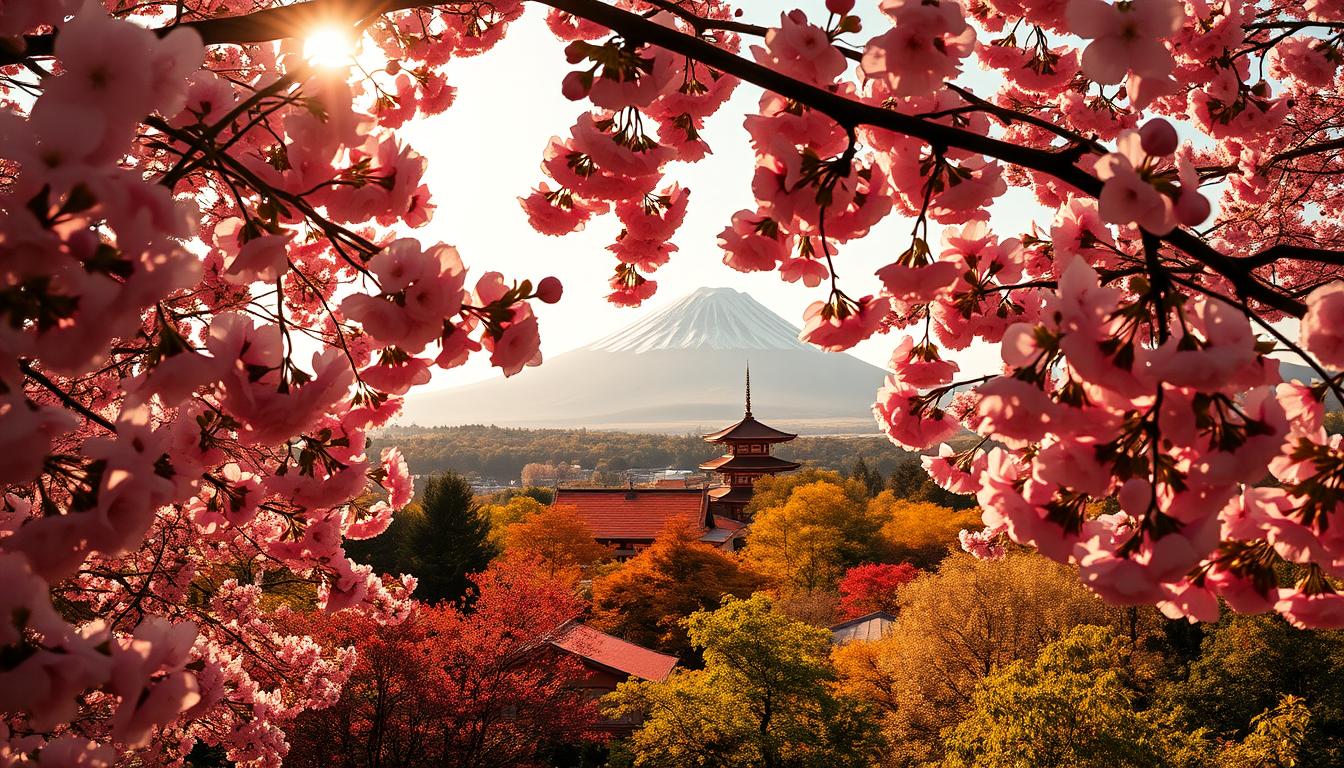
Japan’s seasons are distinct, each providing a unique experience. Spring, from March to May, is celebrated for its cherry blossoms, peaking in late March to early April. Summer, from June to August, is warm and humid, with many festivals and fireworks displays. Autumn, from September to November, offers comfortable temperatures and stunning foliage, best seen in Kyoto and Nikko. Winter, from December to February, is perfect for skiing and hot springs, with colder climates more pronounced in the north.
The Cherry Blossom Festival (Hanami) in spring is a significant event in Japan. During this time, parks and temples are filled with people enjoying the blossoms. Summer’s Obon festivals honor ancestors, featuring traditional dances and lanterns.
Seasonal Highlights in South Korea
South Korea also experiences four distinct seasons, each with its own charm. Spring, from March to May, is mild with beautiful flowers, including cherry blossoms. Summer, from June to August, is hot and humid, with a monsoon season in July. Autumn, from September to November, is a favorite time to visit, with comfortable temperatures and stunning foliage. Winter, from December to February, is cold, but great for skiing and winter sports.
Korea’s autumn foliage is breathtaking, with national parks like Seoraksan displaying spectacular views. Winter is also ideal for visiting Jeju Island, known for its beaches and unique landscapes, even in the cold.
Practical Travel Tips for First-Time Visitors
Starting your first journey to Japan or South Korea is both exciting and daunting. With so much to explore, preparation is key. Here are some practical travel tips to enhance your experience.
Japan Travel Essentials
Understanding Japan’s customs and etiquette is vital. Japan values punctuality, so being on time is essential. Here are additional tips:
Get a Suica or Pasmo card for seamless travel on public transport. These prepaid cards work on most trains, buses, and subways.
Learn basic Japanese phrases like “konnichiwa” (hello), “arigatou” (thank you), and “sumimasen” (excuse me). Showing respect for the culture through language is important.
South Korea Travel Essentials
South Korea boasts a rich culture and history. For newcomers, grasping local customs and navigating the city is essential.
Buy a T-Money card for easy travel on public transport in Seoul and other major cities.
Learn Korean phrases like “annyeonghaseyo” (hello), “gamsahamnida” (thank you), and “jeoneun [insert language here]go issseubnikka?” (I speak [language]).
Be sure to try Korea’s famous street food. From hotteok to tteokbokki, there’s something for every taste.
By following these tips, you’ll be ready for your adventure. Whether you’re visiting Japan’s temples or Korea’s palaces, these essentials will make your trip unforgettable.
Conclusion: Making Your Decision
Deciding between Japan and South Korea for your next trip depends on your personal tastes and what you value most. Both countries provide unique cultural experiences, historical sites, and modern attractions. These cater to a broad spectrum of interests.
Japan and Korea each have their own distinct appeal. Japan is known for its serene gardens and advanced technology. Korea, on the other hand, offers a vibrant K-pop scene and a rich historical heritage. Your choice might depend on whether you prefer Japan’s peaceful countryside or Seoul’s energetic streets.
Think about what’s most important to you: food, history, entertainment, or natural beauty? The debate between Japan and Korea isn’t about which is superior. It’s about finding the destination that matches your travel dreams. Whether you’re drawn to Japan’s sushi and ramen or Korea’s bibimbap and kimchi, you’re set for an adventure you won’t forget.
Let your interests guide your decision. Whether you choose Japan or Korea, you’re in for a memorable journey.
FAQ
What are the must-try dishes when visiting Japan and South Korea?
What are the best cities to visit in Japan and South Korea?
How do I navigate transportation in Japan and South Korea?
What are the cultural similarities and differences between Japan and South Korea?
Are there any historical sites to visit in Japan and South Korea?
How do I budget for travel in Japan and South Korea?
What are the best times to visit Japan and South Korea?
Can I easily communicate in English in Japan and South Korea?
What are some practical travel tips for first-time visitors to Japan and South Korea?
How do the shopping and fashion scenes compare between Japan and South Korea?
What outdoor activities are available in Japan and South Korea?
Can I combine a trip to Japan and South Korea?