
Table of Contents
ToggleTurquoise coves tucked between pine-clad cliffs, long shallow bays of soft white sand, and dramatic beaches where mountains tumble into the sea — Mallorca has some of the best beaches in the Mediterranean. With more than 200 to choose from, Spain’s largest Balearic island offers a beach for every mood, from family-friendly shallows to hidden, boho calas.
The trick is knowing where to look. The east and north hide the prettiest coves, the south has the long sandy bays, and the wild Tramuntana coast in the west serves up the most dramatic scenery. This guide rounds up the best beaches in Mallorca by region, with our honest take on what each does best.
You’ll also find everything you need to plan the trip: the best time to visit, how to reach the coves (a car helps), where to stay and how to enjoy the busy spots at their best. Let’s find your perfect Mallorca beach.
✈️ TripToGo Travel Deals
Get notified about great travel deals
Hand-picked flight, hotel and destination deals, straight to your inbox. No spam, unsubscribe anytime.
🎉 Thank you for subscribing!
You’re all set — the best travel deals are on their way.
Key Takeaways
- Mallorca has 200+ beaches — turquoise coves (calas) in the east, long sandy bays in the north and south.
- Caló des Moro and Cala Mondragó are the most beautiful coves; Playa de Muro and Es Trenc the best family beaches.
- The wild Tramuntana coast (Sa Calobra, Formentor) has the most dramatic scenery.
- Beach season is May–October; June and September offer warm sea with fewer crowds.
- A rental car (or boat trips) makes reaching the best hidden coves far easier.
Best Beaches in Mallorca at a Glance
The best beaches in Mallorca, sorted by region and what each does best.
| Beach | Region | Best for |
|---|---|---|
| Caló des Moro | Southeast | Most photogenic cove |
| Cala Mondragó | Southeast | Unspoiled family cove |
| Playa de Muro | North | Long shallow family beach |
| Formentor | North tip | Scenery & pine-fringed sand |
| Es Trenc | South | Caribbean-like white sand |
| Sa Calobra | West (Tramuntana) | Dramatic gorge cove |
| Cala Varques | East | Wild, undeveloped beach |
| Port de Sóller | West | Sheltered family bay & tram |
Mallorca's Coast: Coves, Cliffs & Long Sandy Bays
Mallorca, the largest of Spain’s Balearic Islands, has more than 200 beaches — and an astonishing variety of them. The north and east are famous for calas: tiny, sheltered coves of turquoise water tucked between pine-clad cliffs. The south has long, shallow, white-sand bays perfect for families. And the wild northwest, along the Serra de Tramuntana mountains, hides dramatic pebble coves reached by winding roads or boat.
That range means Mallorca suits everyone — from families and swimmers to hikers, snorkellers and anyone chasing a postcard cove. This guide rounds up the best beaches on the island, plus the best time to go and how to reach them. Official resource: Illes Balears Tourism.
Planning a Mallorca beach trip?
Our partner Voyada’s trip planning AI builds a day-by-day plan with flights, hotels and a real total cost for your dates — in about a minute, free.
Plan trip with AIThe Best Coves (Calas) in the East
Cala Mondragó
Set within a protected natural park in the southeast, Cala Mondragó is a pair of gorgeous, unspoiled coves with soft white sand, shallow turquoise water and pine-backed dunes. Calm and family-friendly, with a coastal path between beaches, it’s one of the island’s loveliest and best-preserved spots.
Caló des Moro & Cala s'Almunia
The most photographed cove on Mallorca, tiny Caló des Moro is a jewel of impossibly blue water framed by cliffs — reached by a short scramble down. Neighbouring Cala s’Almunia is equally stunning. Both are small and hugely popular, so arrive early in summer to enjoy them.
Cala Varques & Cala Llombards
Cala Varques is an undeveloped, boho favourite reached by a 20-minute walk through the woods — wild, beautiful and worth the effort. Cala Llombards is a sheltered, sandy cove framed by cliffs and fishermen’s boathouses, calm enough for young families.
The Best Beaches in the North
Playa de Muro & Alcúdia
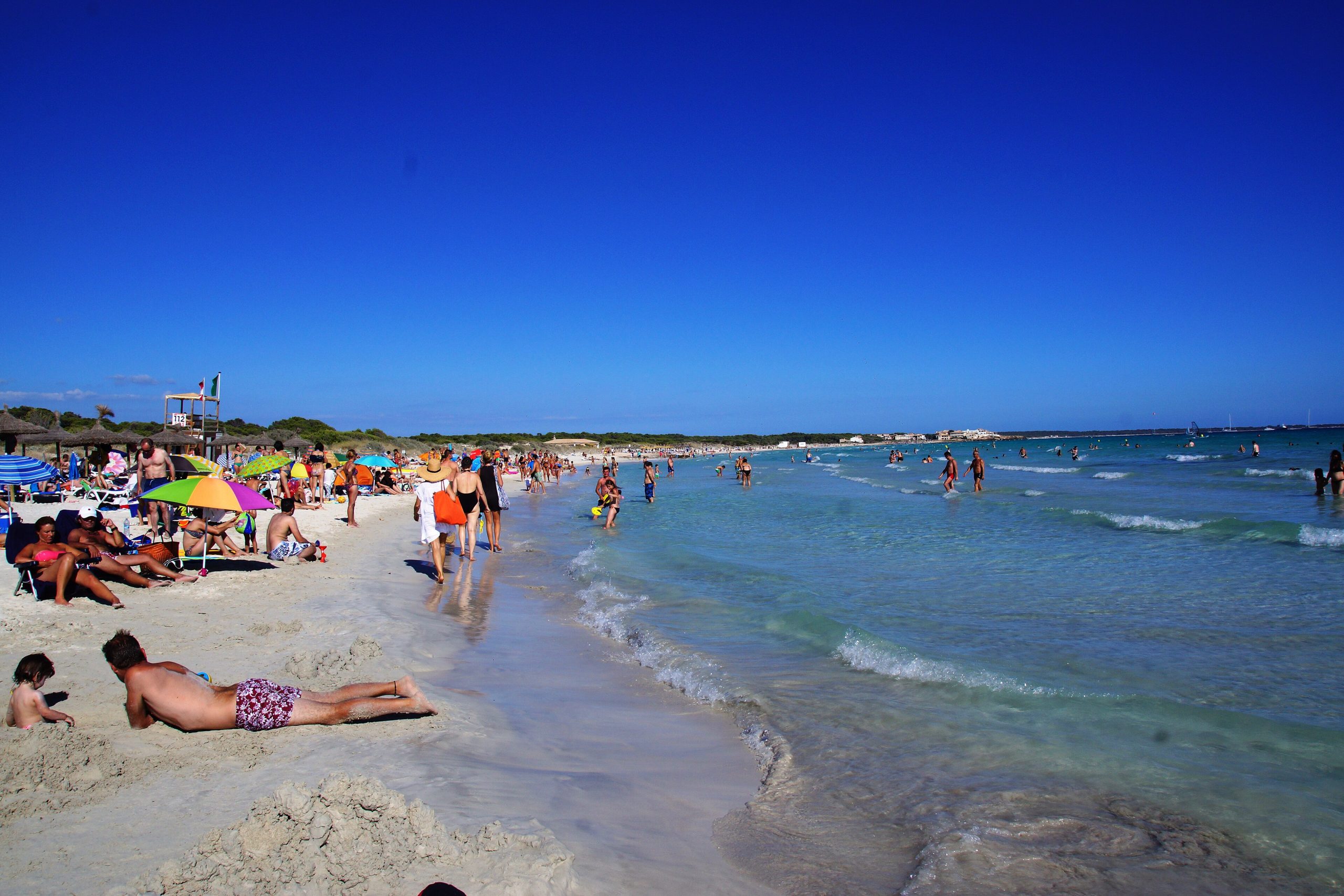
The Bay of Alcúdia in the north is home to Mallorca’s best long sandy beaches. Playa de Muro is a superb stretch of fine white sand and shallow, calm, crystal-clear water backed by dunes and a nature reserve — ideal for families. Neighbouring Alcúdia beach offers the same gentle water with more amenities.
Formentor
At the island’s dramatic northern tip, Playa de Formentor is a beautiful pine-fringed beach with views across to the mountains, reached by boat from Port de Pollença or the 334 shuttle bus — private cars are barred beyond the beach from 10am to 10pm, mid-May to mid-October. The scenery en route, past the Formentor lighthouse viewpoint, is unforgettable.
The West Coast & Mountains
Sa Calobra & Cala Tuent
On the wild Tramuntana coast, Sa Calobra sits at the mouth of the Torrent de Pareis gorge — a dramatic pebble cove reached by a famously twisting road or a scenic boat ride. Quieter Cala Tuent nearby offers similar mountain-meets-sea drama with far fewer people.
Cala Deià & Port de Sóller
Below the artists’ village of Deià, a small rocky cove with clear water and celebrated seafood shacks rewards the walk down. The pretty resort of Port de Sóller has a sheltered, family-friendly bay reached by a charming vintage tram from Sóller town.
The Best Family Beaches in the South
Around the south and the Bay of Palma, the beaches are longer, shallower and packed with amenities — ideal for families and easy access. Es Trenc is the star: a long, undeveloped stretch of white sand and shallow turquoise water that’s often compared to the Caribbean. Playa de Palma and Cala Major near the capital are convenient, lively and well-served, while Sant Elm in the southwest looks out to the Dragonera island.
Best Mallorca Beaches for Every Traveller
- Families & calm swimming: Playa de Muro, Es Trenc, Cala Mondragó, Alcúdia.
- Most beautiful coves: Caló des Moro, Cala Mondragó, Cala Varques.
- Dramatic scenery: Sa Calobra, Formentor, Cala Tuent.
- Snorkelling: the east-coast calas and the clear Tramuntana coves.
- Easy & lively: Playa de Palma, Port de Sóller, Alcúdia.
- Off the beaten path: Cala Varques, Cala Tuent, Sant Elm.
Best Time to Visit Mallorca's Beaches
The beach season on Mallorca runs from roughly May to October, with the warmest sea and sunniest days in July and August — also the busiest and priciest months, when the famous coves overflow. The shoulder months of May, June, September and October are the sweet spot: warm, sunny weather, swimmable water (the sea is warmest in late summer and early autumn) and far fewer crowds.
Spring and autumn are also glorious for combining beaches with hiking in the Tramuntana, when temperatures are comfortable. Winters are mild but too cool for swimming, though lovely and quiet for walking and sightseeing. For the best balance of warm sea and manageable crowds, aim for June or September.
| Season | Months | Weather | Notes |
|---|---|---|---|
| Peak summer | Jul–Aug | Hot, warm sea | Busiest & priciest; coves crowded |
| Shoulder | May–Jun, Sep–Oct | Warm, sunny | Best balance; sea warmest in Sep |
| Off-season | Nov–Apr | Mild, cool sea | Great for hiking, not swimming |
How to Get There & Get Around
Fly into Palma de Mallorca (PMI), one of Spain’s busiest airports, with abundant direct flights from across Europe (and seasonal charters). To reach the best coves and mountain beaches, a rental car is highly recommended, as many are tucked away and poorly served by public transport — though buses connect the main resorts and Palma. Boat trips are a wonderful (and sometimes the easiest) way to reach spots like Sa Calobra and Formentor. Because flights, a car and where to base yourself all matter, an AI planner can line up the trip for your dates in about a minute.
Where to Stay
The north (Alcúdia, Pollença, Port de Pollença) is best for long sandy family beaches; the east (Cala d’Or, Porto Cristo) puts you near the prettiest coves; the southwest and Palma offer city buzz, nightlife and easy access; and the Tramuntana (Sóller, Deià) suits hikers and those after mountain-and-sea scenery. Book summer well ahead, as the island is hugely popular.
Beach Tips & Safety
Mallorca’s beaches are generally calm and safe, but a few tips help: park at Cala Llombards and walk in to Caló des Moro (its access streets are residents-only from June), and note Cala Varques’ roadside parking is now blocked off; wear water shoes for pebbly coves and rocky entries; and bring cash, water and shade, as the wild coves have few or no facilities. Watch for occasional jellyfish and heed any flags at the busier beaches. A little planning turns a crowded cove into a perfect one.
Related Guides
Frequently Asked Questions
What is the most beautiful beach in Mallorca?
Caló des Moro in the southeast is the most photographed and arguably most beautiful — a tiny turquoise cove framed by cliffs. Cala Mondragó and Cala Varques are close rivals, while Es Trenc is the finest long white-sand beach.
Which part of Mallorca has the best beaches?
The east and southeast have the prettiest turquoise coves (calas), the north (Alcúdia bay) has the best long sandy family beaches, the south has Es Trenc, and the wild Tramuntana west coast has the most dramatic scenery.
When is the best time to visit Mallorca’s beaches?
The beach season runs May to October. July and August are hottest and busiest; May, June, September and October are the sweet spot, with warm, swimmable water (the sea is warmest in September) and far fewer crowds.
What are the best family beaches in Mallorca?
Playa de Muro and Alcúdia in the north, Es Trenc in the south, and Cala Mondragó in the southeast are the best for families — all have shallow, calm, clear water, soft sand and good facilities nearby.
Do you need a car to reach Mallorca’s beaches?
A rental car is highly recommended for the best coves and mountain beaches, which are often tucked away with limited public transport. Buses connect the main resorts and Palma, and boat trips are a great way to reach spots like Sa Calobra and Formentor.
How do you visit the famous small coves without the crowds?
Arrive early in the morning (or late afternoon) in summer, especially at Caló des Moro, Cala Varques and Cala Mondragó, which are small and hugely popular with limited parking. Visiting in the shoulder season also means far fewer people.
Are Mallorca's beaches safe to swim at?
Yes, Mallorca’s beaches are generally very safe for swimming, with calm, sheltered water at most coves and Blue Flag lifeguard cover at the busiest spots in summer. Conditions can turn choppier at exposed west-coast beaches on windy days, and it is worth checking the coloured flag system (green, yellow, red) posted at guarded beaches before swimming, since red means the water is closed.
Where should you stay for the best beach access in Mallorca?
Base yourself in a resort town close to the coast rather than inland Palma suburbs: Alcudia or Port de Pollenca in the north for family-friendly sand, Cala d’Or or Porto Cristo in the east for coves, or Camp de Mar and Paguera in the southwest for a quieter, upscale feel. Staying directly in a beach resort cuts out the drive that inland or central Palma bases require.
Can you smoke on the beaches in Mallorca?
No, smoking and vaping are banned on the sand at around 50 beaches across the Balearic Islands, including many of Mallorca’s most popular ones, under the Playas Sin Humo (smoke-free beaches) initiative. The ban covers the whole beach area from the waterline to the promenade, and fines for breaking it can run into the thousands of euros, so it is worth checking signage at your specific beach.
Can you drink alcohol on the beaches in Mallorca?
It depends where you are. Public drinking, including on the beach, is now banned in designated zones of Palma, Calvia (Magaluf), Llucmajor and a few other municipalities as part of a crackdown on binge tourism, with fines from around €500 to €1,500 for open containers. Away from these specific restricted zones, a quiet drink on a towel is generally tolerated, but it is best to check local signage rather than assume.
Are there jellyfish at Mallorca's beaches?
Occasionally, yes, particularly between July and September when warmer water brings jellyfish blooms to Balearic waters. Numbers vary a lot by beach, wind and current, so one cove can see jellyfish while a neighbouring one stays clear; guarded beaches usually raise a warning flag or sign when jellyfish are reported, so it is worth checking before wading in during late summer.
How much do sunbeds and umbrellas cost on Mallorca's beaches?
Prices vary a lot by beach: a simple sunbed on a quieter cove can cost as little as €5 a day, while a sunbed-and-umbrella package on a busy resort beach like Playa de Palma typically runs €20-€30, and premium loungers or Balinese beds at upmarket beach clubs can cost €45-€70 or more. Bringing your own towel and finding a free patch of sand is always an option if you would rather not pay.
Are there nudist or topless beaches in Mallorca?
Yes, Mallorca has several nudist and naturist-friendly beaches, most famously the southern end of Es Trenc, a long stretch of white sand near Campos where naturists and regular swimmers share the beach comfortably. Other spots practising naturism include parts of Es Calo des Monjo and Sa Rapita in the south. Topless sunbathing, meanwhile, is common and unremarkable at almost any beach on the island.
Are dogs allowed on Mallorca's beaches?
Only on a handful of designated dog beaches, including Es Carnatge near Palma, Llenaire near Pollenca and a beach at Alcanada in the Bay of Alcudia; dogs are banned from most other beaches during the high season, with fines for breaking the rule. Restrictions ease considerably in the low season, typically from around November to March or April depending on the municipality, when many more beaches allow dogs.
Why is the water so clear at Mallorca's beaches?
The main reason is Posidonia oceanica, an ancient seagrass that carpets much of the seabed around the island and acts as a natural water filter, trapping sediment and improving underwater visibility dramatically. It is also the source of the small brown fibre balls that sometimes wash up on Mallorca’s sand, a completely natural and harmless by-product of the same plant that keeps the water so clear.
Do any of Mallorca's beaches have Blue Flag status?
Yes, Mallorca holds around 22 Blue Flag beaches in 2026, an international certification for water quality, safety and facilities, spread across beaches including Alcudia, Cala Major, Cala Millor, Sa Coma and Cala Mondrago. The flag is a useful shortcut for finding a beach with reliably clean water and proper lifeguard and facility standards.
Do you need a visa or ETIAS to visit Mallorca?
No visa is needed for most visitors. Mallorca is part of Spain and the Schengen Area, so US, UK, Canadian and Australian passport holders can visit visa-free for up to 90 days in any 180-day period. Once ETIAS launches, visa-exempt visitors will also need to register online via it before arrival, at a cost of around €20, free for under-18s and over-70s.
Final Thoughts: Planning Your Mallorca Beach Trip
Few islands pack as much beach variety into one place as Mallorca. Seek out the turquoise coves of the east like Caló des Moro and Cala Mondragó, bring the family to the long shallow sands of Playa de Muro or Es Trenc, and marvel at the mountain drama of Sa Calobra and Formentor. Base yourself to match your beaches, visit in June or September for warm sea without the crush, rent a car to reach the hidden coves, and arrive early at the famous ones. Do that, and Mallorca’s beaches will live up to every photo.
Before you go: turn this guide into a day-by-day plan. Our partner Voyada is a free itinerary creator that builds the trip with flights, hotels and a real total cost for your dates — in about a minute.
Build a travel itinerary →