

Table of Contents
ToggleDid you know Thailand has over 1 million street food vendors? This shows the country’s love for bold flavors and spices. It also highlights the variety of dishes that excite our taste buds.
When you plan your next trip to Thailand, get ready for a food adventure. You’ll try everything from famous Pad Thai to local favorites. The smells and tastes of Thai food will make you crave for more.
Key Takeaways
- Discover the essence of authentic Thai cuisine
- Explore regional specialties and popular dishes
- Experience the bold flavors and spices of traditional Thai food
- Must-try dishes on your next Thailand vacation
- Tips for navigating Thailand’s vibrant street food scene
The Vibrant World of Thai Cuisine in Thailand
Thailand’s food scene is a colorful mix of sweet, salty, sour, and spicy flavors. This mix of tastes shows the country’s rich culture and its love for new foods.
The Four Fundamental Flavors
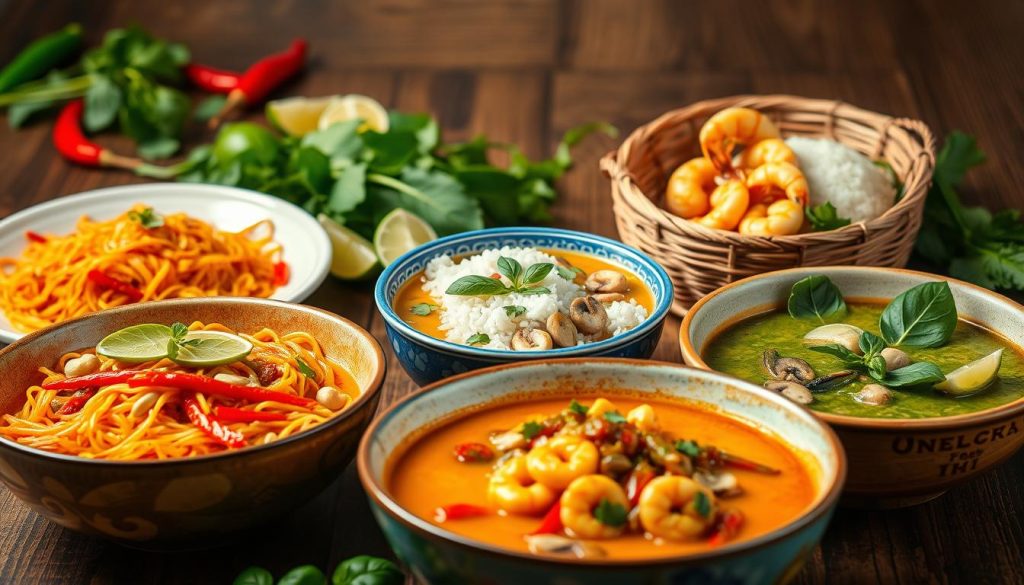
Thai food centers around four main tastes: sweet, salty, sour, and spicy. These flavors blend together to make dishes that are both simple and complex. Sweetness comes from palm sugar or fruits, while saltiness is from fish sauce or salt.
Sour tastes come from lemongrass, tamarind, or lime juice. Spiciness is from different chili peppers.
Knowing these flavors helps us enjoy Thai food more. For example, you can make a dish spicier or milder to fit your taste.
Regional Variations Across Thailand
Thailand’s different areas have their own food styles. The south loves spicy dishes, thanks to lots of seafood and coconut milk. The northeast, or Isaan, is known for its strong, spicy flavors and fermented fish sauce.
The north and central regions have their own tastes too. The north is influenced by Burmese and Lanna traditions. The central region is famous for its royal cuisine, which is more refined and complex.
Essential Street Food Experiences
Explore the world of Thai street food, a journey of flavors and smells. It’s everywhere in Thailand, from Bangkok’s busy streets to Chiang Mai’s night markets. Thai street food is a big part of the country’s culture and identity.
Navigating Thai Food Markets
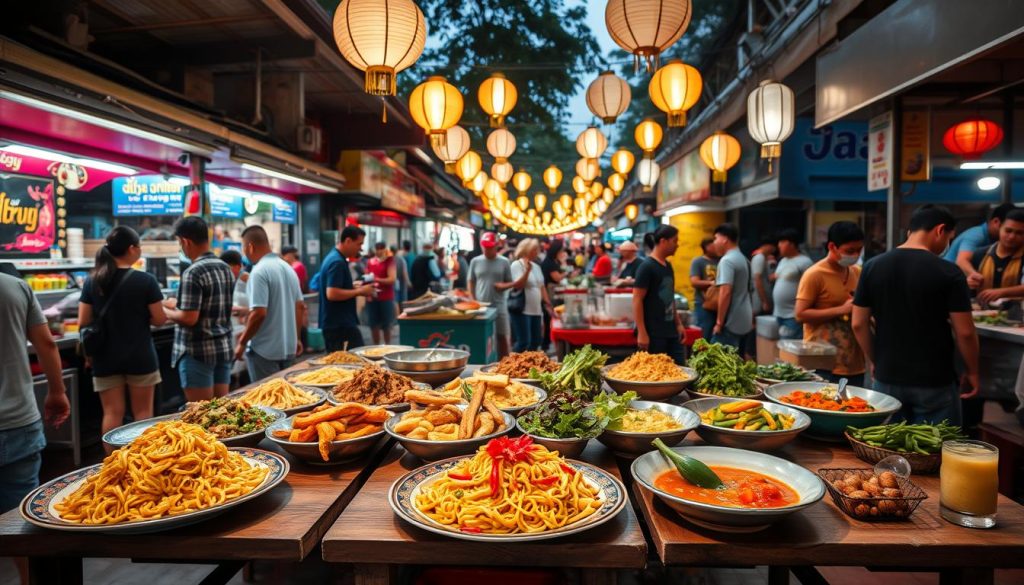
Thai food markets are full of amazing smells and tastes. Start by following your nose and your hunger. The busiest stalls serve the freshest, tastiest food. Try popular dishes like pad thai, tom yum soup, or mango sticky rice.
Look for stalls with lots of customers. This means the food is fresh and good. Eating with your hands or simple utensils is all part of the fun.
Popular Street Food Stalls and Vendors
Street food stalls offer everything from grilled skewers to steaming noodle soups. Must-try dishes include satay and khao soi, a curried noodle soup from Northern Thailand. Don’t forget to try local fruits like durian or jackfruit for a sweet treat.
Street Food Safety Tips for Tourists
Eating Thai street food is generally safe, but take some precautions. Choose stalls that are busy and serve food quickly. Drink bottled or filtered water and avoid raw or undercooked meat.
By being careful and adventurous, you can enjoy all the delicious must-try Thai dishes Thailand offers. Whether you love food or just want to try something new, Thai street food is a must-see experience.
Pad Thai: Thailand's World-Famous Noodle Dish
Pad Thai is loved for its mix of flavors and textures. It’s a dish you must try in Thailand. It’s made with rice noodles, eggs, and various vegetables and proteins. These are all mixed with sweet, sour, and savory flavors.
Traditional Preparation Methods
Pad Thai is traditionally cooked in a wok over high heat. This quick stir-fry keeps the ingredients’ texture. It includes shrimp, tofu, bean sprouts, and peanuts for its rich taste.
The way it’s prepared is key. Chefs stir-fry quickly to get the right taste and texture. They use tamarind paste, fish sauce, and palm sugar for that sweet and sour flavor.
Where to Find the Best Pad Thai in Bangkok
Bangkok is famous for its street food, and Pad Thai is a big part of it. For a real taste, go to Sukhumvit or Silom markets. There, vendors serve hot plates of Pad Thai.
Thip Samai is a legendary spot for Pad Thai, serving it up for 56 years. Pad Thai Pratu Phi is also a must-visit for its tasty and cheap Pad Thai.
Tom Yum Goong: The Iconic Spicy Shrimp Soup
Tom Yum Goong is a must-try Thai spicy shrimp soup. It’s a key dish in Thai cuisine, loved for its bold and aromatic flavors. These flavors make your taste buds dance with joy.
Key Ingredients and Flavor Profile
The secret to Tom Yum Goong is its mix of ingredients. It has juicy shrimp, fragrant lemongrass, and spicy chilies. The broth is made with herbs and spices like galangal, kaffir lime leaves, and lime juice.
This mix creates a complex and refreshing taste. The soup’s spiciness can be adjusted to your liking. Its sour, salty, and spicy flavors show off Thai cuisine’s bold side.
Variations of Tom Yum Across Thailand
Tom Yum Goong stays the same in some ways, but it changes in others. Different regions in Thailand add their own twist. Some add mushrooms or tomatoes, while others change the spiciness or sourness.
In some places, Tom Yum uses chicken or fish instead of shrimp. Trying these variations lets you see the variety and depth of Thai cuisine.
Som Tam: The Fiery Green Papaya Salad
Som Tam is a spicy and sour salad from Thai cuisine. It’s made from shredded green papaya. This dish is a must-try for anyone wanting to taste authentic Thai food.
Regional Variations of Som Tam
Som Tam is loved all over Thailand, but it’s made differently in each place. In the Northeast, or Isaan, it has a stronger flavor from fermented fish sauce. In other areas, peanuts and dried shrimp are added, making the salad richer.
These changes show how diverse Thai cuisine is. Som Tam can be found in many places, each with its own twist. Whether you’re in Bangkok or the countryside, you’ll find a Som Tam that suits your taste.
How to Order Som Tam According to Your Spice Tolerance
Adjusting the spice level of Som Tam is important. When you order, tell them how spicy you like it. Say “mai ped” for not spicy or “ped” for spicy.
Knowing how to ask for your spice level lets you enjoy Som Tam fully. Always ask your server for advice or changes to make it just right for you.
The Magnificent World of Thai Curries
Thai curries are a world of flavors, rich and complex. Each type has its own unique taste, appealing to different palates.
Massaman Curry: The King of Thai Curries
Massaman curry is a favorite, loved for its sweet and rich taste. It’s made with spices like cinnamon and coconut milk for creaminess. Peanuts or cashews add a nice crunch.
Green, Red, and Yellow Curry Distinctions
Thai cuisine offers many curries, including green, red, and yellow. Green curry is bright and spicy, with Thai basil and bamboo shoots. Red curry is sweeter, with a deeper color from red chilies. Yellow curry is mild, with turmeric and potatoes.
Panang Curry: The Creamy Delight
Panang curry is creamy and flavorful, loved by many. It uses peanuts for flavor and texture. Beef or chicken, kaffir lime leaves, and Thai basil make it a satisfying dish.
Exploring Thai curries is a culinary journey for all. Whether you like spicy or mild, Thai curries impress everyone.
Khao Soi: Northern Thailand's Curry Noodle Soup
Northern Thailand’s curry noodle soup, Khao Soi, is a flavorful experience. It combines Burmese influences with local ingredients. This beloved dish is known for its rich and creamy curry broth, served with chewy boiled egg noodles and crispy fried noodles on top.
The Burmese Influence on Khao Soi
Khao Soi’s origins are deeply rooted in Burmese cuisine. This reflects the cultural exchange between Burma (Myanmar) and Northern Thailand. The dish’s name, “Khao Soi,” is believed to be derived from the Burmese term “Khao Swè,” meaning “noodle soup.” Over time, local ingredients and preferences have shaped Khao Soi into a unique representation of Northern Thai cuisine.
The curry broth, a key component of Khao Soi, is made with a blend of spices. These include turmeric, cumin, and coriander, mixed with coconut milk, giving it a creamy texture. The use of boiled egg noodles alongside crispy fried noodles adds a delightful contrast in textures, making each spoonful a satisfying experience.
Must-Visit Khao Soi Restaurants in Chiang Mai
Chiang Mai, the cultural heart of Northern Thailand, is renowned for its Khao Soi. Visitors can find authentic Khao Soi at numerous local restaurants and street food stalls. Some must-visit places include Khao Soi Mae Sai, known for its traditional recipe, and Khao Soi Khun Yant, which offers a variety of Khao Soi variations.
Exploring the local eateries not only provides a taste of authentic Khao Soi. It also offers an insight into the culinary traditions of the region. Whether you’re a seasoned foodie or just discovering Thai cuisine, Khao Soi in Chiang Mai is an experience not to be missed.
Savory Thai Appetizers and Snacks
Thai appetizers and snacks are more than just a start to a meal. They are a full experience. Streets in Thailand are filled with vendors selling tasty snacks that are both cheap and delicious.
These treats are key to Thai cuisine. They show the country’s love for strong flavors and spices. You can try everything from skewered meats to fish cakes and spring rolls.
Moo Ping and Satay: Thailand's Favorite Skewered Meats
Moo Ping (grilled pork skewers) and Satay (grilled chicken or beef skewers) are loved in Thai street food. They are marinated meats grilled to perfection. Moo Ping uses pork marinated in coconut milk, fish sauce, and spices. Satay is often served with a peanut sauce that goes well with the meat.
Tod Mun Pla: Thai Fish Cakes
Tod Mun Pla, or Thai fish cakes, are a favorite appetizer. They are made from fish paste, red curry paste, and green beans. These crispy fried cakes are served with a sweet and sour cucumber sauce, making a great mix of flavors and textures.
Fresh Spring Rolls and Their Dipping Sauces
Fresh spring rolls are a healthy and tasty snack in Thai cuisine. They are filled with shrimp, vegetables, and sometimes tofu. These rolls are wrapped in rice paper and served with sweet chili sauce, adding a tangy and spicy kick.
Exploring Thai appetizers and snacks is a journey into Thai cuisine’s heart. With their bold flavors, varied textures, and cultural significance, these dishes will surely impress any traveler.
Tom Kha Gai: Coconut Chicken Soup
Try Tom Kha Gai, a tasty Thai soup with coconut milk, chicken, and spices. It’s a comfort food in Thai cuisine and good for your health too.
Medicinal Properties of Galangal and Lemongrass
Galangal and lemongrass are key in Tom Kha Gai. They’re good for you. Galangal helps with digestion and has anti-inflammatory effects. Lemongrass is full of antioxidants and helps with pain and inflammation.
These ingredients make Tom Kha Gai not just tasty but also healthy. It’s a great choice for those wanting to try Thai food.
Tom Kha Variations Worth Trying
Tom Kha Gai has many variations. Some use shrimp or tofu instead of chicken. Others change the spice level or add mushrooms or bell peppers.
For those who love trying new foods, exploring Tom Kha Gai variations is exciting. It shows how versatile this Thai soup can be.
Pad Krapow: Holy Basil Stir-Fry
Pad Krapow is a standout Thai dish, known for its aromatic holy basil and spicy kick. It’s a staple in Thai cuisine, loved for its bold flavors and versatility.
The Perfect Spice Level
Pad Krapow’s spicy flavor is a key feature. It’s made with chilies, garlic, and spices, which you can adjust to your liking. To get the spice just right, you can tweak the chili amount or add sugar to soften the heat.
If you prefer less heat, use fewer chilies or swap them for milder peppers. For a spicier dish, add more chilies or chili flakes.
Variations with Different Proteins
Pad Krapow can be made with many proteins, pleasing different tastes and diets. You can use chicken, beef, pork, or seafood, each adding a unique flavor.
Vegetarians and vegans can enjoy it with tofu or tempeh, which soak up the basil and spice flavors. Adding veggies like bell peppers, onions, and mushrooms can also enhance the dish.
By trying different proteins and ingredients, you can make Pad Krapow your own. It’s a dish that’s both true to its roots and open to personalization.
Authentic Thai Salads Beyond Som Tam
Thai cuisine is famous for its wide range of salads. These dishes show the country’s love for fresh ingredients and bold flavors. They are a mix of spices and tastes.
Yam Woon Sen is a standout salad in Thai cuisine. It’s a glass noodle salad that’s both refreshing and full of flavor. It includes glass noodles, mixed veggies, and sometimes meat or seafood. The dressing is zesty, with sour, sweet, and savory notes.
Yam Woon Sen: Glass Noodle Salad
Yam Woon Sen is a favorite in Thai restaurants. It’s known for its light, refreshing taste. The glass noodles are cooked just right, then mixed with tomatoes, cucumbers, and herbs.
The dressing is key, made with fish sauce, lime juice, and chili peppers. It brings all the flavors together.
Larb is another salad that shows Thai cuisine’s diversity. It comes from the Isaan region and is known for its spicy and sour taste. It’s fresh, with herbs and ground meat.
Larb: The Flavorful Meat Salad from Isaan
Larb uses minced meat (chicken, beef, or pork) mixed with herbs like mint and cilantro. It’s seasoned with chilies, lime juice, and fish sauce. It’s often served with steamed rice and fresh veggies.
Both Yam Woon Sen and Larb show the variety of Thai salads. They offer different flavors and textures. Whether you want something light or bold, Thai cuisine has a salad for you.
Boat Noodles and Other Noodle Specialties
Exploring Thai noodles opens up a world of flavors. Each dish has its own story. You’ll find a variety of noodles, like Boat Noodles, Pad See Ew, and Rad Na, each with its own taste.
Kuay Teow Reua: Traditional Boat Noodles
Kuay Teow Reua, or Boat Noodles, is a dish full of flavor. It comes from vendors who sold noodles from boats in Bangkok’s canals. The broth is dark and rich, made with beef or pork stock.
It’s served with toppings like rare beef, beef balls, and blanched greens. The name “Boat Noodles” comes from how vendors used to sell it, moving through the city’s waterways.
Pad See Ew: Stir-Fried Soy Sauce Noodles
Pad See Ew is a favorite Thai noodle dish. It’s made with flat rice noodles, Chinese broccoli, and your choice of protein. The sauce is savory and slightly sweet, thanks to the hot wok.
This dish is a staple in Thai cuisine. You can find it in restaurants and street food stalls. Its simple yet rich flavor makes it a hit with both locals and tourists.
Rad Na: Gravy Noodles
Rad Na is a beloved Thai noodle dish. It’s made with wide rice noodles, your choice of protein, and vegetables. It’s all covered in a thick, savory gravy.
This dish is comforting and satisfying. It’s a quick and tasty meal. The secret to a great Rad Na is finding the right balance of flavors and gravy texture.
Sweet Endings: Thai Desserts
Thai desserts are a world of their own. They offer a mix of sweet, creamy, and refreshing flavors. These are perfect for ending a meal. The diversity in Thai desserts is remarkable, ranging from traditional sticky rice dishes to innovative coconut-based treats.
Mango Sticky Rice: Thailand's Beloved Dessert
Mango Sticky Rice, or “Khao Niew Mamuang” in Thai, is a classic dessert. It combines the sweetness of ripe mangoes with the creaminess of coconut milk-infused sticky rice. This dessert is a staple during Thailand’s mango season and is loved by locals and tourists alike.
The preparation involves cooking glutinous rice with coconut milk, palm sugar, and a pinch of salt. Then, it’s served with sliced mango. The result is a harmonious balance of sweet and slightly salty flavors.
Coconut Ice Cream with Traditional Toppings
Coconut ice cream is another popular Thai dessert. It’s known for its rich and creamy texture. What makes it unique is the variety of traditional toppings, such as crushed peanuts, sweet sticky rice, and fragrant coconut ice cream sticks.
This dessert is not only a treat for the taste buds but also a visual delight. The colorful toppings add to its appeal. Vendors in Thailand often customize the toppings according to customer preferences, making it a personalized dessert experience.
Khanom Buang: Crispy Thai Crepes
Khanom Buang, or Thai crepes, are delicate, crispy pancakes. They are filled with a sweet coconut and egg mixture. These crepes are a popular street food dessert in Thailand, with vendors skillfully preparing them in front of customers.
The fillings can vary, but the traditional version includes a mixture of shredded coconut, palm sugar, and beaten eggs. Cooked to perfection inside the crepe, the result is a deliciously sweet and crunchy dessert that’s hard to resist.
Regional Specialties Across Thailand
Exploring Thailand’s regional specialties is like a food journey across different lands. Each region in Thailand offers a unique taste experience. This is thanks to local ingredients, cultural traditions, and historical influences.
Northern Thai Cuisine Highlights
Northern Thai food is known for its bold flavors, influenced by Myanmar and Laos. Khao Soi, a curried noodle soup, is a must-try in Chiang Mai. It combines boiled and crispy noodles with various toppings and a rich curry broth.
Local ingredients like fermented fish sauce and herbs add depth to Northern Thai dishes. The cooler climate also supports a wide variety of vegetables and herbs, making the cuisine even richer.
Southern Thai Spicy Delicacies
Southern Thai food is famous for its bold and spicy tastes, influenced by Malaysia and Indonesia. Gaeng Tai Pla, a spicy fish curry, is a highlight. It uses coconut milk, turmeric, and spices for its unique flavor.
The region’s long coastline means fresh seafood is a big part of its cuisine. From spicy salads to rich curries, Southern Thai dishes showcase the region’s rich culinary history.
Isaan's Distinctive Flavors
Isaan cuisine, from Thailand’s northeast, is known for its bold and sour tastes. It often includes chilies, lemongrass, and fermented fish. Larb and Som Tam, popular in other regions, originated in Isaan.
Isaan food is simple yet hearty, loved by locals and visitors. Its culinary traditions are closely tied to cultural festivals and events, making dining a key part of the Isaan experience.
Thai Dining Etiquette and Customs
Exploring Thai cuisine means learning about dining customs. Thai culture values respect and politeness at meals. This is seen in how meals are shared, utensils used, and food ordered.
Using Utensils the Thai Way
In Thailand, you eat with a fork and spoon. Hold the spoon in your right hand to push food onto the fork. For noodle dishes, chopsticks are used, but fork and spoon are more common.
When not eating, put utensils on the rest or plate’s edge, not on the table.
Ordering and Sharing Food in Thailand
Dining in Thailand means sharing dishes. Order several to share, not just for yourself. This style promotes socializing and is a big part of Thai culture.
When serving yourself, use the serving spoon. Then, move food to your plate.
Common Phrases for Ordering Food
Knowing basic Thai phrases improves your dining. Say “Khao niew?” for rice dishes, “Khao pad?” for stir-fried rice, or “Tom Yum” for spicy soup. Asking for recommendations shows respect.
Conclusion: Embracing the Full Spectrum of Thai Cuisine
Thai cuisine is a vibrant reflection of the country’s rich culture and history. It offers a wide range of flavors and dishes for everyone. From spicy curries to sweet desserts, Thai food is as varied as it is delicious.
When you start your culinary journey in Thailand, it’s important to try everything. Visit street food markets, try local specialties, and explore beyond what you know. With these tips, you’ll discover the real flavors of Thailand.
Whether you’re enjoying a spicy Tom Yum Goong or the sweet Mango Sticky Rice, each dish shows the beauty of Thai cuisine. So, take your time to explore, taste, and learn. Your taste buds will be grateful.
FAQ
What are the four fundamental flavors of Thai cuisine?
What is the best way to experience Thai street food?
What is Pad Thai, and where can I find the best version in Bangkok?
What makes Tom Yum Goong a staple of Thai cuisine?
How can I order Som Tam according to my spice tolerance?
What are the different types of Thai curries, and how do they vary?
What is Khao Soi, and where can I find the best version in Chiang Mai?
What are some popular Thai appetizers and snacks?
What is Tom Kha Gai, and what are its health benefits?
How can I experience the full spectrum of Thai cuisine during my visit?
What are some must-try Thai noodle dishes beyond Pad Thai?
What are some popular Thai desserts?
How do I use utensils the Thai way?
What are some common phrases to use when ordering food in Thailand?