
Table of Contents
ToggleDid you know Ireland’s lush landscapes and rich history draw millions each year? Planning a trip here can feel daunting. But with the right help, you can see Ireland’s best spots. For official, up-to-date visitor information, see Tourism Ireland’s official site.
Our 7-day plan is here to guide you. You’ll see Dublin’s lively streets and the stunning Cliffs of Moher. This guide will show you the top places, how to travel, and where to stay for an unforgettable trip.
Key Takeaways
- Discover the top destinations to visit in Ireland
- Learn the best ways to travel around the Emerald Isle
- Find out the best accommodations for your trip
- Get an overview of what to expect from your 7-day Ireland trip
- Plan your trip with our complete guide
Planning Your Perfect 7-Day Adventure in Ireland
Planning a 7-day trip to Ireland is exciting. You’ll see its rich history, beautiful landscapes, and lively culture. Ireland has something for everyone.
Best Time to Visit Ireland
Ireland’s weather is mild all year. The best times to visit are spring (March to May) and autumn (September to November). These seasons have nice weather and fewer tourists than summer.
Spring brings Ireland’s landscapes to life with greenery everywhere. Autumn offers golden colors and comfortable weather, perfect for exploring.
How to Get to Ireland from the US
Traveling from the US to Ireland is easy by flying. You can fly directly from major US cities to Dublin Airport, the main international airport.
Airlines like Aer Lingus, American Airlines, and Delta offer direct flights. Booking early helps get the best prices.
Travel Documents and Requirements
Your passport must be valid for the length of your stay. US citizens don’t need a visa for visits up to 90 days, but do need a UK Electronic Travel Authorisation to cross into Northern Ireland.
Check with your airline for any special travel document needs. Also, think about getting travel insurance for unexpected events.
Transportation Options for Your Irish Adventure
Ireland has many ways to get around, like driving or using public transit. Knowing your options is key to enjoying your 7-day trip.
Renting a Car in Ireland: Tips for Driving on the Left
Driving a car lets you explore Ireland freely. But, driving on the left can be tough, even for locals. Rent an automatic car if you’re not used to manual.
Learn about Ireland’s road signs and rules. Watch out for narrow roads in rural areas. Always be careful of pedestrians and cyclists.
Public Transportation Alternatives
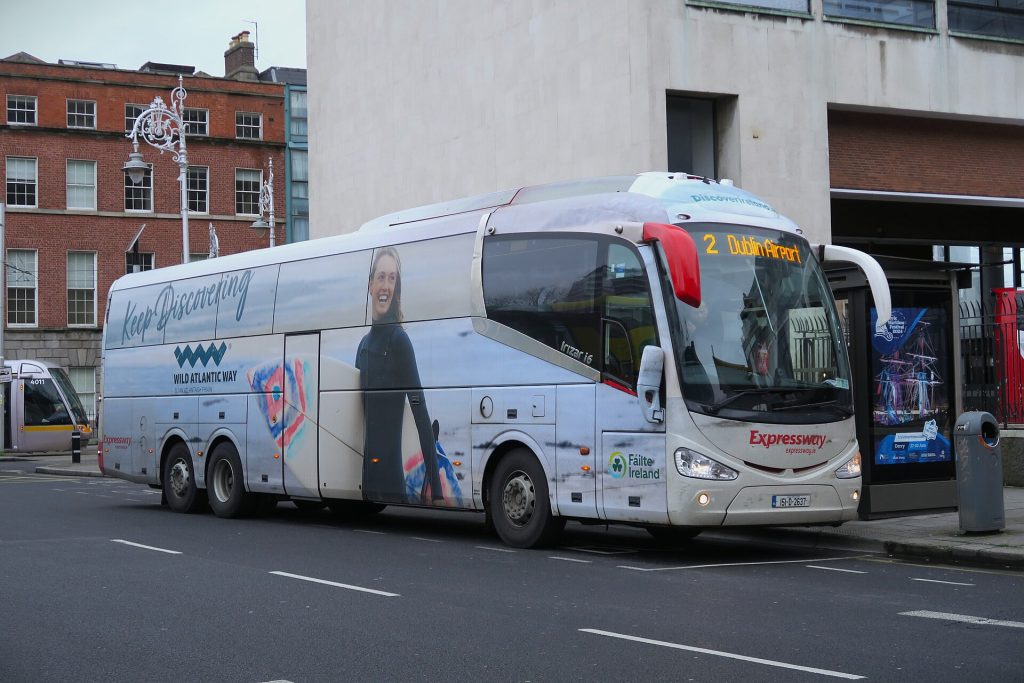
If you don’t want to drive, Ireland’s public transport is good. Buses and trains link cities and towns. Bus Éireann and Irish Rail offer tickets and passes for longer trips.
Public transport lets you relax and see the views. It’s perfect for those who want to unwind on their trip.
Guided Tours vs. Self-Guided Exploration
Choose between guided tours or exploring on your own. Tours give insights into Ireland’s history and culture. They’re great if you’re short on time or don’t want to plan.
Exploring by yourself lets you make your own itinerary. With a map and some planning, you can see Ireland at your pace.
Accommodation Guide for Your Week in Ireland
Ireland has many places to stay, from cheap hostels to fancy hotels. Picking the right spot is key to enjoying your trip.
Hotels and B&Bs: Where to Stay in Each Location
In Ireland, you can find hotels and B&Bs in many places. Dublin’s city center is great for seeing Trinity College and the Guinness Storehouse. For a homey feel, try B&Bs in Portobello or Rathmines.
In Galway, hotels near the center are close to Galway Cathedral and the Latin Quarter. Killarney’s hotels offer views of Killarney National Park.
Budget-Friendly Options
Travelers on a tight budget will find many affordable places in Ireland. Hostels are perfect for solo travelers or those wanting to meet others. They offer dorms and private rooms, and some have kitchens.
There are also budget hotels and guesthouses for a local vibe. Book early, as prices go up during busy times.
Luxury Accommodations for a Special Experience
For a fancy stay, Ireland’s top hotels and resorts are unmatched. Dublin’s Shelbourne or Four Seasons offer luxury and great locations.
In the countryside, castles or boutique hotels offer a unique stay. They have fine dining and personal service for a memorable trip.
Packing Essentials for Ireland's Unpredictable Weather
Packing for Ireland’s weather can be tricky. But with the right tips, you’ll be ready for your trip. Ireland’s climate is rainy and windy, so pack layers and waterproof items.
Clothing Recommendations by Season
Dressing in layers is key. This makes it easy to adjust to the weather. For spring and autumn, mix lightweight and warm clothes. Summer might be mild, but bring a waterproof jacket. Winters are cool and wet, so focus on warm, waterproof clothes.
Always pack a hat, gloves, and scarf. These can keep you warm. Also, bring comfortable, waterproof shoes for outdoor adventures.
Tech and Travel Gear You Shouldn't Forget
Don’t forget tech and travel gadgets for your Ireland trip. A waterproof phone case is essential for rainy photos. A portable charger is handy for long days out. Ireland uses Type G power sockets, so bring a universal adapter.
Other must-haves include a compact umbrella, a travel-sized first-aid kit, and a reusable water bottle. For outdoor activities, a waterproof backpack is great.
Staying Connected: SIM Cards and Wi-Fi Options
Staying connected is important for your trip. Ireland has good 4G and 3G networks. Consider a local SIM card or portable Wi-Fi hotspot for data. Many places offer free Wi-Fi, too.
If you’re with a group, think about renting a portable Wi-Fi hotspot. It’s cheaper than using your home network’s data.
Your 7-Day Ireland Itinerary at a Glance
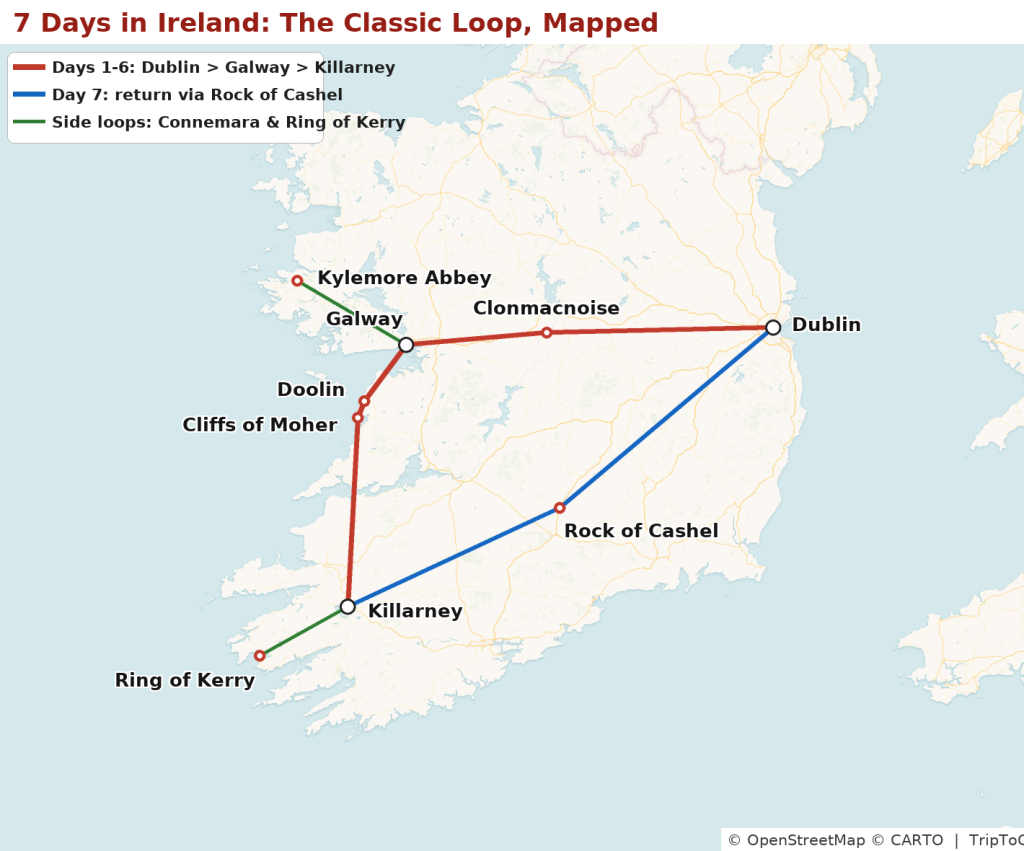
Here is the whole week in one view — the classic loop out west and back — before the day-by-day detail below.
| Day(s) | Base | Highlights |
|---|---|---|
| Days 1–2 | Dublin | Trinity College & Book of Kells, Dublin Castle, Guinness Storehouse, Temple Bar |
| Day 3 | Dublin → Galway | Cross-country drive with a stop at Clonmacnoise monastic site |
| Day 4 | Galway | Latin Quarter, then Connemara National Park & Kylemore Abbey |
| Day 5 | The Burren & Doolin | Cliffs of Moher, Burren limestone country, trad-music night in Doolin |
| Day 6 | Killarney | Killarney National Park, Muckross House, Ring of Kerry drive |
| Day 7 | Back to Dublin | Rock of Cashel en route, farewell dinner in Dublin |
✈️ TripToGo Travel Deals
Get notified about great travel deals
Hand-picked flight, hotel and destination deals, straight to your inbox. No spam, unsubscribe anytime.
🎉 Thank you for subscribing!
You’re all set — the best travel deals are on their way.
Planning the Route: Key Facts
This is a driving trip: rent the car at Dublin Airport on Day 3, not Day 1 — you don’t need (or want) a car in Dublin. Book an automatic early; they sell out and manuals are the default in Ireland.
Total driving: roughly 750 km / 465 miles for the full loop — no single leg over 3 hours. The west-coast sections follow the signposted Wild Atlantic Way.
Best time to go: May, June and September balance long days with manageable crowds — our best time to visit Ireland guide has the month-by-month detail.
Heritage sites: Clonmacnoise and the Rock of Cashel are run by Heritage Ireland (book Cashel ahead in summer). Off the Ring of Kerry sits Skellig Michael, Ireland’s island monastery World Heritage Site — boats from Portmagee, weather permitting, book months ahead.
Official info: entry requirements and events at Ireland.com (Tourism Ireland).
Day 1: Arriving in Dublin - Beginning Your Irish Journey
Make this Ireland loop yours
Our partner Voyada’s travel AI planner turns this itinerary into your booking-ready plan — flights, hotels, the driving legs and a real total cost for your dates — in about a minute, free.
Plan my vacation→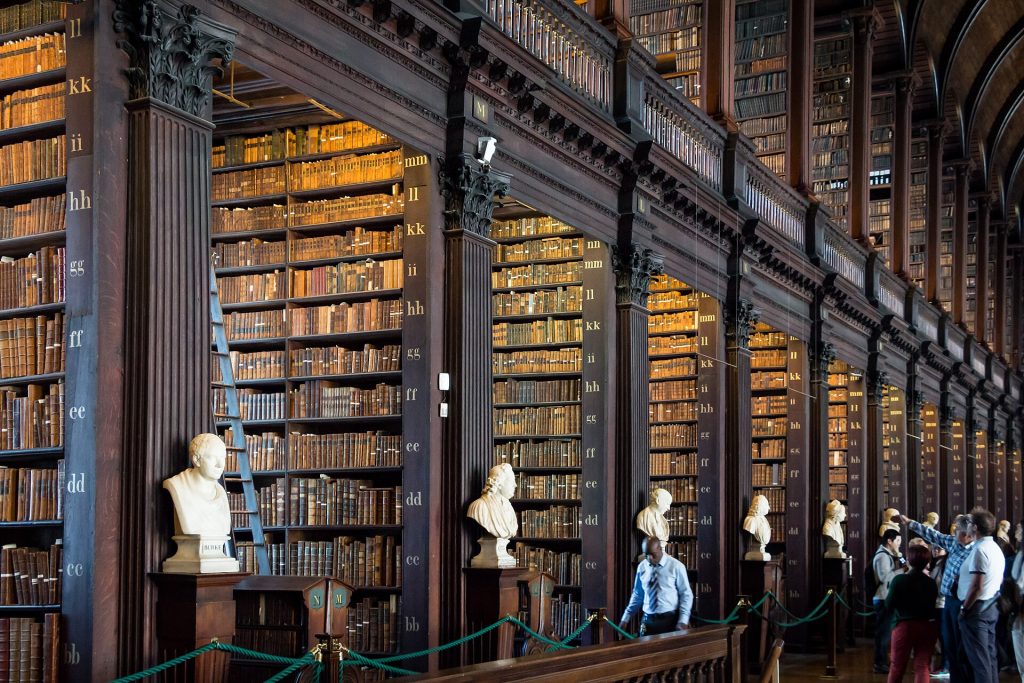
Arriving in Dublin starts an unforgettable week in Ireland. As you step off your flight, the excitement of your Irish adventure begins. Dublin, known for its friendly locals and rich history, is the perfect place to start your journey.
Navigating Dublin Airport and Transportation to City Center
When you arrive at Dublin Airport, you’ll need to get to the city center. Dublin Express (route 782) and Aircoach are the best options, taking about 30 minutes. Taxis are also available, but they cost more. For a cheaper option, take bus number 41 or 16, which takes around 45 minutes.
Afternoon Exploration: Trinity College and the Book of Kells
After checking into your hotel, visit Trinity College to see the famous Book of Kells. This ornately illustrated manuscript is a masterpiece of Celtic art. Take a stroll through the beautiful campus, exploring historic buildings and courtyards.
Evening Stroll Through Grafton Street and Dinner in St. Stephen's Green Area
In the evening, walk down Grafton Street, Dublin’s premier shopping destination. It’s lined with street performers and charming cafes. For dinner, head to the St. Stephen’s Green area, where you’ll find many restaurants serving traditional Irish cuisine. Enjoy a hearty meal and watch the locals enjoying the park.
As your first day in Dublin comes to a close, you’ve experienced the city’s culture, history, and hospitality. This sets the stage for a fantastic 7-day Irish adventure.
Day 2: Exploring Dublin's Historic Treasures
Dublin’s historic treasures await on Day 2 of your Irish adventure. As you explore the city’s iconic landmarks, you’ll uncover layers of history, culture, and entertainment that make Dublin so unique.
Morning at Dublin Castle and Christ Church Cathedral
Start your day at Dublin Castle, a 13th-century fortress with a rich history. Take a guided tour to see its State Apartments, Medieval Undercroft, and the Chapel Royal. Nearby, Christ Church Cathedral awaits. Founded in 1030, it has stunning stained-glass windows and an impressive crypt.
Afternoon at the Guinness Storehouse and Jameson Distillery
After lunch, visit the Guinness Storehouse, Ireland’s most popular attraction. Learn about brewing and enjoy a rooftop pint at the Gravity Bar. Or, visit the Jameson Distillery to learn about whiskey production and enjoy a tasting.
Evening in Temple Bar District: Music and Dining
As evening falls, head to the vibrant Temple Bar district. Known for its lively atmosphere, cobblestone streets, and eclectic mix of pubs, restaurants, and galleries, Temple Bar is the perfect place to experience Dublin’s nightlife. Enjoy traditional Irish music in one of the many pubs, dine at a cozy restaurant, or simply soak up the lively ambiance. Temple Bar is sure to leave a lasting impression on your Dublin adventure.
Day 3: Heading West - From Dublin to Galway
On Day 3, you’ll drive from Dublin to Galway. This journey is as beautiful as the places you’ll see.
Scenic Drive Through the Irish Countryside
The drive from Dublin to Galway is famous for its views. You’ll see Ireland’s hills, green landscapes, and small villages. Leaving Dublin, you’ll see the Irish countryside, a feast for the eyes.
Make sure to stop at charming spots along the way. Enjoy the fresh air and take in the views.
Stopping at Clonmacnoise Monastic Site
Clonmacnoise is a highlight of your trip. Founded in the 6th century, it’s a key historical site. See ancient churches, a cathedral, and grave slabs.
It’s a place of peace and history. You’ll feel the calm and learn about Ireland’s past.
Arriving in Galway: First Impressions and Evening Activities
Galway welcomes you with its lively vibe. It’s a city of culture and creativity. The streets are colorful, and the food is delicious.
Don’t miss the traditional Irish music in the pubs. Galway has lots to see, from the Latin Quarter to Salthill Promenade. Your first day here will be memorable.
After a day of driving, history, and culture, you’ll feel ready for more. Day 3 is a mix of experiences that will excite you for what’s next.
Day 4: Galway and the Wild Atlantic Way
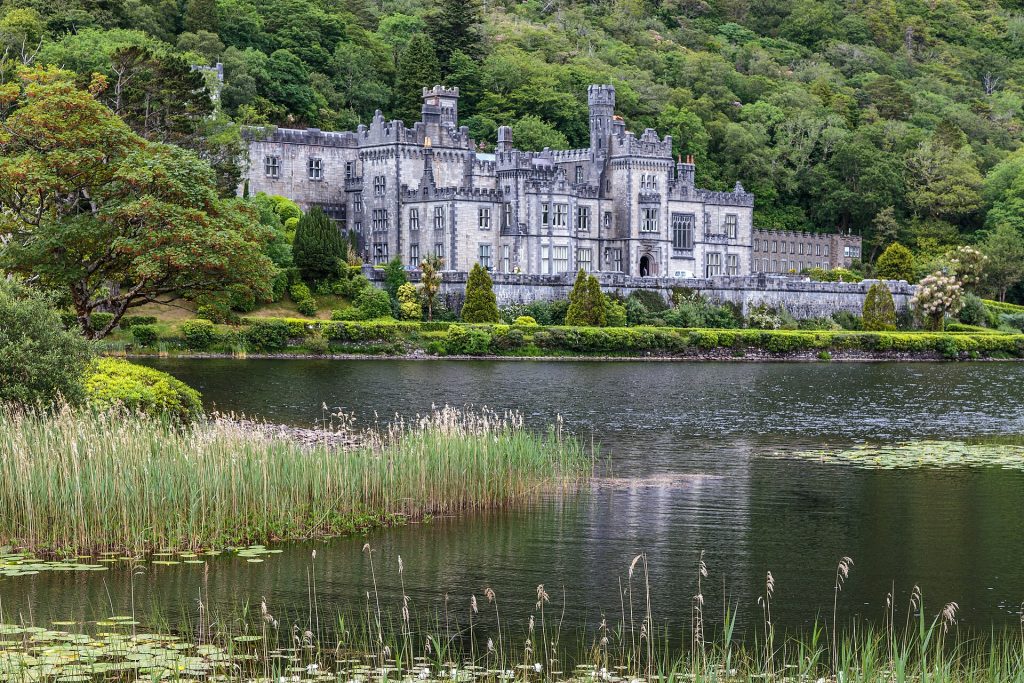
Day 4 in Galway is all about the Wild Atlantic Way. This city mixes old Irish culture with new life. It’s a key spot on your Ireland trip.
Morning Exploring Galway City's Colorful Streets
Begin by exploring Galway’s vibrant streets. You’ll find cool shops, cafes, and street acts. Check out the Galway City Museum to dive into the city’s history.
Afternoon Trip to Connemara National Park and Kylemore Abbey
After lunch, visit Connemara National Park. It’s full of wild landscapes and unique animals. Don’t miss the Connemara Pony Heritage Centre.
Then, go to Kylemore Abbey. It’s a beautiful castle turned abbey. Enjoy its gardens and calm vibe.
This day in Galway captures the Wild Atlantic Way’s spirit. It’s a day you won’t forget.
Evening in Galway's Vibrant Pub Scene: Live Music Recommendations
Evening brings Galway’s famous pubs to life. Tig Cóilí is a top spot for live music. Róisín Dubh also offers great music and fun.
Galway’s mix of culture, nature, and fun makes Day 4 special. It’s a key part of your Ireland adventure.
Day 5: The Majestic Cliffs of Moher and The Burren
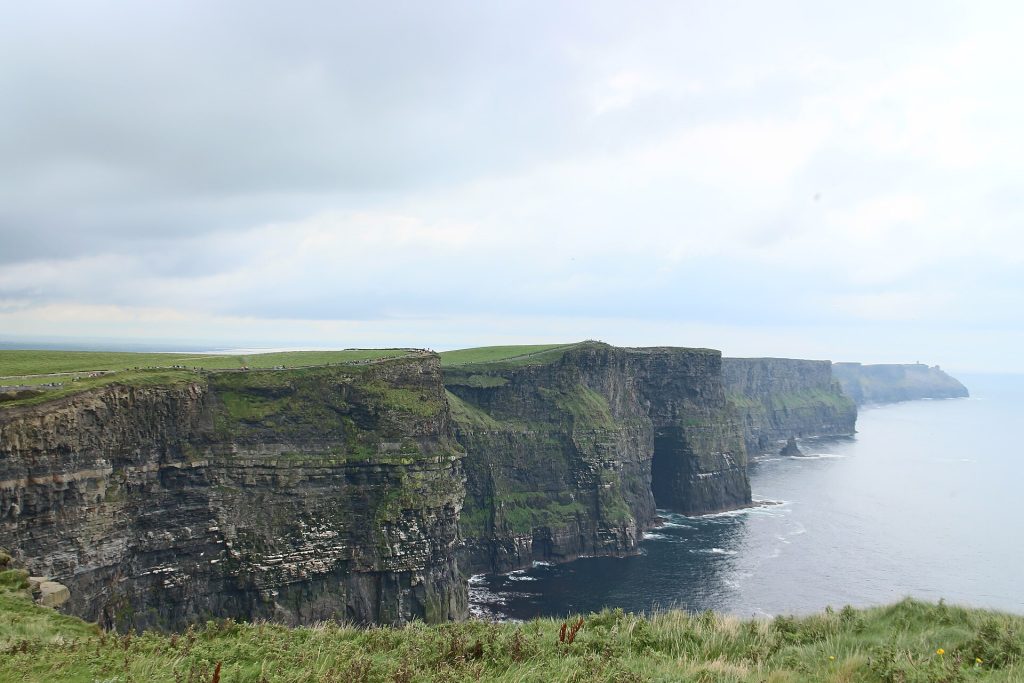
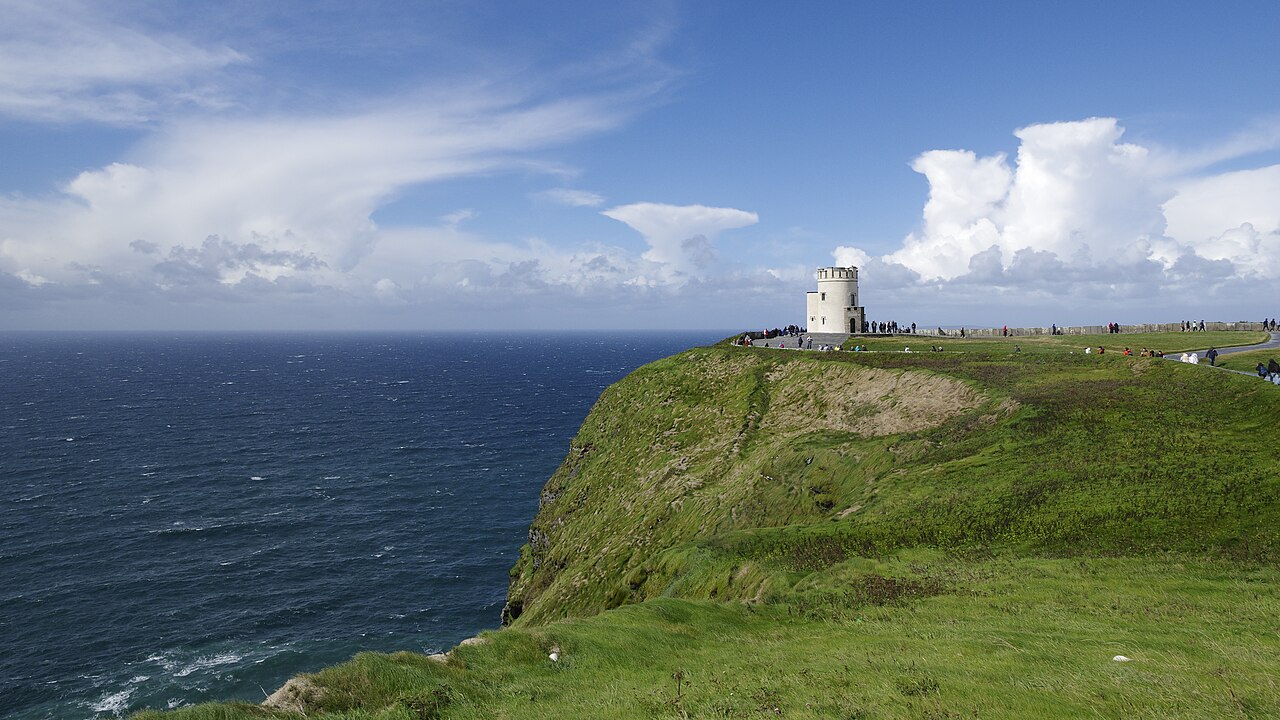
The fifth day of your trip to Ireland is all about experiencing the majestic beauty of the Cliffs of Moher and The Burren. You’ll be captivated by the sheer scale and natural beauty of these iconic attractions.
Journey to the Cliffs of Moher: Photography Tips and Best Viewpoints
The journey to the Cliffs of Moher is a scenic drive through Ireland’s rugged countryside. As you approach the cliffs, the anticipation builds. The first glimpse of the cliffs is breathtaking.
To capture the perfect shot, arrive at sunrise or sunset when the light is soft and golden. Don’t forget your camera and a sturdy tripod to stabilize your shots. The cliffs stand 702 feet tall, with dramatic views of the Atlantic Ocean and the Aran Islands.
Exploring The Burren's Unique Limestone Landscape
After the Cliffs of Moher, head to The Burren, a unique karst landscape. It’s teeming with flora and fauna. This vast, limestone expanse is home to a surprising variety of plant life.
Take a guided tour to uncover the secrets of this fascinating landscape. Enjoy the tranquility of this lesser-known gem.
Overnight in Doolin: Traditional Music Capital of Ireland
As the day comes to a close, head to Doolin, a charming coastal village. It’s renowned for its traditional Irish music sessions. Spend the evening soaking up the lively atmosphere in one of Doolin’s many pubs.
Enjoy local music, delicious Irish cuisine, and a warm welcome. It’s the perfect way to unwind after a day of exploring some of Ireland’s most spectacular landscapes.
As you settle into your accommodation, take a moment to appreciate the day’s adventures. Look forward to the experiences that tomorrow will bring on your Ireland itinerary.
Day 6: Killarney and the Ring of Kerry
Day 6 of our 7-day Irish adventure takes us to Killarney National Park and the famous Ring of Kerry. Killarney is known for its stunning beauty and lively vibe. It’s the perfect place to start our exploration.
Travel to Killarney National Park: Muckross House and Gardens
Our day starts with a trip to Killarney National Park. This park is filled with lakes, mountains, and forests. We’ll visit Muckross House and Gardens, a 19th-century estate that shows traditional Irish farming.
The gardens are a mix of different plants and are very peaceful. They are a dream for photographers.
Highlights of the Ring of Kerry Scenic Drive
The Ring of Kerry is a famous scenic drive in Ireland. It’s a 179-kilometer route that shows off Ireland’s most beautiful landscapes. We’ll see rugged coastlines, rolling hills, and small villages.
We’ll stop at viewpoints, ancient ruins, and maybe go for a short hike. This way, we can really enjoy the beauty around us.
Evening in Killarney Town: Dining and Entertainment
After a day of exploring, we head back to Killarney town. The evening is filled with traditional Irish food and fun entertainment. We’ll eat at a local restaurant, trying dishes that show off Ireland’s food heritage.
The night might also include a visit to a pub. There, we can enjoy live music and the friendly atmosphere that Killarney is famous for.
Ireland Itinerary 7 Days: Day 7 Return to Dublin via Rock of Cashel
As your 7-day Ireland tour ends, it’s time to head back to Dublin. But first, visit the Rock of Cashel, a stunning medieval site. This day is filled with history and a gentle goodbye to Ireland.
Morning Departure from Killarney
Start your day with an early leave from Killarney. The drive to the Rock of Cashel takes about 3 hours. It’s a chance to think about your week-long adventure.
Exploring the Rock of Cashel: Ireland's Most Spectacular Medieval Site
When you arrive at the Rock of Cashel, its grandeur will amaze you. It sits atop a limestone rock, showing Ireland’s rich past. Explore the ruins, like the 12th-century chapel and the Hall of the Vicars Choral.
The Rock of Cashel is more than old buildings. It’s a trip through Irish history. Don’t miss the Romanesque chapel and St. Patrick’s Cathedral. They highlight the site’s importance.
Final Evening in Dublin: Farewell Dinner Recommendations
After a day at the Rock of Cashel, head back to Dublin. For your last dinner, try The Brazen Head, Ireland’s oldest pub, or Chapter One for modern Irish food. These places offer unforgettable meals.
While you eat, think about your amazing Ireland trip. From Dublin’s lively streets to the countryside’s beauty, your farewell dinner celebrates your journey. It’s a time to cherish the memories from your 7-day Ireland tour.
Irish Cuisine: What to Eat During Your 7-Day Trip
Get ready to dive into Ireland’s rich food scene on your 7-day trip. Irish cuisine is a mix of traditional tastes, fresh ingredients, and new twists. You’ll find everything from hearty dishes to fresh seafood, making your dining experiences unforgettable.
Traditional Irish Dishes You Must Try
Irish food is all about comfort and flavor, using local ingredients. You should try Irish stew, a lamb or beef stew with potatoes and veggies. Also, don’t miss soda bread and fresh seafood from Ireland’s coast.
Other must-try dishes include colcannon, boxty, and bangers and mash. These authentic Irish dishes are a must during your 7-day journey.
Best Pubs and Restaurants in Each Location
Ireland’s pubs are famous for their warm welcomes, live music, and tasty food. Here are some top spots:
In Dublin, Brazen Head is Ireland’s oldest pub, serving traditional food in a lively setting. For something modern, try The Modern Pantry or The Winding Stair.
In Galway, McDonagh’s Seafood Bar offers the freshest seafood. The Quays is great for a Guinness and live music.
In Killarney, The Killarney Park Hotel’s restaurant serves local specialties. The Chart House is known for its seafood and views.
Food Tours and Culinary Experiences
Joining a food tour or culinary experience can deepen your Irish food knowledge. These tours visit local markets, producers, and hidden spots, showing Ireland’s food culture.
In Dublin, a food tour will take you to culinary hotspots. You’ll taste artisanal cheeses and craft beers. In Galway, a seafood tour teaches about fishing and offers fresh catches.
Visit a local farm or artisan producer for a unique experience. You’ll learn about traditional cooking and ingredients. These experiences are not just tasty but also connect you to Ireland’s food heritage.
Cultural Experiences to Enhance Your Ireland Journey
As you explore Ireland, dive into the country’s lively culture. Enjoy traditional music, festivals, and historical tours.
Where to Find the Best Traditional Irish Music Sessions
Ireland is famous for its traditional music sessions. You can find them in pubs and venues all over the country. In Dublin, the Temple Bar area is a top spot for live music. The Brazen Head is a great place to experience it.
In Galway, the Latin Quarter buzzes with music. You can find cozy pubs with impromptu sessions. Try to visit during the week to avoid the weekend crowds. If you play an instrument, feel free to join in; many sessions welcome newcomers.
Cultural Festivals and Events by Season
Ireland has many cultural festivals throughout the year. Each one gives a special look into Irish culture. In spring, the St. Patrick’s Festival in March is a big deal. It celebrates Irish heritage with parades and events.
Summer brings the Cork Midsummer Festival. It features music, theater, and street performances. July is the time for the Galway International Arts Festival. It showcases local and international art, music, and theater.
September brings the Dublin Fringe Festival. It’s one of Europe’s biggest fringe festivals. It offers a wide range of performances.
Literary and Historical Tours for History Buffs
Ireland has many tours for literature and history lovers. In Dublin, the Museum of Literature Ireland (MoLI) is a must-visit. It explores the lives and works of famous Irish writers like James Joyce and Oscar Wilde.
Historical tours take you to ancient sites like Clonmacnoise. There, you can learn about Ireland’s early Christian era. The Rock of Cashel is also a must-see for history buffs. It has stunning medieval architecture.
Budget Breakdown for 7 Days in Ireland
Planning a trip to Ireland is exciting, but knowing the costs is key for a stress-free trip. Ireland’s beautiful landscapes and rich culture can be affordable if you plan well.
Accommodation Costs by Category
Ireland has many places to stay, from hostels to luxury hotels. Prices vary. Here’s what you might pay:
- €20-€40 per night for a hostel dorm
- €60-€100 per night for a budget hotel or vacation rentals
- €120-€250 per night for a mid-range hotel
- €250+ per night for luxury accommodations
For a 7-day stay, budgeting €80-€150 per night for mid-range places is good. This totals €560-€1,050.
Transportation Expenses: Rental Cars vs. Public Transit
There are two ways to get around Ireland: rental cars or public transit. Rental cars are great for rural areas. Daily car rental costs €40-€60, plus fuel. For a week, expect to pay €300-€420, excluding fuel.
Public transit is cheaper, with a weekly Leap Card costing €40-€60. But it limits exploring remote areas.
Food, Activities, and Souvenirs: Managing Your Budget
Eating out in Ireland can be affordable or pricey. Meals cost €15-€25 per person. Budget €300-€500 for food for a week, depending on your choices.
Attractions and activities have different prices. Many sites are free or cheap, but some museums and tours cost €10-€20 per person. Budget €200-€300 for activities to enjoy a variety of experiences.
Souvenirs can add up. Set aside €100-€200 for them to stay within budget.
Breaking down these costs helps plan a trip to Ireland. It ensures a memorable trip without overspending.
Photography Guide: Capturing Ireland's Beauty
Ireland is a treasure trove for photographers, with its stunning coastlines and lively cities. On your 7-day trip, you’ll find many chances to take amazing photos.
Most Instagram-Worthy Locations on Your Route
Ireland’s path is filled with spots that will make your Instagram followers jealous. You’ll see the famous Cliffs of Moher and the lovely streets of Galway. Each place is perfect for your photography journey.
Don’t miss the Wild Atlantic Way, Trinity College in Dublin, and the Rock of Cashel. These are just a few of the many places you’ll find.
Tips for Capturing Stunning Photos
To get the best photos in Ireland, keep these tips in mind. Always be ready for the weather, use a polarizing filter, and try different angles. Early morning and late evening are the best times for light.
Drone Regulations and Aerial Photography Opportunities
Ireland is great for aerial photos, showing off its landscapes from above. But, you must follow drone rules.
Drones over 250g need to be registered with the Irish Aviation Authority. Also, respect privacy and don’t fly over people or private areas without permission.
Some top spots for aerial photos include the Cliffs of Moher, the Wild Atlantic Way, and Killarney National Park. These places offer incredible views.
Alternative Routes for Your Week in Ireland
Ireland is full of diverse landscapes and rich history. There are many alternative routes for those looking for something special. Exploring off the beaten path can show you Ireland’s true heart.
Northern Ireland Option: Belfast, Giant's Causeway, and Game of Thrones Locations
Spending a few days in Northern Ireland is a great idea — but apply for a UK Electronic Travel Authorisation first, which US visitors need even when crossing by road from the Republic. It’s full of history and natural beauty. In Belfast, you can see the Titanic Belfast museum and learn about the Troubles through murals.
Just a short drive away, the Giant’s Causeway is amazing. It has unique rock formations. If you love Game of Thrones, don’t miss the Dark Hedges and Castle Ward.
Southern Coast Focus: Cork, Kinsale, and Waterford
The southern coast of Ireland is also worth exploring. It has charming towns and beautiful landscapes. Cork, known as the Rebel City, has a vibrant culture and great food.
The fishing village of Kinsale is famous for its seafood and beautiful harbor. Waterford, further east, has a rich history. You can see its medieval old town and the House of Waterford Crystal.
Off-the-Beaten-Path Ireland: Hidden Gems and Local Secrets
Exploring Ireland’s hidden spots can be very rewarding. County Donegal is known for its wild beaches and mountains. The Aran Islands offer a look into traditional Irish life.
For a unique experience, visit the Skellig Islands. They are a UNESCO World Heritage Site and were once a monastic settlement.
Before you go: turn this guide into a day-by-day plan. Our partner Voyada is a free custom travel itinerary that builds the route with flights, hotels and a real total cost for your dates — in about a minute.
Create a travel itinerary →Ireland Road-Trip Tips: Driving, Weather, and Booking
A week in Ireland usually means a road trip — and a few realities of Irish roads and weather are worth knowing first.
- Drive on the left in a smaller car — rural roads and the Wild Atlantic Way are narrow, hedge-lined and sometimes single-track; take it slow.
- Pack for four seasons in a day: layers and a waterproof are non-negotiable year-round — the weather changes fast, and that’s part of the charm.
- Book the headline sights: the Cliffs of Moher, the Book of Kells in Dublin and Guinness Storehouse use timed tickets — reserve ahead in summer.
- Don’t over-drive: the Ring of Kerry, Dingle and Connemara deserve unhurried days — two or three bases beat a new town every night.
- Evenings are for the pub: trad-music sessions are the heart of Irish nightlife — ask locally which pub has music that night.
Ireland: Alternative Routes & Where to Stay
A week in Ireland is usually a road trip. Here are the best loops and bases.
- Classic loop: Dublin + Galway + the Ring of Kerry/Killarney + the Cliffs of Moher.
- Wild Atlantic Way focus: Galway–Clare–Kerry, with less time in Dublin.
- With more days: add Dingle, Connemara, or the north (the Giant’s Causeway and Belfast).
- Where to stay: Dublin (city centre), Galway (old town), Killarney (a Kerry base).
- Transport: rent a car (drive on the left) and use two or three bases rather than moving nightly.
Conclusion: Making the Most of Your Week in Ireland
This Ireland itinerary 7 days guide is your key to an amazing adventure. As you travel from Dublin to Galway, and then to Killarney, stay open to new experiences. The ultimate guide is here to help you, but feel free to explore and try local foods.
Every moment, from the Cliffs of Moher to traditional Irish music in Galway, is a chance to make memories. As your 7-day journey ends, cherish Ireland’s rich history, beautiful landscapes, and friendly people.
By following this guide, you’re set to see Ireland’s best. So, pack your bags, grab your camera, and get ready to fall in love with this incredible place.
FAQ
What is the best time to visit Ireland for a 7-day trip?
How do I get to Ireland from the US?
What travel documents do I need for Ireland?
Is it better to rent a car or use public transportation in Ireland?
What are the must-see attractions in Ireland for a 7-day itinerary?
How do I book accommodations in Ireland?
What should I pack for Ireland's unpredictable weather?
Are there any specific driving rules or tips for driving in Ireland?
Can I use my US credit cards and debit cards in Ireland?
What are some traditional Irish dishes I should try during my 7-day trip?
Are there any cultural festivals or events I should be aware of during my visit?
Can I bring my drone to Ireland for aerial photography?
What are some alternative routes or destinations for a 7-day Ireland trip?
How safe are Ireland's cliff paths and Atlantic beaches?
Treat both with respect. Cliff paths are fenced only in the main visitor areas, and at the Cliffs of Moher the ground beyond the barriers can be undercut or crumbling, so stay on the marked route, keep well back from the edge and never climb over a wall for a photograph. In the sea, swim only where lifeguards are on duty, which at Irish beaches generally means selected strands in the summer months, and stay between the red and yellow flags. Water Safety Ireland publishes beach guidance, and the Irish Coast Guard answers 112 or 999 for anyone in trouble on the water or the cliffs. Atlantic water stays cold and conditions change fast.
Do you tip in Ireland, and how much?
Tipping is welcome but modest, and nothing like the pressure of the United States. Check the bill first, because many restaurants add a service charge, particularly for larger tables, and where one appears you need not add anything. If it is not included, something around a tenth of the bill is a normal thank you for good service. You do not tip for drinks ordered at the pub counter, though leaving your change with table service is a kind gesture. Rounding up a taxi fare is usual, and a small note for a guide or for housekeeping is appreciated rather than expected. Nobody will chase you for more.