
Table of Contents
ToggleThe best things to do in Dubai range from riding up the world’s tallest building to crossing Dubai Creek in a wooden boat for a single dirham. In one trip you can watch the Dubai Fountain at the foot of the Burj Khalifa, race over red dunes on a desert safari, haggle in the Gold Souk, swim off a public beach at sunset and ski on real snow inside a shopping mall.
This guide ranks the 25 top things to do in Dubai, grouped by area: Downtown, Old Dubai and the creek, the desert, the coast from Palm Jumeirah to Dubai Marina, family and seasonal attractions, food and nightlife, and two day trips. Each entry gives a practical detail you need to plan it, such as a price, a show time or a booking tip. Prices were checked on official sites in November 2026.
After the list you’ll find picks by type of trip, sample plans for one day, three days and a layover, the best time to visit, how to get around on the Dubai Metro, where to stay, free and budget options, and the local rules worth knowing before you land.
✈️ TripToGo Travel Deals
Get notified about great travel deals
Hand-picked flight, hotel and destination deals, straight to your inbox. No spam, unsubscribe anytime.
🎉 Thank you for subscribing!
You’re all set — the best travel deals are on their way.
Key Takeaways
- Book a timed At the Top ticket for the Burj Khalifa (levels 124 and 125, or 148 for the premium deck); late-afternoon slots that run into sunset sell out first.
- The Dubai Fountain is free: evening shows run every 30 minutes from 6pm to 11pm, plus two afternoon shows.
- Old Dubai is the cheapest half-day in the city: Al Fahidi is free to wander and the traditional abra across Dubai Creek costs AED 1.
- Seasonal favourites Global Village and Dubai Miracle Garden open from October to May; the Museum of the Future closed in September 2026 for a revamp and plans to reopen in early 2027.
- Visit from November to March for the best weather; summer regularly tops 40°C/104°F.
- The UAE weekend is Saturday and Sunday; dress modestly away from the beach and drink only in licensed venues.
The 25 Best Things to Do in Dubai at a Glance
All 25 entries with their area, the standard adult cost and the best time to go. “Free” means no entry charge. Prices are in UAE dirhams (AED 1 is about US$0.27) and were checked on official sites in November 2026.
| # | Thing to do | Area | Cost (adult) | Best time |
|---|---|---|---|---|
| 1 | Burj Khalifa (At the Top) | Downtown | Paid, timed ticket | Late afternoon into sunset |
| 2 | Dubai Mall and Dubai Aquarium | Downtown | Mall free; aquarium tunnel paid | Any time; ideal in the heat |
| 3 | Dubai Fountain | Downtown | Free | Every 30 min, 6pm–11pm |
| 4 | Dubai Frame | Zabeel Park | AED 50 (child AED 20) | Morning or sunset |
| 5 | Al Fahidi (Bastakiya) | Bur Dubai | Free | Morning |
| 6 | Abra across Dubai Creek | Bur Dubai–Deira | AED 1 | Late afternoon |
| 7 | Gold Souk and Spice Souk | Deira | Free to browse | Evening |
| 8 | Jumeirah Mosque visit | Jumeirah | Guided visit fee | Morning, Sat–Thu |
| 9 | Al Shindagha and Etihad Museum | Bur Dubai / Jumeirah | Etihad Museum AED 25 | Midday (indoors) |
| 10 | Alserkal Avenue | Al Quoz | Free galleries | Weekday afternoon |
| 11 | Desert safari | Desert outside the city | Paid tour | Afternoon to night, Oct–Apr |
| 12 | Hot air balloon or falconry | Desert | Paid tour | Sunrise |
| 13 | Palm Jumeirah and Atlantis | Palm Jumeirah | Boardwalk free; The View paid | Daytime and sunset |
| 14 | Burj Al Arab and Souk Madinat Jumeirah | Umm Suqeim | Souk free to browse | Sunset |
| 15 | Beaches: Kite Beach, JBR, Sunset Beach | Jumeirah coast | Free | Morning, sunset or night swim |
| 16 | Dubai Marina and a dhow cruise | Dubai Marina | Walk free; cruises paid | Evening |
| 17 | Skydiving, XLine and Deep Dive Dubai | Palm, Marina, Nad Al Sheba | Paid, book ahead | Morning |
| 18 | Ski Dubai | Mall of the Emirates | Paid | Any time (indoors) |
| 19 | Theme parks | Dubailand / Jebel Ali | Paid | Weekdays |
| 20 | Global Village | Dubailand | AED 25 Mon–Thu, AED 30 any day | Evenings, Oct–May |
| 21 | Dubai Miracle Garden | Al Barsha South | AED 105 (child AED 84) | Morning, Oct–May |
| 22 | Brunch and Deira street food | Citywide / Deira | Varies | Weekend lunchtime |
| 23 | Dubai after dark | Citywide | Mostly free | After sunset |
| 24 | Hatta | Hajar Mountains | Free; kayak hire paid | Oct–Apr, early start |
| 25 | Abu Dhabi and Al Ain day trip | Abu Dhabi emirate | Grand Mosque free (book online) | Full day |
Planning a Dubai trip?
Our partner Voyada’s trip builder builds a day-by-day plan with flights, hotels and a real total cost for your dates — in about a minute, free.
Plan trip with AI →Downtown Dubai: Burj Khalifa, Dubai Mall and the Fountain
Downtown Dubai packs the city’s headline sights into a short walk: the Burj Khalifa, the Dubai Mall and the fountain on Burj Lake, with the Dubai Frame a few Metro stops north. Burj Khalifa/Dubai Mall station on the Metro Red Line connects to the mall by a covered walkway, so you can do the whole area without a taxi.
1. Ride Up the Burj Khalifa to At the Top
At 828 metres (2,717 ft), the Burj Khalifa is the tallest building in the world, and its observation decks are the city’s most popular ticket. Standard At the Top tickets cover levels 124 and 125; At the Top SKY adds the 148th-floor deck with a lounge and costs considerably more. Tickets are timed and priced by slot, and the late-afternoon slots that run into sunset sell out days ahead in winter, so book online before you fly. Allow about 90 minutes, and pick a clear day: dust haze can flatten the view in summer.
2. Explore the Dubai Mall and Dubai Aquarium
The Dubai Mall at the foot of the tower is a sight in its own right, with more than 1,200 shops, an Olympic-size ice rink and the Dubai Aquarium & Underwater Zoo. You can see the aquarium’s 10-million-litre tank, home to sharks and rays, free through the giant viewing panel on the ground floor; a paid ticket adds the walk-through tunnel and the Underwater Zoo upstairs. Entry to the mall is free, it stays open late, and on hot afternoons it is the coolest place in Downtown to spend a few hours.
3. Watch the Dubai Fountain Show
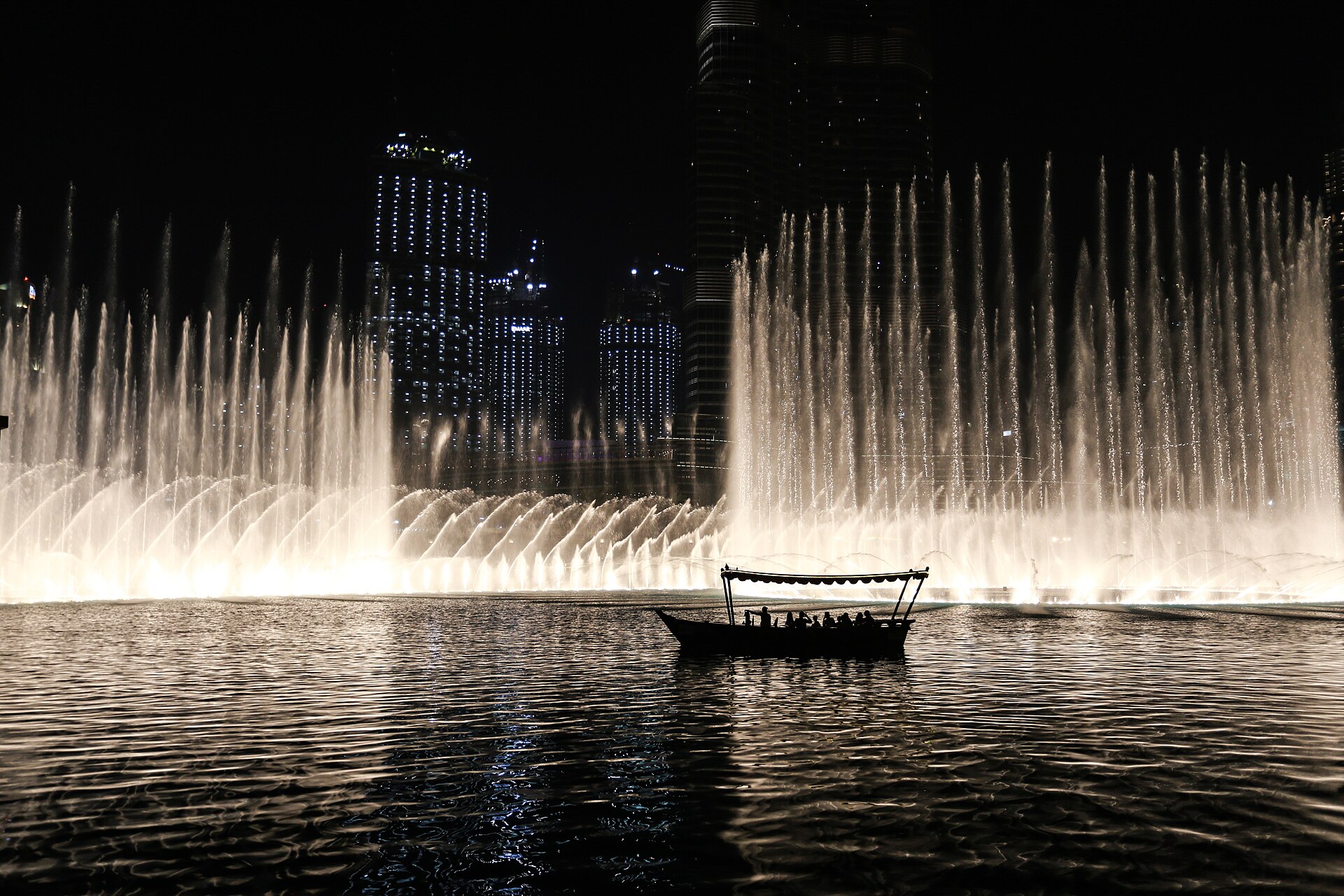
The Dubai Fountain on the 30-acre Burj Lake performs free shows set to music and light. Evening shows run every 30 minutes from 6pm to 11pm daily, with afternoon shows at 1pm and 1:30pm from Saturday to Thursday and at 2pm and 2:30pm on Fridays. The waterfront promenade outside the Dubai Mall and the bridge to Souk Al Bahar give the best free views; for a closer look you can pay to walk the boardwalk over the lake or take a short abra ride on it.
4. See Old and New Dubai from the Dubai Frame
The giant gold picture frame in Zabeel Park lines up the old city on one side with the skyscrapers of Sheikh Zayed Road on the other. A glass-floored bridge links its two towers at the top, and galleries cover Dubai’s past, present and an imagined future. The Dubai Frame opens daily from 8am to 9pm; tickets cost AED 50 for adults and AED 20 for children aged 3 to 12, and under-3s go free. Use Gate 4 of Zabeel Park; Al Jafiliya is the nearest Metro station.
Back on Sheikh Zayed Road, beside Emirates Towers Metro station, the ring-shaped Museum of the Future closed in September 2026 for a full revamp, with new exhibitions planned for early 2027. Until it reopens, its facade wrapped in Arabic calligraphy is still worth a photo from the street.
Old Dubai: Al Fahidi, the Souks and Dubai Creek
This is the Dubai old town, split by Dubai Creek: Bur Dubai on the south bank, with the Al Fahidi and Al Shindagha heritage districts, and Deira on the north bank, with the Gold and Spice Souks. Together they make the best half-day in the city for almost no money. Go in the morning or after 4pm in the warmer months, wear comfortable shoes and carry small notes for the abra and the souks.
5. Wander the Al Fahidi Historical Neighbourhood (Bastakiya)
Al Fahidi, still widely called Bastakiya, is a restored maze of sand-coloured courtyard houses topped with wind towers, the traditional form of air conditioning. Its lanes hold small galleries, cafes, the Coffee Museum and the Sheikh Mohammed Centre for Cultural Understanding at House 26, which hosts Emirati breakfasts where a local host answers questions about customs and faith. Walking the district is free.
On its edge stands Al Fahidi Fort, built in 1787 and the emirate’s oldest surviving structure. It closed for a long restoration, and the former Dubai Museum inside is being remade as a new museum that Dubai’s government had scheduled to open in the first half of 2026, so check whether it has reopened before you plan around it.
6. Cross Dubai Creek by Abra
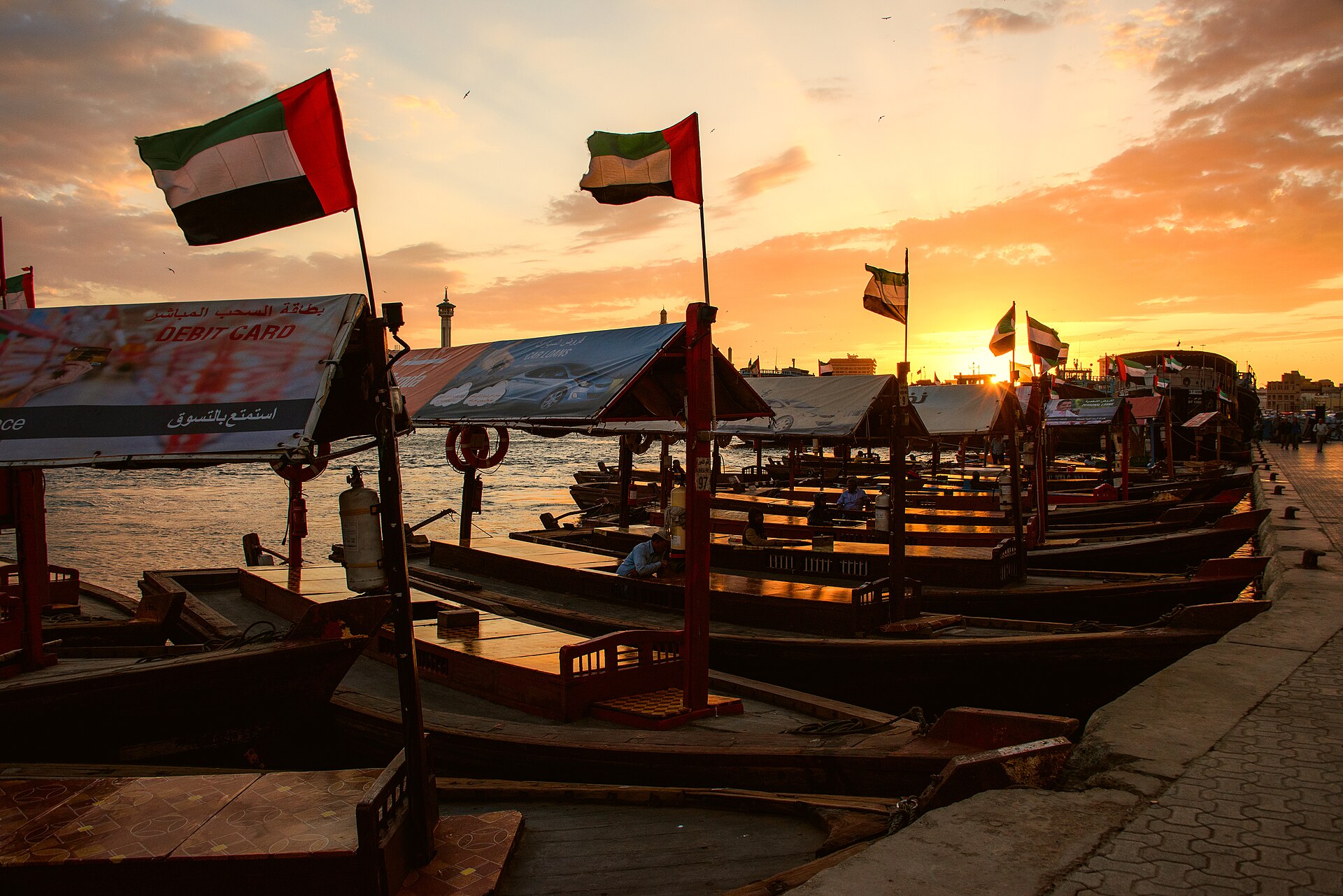
The classic Dubai experience costs one dirham. Wooden abra water taxis shuttle between the Bur Dubai and Deira Old Souq stations all day, and the fare on the traditional motorised abra is AED 1 per person, paid in cash. The crossing takes only a few minutes, but it gives you the best view of the creek’s dhows, wind towers and minarets. The RTA’s heritage abra routes linking Al Seef, Al Fahidi, Deira Old Souq and Baniyas cost AED 2, and a private abra charter is AED 120 an hour, a good-value sunset cruise for a family or small group.
7. Haggle in the Gold Souk and Spice Souk
Step off the abra in Deira and you are at the Spice Souk, a few covered lanes of sacks piled with saffron, dried limes, frankincense and dates. A few minutes’ walk away, the Gold Souk glitters with hundreds of jewellery shops. Gold is sold by weight at the day’s rate plus a making charge, and it is the making charge, not the gold price, that is open to bargaining, so compare a few shops before you buy. Browsing is free, and the lanes are liveliest in the evening.
8. Take a Guided Visit to Jumeirah Mosque
The white-stone Jumeirah Mosque is one of the few mosques in Dubai open to non-Muslims, and the guided visits run by the Sheikh Mohammed Centre for Cultural Understanding (SMCCU), under its motto “Open Doors. Open Minds.”, are one of the most rewarding hours you can spend in the city. You register at the majlis opposite the mosque for Arabic coffee, tea and a light breakfast, then go inside for a frank explanation of prayer and Islamic practice, with time for any question. Visits run in the morning from Saturday to Thursday; cover arms and legs, and women should bring a scarf for their hair.
9. Learn Dubai's Story at Al Shindagha and the Etihad Museum
Where the creek meets the sea, the Al Shindagha Museum fills a row of restored courtyard houses with the story of the creek, pearl diving and trade, and opens daily from 10am to 8pm. For the modern chapter, the Etihad Museum in Jumeirah tells how the UAE was founded in 1971, beside Union House, where the federation was declared. Under Dubai’s official ticket schedule, adult entry to the Etihad Museum is AED 25, and children under five go free. Both are air-conditioned, which makes them good midday stops.
10. Browse the Galleries of Alserkal Avenue
In the industrial district of Al Quoz, Alserkal Avenue turned a block of warehouses into Dubai’s main contemporary arts district. Its galleries show artists from the Middle East, South Asia and beyond, alongside design studios, specialty coffee roasters, the independent Cinema Akil and a programme of talks and performances. Gallery entry is free, but hours vary by gallery, so check before you go and plan a weekday afternoon. It is not close to a Metro station, so take a taxi.
Desert Adventures
11. Go on a Desert Safari
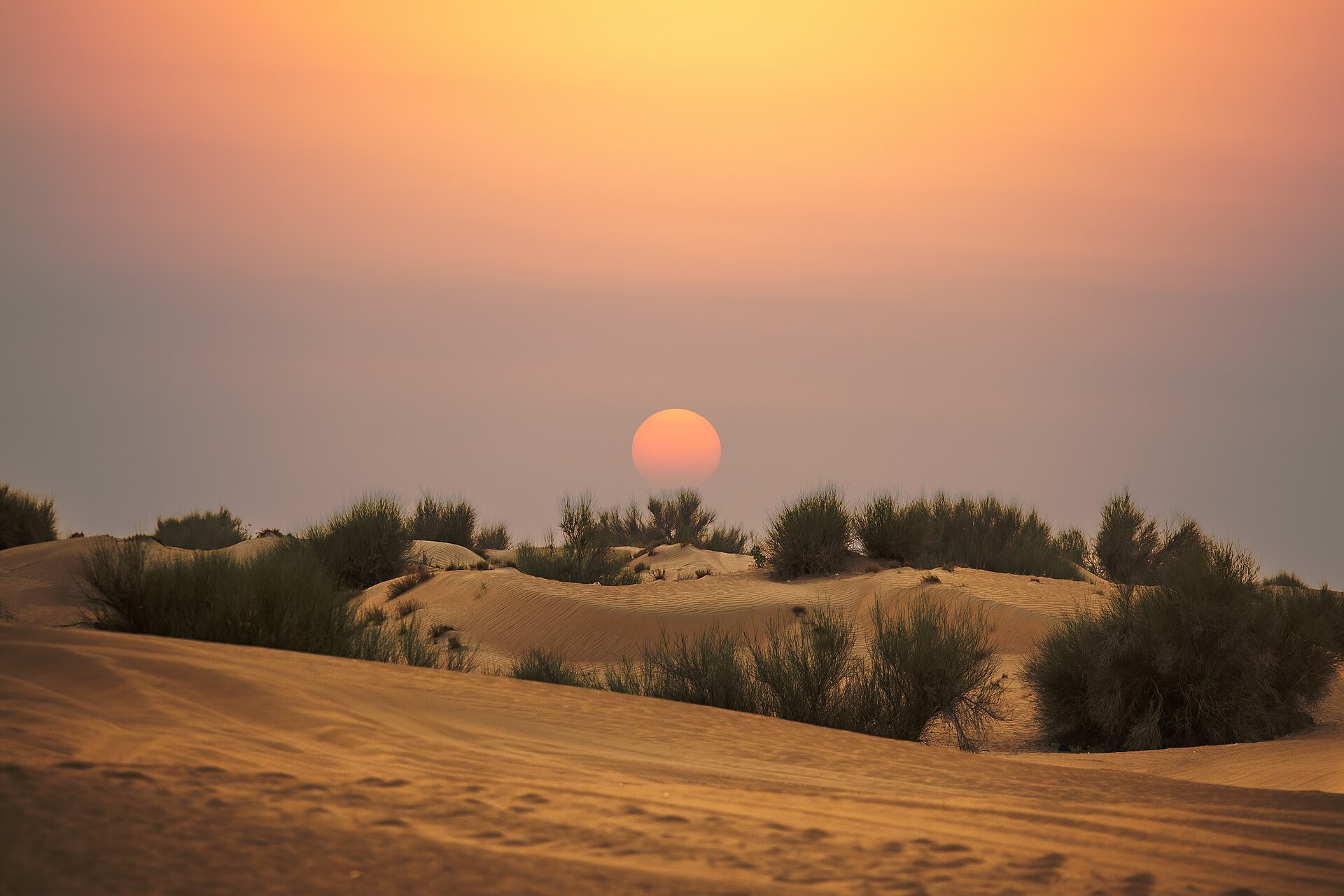
For many visitors the desert safari is the highlight of the trip. A classic evening safari collects you from your hotel in the afternoon and drives out to the red dunes beyond the city for 4×4 dune-bashing, sandboarding and a short camel ride as the sun goes down. The night ends at a Bedouin-style camp with a barbecue dinner, henna, shisha and shows under the stars. Prices vary widely with group size and inclusions, so read exactly what is included and choose an operator licensed by Dubai’s Department of Economy and Tourism.
Variations are worth knowing. Morning safaris swap dinner for quieter dunes and cooler air, and overnight trips add a night in a tent or a glamping camp with sunrise over the sand. Skip the dune-bashing if you’re pregnant, have back or heart problems, or travel with toddlers: a camel-and-camp evening without the 4×4 run suits them better. Safaris run all year, but October to April is far more comfortable.
12. Take a Sunrise Balloon Flight or Meet the Falcons
For a calmer desert morning, a hot air balloon flight lifts off before dawn so you drift over the dunes as the sun rises, often with oryx or gazelles below and breakfast at a camp afterwards. Flights depend on the wind and are cancelled in poor conditions, so book one of the first days of your trip to leave room for a backup. Falconry is the other desert tradition to see: many morning tours and desert camps include a falcon display, where handlers explain how Emiratis have hunted with the birds for generations.
The Coast: Palm Jumeirah, Beaches and Dubai Marina
The coast is where Dubai relaxes: free public beaches, the man-made Palm Jumeirah, the sail of the Burj Al Arab and the yacht-lined Dubai Marina. The Dubai Tram links the Marina and JBR with the Palm Monorail, and the Metro Red Line runs parallel a few blocks inland.
13. Explore Palm Jumeirah and Atlantis
Seen from above, Palm Jumeirah is a palm tree of sand: a trunk, fronds lined with villas and a crescent-shaped breakwater. Ride the Palm Monorail down the trunk to the crescent, where the Atlantis resort houses the Aquaventure waterpark and The Lost Chambers aquarium. For the full shape of the island, The View at The Palm has a 360-degree deck on level 52 of The Palm Tower, 240 metres above sea level. Atlantis The Royal, the island’s other landmark hotel, is the place for a splurge dinner, and the boardwalk along the crescent makes a free sunset walk with skyline views.
14. See the Burj Al Arab and Souk Madinat Jumeirah
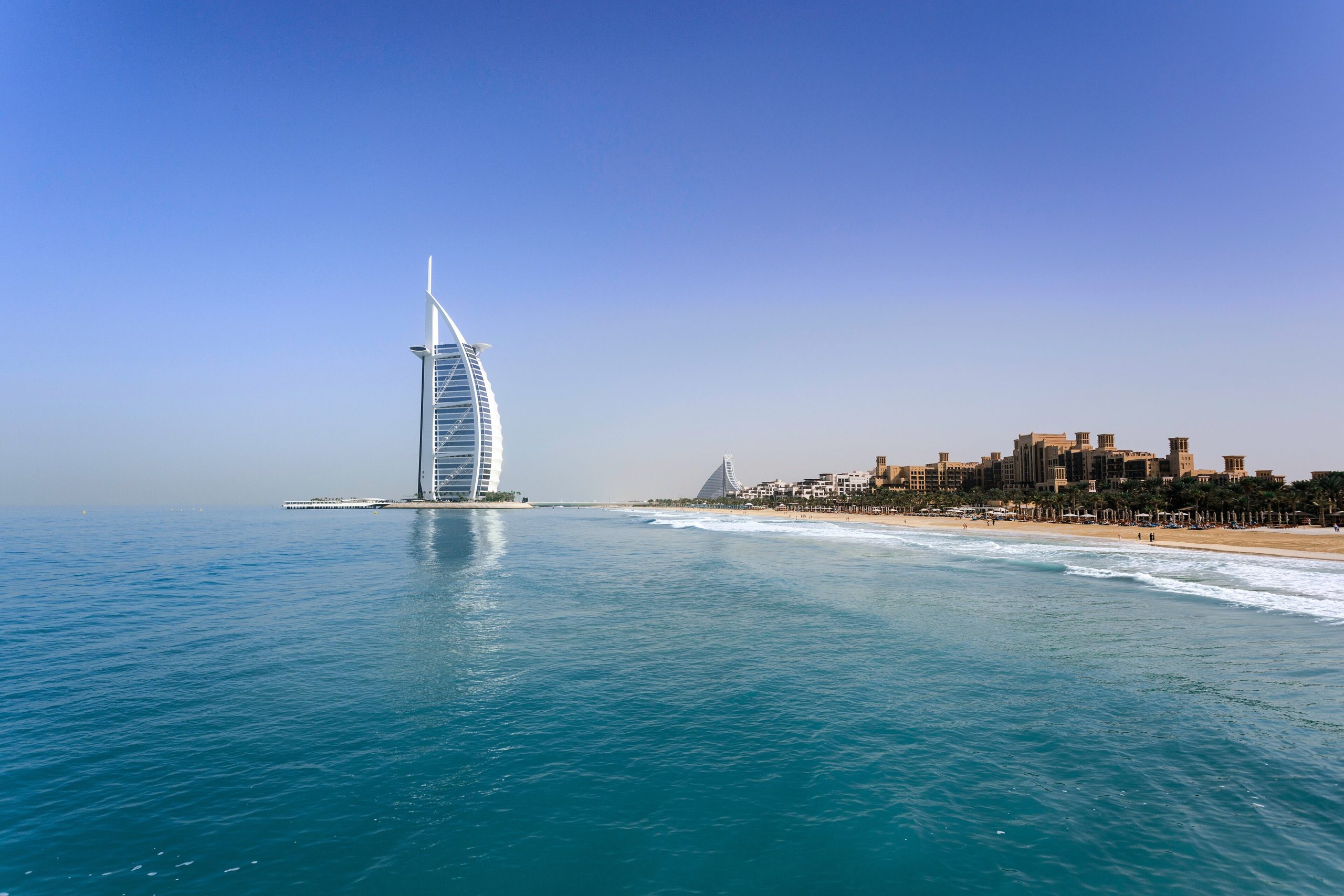
The sail-shaped Burj Al Arab stands on its own island off Umm Suqeim, and the best free view is from the sand at Sunset Beach. To get closer, walk through Madinat Jumeirah, a resort built like an Arabian town with wind towers and canals. Its Souk Madinat Jumeirah is free to browse, and its waterfront restaurants look across the water to the Burj Al Arab, an easy choice for a romantic dinner. Non-guests can enter the Burj Al Arab itself only with a restaurant booking or a paid guided tour.
15. Spend a Day on Dubai’s Beaches
Dubai’s public beaches are free, clean and well equipped. Kite Beach has a long running track, water sports and cafes with Burj Al Arab views; JBR, the beach in front of Jumeirah Beach Residence, adds the cafes and shops of The Walk; and Sunset Beach in Umm Suqeim is the classic spot for Burj Al Arab photos. You can even swim after dark: Dubai Municipality opened 800-metre night-swimming beaches at Jumeirah 2, Jumeirah 3 and Umm Suqeim 1, lit from sunset to sunrise with lifeguards on duty. Swim only in the marked zones, and keep swimwear for the beach.
16. Stroll Dubai Marina and Take a Dhow Cruise
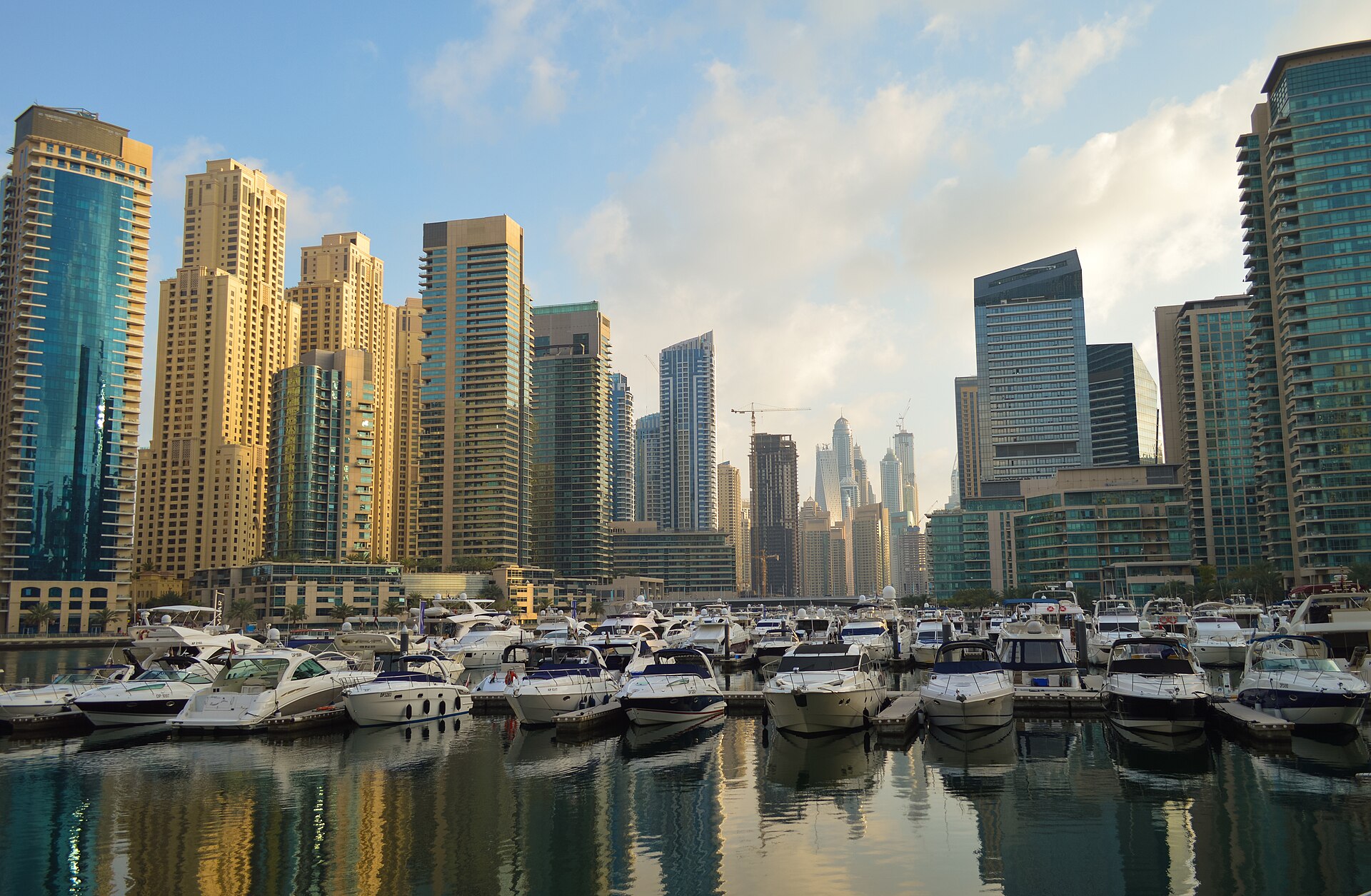
Dubai Marina is a canal lined with towers and yachts, and its waterfront promenade is busiest in the evening, when the restaurants fill and the towers light up. The best way to see it is from the water: a dhow cruise on a converted wooden trading boat, usually with a buffet dinner and about two hours afloat, or a shorter boat tour. On Dubai Creek, dhow dinner cruises give a more traditional backdrop of souks and minarets. Nearby, Dubai Harbour and Bluewaters Island add waterfront promenades with views back to the Marina skyline.
17. Get Your Adrenaline Fix: Skydiving, XLine and Deep Dive Dubai
Dubai sells thrills at every altitude. Tandem skydives over Palm Jumeirah are among the most famous jumps in the world, so book well ahead for the cool season. XLine Dubai Marina sends you down one of the longest urban zip lines anywhere, flying face-first between the Marina towers. Underwater, Deep Dive Dubai in Nad Al Sheba holds the Guinness World Record for the deepest swimming pool for diving, at 60 metres, with a flooded sunken city to explore on snorkel, scuba or a try-dive that needs no certification. For views without the jump, Sky Views Dubai beside the Burj Khalifa adds a glass slide and an edge walk high above Downtown.
Family Fun and Seasonal Favourites
Most things to do in Dubai with kids are built to beat the heat, so they work all year. Pick one big ticket per day, keep outdoor time for early morning and evening, and save the outdoor seasonal attractions below for the cooler months between October and May. For more inspiration, see these family vacation ideas, and if you’re flying long-haul with an infant, read up on how to travel with a baby.
18. Ski Real Snow at Ski Dubai
Inside Mall of the Emirates, Ski Dubai keeps real snow below freezing all year on an indoor slope with several runs, a chairlift and a snow park with sled runs and an ice cave. Beginners can book lessons, non-skiers can buy a snow-park pass, and the penguin encounters are a hit with children. Slope tickets include a jacket, trousers, boots and skis or a snowboard, but bring your own gloves and hat or buy them there. Mall of the Emirates station on the Metro Red Line connects straight to the mall.
19. Spend a Day at the Theme Parks
IMG Worlds of Adventure is a vast indoor theme park on Sheikh Mohammed Bin Zayed Road, with Marvel and Cartoon Network zones and a dinosaur world, all air-conditioned, which makes it the best summer pick. Outdoors, Dubai Parks and Resorts near Jebel Ali groups Motiongate, with Hollywood film-themed rides, and Legoland Dubai with its water park, both best kept for the cooler months. Weekdays outside school holidays bring the shortest queues, and combination tickets usually beat paying park by park.
20. Eat Your Way Around Global Village
Global Village is a seasonal open-air park where pavilions representing more than 90 cultures sell street food, crafts and souvenirs, with stage shows, fireworks and a funfair. The 2026–27 season runs from 14 October 2026 to May 2027, opening at 4pm daily and closing at midnight from Sunday to Wednesday and at 1am from Thursday to Saturday. Tickets cost AED 25 from Monday to Thursday or AED 30 for an any-day ticket; children under 3 and over-65s enter free, and rides cost extra. Tuesdays are reserved for women and families, except on public holidays.
21. Walk Through Dubai Miracle Garden
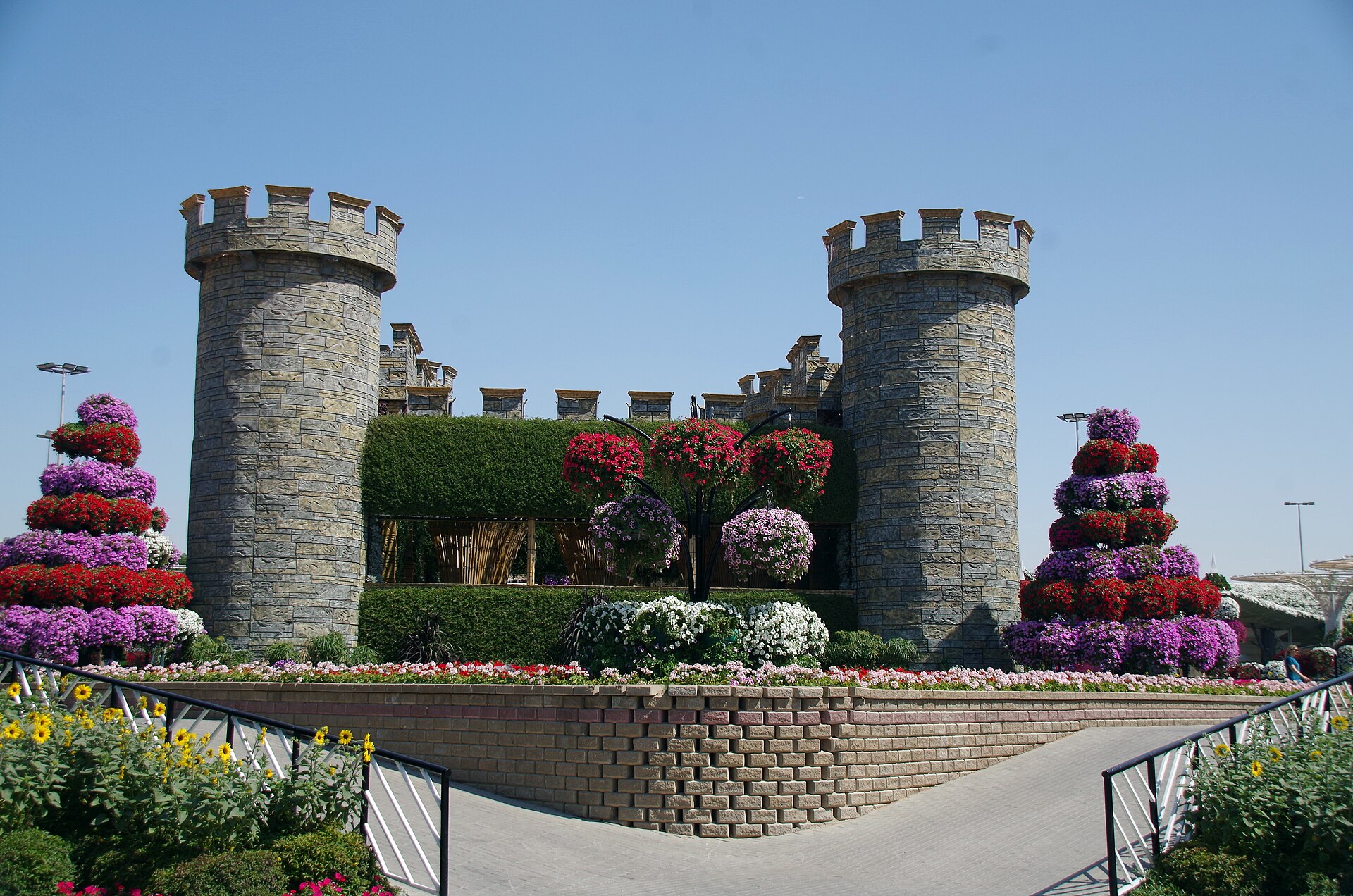
In Al Barsha South, Dubai Miracle Garden arranges more than 200 million flowers each season into hearts, castles, arches and a full-size flower-covered airliner. Season 15 runs from 8 October 2026 to 31 May 2027, open daily from 9am to 9pm; tickets cost AED 105 for adults and AED 84 for children aged 3 to 12, and the Butterfly Garden next door is a paid add-on. Go early or near sunset to avoid the midday glare, and take the Metro to Mall of the Emirates, then a taxi or the seasonal bus 105.
Food and Nightlife
22. Join a Weekend Brunch and Eat Your Way Through Deira
Dubai’s weekend brunch is an institution: hotel restaurants lay on lavish buffets or sharing menus, often with drinks packages, from around midday on Saturdays and, at many venues, Fridays and Sundays too. For the other end of the scale, head to Deira and Al Rigga, where Emirati, Iranian, Indian, Pakistani and Lebanese cafes serve shawarma, biryani, grilled fish and fresh juice for a fraction of hotel prices. Book brunch tables ahead in winter, and remember that alcohol is served only in licensed hotels and venues, where dress codes lean smart in the evening.
23. See Dubai After Dark
The best things to do in Dubai at night start at sunset, when the heat breaks. Watch the Dubai Fountain’s evening shows every half hour from 6pm, go up the Burj Khalifa for the city lights, or take a dhow dinner cruise on Dubai Creek or Dubai Marina. Global Village and the souks stay busy until late, rooftop bars along Sheikh Zayed Road and the Marina pour sundowners, and in the cooler months couples can book a desert dinner under the stars. Much of the city keeps going past midnight, especially on Friday and Saturday nights.
Day Trips from Dubai: Hatta and Abu Dhabi
24. Kayak and Hike in Hatta
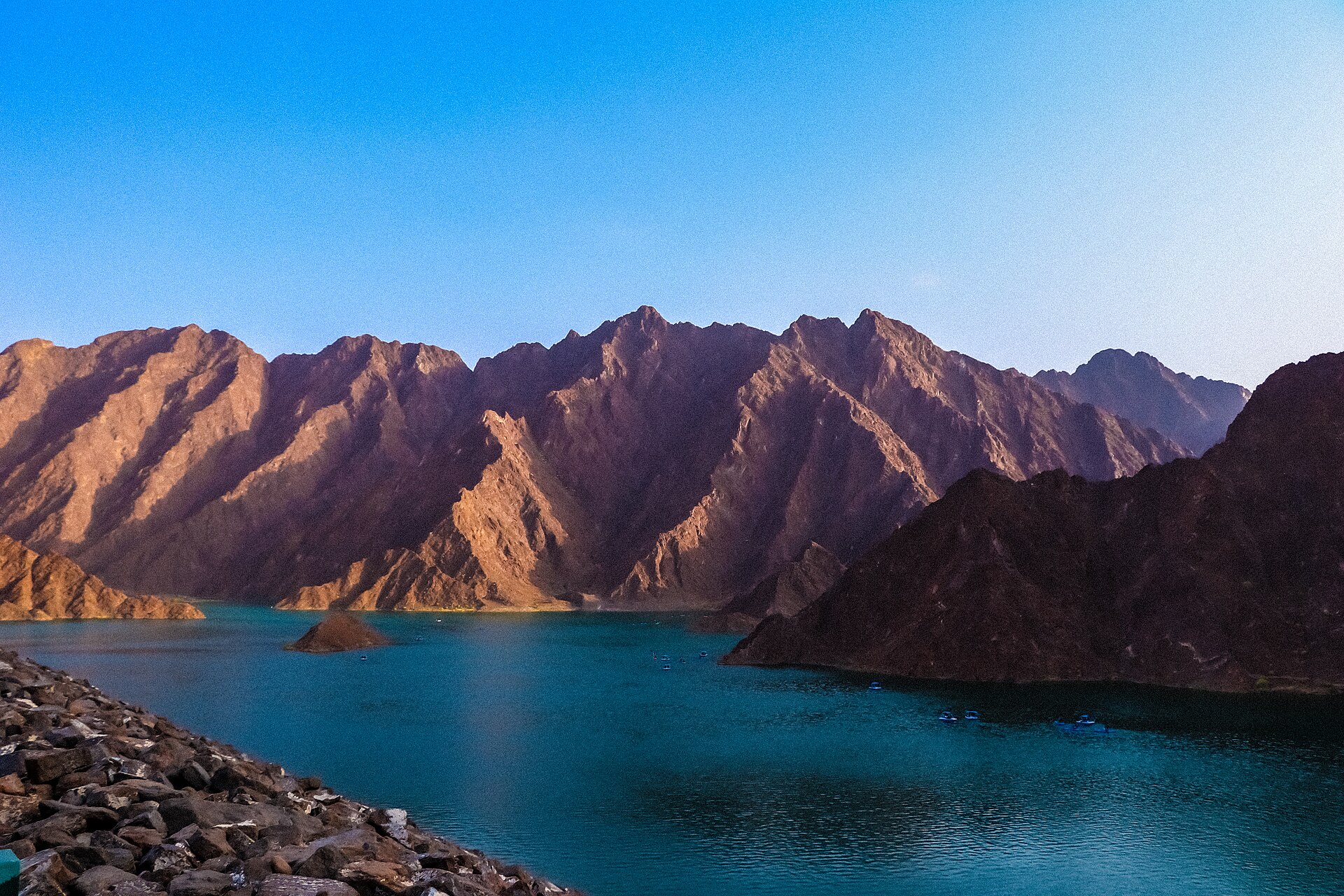
In the Hajar Mountains near the Oman border, Hatta is Dubai’s mountain escape, about 90 minutes’ drive from the city. Hire a kayak on the turquoise Hatta Dam, ride the mountain-bike trails, and walk through the restored Hatta Heritage Village of stone houses and watchtowers. Go between October and April, when hiking is comfortable, and start early to finish before the midday sun. Visit Dubai, the city’s official tourism site, lists the activities and their opening times.
25. Take a Day Trip to Abu Dhabi or Al Ain
Abu Dhabi, the UAE capital, is about 90 minutes southwest by road and easy to cover in a day. Start at the white marble Sheikh Zayed Grand Mosque, where cultural tours are free but visitors must pre-book online for an access pass; it opens from 9am to 8:30pm, except on Fridays, when it closes for prayers between 11:30am and 2:30pm. Then cross to Saadiyat Island for the Louvre Abu Dhabi. With a car and an early start you could instead head inland to Al Ain, the oasis city whose palm groves, forts and ancient tombs make up the UNESCO-listed Cultural Sites of Al Ain.
Best Things to Do in Dubai by Type of Trip
Use this table to match the list to your trip, whether you want things to do in Dubai for couples, with kids, on a budget or after dark, or the best things to do in Dubai in winter versus summer.
| Trip type | Top picks | Tip |
|---|---|---|
| First-timers | Burj Khalifa, Dubai Fountain, desert safari, Al Fahidi and the abra | Book At the Top and the safari before you fly |
| With kids | Dubai Aquarium, Ski Dubai, IMG Worlds, Aquaventure, Global Village | Keep outdoor time for mornings and evenings |
| Couples | Sunset at At the Top, dhow dinner cruise, dinner at Madinat Jumeirah, desert dinner | Reserve sunset slots and cruise tables early |
| Culture | Jumeirah Mosque, Al Fahidi, an SMCCU breakfast, Etihad Museum, Alserkal Avenue | Dress modestly; mosque visits don’t run on Fridays |
| Free and budget | Beaches, fountain shows, souks, Al Fahidi, the AED 1 abra | See the budget section below |
| Night owls | Fountain shows, Global Village, night-swimming beaches, Marina and rooftop bars | Fountain shows run every 30 min from 6pm |
| Winter, including Dubai in December | Global Village, Miracle Garden, desert camps, beaches, the Dubai Shopping Festival | Peak season: book hotels and tours early |
| Summer | Ski Dubai, the aquarium, IMG Worlds, museums, malls, night swimming | Plan outdoor trips for sunrise or after dark |
| Adventure | Dune-bashing, skydiving, XLine, Deep Dive Dubai, Hatta kayaking | Book skydives weeks ahead in the cool season |
Dubai Itineraries: One Day, 3 Days, a Week or a Layover
Dubai in One Day
With one day, stay central. Spend the morning in Old Dubai: walk Al Fahidi, cross Dubai Creek by abra for AED 1 and browse the Spice and Gold Souks. After lunch, take the Metro to Burj Khalifa/Dubai Mall station for the aquarium and the mall, go up At the Top in a late-afternoon slot, and come down for the evening fountain shows, which run every 30 minutes from 6pm.
3 Days in Dubai
| Day | Morning | Afternoon | Evening |
|---|---|---|---|
| Day 1 | Al Fahidi, the abra and the souks | Dubai Mall and Dubai Aquarium | At the Top at sunset, Dubai Fountain |
| Day 2 | Jumeirah Mosque visit, Etihad Museum | Desert safari pickup | Camel ride, sandboarding and camp dinner |
| Day 3 | The View at The Palm, Atlantis | JBR or Kite Beach, or Aquaventure | Dubai Marina walk or a dhow cruise |
With five days to a week, add Hatta or Abu Dhabi, a theme park or Ski Dubai, Alserkal Avenue and, between October and May, Global Village and Dubai Miracle Garden. A week also leaves room for a slow beach day, which matters in the heat.
Dubai Layover: What Fits in 8 to 12 Hours
Dubai International (DXB) is one of the world’s busiest hubs, and the Metro Red Line stops at Terminals 1 and 3, so a long stopover can include the city. US passport holders don’t need to arrange a visa in advance (see the FAQ and this list of visa-free countries for US citizens). With 8 to 12 hours between flights, ride the Metro to Burj Khalifa/Dubai Mall for the mall, the aquarium window and a fountain show, or change to the Green Line for Old Dubai and the abra. Leave at least three hours to get back through immigration and security. If your connection runs through Istanbul instead, see these iconic things to do in Turkey.
Best Time to Visit Dubai
The best time to visit Dubai is the cooler season from November to March, when days are warm and sunny (around 24–30°C/75–86°F) and you can comfortably enjoy the beaches, the desert and outdoor sights. This is peak season, busiest and priciest around the winter holidays and the Dubai Shopping Festival (December to January), so book ahead; Dubai in December also brings cool desert evenings, when a light jacket helps. Global Village and Dubai Miracle Garden open from October to May. Egypt shares the same winter sweet spot, so the two pair well; see the best time to visit Egypt.
Summer (June to September) is brutally hot, often above 40°C/104°F with high humidity, so outdoor sightseeing works only early or late. Hotel prices are at their lowest, though, and the indoor attractions, from Ski Dubai to the aquarium, are fully air-conditioned. The shoulder months of April, May and October are hot but manageable. Ramadan follows the lunar calendar and moves about 11 days earlier each year, so check its dates when you book.
| Season | Months | Weather | Best for | Watch out for |
|---|---|---|---|---|
| Cool/peak | Nov–Mar | Warm, sunny days; cool evenings | Beaches, desert, Global Village, Miracle Garden, Dubai Shopping Festival | Highest hotel prices; book December early |
| Shoulder | Apr–May, Oct | Hot but manageable | Fewer crowds and better rates; seasonal parks open in October | Midday heat outdoors |
| Summer | Jun–Sep | Often above 40°C/104°F, humid | Lowest hotel rates; indoor attractions, night swimming | Outdoor sightseeing only early or late |
How to Get There and Get Around Dubai
Dubai International (DXB) is one of the world’s busiest airports, with nonstop flights from many US cities, and the Dubai Metro Red Line links Terminals 1 and 3 with Downtown, Mall of the Emirates and Dubai Marina. Fares work on zones: with a Silver nol card a trip costs AED 3 within one zone, AED 5 across two and AED 7.50 beyond that, single-use Red Tickets cost AED 4 to AED 8.50, and a 7-day pass costs AED 50 to AED 110. Cash isn’t accepted at the gates, so buy a nol card from station machines or counters.
The Dubai Tram serves the Marina and JBR, abras cross the creek, and metered taxis and ride-hailing apps fill the gaps. You need a car only for Hatta, Al Ain or a road trip; desert safaris include hotel pickup.
Where to Stay
Downtown Dubai puts you by the Burj Khalifa and Dubai Mall; Dubai Marina and JBR offer beach, dining and nightlife; Palm Jumeirah is for resort luxury; and Deira/Bur Dubai near the Creek is more affordable and atmospheric. Dubai spans every budget from hostels to some of the world’s most opulent hotels — choose your neighbourhood by whether you want city icons, beach or old-town charm.
| Area | Best for | Getting around |
|---|---|---|
| Downtown Dubai | First-timers: Burj Khalifa, Dubai Mall, the fountain | Metro Red Line |
| Dubai Marina and JBR | Beach, dining and nightlife | Metro Red Line and Dubai Tram |
| Palm Jumeirah | Resort stays, families, Atlantis | Palm Monorail and taxis |
| Jumeirah and Umm Suqeim | Quieter beach hotels near the Burj Al Arab | Taxis; Metro a short ride inland |
| Deira and Bur Dubai | Budget stays, the souks and Old Dubai | Metro Red and Green Lines, abras |
Free Things to Do in Dubai and Dubai on a Budget
Dubai has a reputation for excess, but many of its best sights cost nothing. The top free things to do in Dubai are the public beaches, the evening Dubai Fountain shows, the aquarium window inside the Dubai Mall, the lanes of Al Fahidi, the Gold and Spice Souks, Souk Madinat Jumeirah, the Alserkal Avenue galleries and the sunset walk along the Palm’s crescent boardwalk. The abra across Dubai Creek costs AED 1, and Metro rides with a Silver nol card cost AED 3 to AED 7.50.
To stretch your money further, eat in Deira, Karama and Al Rigga, look for set-price lunches and happy hours, and consider the shoulder months, when hotel rates fall. Dubai has no single government-run sightseeing pass. Private multi-attraction passes are sold online and pay off only if you will visit several paid attractions a day, so add up the gate prices you actually plan to pay before buying one. For transport, the 7-day nol pass is the closest thing to a city pass.
Rules and Etiquette to Know Before You Visit Dubai
Dubai is very safe and welcoming, but it is a Muslim city with stricter laws than most visitors expect. Dress modestly in malls, souks and public areas (cover shoulders and knees), and keep swimwear for the beach and pool. Alcohol is served only in licensed hotels, restaurants and bars; drinking in public and public drunkenness are offences, and the limit for drivers is effectively zero. Keep public affection low-key, and ask before photographing people, especially women.
Since 1 January 2022 the weekend has been Saturday and Sunday, with Friday a half day for government offices. Friday is still the main prayer day, so some attractions change their hours around midday prayers. Visiting Dubai during Ramadan is fine, but eating and drinking in public in daylight is not, and many venues change their hours (see the FAQ). Some common medicines, including codeine-based painkillers, are controlled in the UAE, so check before you pack. Tipping is customary but not compulsory.
Related Guides
Frequently Asked Questions
What is Dubai best known for?
Dubai is famous for its record-breaking modern architecture — above all the Burj Khalifa, the world’s tallest building — along with luxury shopping malls, the man-made Palm Jumeirah island, the sail-shaped Burj Al Arab hotel, desert safaris, and its blend of ultra-modern glamour with traditional Arabian souks.
How many days do you need in Dubai?
Three to four days is ideal — enough to see the Burj Khalifa and Dubai Mall, go on a desert safari, explore Old Dubai and the souks, visit the Palm Jumeirah and enjoy a beach. It’s also a popular stopover, where even a day or two hits the highlights.
What is the best time to visit Dubai?
November to March, the cool season, is best — pleasant, sunny weather ideal for the beaches, desert and outdoor sights. It’s peak season, so book ahead. Summer (June–September) is extremely hot (over 40°C), though hotels are cheapest and everything indoors is air-conditioned.
Do you need a car in Dubai?
Not necessarily — the modern, driverless Dubai Metro is clean, cheap and links many major sights, and taxis and rideshares are affordable. A car or tour is helpful for the desert safari and farther attractions, but many visitors get by without one.
What should you wear in Dubai?
Dubai is more relaxed than some of its neighbours, but as a Muslim city you should dress modestly in public areas, malls and old-town districts — cover shoulders and knees. Beachwear is fine at the beach and pool, and there are no strict rules for tourists, but respectful dress is appreciated. In Dubai in December and January, evenings can feel cool, especially in the desert, so pack a light jacket or sweater.
Is a desert safari worth it in Dubai?
Absolutely — it’s one of Dubai’s signature experiences. A typical safari includes dune-bashing in a 4×4, a camel ride, sandboarding, and a Bedouin-style camp with a barbecue dinner and entertainment under the stars — a memorable contrast to the glittering city.
Is Dubai safe for women, including solo female travellers?
Yes – Dubai has very low rates of violent crime and is consistently rated one of the safer cities in the world for women to walk around, including alone at night in main tourist areas. That said, the UAE operates under Islamic-influenced law, so modest dress in public (shoulders and knees covered outside of pools and beach clubs), discretion with alcohol, and avoiding public displays of affection matter more here than in most Western cities. Sexual harassment does still occur occasionally, so the usual precautions – sharing your plans, using licensed taxis – remain sensible.
Is Dubai worth visiting in July or August despite the heat?
It’s genuinely extreme heat, not just uncomfortable – daytime temperatures regularly climb past 40°C, sometimes touching 45-48°C with high humidity, making outdoor activity dangerous, not just unpleasant, for several hours around midday. Heatstroke and dehydration are real risks if you underestimate it. That said, it can still be worth visiting: flights and hotels drop sharply, malls, aquariums and indoor ski slopes are heavily air-conditioned, and beach clubs run misted, shaded areas. Just plan outdoor activities like desert safaris for early morning or evening, and never underestimate the heat by midday.
Is Dubai expensive to visit?
Dubai can be as expensive as you make it, but it doesn’t have to be a luxury-only destination. A mid-range hotel typically runs AED 400-800 a night (roughly $110-220), a casual meal AED 40-80 (about $11-22), and Metro rides cost AED 3 to AED 7.50 with a Silver nol card. Where costs escalate fast are alcohol (bar prices are high), five-star hotels and beach clubs, and add-on experiences like helicopter tours or exclusive desert camps. Budget-conscious travellers can genuinely do Dubai affordably by sticking to the Metro, food courts and free attractions like the beaches and souks.
Do you need a visa to visit Dubai, and how long can you stay?
US citizens don’t need to apply for a visa in advance: a free visit visa is stamped on arrival. The UAE Embassy in Washington says it allows a stay of up to 90 days within 180 days, non-renewable, with a fine of AED 50 for each day you overstay, though some other official pages still quote 30 days, so plan around the shorter figure for a long trip. Your passport must be valid for at least six months beyond your arrival date. UK, Canadian, Australian and most EU passports also get visas on arrival, but the length of stay varies by nationality.
Can you drink alcohol in Dubai, and what are the rules?
Yes, but only in licensed venues – hotel bars, restaurants with a liquor licence, and licensed lounges – not in public places such as streets, parks or the open beach. Being visibly drunk in public, or causing a disturbance while intoxicated, can lead to arrest, since public intoxication is a genuine legal offence in the UAE, not just frowned upon. Beach clubs and many hotel pools do serve alcohol within their grounds. If you’re driving, the legal blood alcohol limit is effectively zero, so don’t drink at all before getting behind the wheel.
Is dune-bashing on a desert safari safe?
It’s generally safe with a reputable operator and an experienced driver, but it is a real activity with real risk, not a gentle ride – vehicles deliberately drive fast over steep dunes, and rollovers, while rare, have happened, along with motion sickness being extremely common. Always wear your seatbelt throughout, tell the driver immediately if you feel unwell, and skip it altogether if you’re pregnant or have back or heart problems, as most operators advise. Choose a licensed company with well-maintained 4x4s rather than the cheapest option you find.
Which medicines are restricted or banned in the UAE?
The UAE controls a longer list of medicines than most travellers expect. Anything containing codeine, tramadol, several strong painkillers, some anxiety and sleep medications and many ADHD treatments falls under controlled rules, and products containing CBD are prohibited outright. Bringing a controlled medicine without clearance can mean confiscation or detention, and a doctor’s word at the airport is not enough. Apply for prior approval through the UAE health ministry’s official channel before you fly, carry the medicine in its original labelled packaging with a copy of your prescription, and keep it in hand luggage. The list is revised periodically, so check the current official UAE guidance rather than an older travel article.
What is Dubai like during Ramadan, and can you still visit?
You can visit, and many travellers enjoy it, but the rhythm of the city changes. During daylight hours in the holy month, eating, drinking and smoking in public are not acceptable and can bring a warning or a fine, non-Muslim visitors included, so daytime meals happen behind screens in hotel restaurants or in your room. Live music and bar service are scaled back, and many shops and attractions shift to later opening hours. The upside is a calmer city, softer hotel rates in some years, and the nightly iftar gatherings and decorated souks, which are genuinely atmospheric. The dates move each year, so check before you book.
Is Dubai a good destination for young children?
It suits families unusually well. The city is compact, very safe and built around air-conditioned indoor attractions, which matters when the weather rules out playgrounds for months at a time: aquariums, indoor snow and ski parks, waterparks and large theme parks all sit within a short drive. Hotels are used to families, and malls and pavements take a pushchair easily. The real limits are heat and cost. Small children overheat quickly, so outdoor time belongs to early morning and evening, and dune-driving desert safaris are usually unsuitable for toddlers or anyone prone to travel sickness, though calmer camel-and-camp evening trips work well.
What are the best free things to do in Dubai?
The best free things to do in Dubai are the Dubai Fountain’s evening shows (every 30 minutes from 6pm to 11pm), public beaches such as Kite Beach and JBR, the lanes of Al Fahidi, the Gold and Spice Souks, the aquarium window in the Dubai Mall, Souk Madinat Jumeirah and the Alserkal Avenue galleries. Add an AED 1 abra ride across Dubai Creek and you have a full day for almost nothing.
Is the Burj Khalifa worth it, and which floor should you choose?
Yes for most first-time visitors, if you book the right slot. Levels 124 and 125 (At the Top) give the classic view at the standard price; level 148 (At the Top SKY) adds a quieter lounge and a higher deck but costs considerably more, so it suits a special occasion. Book a late-afternoon slot to see the city by day, at sunset and lit up at night, and buy online ahead in winter, when sunset times sell out.
What can you do in Dubai in one day?
Spend the morning in Old Dubai, walking Al Fahidi, crossing the creek by abra for AED 1 and browsing the Spice and Gold Souks. In the afternoon, take the Metro to the Dubai Mall for the aquarium and the shops, go up the Burj Khalifa in a late-afternoon slot, then watch the free Dubai Fountain shows, which run every 30 minutes from 6pm. A desert safari needs a separate half day.
What can you do on a Dubai layover?
With eight hours or more and a passport that gets a visa on arrival, you can leave the airport. The Metro Red Line runs from Terminals 1 and 3 to Burj Khalifa/Dubai Mall station in Downtown, where the mall, the aquarium window and the evening fountain shows fill a few hours. With a longer layover, add Old Dubai and an abra ride. Allow at least three hours to get back through immigration and security before your next flight.
Does Dubai have a tourist pass?
There is no single government-run sightseeing pass. Private companies sell multi-attraction passes online, which can save money if you plan to visit several paid attractions, such as the Burj Khalifa, the Dubai Aquarium and a waterpark, in a few days, but they rarely pay off on a slow trip. For transport, a nol card covers the Metro, tram and buses, and a 7-day nol pass costs AED 50 to AED 110 depending on zones.
What are the best things to do in Dubai at night?
Start with the Dubai Fountain’s free evening shows every 30 minutes from 6pm to 11pm, then go up the Burj Khalifa for the lights or take a dhow dinner cruise on Dubai Creek or Dubai Marina. From October to May, Global Village opens from 4pm until midnight or 1am, and Dubai Municipality’s lit night-swimming beaches at Jumeirah 2, Jumeirah 3 and Umm Suqeim 1 let you swim after dark with lifeguards on duty.
Can you visit Abu Dhabi on a day trip from Dubai?
Yes. Abu Dhabi is about 90 minutes from Dubai by road, so a day is enough for the Sheikh Zayed Grand Mosque and the Louvre Abu Dhabi. Visiting the mosque is free, but you must pre-book an online access pass; it opens from 9am to 8:30pm, with a break for Friday prayers between 11:30am and 2:30pm. A tour or a car with a driver is the easiest way to do it.
Final Thoughts: Planning Your Dubai Trip
Dubai is a place that has to be seen to be believed. Soar up the Burj Khalifa, watch the fountains dance, race over desert dunes at sunset, haggle in the gold souks and unwind on a golden beach — all in one dazzling, ultra-modern city. Base yourself by the icons downtown or on the beach at the Marina, visit between November and March for the best weather, ride the metro, and dress respectfully. Give it three or four days, and Dubai’s blend of ambition and Arabian charm will amaze you.
Before you go: turn this guide into a day-by-day plan. Our partner Voyada is a free itinerary creator that builds the trip with flights, hotels and a real total cost for your dates — in about a minute.
Build a travel itinerary →