
Table of Contents
ToggleHong Kong is one of the greatest food cities on earth, and eating here is a headline attraction in its own right. This is a place where a plate of roast-goose rice from a Michelin-starred shop can cost less than a casual lunch back home, where East meets West on every menu, and where the ritual of sharing dim sum over tea is woven into daily life. From steamer baskets to street-side egg waffles, the best food to eat in Hong Kong is often the cheapest.
This Hong Kong food guide covers what to eat in Hong Kong — 15 essential dishes, from dim sum and roast meats to wonton noodles, street snacks and egg tarts — along with where to find them, typical prices in HKD, the best food neighbourhoods, and how to order like a local. Come hungry.
✈️ TripToGo Travel Deals
Get notified about great travel deals
Hand-picked flight, hotel and destination deals, straight to your inbox. No spam, unsubscribe anytime.
🎉 Thank you for subscribing!
You’re all set — the best travel deals are on their way.
Key Takeaways
- Do first: a leisurely dim sum (yum cha) — the heart of Hong Kong food.
- Don’t miss: roast goose, wonton noodles, egg tarts and a cha chaan teng milk tea.
- Street food: egg waffles, curry fish balls and cheung fun in Mong Kok & Sham Shui Po.
- Best value: Hong Kong has some of the world’s cheapest Michelin-starred meals.
- How to eat: share everything, follow the queues, and eat where it’s busy.
Must-Try Food in Hong Kong at a Glance
So what food is Hong Kong famous for? These 15 dishes define Hong Kong eating. Prices are typical ranges as of late 2026 and vary by shop.
| Dish | Cantonese name | What it is | Where to try it | Typical price (HK$) |
|---|---|---|---|---|
| Shrimp & pork dumplings | har gow, siu mai | Steamed dim sum classics | Maxim’s Palace (City Hall), Tim Ho Wan | 30–65 a basket |
| Barbecue-pork buns | char siu bao | Fluffy steamed or crisp baked buns | Tim Ho Wan (baked version) | 30–40 for three |
| Rice-noodle rolls | cheung fun | Silky rolls with soy, or street-style with sauces | Dim sum halls, Sham Shui Po stalls | 15–50 |
| Roast goose | siu ngo | Crisp-skinned Cantonese roast goose | Yat Lok (Central), Kam’s Roast Goose (Wan Chai) | 60–120 with rice |
| Barbecue pork | char siu | Sweet, charred roast pork | Joy Hing (Wan Chai), any siu mei shop | 45–80 with rice |
| Wonton noodles | wun tun min | Shrimp wontons and egg noodles in broth | Mak’s Noodle, Tsim Chai Kee | 45–70 |
| Beef brisket noodles | ngau naam min | Slow-braised brisket in clear broth | Kau Kee (Gough Street, Central) | 50–80 |
| Congee | juk | Silky rice porridge | Neighbourhood congee shops | 30–60 |
| Claypot rice | bo zai fan | Rice with a crispy crust, cooked in a clay pot | Kwan Kee (Sai Ying Pun), Temple Street area | 70–150 |
| Hong Kong-style milk tea | nai cha | Strong tea with evaporated milk | Lan Fong Yuen (Central), any cha chaan teng | 20–35 |
| Pineapple bun | bo lo bau | Sweet bun with a crackly sugar crust | Cha chaan teng and bakeries | 10–25 |
| Egg tart | daan taat | Pastry with wobbling custard | Tai Cheong Bakery, local bakeries | 10–15 |
| Egg waffle | gai daan jai | Bubbly, sweet griddle waffle | Street stalls in Mong Kok and beyond | 25–40 |
| Curry fish balls | gaa lei yu daan | Skewered fish balls in curry sauce | Mong Kok street stalls | 15–25 a skewer |
| Steamed milk pudding / mango pomelo sago | seung pei nai / yeung ji gam lo | Hong Kong’s signature desserts | Yee Shun, Australia Dairy, Kai Kai | 30–50 |
Dim Sum: The Essential Hong Kong Ritual
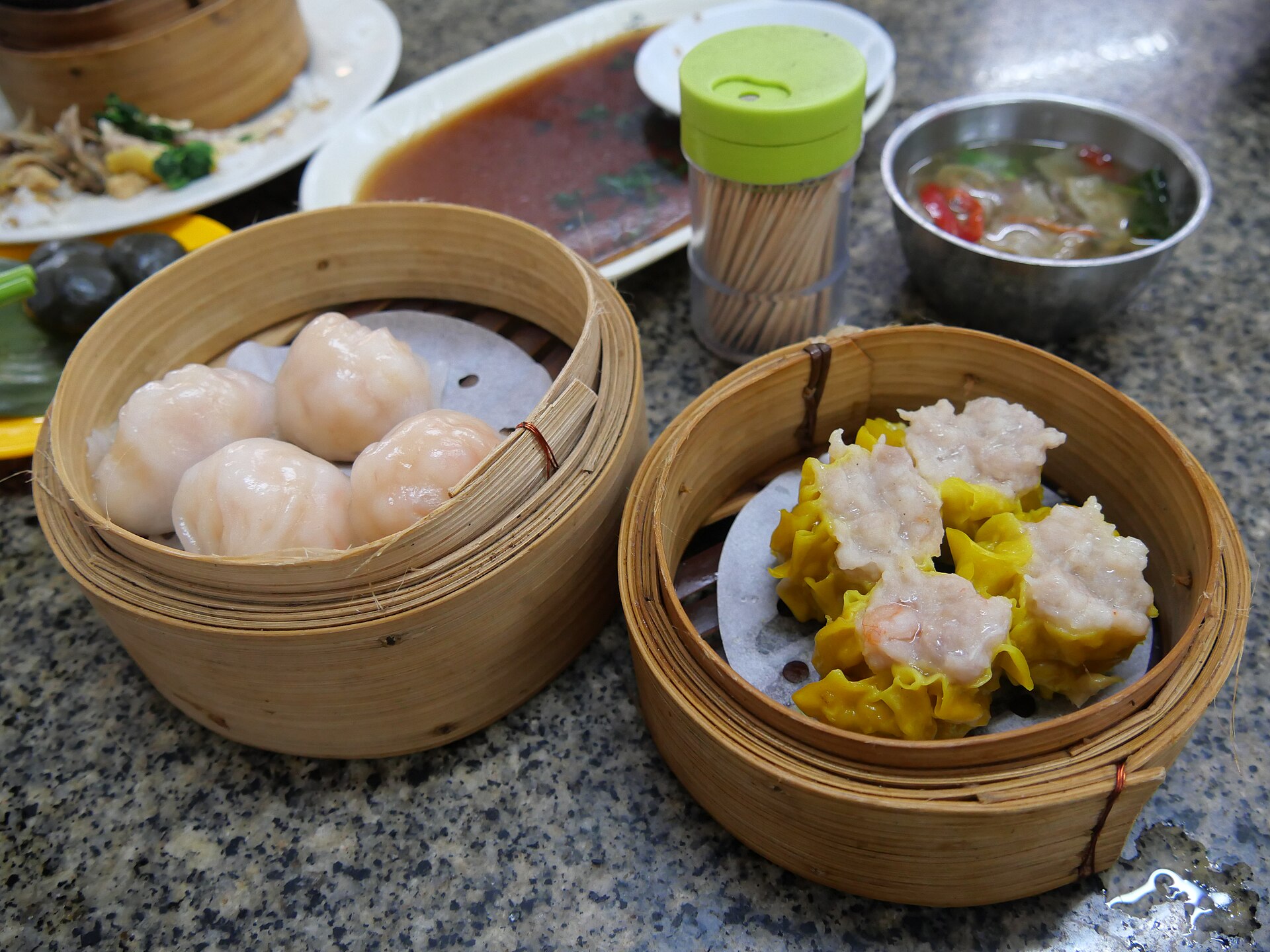
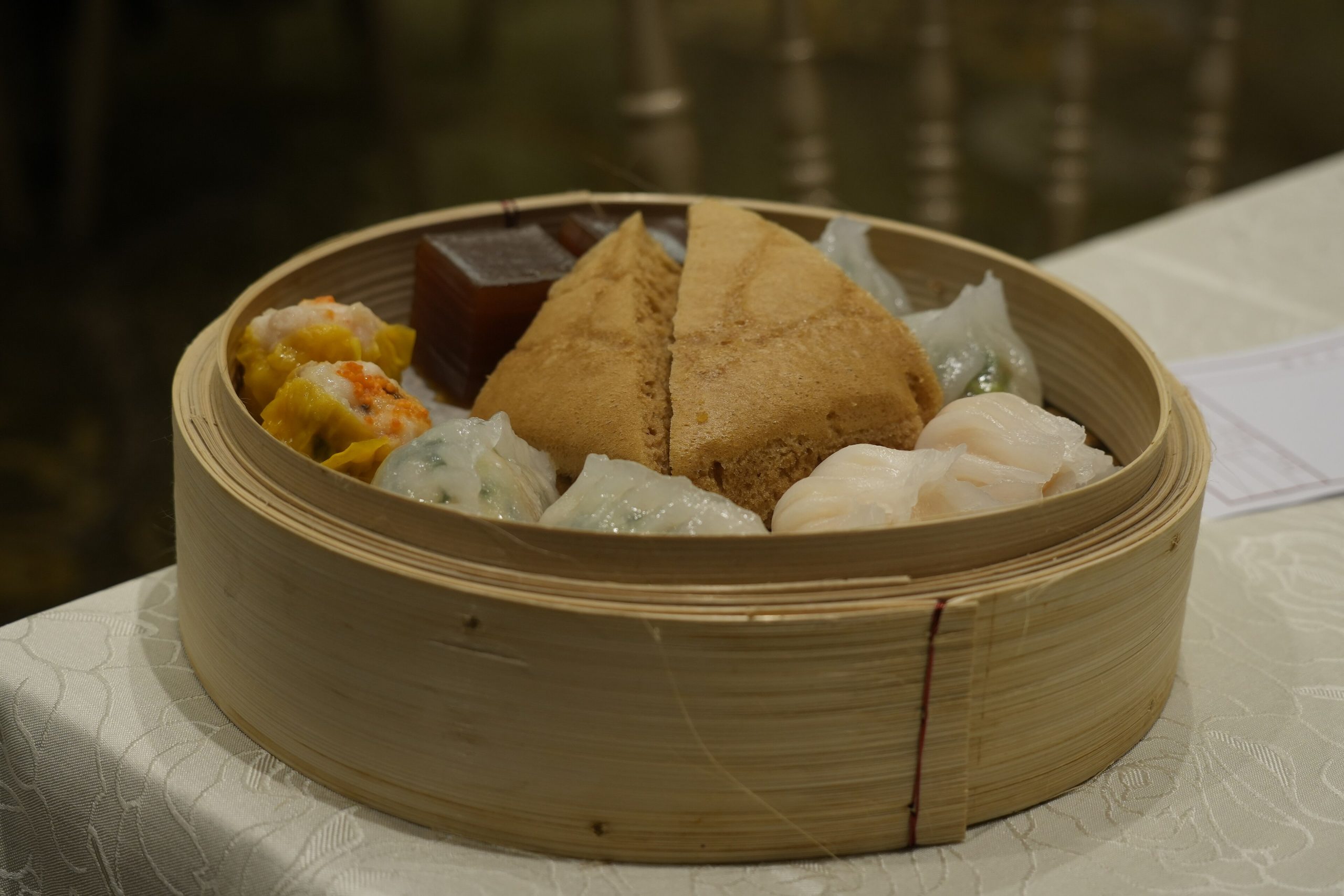
If you eat one thing in Hong Kong, make it dim sum. The ritual of yum cha (‘drink tea’) — ordering a parade of small steamer baskets and fried plates to share over pots of tea — is the soul of the city’s food culture, traditionally a leisurely late-morning affair. Aim for the classics: translucent har gow (shrimp dumplings), pork-and-shrimp siu mai, fluffy char siu bao (barbecue-pork buns), silky cheung fun (rice-noodle rolls) and, to finish, a warm egg tart.
| Dim sum | What it is | Steamed, baked or fried |
|---|---|---|
| Har gow | Shrimp dumpling in a translucent wrapper | Steamed |
| Siu mai | Open-topped pork-and-shrimp dumpling | Steamed |
| Char siu bao | Bun filled with sweet barbecue pork | Steamed or baked |
| Cheung fun | Rice-noodle roll with shrimp, beef or char siu, in soy sauce | Steamed |
| Egg tart | Pastry shell with warm custard, the classic finish | Baked |
Where to go spans the whole spectrum: the Michelin-listed chain Tim Ho Wan (famous for its baked barbecue-pork buns), the grand harbour-view hall of Maxim’s Palace at City Hall in Central, where trolleys still circulate, and the century-old Lin Heung Tea House, which closed in 2022, reopened under new management and has since changed premises, so check its current address before you go. The Hong Kong Tourism Board’s beginner’s guide to dim sum is a handy ordering cheat sheet. Go with a group so you can try more, and don’t rush — lingering is the point.
Cha Chaan Teng: Hong Kong’s Cafe Culture
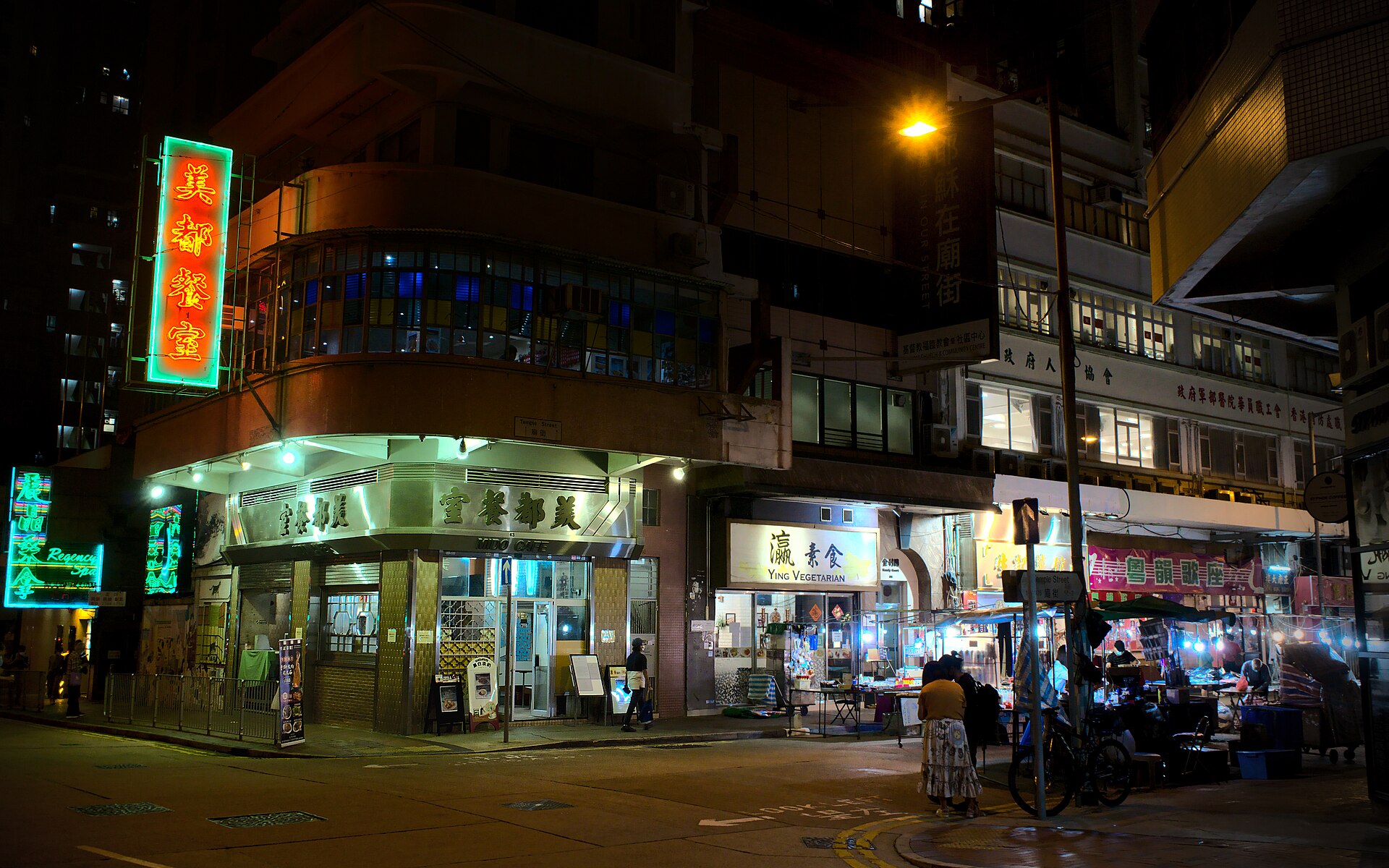
The cha chaan teng (‘tea restaurant’) is Hong Kong’s beloved everyday cafe, a fast, cheap, gloriously kitsch institution born of the city’s East-meets-West history. This is where you order a cup of strong, silky Hong Kong milk tea (or yuenyeung, its coffee-and-tea hybrid), a pineapple bun with a slab of cold butter, thick French toast dripping with syrup, or a bowl of macaroni in soup with ham.
The milk tea itself is serious business. Hong Kong-style milk tea is a strong blend of black teas strained repeatedly through a cloth filter, nicknamed the ‘silk stocking’, then poured over evaporated milk; its making technique was named to Hong Kong’s first Representative List of Intangible Cultural Heritage in 2017. Lan Fong Yuen on Gage Street in Central is the name most associated with silk-stocking tea, and iced lemon tea is the other everyday order. Heartier plates include baked pork chop rice under tomato sauce and cheese.
It’s comfort food, Hong Kong-style, and every neighbourhood has its own. The retro Australia Dairy Company in Jordan (famous for scrambled eggs and brisk, no-nonsense service) and Kam Wah Cafe in Mong Kok are institutions worth seeking out; the tourism board keeps a list of must-visit cha chaan teng.
Roast Meats: Siu Mei, Roast Goose and Char Siu
Those glistening ducks and glossy strips of pork hanging in restaurant windows are siu mei — Cantonese roast meats, and one of Hong Kong’s greatest and most affordable pleasures. The king of them is roast goose, its skin lacquered and crisp, its meat rich and tender; the legendary Yat Lok in Central, which holds one Michelin star in the 2026 guide, serves it over rice or with noodles for roughly the price of a casual lunch back home.
Also seek out soy-poached chicken and crackling-skinned siu yuk (roast pork belly), usually served over rice or with noodles. Kam’s Roast Goose in Wan Chai is the other roast-goose name locals argue about — proof that some of the city’s best food costs the least.
Char Siu: Hong Kong Barbecue Pork
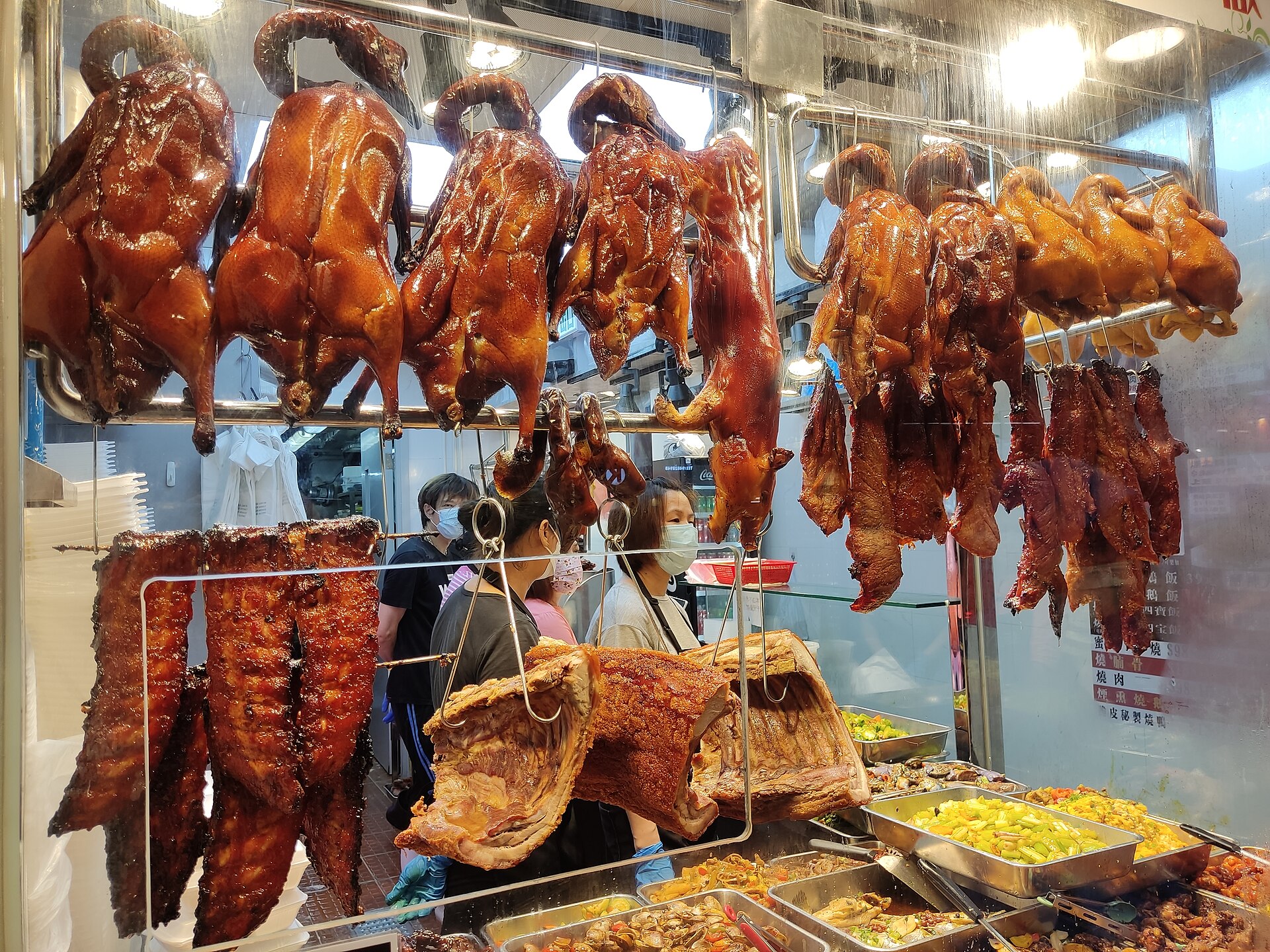
Char siu deserves its own entry. Strips of pork shoulder or belly are marinated in a sweet mix of honey or maltose, soy, hoisin and five-spice, then roasted on hooks until the edges char and the outside turns sticky and dark red. The best cuts balance lean and fat, so ask for bun fei sau (half fat, half lean) if you see locals ordering it. You will meet char siu everywhere: sliced over rice with a fried egg, tucked into char siu bao at dim sum, or piled on wonton noodles.
For a dedicated plate, Joy Hing in Wan Chai is one of the oldest and most celebrated roast-meat shops, known above all for its char siu, while any busy siu mei counter with a queue at lunchtime is a safe bet. Expect to pay roughly HK$45–80 for char siu over rice, or order a mixed two-meat plate of char siu with roast goose or siu yuk to compare. Take-away by weight is normal, and many shops sell out of the best cuts by mid-afternoon.
Noodles, Wontons, Congee and Claypot Rice
Hong Kong’s noodle shops are a daily ritual. The signature bowl is wonton noodles — springy egg noodles and plump shrimp wontons in a clear, savoury broth — perfected at tiny institutions like Mak’s Noodle and Tsim Chai Kee, where a bowl runs about HK$45–70. Add fish balls for a heartier bowl, or move on to the city’s other great noodle dish below.
Beef Brisket Noodles at Kau Kee
Beef brisket noodles (ngau naam min) are Hong Kong comfort food at its most concentrated: chunks of brisket braised for hours with spices until they fall apart, served in a clear, deeply beefy broth over thin egg noodles, flat rice noodles or springy e-fu noodles. The most famous bowl in the city is at Kau Kee on Gough Street, between Central and Sheung Wan, a cramped, cash-only shop that has been ladling brisket for generations.
There are two classic orders. The clear-broth brisket is the purist’s choice, while the curry beef tendon noodles are richer and gently spiced. Expect a queue at lunch, shared tables and very fast service, and budget roughly HK$50–80 for a bowl. Go mid-afternoon to avoid the worst of the line, and pair it with a glass of milk tea. If the queue is too long, almost every noodle shop in the city offers its own brisket version, and many neighbourhood favourites are excellent.
For comfort, nothing beats a bowl of silky congee (rice porridge) topped with century egg and pork or fish, often with a crisp fried dough stick for dunking. It is a classic breakfast and costs about HK$30–60. These are the everyday dishes locals eat — cheap, satisfying and quietly excellent.
Claypot Rice (Bo Zai Fan)
Claypot rice (bo zai fan) is a cold-weather favourite. Rice is cooked to order in an individual clay pot, traditionally over charcoal, then topped with Chinese sausage and cured liver sausage, chicken and mushroom, spare ribs in black bean sauce, or eel. The prize is the golden, crunchy crust that forms on the bottom of the pot. Drizzle sweet soy sauce over the top, put the lid back on for a minute, then scrape the crust up as you eat.
Because each pot is cooked to order and takes time, claypot rice is a sit-down dinner rather than a quick bite. Kwan Kee in Sai Ying Pun is one of the best-known specialists, and the streets around the Temple Street Night Market in Yau Ma Tei have several old-school claypot shops that set out tables in the evening. Prices run about HK$70–150 a pot, and many places serve it mainly in the cooler months, roughly October to March, so ask before you queue in summer.
Hong Kong Street Food and Dai Pai Dong
Hong Kong street food is an open-air feast. The most beloved snack is the egg waffle (gai daan jai) — a bubbly, sweet honeycomb of batter cooked on a griddle, about HK$25–40 — but the stalls also sizzle with curry fish balls (around HK$15–25 a skewer), siu mai on skewers, cheung fun doused in sweet, sesame and chilli sauces, stinky tofu and roasted chestnuts in winter.
For the full experience, seek out a dai pai dong — a licensed open-air food stall — where you can eat wok-fried classics at plastic stools on the pavement. The best hunting grounds are the streets of Mong Kok, the food-obsessed lanes of Sham Shui Po, and the Temple Street Night Market after dark.
Planning your Hong Kong food trip?
Our partner Voyada’s customized trip planner builds a day-by-day plan with flights, hotels and a real total cost for your dates — in about a minute, free.
Plan trip with AI →Seafood by the Water
For a memorable meal out of the city, head to one of Hong Kong’s seafood villages, where you pick your catch live from tanks and have it cooked to order. Sai Kung in the New Territories is the most popular, its harbourfront lined with restaurants and bobbing boats; the car-free island of Lamma and the old fishing quarter of Lei Yue Mun offer the same fresh, steamed-fish-and-garlic-prawns experience with a sea breeze.
Michelin Stars on a Budget
Hong Kong is famous for something rare: world-class food at street prices. Roast goose at Yat Lok, which holds one Michelin star in the 2026 MICHELIN Guide Hong Kong & Macau, costs about the same as a sandwich lunch in a US city, and Tim Ho Wan made its name as the cheapest Michelin-starred restaurant in the world when its tiny original shop won a star; it no longer holds one, but its Sham Shui Po branch is listed as a Bib Gourmand. For value, look for the guide’s Bib Gourmand list, which flags good food at moderate prices and includes dozens of noodle shops, roast-meat counters and dessert houses. At the other end sit glittering fine-dining rooms with harbour views; between them lies one of the most complete food cities anywhere, and a match for the cheapest countries to visit in Asia when it comes to everyday eating.
Sweets, Desserts and Egg Tarts
Save room for something sweet. The egg tart — a flaky or crisp pastry cradling wobbling custard — is the city’s signature bake, best warm from a bakery like Tai Cheong. Chinese dessert houses (tong sui) serve soothing sweet soups, silky tofu pudding (dau fu fa) with ginger syrup, and the beloved mango pomelo sago, a cool mango-and-grapefruit dessert invented in Hong Kong.
Hong Kong also has a dessert culture all its own. Steamed milk pudding (seung pei nai, ‘double-skin milk’) is a silky, lightly sweet custard of milk, sugar and egg white, served hot or cold at Yee Shun Milk Company and the Australia Dairy Company in Jordan. Dessert houses such as Kai Kai in Jordan and the Honeymoon Dessert chain serve thick black sesame soup, walnut soup, glutinous rice balls and mango pomelo sago, typically HK$30–50 a bowl and open late. Don’t overlook the egg waffle as a dessert either, or a Portuguese-style egg tart if you cross to Macau.
What to Eat in Hong Kong for Breakfast and Late at Night
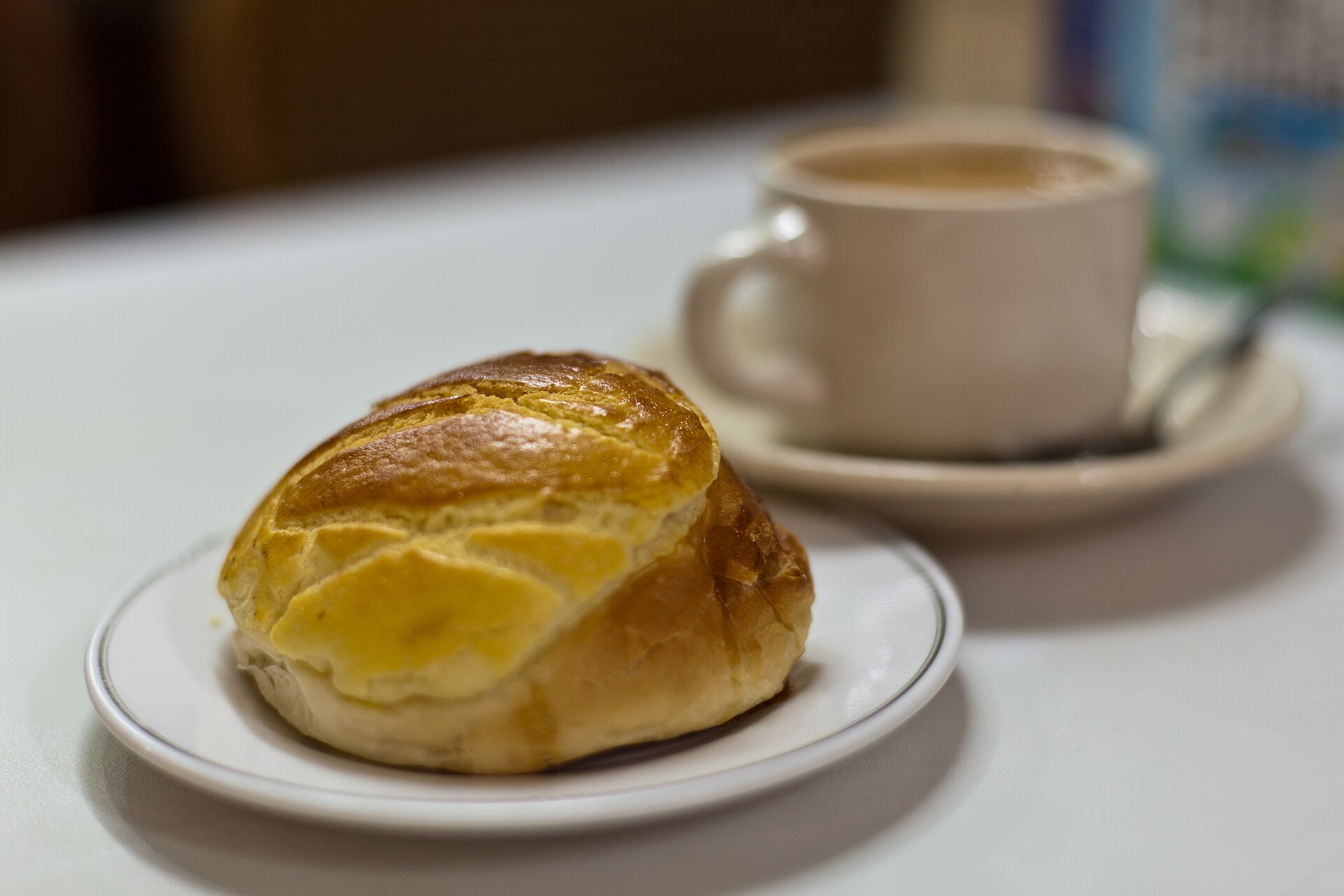
Breakfast is when Hong Kong eats most like Hong Kong. The classic options are a bowl of congee with a fried dough stick, an early dim sum (many traditional tea houses open early in the morning, and older regulars arrive with their newspapers), or a cha chaan teng breakfast set: macaroni in ham soup, scrambled eggs, buttered toast and a milk tea, usually HK$40–75 and served until late morning. Grab a warm egg tart or pineapple bun from a bakery on the way out.
Late at night, head to the Temple Street Night Market in Yau Ma Tei, where dai pai dong tables fill the side streets with stir-fried clams, claypot rice and oyster omelettes, or to Causeway Bay and Mong Kok, where hotpot restaurants and snack stalls stay busy late. Dessert houses keep sweet soups and milk puddings going into the night, and a late-opening cha chaan teng is rarely far away. Dinner is the main sit-down meal, so book ahead for popular restaurants on Friday and Saturday nights.
How Much Does Food Cost in Hong Kong? Typical HKD Prices
Eating well in Hong Kong is cheap by big-city standards, as long as you eat where locals do. Prices are in Hong Kong dollars (HKD), which the Hong Kong Monetary Authority keeps in a band of HK$7.75–7.85 to one US dollar, so divide by about 7.8 to get US dollars. The ranges below are typical per-person costs as of late 2026.
| Meal | Typical cost per person (HK$) | Roughly in US$ |
|---|---|---|
| Street snack (egg waffle, fish balls, egg tart) | 10–40 | $1–5 |
| Cha chaan teng breakfast or lunch set with milk tea | 40–75 | $5–10 |
| Bowl of noodles or roast-meat rice | 45–120 | $6–15 |
| Dim sum at a traditional restaurant | 120–250 | $15–32 |
| Dai pai dong or claypot-rice dinner | 100–250 | $13–32 |
| Hotpot dinner | 250–450 | $32–58 |
| Fine-dining tasting menu | 1,500+ | $190+ |
Smarter restaurants add a 10% service charge, and dim sum halls often charge a small per-person tea fee. A comfortable food budget is about HK$300–500 (US$40–65) a day if you mix cha chaan teng, noodle shops and one sit-down meal. For hotels, transport and attraction costs, see our full Hong Kong travel cost guide.
Where to Eat in Hong Kong: The Best Food Neighborhoods
Some districts are destinations in their own right for eating.
| Neighborhood | Known for |
|---|---|
| Sham Shui Po | The city’s best cheap eats, cheung fun & street food |
| Mong Kok | Street snacks: egg waffles, curry fish balls, siu mai skewers |
| Jordan & Yau Ma Tei | Temple Street Night Market, Australia Dairy, milk pudding, claypot rice |
| Central, Sheung Wan & SoHo | Yat Lok, Kau Kee, wonton noodles, Lan Fong Yuen; fine dining & cocktail bars |
| Wan Chai | Roast-meat shops such as Joy Hing and Kam’s Roast Goose |
| Tsim Sha Tsui | Harbour-view dim sum, South Asian & halal food, big-name restaurants |
| Causeway Bay | Hotpot, Japanese & late-night eats |
| Kowloon City | Hong Kong’s ‘Little Thailand’ & Chiu Chow food |
| Sai Kung | Waterfront live seafood |
Wandering these areas hungry, following the queues, is the single best way to eat in Hong Kong — the locals’ favourites are almost always the tastiest and cheapest.
How to Order and Dining Tips
A little know-how goes a long way at the table:
- At dim sum, you’ll get a card the staff stamp as you order; tick a menu or point at the trolleys, and share everything.
- You’ll be offered tea first — a small pot to share; tap two fingers on the table to say thank you when someone pours for you.
- Meals are shared, family-style, so order several dishes for the table rather than one each.
- Tipping isn’t expected, though smarter restaurants add a 10% service charge shown on the bill.
- Carry cash for street stalls and old-school shops; an Octopus card works at many bakeries, cafes and convenience stores.
- Don’t snack on the MTR: MTR by-laws ban eating and drinking in the paid area of stations and on trains, with a fine of up to HK$2,000.
- Don’t judge a place by its looks — some of the best food comes from the plainest shops and street stalls.
- Eat where it’s busy; high turnover means fresh food and, usually, a local seal of approval.
Related Guides
Frequently Asked Questions
What food is Hong Kong most famous for?
Dim sum above all — steamer baskets of dumplings, buns and rice rolls shared over tea. Hong Kong is also famous for Cantonese roast meats (especially roast goose), wonton noodles, egg tarts, cha chaan teng milk tea and pineapple buns, and street snacks like the egg waffle.
What is a cha chaan teng?
A cha chaan teng is a classic Hong Kong-style cafe — fast, cheap and gloriously retro — serving East-meets-West comfort food. Order the strong milk tea, a pineapple bun with butter, thick French toast, macaroni soup or scrambled-egg toast. Every neighbourhood has one, and they’re a quintessential local experience.
Is street food safe to eat in Hong Kong?
Yes — Hong Kong has high food-safety standards, and the busy street stalls and dai pai dong (open-air food stalls) have quick turnover, so the food is fresh. Follow the crowds, eat where it’s busy, and you’ll be fine. Mong Kok, Sham Shui Po and the Temple Street Night Market are the best hunting grounds.
How much does food cost in Hong Kong?
Everyday food is good value: street snacks cost about HK$10–40 (US$1–5), a bowl of wonton noodles HK$45–70, roast-goose rice HK$60–120, a cha chaan teng set with milk tea HK$40–75, and dim sum at a traditional restaurant HK$120–250 per person. Hotpot and smarter restaurants cost more, and fine dining starts around HK$1,500. See our Hong Kong budget guide for full trip costs.
What is the best dim sum in Hong Kong?
For the classic trolley experience, Maxim’s Palace at City Hall in Central serves traditional dim sum in a grand harbour-view hall. Tim Ho Wan, whose Sham Shui Po branch is a Michelin Bib Gourmand, is famous for its baked barbecue-pork buns at modest prices, and the century-old Lin Heung Tea House keeps the old pushcart style alive (it reopened in 2024 and moved to Sheung Wan in May 2026, so check its current address). Go late morning with a group and share widely.
Do you tip in Hong Kong restaurants?
Tipping isn’t generally expected in Hong Kong. Casual eateries, noodle shops and street stalls don’t require a tip, while smarter restaurants usually add a 10% service charge to the bill automatically. Rounding up or leaving small change for good service is appreciated but never obligatory.
What should vegetarians eat in Hong Kong?
Hong Kong has a strong Buddhist vegetarian tradition, so look for vegetarian dim sum, mock-meat dishes and the excellent temple restaurants (such as the vegetarian hall at Po Lin Monastery by the Big Buddha). Many cha chaan teng and noodle shops also offer meat-free options, and the city has a growing number of modern vegetarian and vegan spots.
What is the bowl of hot water for at a dim sum restaurant?
When you sit down you are usually brought a pot of tea and a large empty bowl. The bowl is not for drinking or for soup: it is for rinsing your chopsticks, spoon, cup and small plate in hot water or tea before you eat, tipping the water away afterwards, and staff will clear it once you are done. The habit comes from fast, busy service rather than any suggestion that the restaurant is dirty, and nobody minds if you skip it. Two other table customs help while you are there: tap two fingers on the table to thank whoever pours your tea, and leave the pot lid ajar when you want a refill.
Do Hong Kong restaurants take cards, or do you need cash?
Bring both. Hotel restaurants, smarter dining rooms, chains and mall food halls take international cards without fuss, and the city’s tap-and-go Octopus card is accepted at many bakeries, cafes and convenience stores. The catch is that the cheapest and often the best eating, the noodle shops, roast-meat counters, dai pai dong and market stalls, is frequently cash only, and staff may be unimpressed by a large note for a small bowl. Keep a supply of small Hong Kong dollar notes and coins for exactly those meals. Contactless mobile payments are common in the chains but far from universal in older shops, and a few small places quietly set a minimum spend before they will take a card at all.
Will there be an English menu?
Often, but not always, and the gap tends to widen as the food gets cheaper and better. Hotel restaurants, big dim sum halls and anywhere used to visitors will have English or picture menus. The tiny neighbourhood shops may offer nothing but Chinese characters on the wall, and the queue behind you will not wait long. It is easier than it sounds: photograph the dish names you want before you go, use a phone camera translation app, point at what the next table is eating, or learn a handful of names such as wonton noodles, char siu rice and har gow. Staff are brisk rather than unfriendly, and pointing works everywhere.
Is it normal to share a table with strangers?
Yes, and it surprises first-timers more than anything else. At cha chaan teng, noodle shops and open-air stalls at peak times, staff will seat you at any free chair, so you may end up elbow to elbow with strangers eating something entirely different. Nobody expects conversation. If you are a pair, sit side by side rather than facing each other, which leaves the opposite side free for the next two people. Meals in these places are fast: order promptly, eat, pay at the till on the way out and give up the table. Save the lingering for a long, unhurried dim sum instead.
How does Hong Kong hotpot work?
A pot of simmering broth sits in the middle of the table, often split so you can have a mild soup on one side and something fiercer on the other, and you order raw plates to cook in it yourself: thin-sliced beef, prawns, fish balls, dumplings, leafy greens, tofu, and noodles at the end once the broth has taken on all the flavours. Build your own dipping sauce at the condiment counter. Two practical points: use separate chopsticks or the ladle for raw meat and cook it through rather than flashing it, and expect a long, sociable, steamy meal. It is a winter favourite, and busy places take bookings.
Is there halal food in Hong Kong?
Yes, though it takes a little planning in a city built on pork and seafood. Halal-certified restaurants are scattered across Kowloon and Hong Kong Island, and the canteen attached to the main mosque serves halal Cantonese dim sum, which is the easiest way to try the classics without compromise. The South Asian and Middle Eastern eateries around Tsim Sha Tsui are another reliable seam, and Indonesian food is widely available. The tourism board publishes a list of certified and Muslim-friendly restaurants that is worth consulting before you set out. Vegetarian Buddhist restaurants make a useful fallback, though ask how dishes are cooked if certification matters to you.
How do you eat in Hong Kong with a food allergy?
With care, because Cantonese cooking leans on peanut oil, sesame, soy, shellfish and oyster sauce, and busy kitchens with shared woks and fryers make cross-contamination likely rather than theoretical. Nut and shellfish allergies are the hardest to manage. Carry a written card in Chinese setting out precisely what you cannot eat, ask your hotel to telephone ahead before you commit to a restaurant, and favour smarter places and chains, where staff are used to the question and kitchens are less improvised, over street stalls. Keep your own medication on you at all times. Pharmacies are easy to find and the hospitals are excellent if something does go wrong.
What food can you take home from Hong Kong?
Dry, sealed and shelf-stable is the rule. Egg-roll and almond biscuits, preserved fruit, Chinese teas, bottled sauces, chilli oils and dried mushrooms all travel well, and the old-fashioned provisions shops are half the fun of buying them. Put bottles and sauces in checked luggage. The things to be careful with are the ones your own border force is likely to seize: bak kwa and other preserved meats, dairy-filled cakes, fresh fruit and anything containing egg or meat, which many customs authorities prohibit outright. Egg tarts and pineapple buns are best eaten where they are made. Check your destination’s import rules before buying, and declare food when the form asks.
What is the national dish of Hong Kong?
Hong Kong has no official national dish, but dim sum is the closest thing to one: the ritual of yum cha, sharing har gow, siu mai and char siu bao over tea, is the city’s defining food experience. Roast goose, wonton noodles, egg tarts and Hong Kong-style milk tea are the other dishes most often named as Hong Kong’s signatures.
What do people in Hong Kong eat for breakfast?
The classic Hong Kong breakfast is a cha chaan teng set of macaroni in ham soup, scrambled eggs, buttered toast and milk tea for about HK$40–75, or a bowl of congee with a fried dough stick. Early dim sum is popular with older locals, and bakeries sell warm egg tarts and pineapple buns from early morning.
What should I eat in Hong Kong at night?
Head to the Temple Street Night Market area in Yau Ma Tei for dai pai dong stir-fries, claypot rice and oyster omelettes, or to Causeway Bay and Mong Kok for hotpot and street snacks such as egg waffles and curry fish balls. Dessert houses serve sweet soups and milk puddings late, and many cha chaan teng stay open into the evening.
What is the cheapest Michelin-starred restaurant in Hong Kong?
Roast-meat shop Yat Lok in Central, which holds one Michelin star in the 2026 guide, is among the cheapest: a plate of roast goose over rice costs roughly HK$60–120. Tim Ho Wan was famously the world’s cheapest Michelin-starred restaurant but no longer holds a star. For more good-value picks, use the guide’s Bib Gourmand list of noodle, congee and dessert shops.
Can you eat on the MTR in Hong Kong?
No. MTR by-laws ban eating and drinking anywhere in the paid area of stations, including platforms and trains, and offenders can be fined up to HK$2,000. Finish your egg waffle or bubble tea before you tap through the gates. The by-law exempts cross-boundary trains to mainland China, but it is enforced on the everyday metro network.
Is Hong Kong food spicy?
Mostly no. Cantonese cooking, the backbone of Hong Kong food, is built on fresh ingredients, light seasoning and clean broths, so dim sum, roast meats and wonton noodles are mild. Heat comes from table chilli oil, curry fish balls and the city’s many Sichuan, Hunanese and Southeast Asian restaurants, where dishes can be very spicy, so ask for mild if you prefer.
What is Hong Kong milk tea made with?
Hong Kong-style milk tea is made from a strong blend of black teas brewed and strained repeatedly through a cloth filter, the ‘silk stocking’, then mixed with evaporated milk and sugar to taste, giving a rich, smooth cup. Its making technique was added to Hong Kong’s intangible cultural heritage list in 2017. Expect to pay about HK$20–35 a cup.
How do you eat a Hong Kong pineapple bun?
Order it warm as a bo lo yau: a pineapple bun split and stuffed with a thick slab of cold butter, which half melts into the soft bread under the crackly sugar crust. There is no pineapple inside; the name comes from the crust’s pineapple-like pattern. Eat it fresh with a milk tea, ideally at a cha chaan teng, for about HK$10–25.
Eat Your Way Through Hong Kong
Few cities reward a hungry traveler like Hong Kong. Start with a long, lazy dim sum, chase roast goose and wonton noodles through the backstreets, snack on egg waffles at the night markets, and finish with a warm egg tart and a cup of milk tea. Follow the queues, share everything, and don’t be fooled by plain surroundings — in Hong Kong, some of the world’s best food is hiding in the humblest shops. Pairing the city with another stop? Our Hong Kong and Seoul itinerary links two great food cities, and our guides to what to eat in Japan and Thai food to try in Thailand cover more of Asia’s best eating.
Before you go: turn this guide into a day-by-day plan. Our partner Voyada is a free AI powered travel planner that builds the trip with flights, hotels and a real total cost for your dates — in about a minute.
Plan my trip for me →