
Table of Contents
ToggleMykonos is the glamorous star of the Greek Cyclades — a dazzling island of whitewashed lanes and blue-domed churches, iconic windmills, world-famous beaches and a nightlife that draws the jet set from across the globe. It’s stylish, hedonistic and impossibly photogenic.
But there’s more to Mykonos than the party: a beautiful Cycladic town to get lost in, the sacred ancient island of Delos next door, quiet chapels and coves, and superb food. This guide rounds up the very best things to do in Mykonos — from the town and windmills to the beaches, Delos and beyond.
Key Takeaways
- Mykonos Town (Chora), the windmills and Little Venice are the island’s unmissable trio — magic at sunset.
- There’s a beach for every mood, from party (Paradise) to glamorous (Psarou) to family-friendly (Ornos).
- Take the short boat trip to Delos, one of Greece’s greatest ancient sites.
- It’s glamorous and pricey in peak summer — visit late May–June or September for better value.
- Base in town for the buzz or by a beach for calm; book well ahead for summer.
Mykonos Highlights at a Glance
The essential Mykonos experiences at a glance:
| Experience | Why go | Note |
|---|---|---|
| Mykonos Town (Chora) | Whitewashed Cycladic maze | Explore on foot |
| The Windmills | Island emblem & sunset spot | Kato Mili |
| Little Venice | Waterfront bars at sunset | Below the windmills |
| The beaches | Party to family-friendly | South coast |
| Delos | Ancient UNESCO island | Boat trip from town |
| Beach clubs & nightlife | Legendary party scene | Pricey in summer |
✈️ TripToGo Travel Deals
Get notified about great travel deals
Hand-picked flight, hotel and destination deals, straight to your inbox. No spam, unsubscribe anytime.
🎉 Thank you for subscribing!
You’re all set — the best travel deals are on their way.
Wander Mykonos Town (Chora)
The heart of the island is Mykonos Town (Chora) — a labyrinth of narrow, whitewashed lanes designed centuries ago to confuse pirates, now delightfully disorienting for visitors. Get happily lost among the sugar-cube houses with their bright blue doors and shutters, cascading bougainvillea, tiny chapels and chic boutiques. Landmarks include the much-photographed Panagia Paraportiani, a cluster of whitewashed churches, and the buzzing waterfront. Wander without a map by day, then again at night when it’s magically lit.
The Windmills of Kato Mili
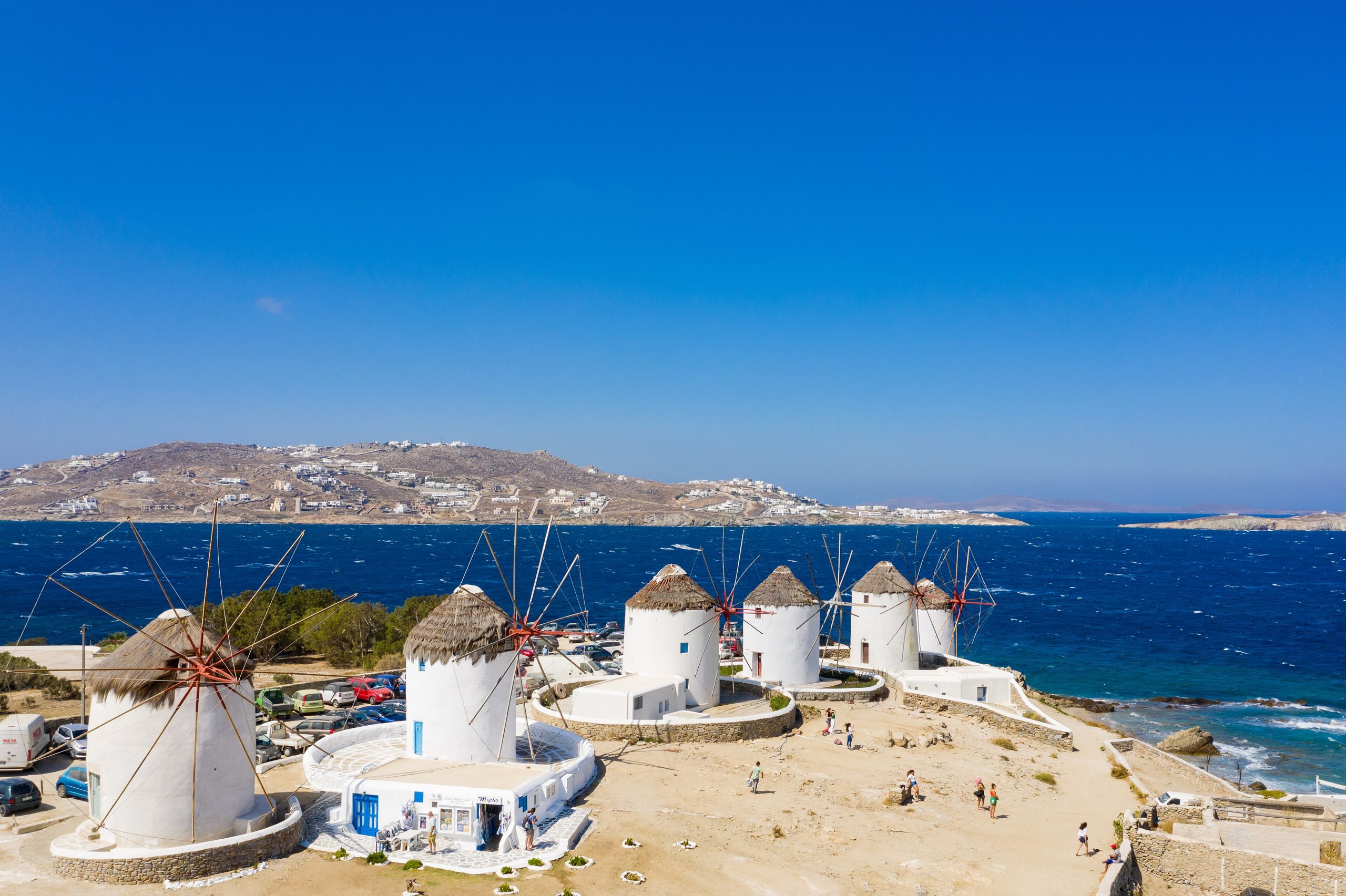
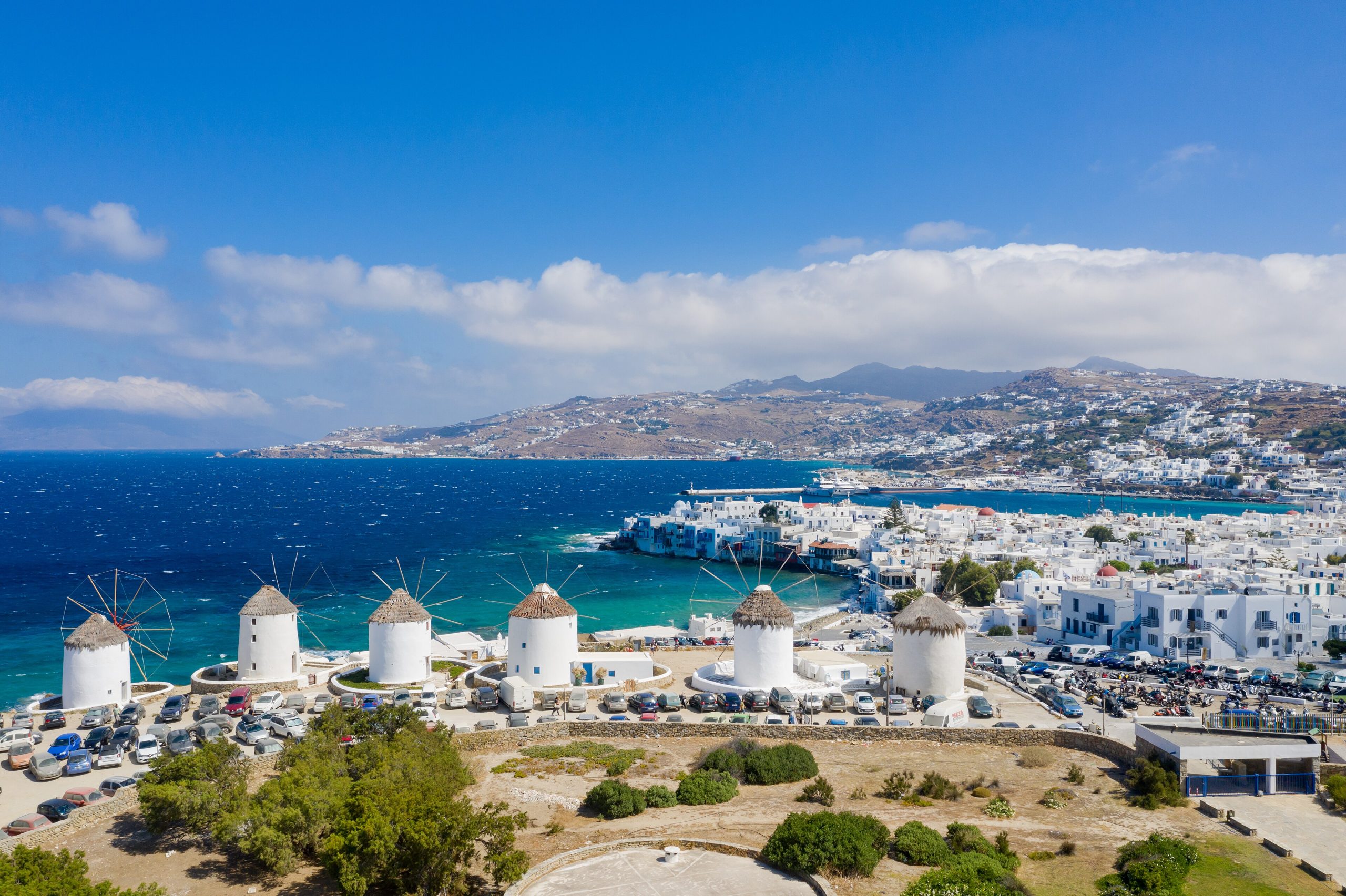
Standing sentinel above the town, the windmills of Mykonos are the island’s emblem. Seven of the 16th-century mills survive in a row at Kato Mili, on a low hill overlooking Little Venice and the sea — once used to grind wheat, now the classic Mykonos photo. It’s one of the best spots on the island for sunset, when crowds gather to watch the sky blaze over the Aegean and the whitewashed mills glow. Arrive early to claim your spot.
Little Venice at Sunset
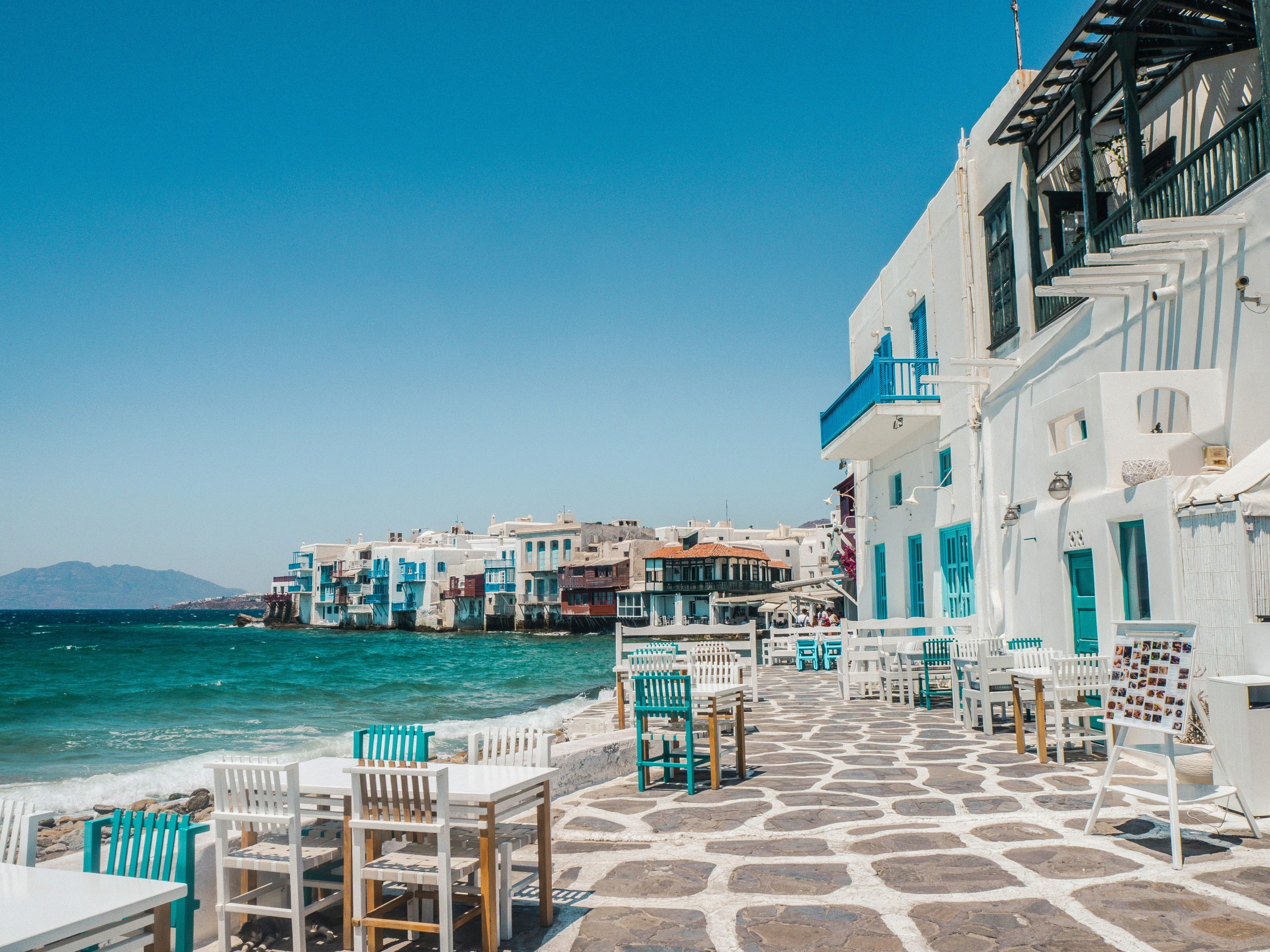
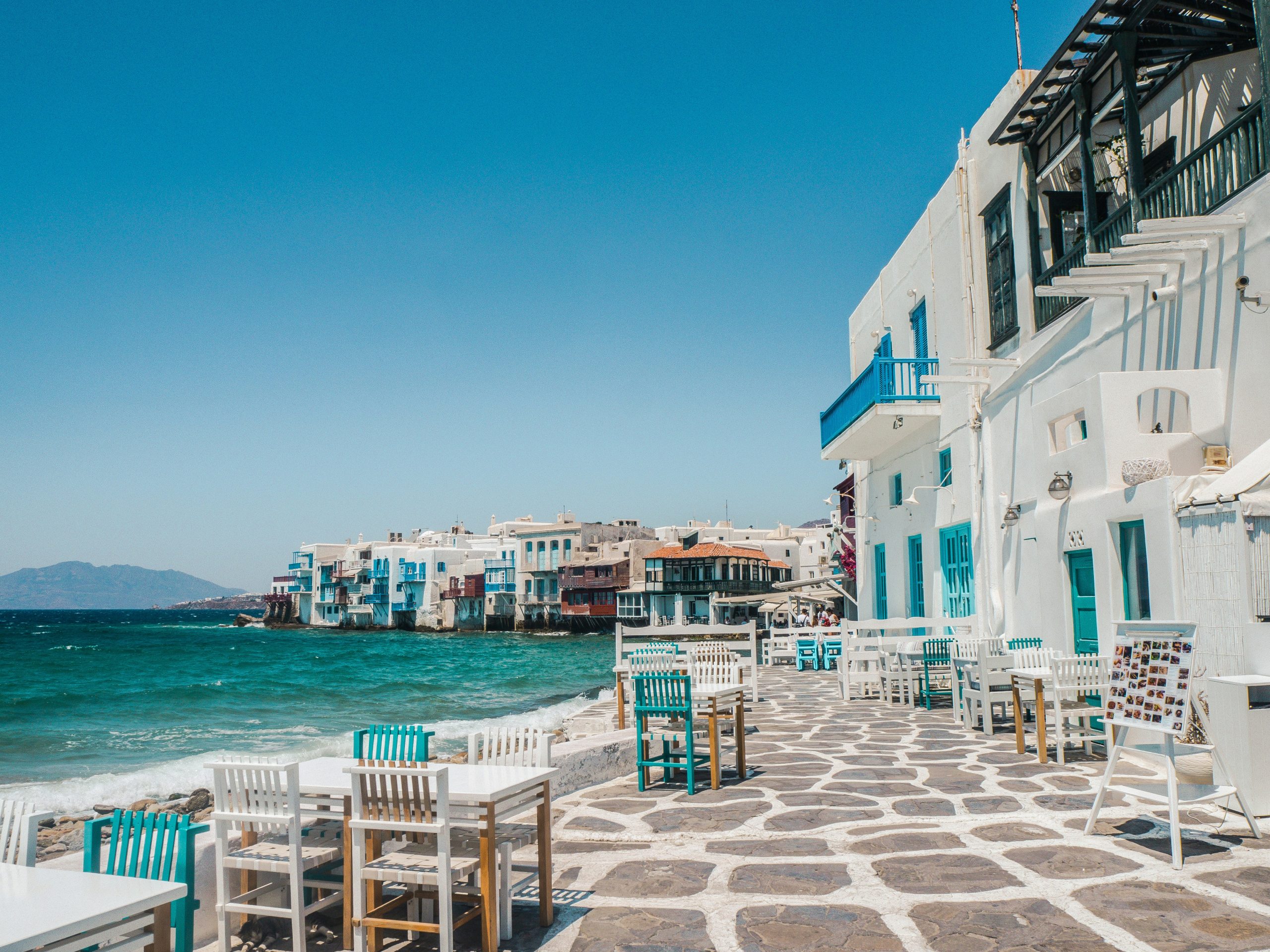
Just below the windmills, Little Venice (Alefkandra) is a row of elegant old sea-captains’ houses built right at the water’s edge, their wooden balconies hanging over the waves. Today they house cocktail bars and restaurants, and there is no more romantic place on Mykonos to sip a drink as the sun sinks into the sea. It’s a short, scenic stroll from the windmills — come at golden hour, order an aperitivo, and soak up the island’s most magical view.
Mykonos’s Beaches
Mykonos is famous for its beaches, and there’s one for every mood. The southern coast has the liveliest: Paradise and Super Paradise are legendary party beaches with clubs and DJs; glamorous Psarou and Platis Gialos draw a see-and-be-seen crowd; and Elia, the island’s largest, is a little more relaxed. For calmer, family-friendly sand, try Ornos or Agios Ioannis. Many are linked by sea taxi from Platis Gialos, making beach-hopping easy.
Beach Clubs & Nightlife
Mykonos is the party capital of the Cyclades, and its beach clubs are the stuff of legend — daytime revelry with champagne, DJs and sun-loungers at spots like Scorpios, Nammos and the clubs of Paradise Beach that rolls on until dawn. In town, the bars of Little Venice and the backstreets buzz late into the night, and world-famous DJs headline through summer. It’s glitzy, hedonistic and not cheap — but if a glamorous party scene is what you’re after, few places do it better.
Planning a Mykonos trip?
Our partner Voyada’s trip planning AI builds a day-by-day plan with flights, hotels and a real total cost for your dates — in about a minute, free.
Plan trip with AIDay Trip to Delos
A short boat ride from Mykonos lies one of Greece’s greatest archaeological sites: Delos, a UNESCO World Heritage island revered in antiquity as the birthplace of the gods Apollo and Artemis. Once a sacred sanctuary and thriving port, it’s now an uninhabited open-air museum of temples, mosaics, markets and the famous Terrace of the Lions. Guided boat tours run from Mykonos Town in the morning; it’s a fascinating half-day and a complete contrast to the island’s party image.
Churches, Culture & the Aegean Style
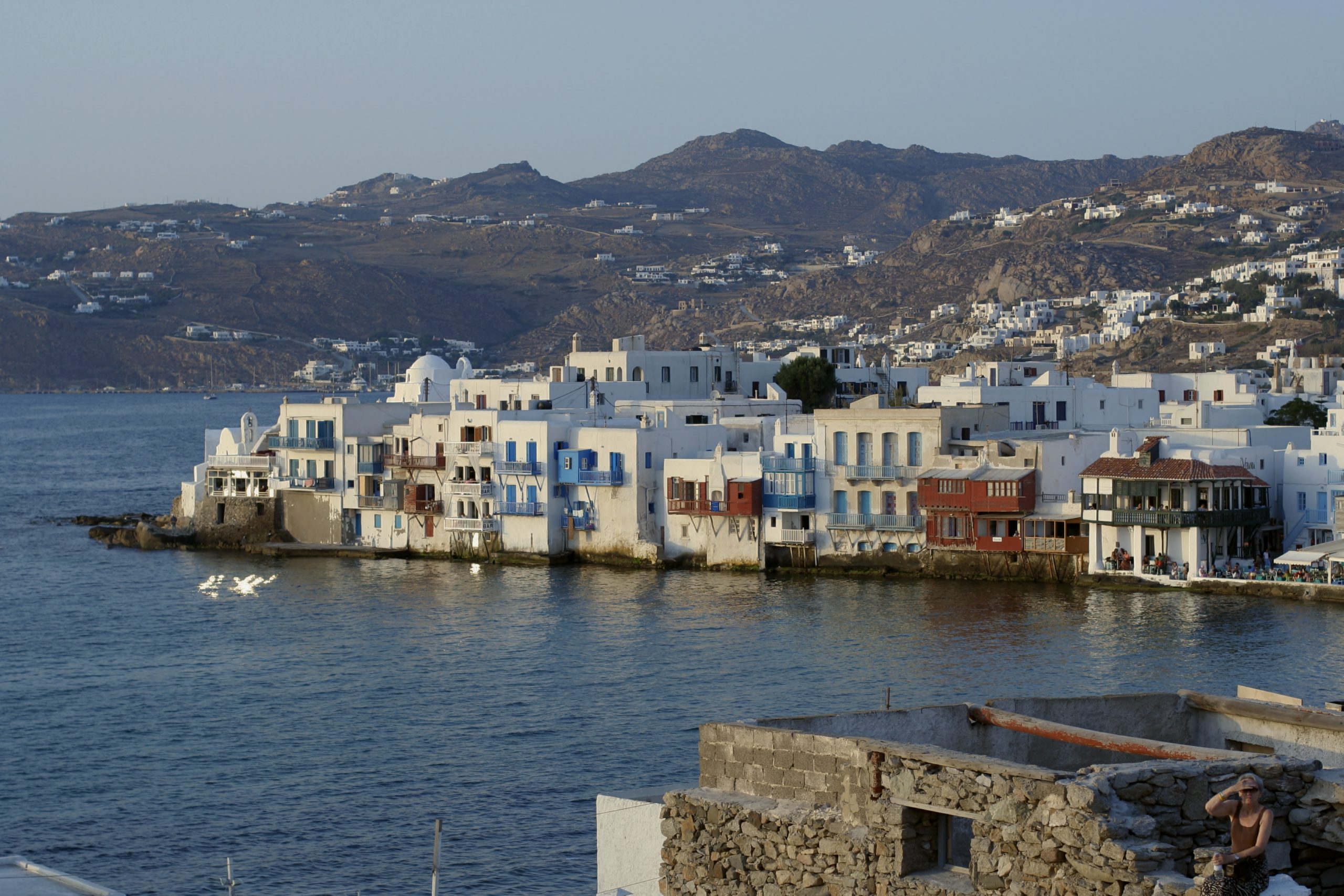
Beyond the beaches and bars, Mykonos rewards slower exploration. Seek out the many little whitewashed chapels dotted across town and countryside, the folklore and maritime museums, and the pelican mascot (a descendant of the beloved ‘Petros’) that patrols the waterfront. Browse the designer boutiques and Greek-style homeware, and admire the pure Cycladic architecture — the blinding white cubes against blue sea and sky — that has inspired designers the world over. It’s a stylish island with genuine soul beneath the glamour.
Boat Trips, Watersports & the Sea
The warm Aegean is Mykonos’s playground. Beyond Delos, boat excursions visit hidden coves and the neighbouring island of Rhenia for swimming and snorkelling in turquoise water, and sunset sailing cruises are a highlight. The windy south coast is a magnet for windsurfing and kitesurfing, while the beaches offer jet-skis, paddleboards and diving. Renting a small boat for the day, or joining a catamaran cruise, is one of the best ways to escape the crowds and see the island’s prettiest, quieter corners.
Eating in Mykonos
Mykonos’s food ranges from humble to high-end. Sample island specialities like kopanisti (a spicy soft cheese), louza cured pork, fresh grilled seafood and Greek classics at a traditional taverna, ideally with your feet near the water. At the other extreme, the island has a glut of glamorous, celebrity-chef restaurants and beach-club dining to match its jet-set reputation. Wherever you eat, pair it with a crisp Greek white or an ouzo, and don’t skip the loukoumades (honey doughnuts) for dessert.
Best Time to Visit Mykonos
Mykonos’s season runs roughly May to October. July and August are peak — hottest, busiest, priciest and at full party pitch, with the famous meltemi wind sometimes whipping the beaches. For the best balance of warm seas, good weather and slightly thinner crowds, aim for late May–June or September. The island largely shuts down in winter. Book well ahead for summer, when accommodation and clubs fill fast. The official Greek tourism site has more planning detail.
Getting There & Around
Mykonos is easy to reach, with an airport served by direct summer flights from across Europe and frequent ferries from Athens (Piraeus/Rafina) and other Cycladic islands like Santorini and Naxos. On the island, a bus network links the town with the main beaches cheaply, and sea taxis hop between the southern beaches. Many visitors rent an ATV/quad, scooter or small car for freedom, though town itself is pedestrianised. Taxis are limited and pricey in high season, so plan ahead.
Where to Stay in Mykonos
Where you stay sets the tone. Mykonos Town (Chora) puts you in the heart of the action — the lanes, bars and sunset views — but it’s lively and can be noisy. For beach glamour and clubs, base near Platis Gialos, Psarou or Ornos; Ornos is also the most family-friendly. The party crowd heads for Paradise Beach. Quieter, more scenic stays cluster around Agios Ioannis and the north. Book early for summer, and match the area to whether you want buzz or calm.
Related Guides
Frequently Asked Questions
What are the best things to do in Mykonos?
Wander the whitewashed lanes of Mykonos Town, watch sunset from the windmills and Little Venice, hit the famous beaches and beach clubs (Paradise, Psarou, Elia), take a boat trip to the ancient UNESCO island of Delos, and enjoy the island’s glamorous dining and nightlife.
How many days do you need in Mykonos?
Three to four days is ideal — time for the town and windmills, a couple of different beaches, a Delos day trip and a taste of the nightlife. Two days covers the essentials; longer lets you slow down and beach-hop.
Is Mykonos worth visiting?
Yes, if you want a stylish, lively island with gorgeous Cycladic town, world-class beaches and legendary nightlife. It’s glamorous and can be pricey and crowded in summer — if you prefer peace and quiet, pair it with a calmer island or visit in the shoulder season.
When is the best time to visit Mykonos?
The season runs May to October. July and August are hottest, busiest and priciest at full party pitch; late May–June and September offer warm seas, good weather and thinner crowds. The island largely closes in winter.
Is Mykonos just for partying?
No — while it’s famous for its clubs and beach parties, Mykonos also has a beautiful whitewashed town, quiet chapels and beaches, the extraordinary archaeological site of Delos, excellent food and stunning Cycladic scenery. You can easily enjoy it without the party scene.
How do you get to Mykonos?
By air (direct summer flights from across Europe) or by ferry from Athens (Piraeus or Rafina) and neighbouring Cycladic islands such as Santorini and Naxos. On the island, buses link the town and main beaches, and sea taxis connect the southern beaches.
Is Mykonos safe for solo female travellers?
Yes, Mykonos is a well-established, tourist-friendly island that many solo women visit without issue, and its compact town and beach clubs stay busy and well lit well into the night. As with any major nightlife destination, take the usual precautions around drinks in busy bars and clubs, and agree taxi fares in advance or use a hotel-booked transfer, since Mykonos taxis are notoriously scarce and sometimes overcharge in peak summer. Quieter beaches and back lanes of Chora are very safe during the day but can feel isolated late at night, so stick to busier routes after dark.
Is there a wildfire risk in Mykonos during summer?
Yes, like much of Greece, Mykonos faces a real wildfire risk during the hot, dry summer months, typically from June to September, when strong winds such as the meltemi can spread fires quickly across dry scrubland. The Greek fire service and civil protection authorities actively monitor conditions and issue daily risk ratings and evacuation orders via the 112 alert system when needed. It’s sensible to register for local alerts, avoid lighting any open flames or discarding cigarettes outdoors, and follow official instructions immediately if you ever receive an evacuation warning while on the island.
Is Mykonos expensive?
Yes, Mykonos is one of the priciest Greek islands, on a par with Santorini, thanks to its jet-set reputation and beach-club scene. Beach club sunbeds alone can run 50-150-plus euros (roughly 55-165 US dollars) a pair in peak season, a simple taverna meal costs around 20-35 euros, and hotel rates in July and August can be two to three times higher than in late May or September. You can visit more affordably by travelling in the shoulder season, staying slightly outside Chora, and choosing free public beaches over the beach clubs.
How much does a week in Mykonos cost?
A week in Mykonos varies hugely by season and style of travel, but budget travellers staying in simple rooms and eating at tavernas can get by on roughly 700-1,000 euros (around 750-1,100 US dollars) per person excluding flights, covering modest accommodation, local transport and meals. Add beach club days, boutique hotels or a stay in high summer, and that figure can easily double or triple, since Mykonos is priced at the luxury end of the Greek islands. Travelling in late May, June or September rather than July-August is the single biggest lever for keeping a week here affordable.
Is Mykonos worth visiting as a day trip?
It can work, but it undersells the island. A day trip from Athens or Santorini gives you enough time to wander Chora, see the windmills and watch sunset over Little Venice, which covers the essential postcard experience. What you’ll miss is the beach-club culture and the slower pace of exploring the quieter beaches and villages, which is really where Mykonos’s charm lies for most repeat visitors. If your schedule only allows a day, go for it, but two or three nights lets you actually enjoy the island rather than just tick it off.
Is Mykonos family-friendly?
Mykonos can work well for families, though it isn’t primarily marketed that way. Beaches like Ornos and Platys Gialos have calm, shallow water and family-friendly tavernas, and Chora is fun for kids to wander despite the crowds. Not all Greek beaches are supervised, though, and official advice is to take extra care where there are no lifeguards, flags or signs, and to keep small children within arm’s reach in the sea. The trade-off is the island’s nightlife-and-beach-club identity, which is concentrated in specific areas and easy to simply avoid if you choose your beach and accommodation with that in mind. Families who want a quieter Cycladic island experience with fewer late-night crowds might find neighbouring Naxos or Paros a more relaxed fit.
How far is Mykonos from Santorini?
Mykonos and Santorini are around 110 km (roughly 70 miles) apart by sea, and high-speed ferries connect them in about 2 to 3 hours, making island-hopping between the two very manageable and one of the most popular combinations in the Cyclades. There’s no direct flight between the two islands, so ferry is the standard option, since travelling via Athens by air would take considerably longer overall. Book ferry tickets ahead in July and August, when the popular routes and best departure times sell out.
How far is Mykonos from Athens?
Mykonos is about 150-170 km (roughly 95-105 miles) southeast of Athens across the Aegean. The fastest option is flying, which takes around 40 minutes, with several flights a day in summer. High-speed ferries from Athens’s port of Piraeus take around 3 to 5 hours depending on the vessel and stops, while slower conventional ferries can take longer still. Most first-time visitors fly one way and take the scenic ferry the other, to experience both.
Can strong winds cancel ferries and boat trips to Mykonos?
Yes, and it catches people out. The meltemi, the dry northerly wind of the Aegean summer, blows hardest in July and August and can raise a sea rough enough for the port authority to suspend sailings, with fast craft and small boats stopped first and the larger ferries the most likely to keep running. Trips to Delos and the beach boats are cancelled on the worst days, and exposed northern beaches turn unswimmable. Most beaches here have no lifeguard, so take wind and waves seriously. Check the day’s sailings with the port before you travel, and keep a spare night on the island rather than connecting straight from a ferry to a flight home.
Planning Your Mykonos Trip
Mykonos delivers on its glamorous reputation — but the real island rewards balance. Get lost in Chora’s white lanes, claim a sunset spot at the windmills and Little Venice, mix a lively beach day with a quiet cove, and set aside a morning for ancient Delos. Visit in the shoulder months for warm seas without the crush, choose your base for buzz or calm, and this dazzling Cycladic island will exceed the hype.
Before you go: turn this guide into a day-by-day plan. Our partner Voyada is a free itinerary creator that builds the trip with flights, hotels and a real total cost for your dates — in about a minute.
Build a travel itinerary →