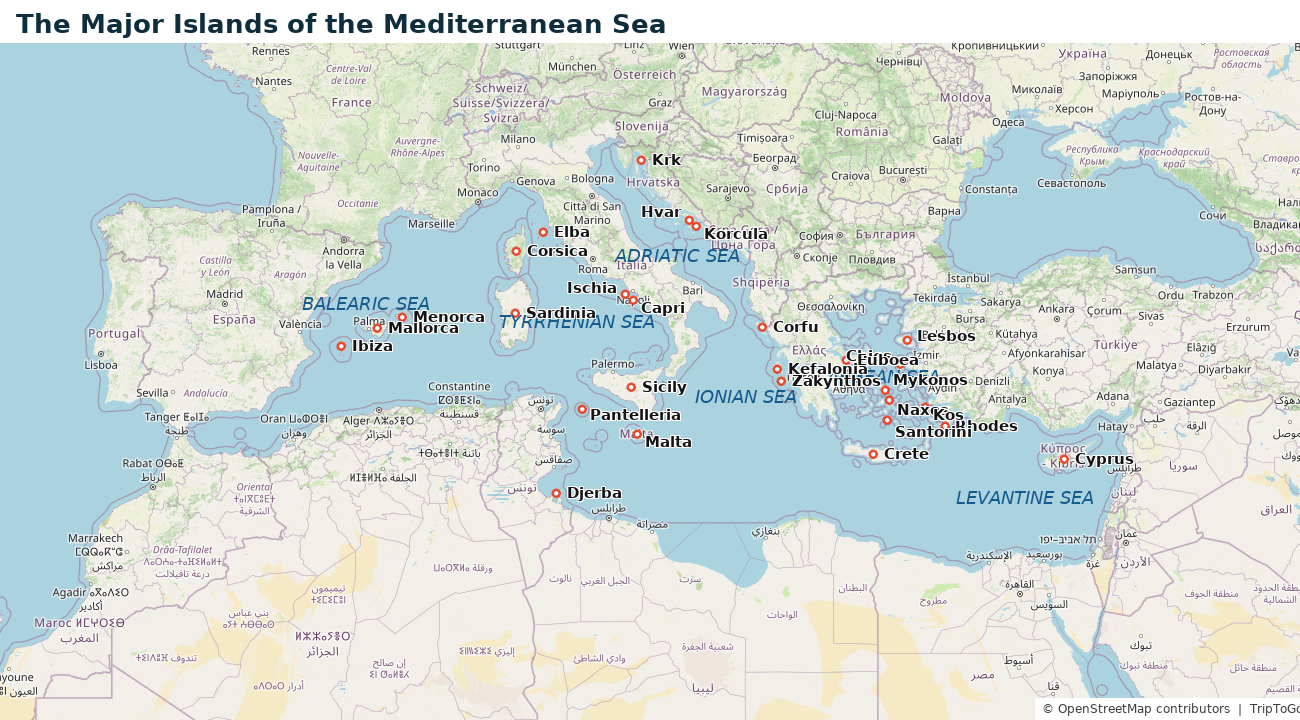
Quick answerThe best Mediterranean islands include Santorini and Crete (Greece), Sicily and Sardinia (Italy), Mallorca and Ibiza (Spain), Malta, and Corsica (France). Pick big all-rounders like Sicily or Mallorca for variety, Ibiza or Mykonos for nightlife, or Vis and Menorca for quiet. They’re best June–September, with calmer shoulder seasons either side.
The Mediterranean has over 3,000 islands, but only a handful consistently rank among the world’s best. Greece’s Santorini and Mykonos headline most lists — but the real gems, like Corsica, Hvar, Gozo, and Milos, offer fewer crowds with equal or greater beauty. Choosing the right Mediterranean island means matching the island’s character to your travel style, not just following the most-photographed destination. For official, up-to-date visitor information, see Visit Europe, the European Travel Commission’s official site.
Best Mediterranean Islands: Complete Comparison (25 Islands, 2026)
Large island, calm beaches, kid-friendly resorts, mythology
Off the Beaten Path
Cyprus
Divided island, Troodos mountains, Aphrodite’s birthplace
Picture walking through Santorini’s white houses, visiting Sicily’s ancient ruins, or enjoying Crete’s calm beaches. The Mediterranean islands have something for everyone, from history to relaxation.
These islands boast clear waters, rich history, and vibrant culture. In this article, we’ll guide you to the best places to visit. Get ready for unforgettable adventures.
Key Takeaways
Discover the most breathtaking Mediterranean islands to visit.
Explore the rich history and culture of these island destinations.
Find out the best times to visit these islands for an unforgettable experience.
Get insider tips on the must-visit attractions and activities.
Learn how to plan your trip to make the most of your island-hopping adventure.
The Allure of Mediterranean Island Getaways
The Mediterranean is known for its diverse islands. Each island offers a unique mix of culture, history, and natural beauty. These places are not just destinations; they’re experiences waiting to be discovered.
Cultural and Natural Diversity of the Mediterranean
The Mediterranean is a mix of cultures, languages, and landscapes. Islands like Crete and Rhodes in Greece, Sardinia in Italy, and Corsica in France are rich in history. They have ancient ruins, medieval towns, and lively cultural festivals.
The natural beauty of these islands is stunning. They have pristine beaches, clear waters, and green mountains.
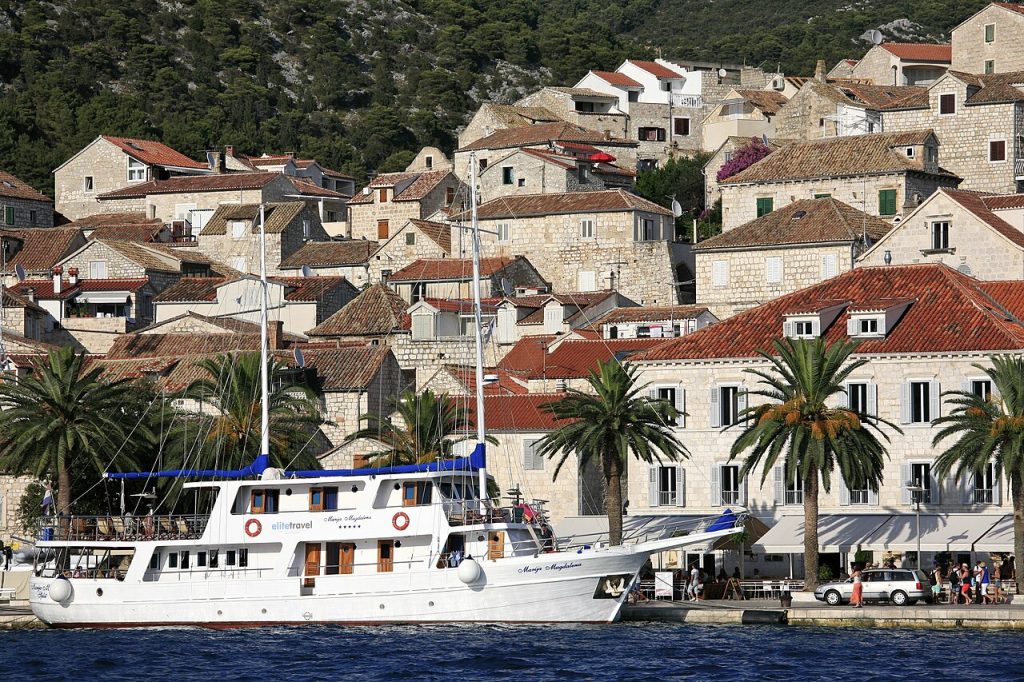
Hvar Town, Croatia. Photo: Alex Proimos from Sydney, Australia (CC BY 2.0) via Wikimedia Commons.
Sardinia’s Costa Smeralda is famous for its luxury resorts and beautiful beaches. Crete has the Samaria Gorge, one of Europe’s longest and most beautiful gorges. This variety means there’s something for everyone, whether you want to relax, have an adventure, or dive into the culture.
When to Visit for the Perfect Experience
The best time to visit the Mediterranean islands depends on the island and what you want. The peak season is June to September, with warm and sunny weather. But, the shoulder season (April to May and September to October) is great for a more relaxed visit, with nice weather and fewer people.
Knowing the local climate and tourist seasons helps plan your trip. Spring and autumn are good for visiting historical sites, with mild weather for outdoor activities. Summer is best for beach lovers and water sports fans. Winter is a good time to enjoy local culture and food without the crowds.
Mediterranean Islands at a Glance: Size, Location & Who They're For
Before the island-by-island guide, here is the data most “best of” lists leave out — every major Mediterranean island with its country, sea, size, nearest airport and who it suits best. Sort it to plan your trip your way.
Island
Country
Sea / Region
Area (km²)
Nearest airport
Best for
Sicily
Italy
Tyrrhenian / Ionian
25,800
Catania (CTA)
Mount Etna, ancient temples, food
Sardinia
Italy
Tyrrhenian
24,100
Cagliari (CAG)
White-sand beaches, Costa Smeralda
Cyprus
Cyprus
Levantine
9,251
Larnaca (LCA)
Year-round sun, ruins, beaches
Corsica
France
Ligurian
8,681
Ajaccio (AJA)
Hiking (GR20), wild coastline
Crete
Greece
Cretan Sea
8,312
Heraklion (HER)
Minoan history, gorges, beaches
Euboea (Evia)
Greece
Aegean
3,655
Athens (ATH) + bridge
Quiet, easy from Athens
Mallorca
Spain
Balearic
3,640
Palma (PMI)
Coves, mountains, all-rounder
Lesbos
Greece
Aegean
1,630
Mytilene (MJT)
Ouzo, authentic, birdwatching
Rhodes
Greece
Aegean (Dodecanese)
1,398
Rhodes (RHO)
Medieval Old Town, beaches
Chios
Greece
Aegean
842
Chios (JKH)
Mastic villages, off the beaten path
Kefalonia
Greece
Ionian
781
Kefalonia (EFL)
Myrtos beach, sea caves
Menorca
Spain
Balearic
694
Mahon (MAH)
Calm beaches, family-friendly
Corfu
Greece
Ionian
592
Corfu (CFU)
Lush greenery, Venetian old town
Ibiza
Spain
Balearic
577
Ibiza (IBZ)
Nightlife and hidden coves
Djerba
Tunisia
Gulf of Gabes
523
Djerba (DJE)
Beaches, North-African flavor
Naxos
Greece
Aegean (Cyclades)
428
Naxos (JNX)
Family beaches, great food
Zakynthos
Greece
Ionian
406
Zakynthos (ZTH)
Navagio beach, sea turtles
Brac
Croatia
Adriatic
395
Brac (BWK) / Split
Zlatni Rat beach
Kos
Greece
Aegean (Dodecanese)
290
Kos (KGS)
Beaches, history, cycling
Korcula
Croatia
Adriatic
279
Dubrovnik (DBV)
Walled town, wine
Elba
Italy
Tyrrhenian
224
Pisa (PSA) + ferry
Beaches, Napoleon history
Paros
Greece
Aegean (Cyclades)
196
Paros (PAS)
Balanced Cyclades base
Milos
Greece
Aegean (Cyclades)
160
Milos (MLO)
Sarakiniko, surreal beaches
Hvar
Croatia
Adriatic
297
Split (SPU) + ferry
Glamour, lavender, nightlife
Mykonos
Greece
Aegean (Cyclades)
85
Mykonos (JMK)
Glamour and nightlife
Formentera
Spain
Balearic
83
Ibiza (IBZ) + ferry
Caribbean-like beaches
Santorini
Greece
Aegean (Cyclades)
76
Santorini (JTR)
Sunsets, caldera, honeymoons
Gozo
Malta
Central Med
67
Malta (MLA) + ferry
Slow pace, rural, diving
Ischia
Italy
Tyrrhenian
46
Naples (NAP) + ferry
Thermal spas, volcanic beaches
Vis
Croatia
Adriatic
90
Split (SPU) + ferry
Remote, Blue Cave
Malta
Malta
Central Med
246
Malta (MLA)
History, diving, English-speaking
Capri
Italy
Tyrrhenian
10
Naples (NAP) + ferry
Glamour, Blue Grotto
Tap a column heading to sort. Areas are approximate and rounded; islands ranked precisely by size below. Sources: national tourism boards and the official UNESCO World Heritage list.
✈️ TripToGo Travel Deals
Get notified about great travel deals
Hand-picked flight, hotel and destination deals, straight to your inbox. No spam, unsubscribe anytime.
🎉 Thank you for subscribing!
You’re all set — the best travel deals are on their way.
The Largest Mediterranean Islands by Size
#
Island
Country
Area (km²)
1
Sicily
Italy
25,834
2
Sardinia
Italy
24,100
3
Cyprus
Cyprus
9,251
4
Corsica
France
8,681
5
Crete
Greece
8,312
6
Euboea
Greece
3,655
7
Mallorca
Spain
3,640
8
Lesbos
Greece
1,630
9
Rhodes
Greece
1,398
10
Chios
Greece
842
11
Kefalonia
Greece
781
12
Menorca
Spain
694
13
Corfu
Greece
592
14
Ibiza
Spain
577
15
Djerba
Tunisia
523
16
Lemnos
Greece
476
17
Samos
Greece
476
18
Naxos
Greece
428
19
Zakynthos
Greece
406
20
Krk
Croatia
406
Areas per the UNESCO/Wikipedia list of Mediterranean islands by area.
How Many Islands Are in the Mediterranean? Key Facts
Which island wins? Price them side by side
Our partner Voyada’s AI itinerary planner turns your Mediterranean island picks into a realistic route with flights, hotels and a real total cost — in about a minute, free.
How many islands are in the Mediterranean? More than 10,000 islands and islets dot the Mediterranean Sea, yet only about 250 are permanently inhabited.
What is the largest Mediterranean island?Sicily (Italy), at roughly 25,800 km² — followed by Sardinia and Cyprus.
Which is the most populous? Sicily again, with about 4.8 million residents.
What is the highest point?Mount Etna on Sicily, an active volcano of about 3,350 m — the tallest island peak in the Mediterranean and Europe’s most active volcano.
Which country has the most islands?Greece by far — roughly 6,000 islands and islets, of which about 227 are inhabited — followed by Croatia with 1,244 islands, islets and reefs (around 50 inhabited).
Which are cheapest? Smaller Greek isles and Albania’s coast offer the best value; Capri, Hvar and the Balearics sit at the pricey end.
Best island for a first visit?Crete or Mallorca — both are large, well-connected and offer beaches, history and food in one place.
Italy — the two largest islands, Sicily and Sardinia, plus the Bay of Naples gems Capri and Ischia and Tuscany’s Elba. Plan around the best time to visit Italy.
Spain — the Balearics: Mallorca, Menorca, Ibiza and tiny Formentera.
✈️ Getting there: fly to Santorini (JTR) · ⛴️ ferry from Athens (Piraeus) ~5–8 hrs · 📅 Days: 2–3 · 🏨 Base in: Oia or Fira
Santorini is known for its stunning landscapes, beautiful sunsets, and quaint villages. It’s a top pick for those looking for a memorable Mediterranean trip. This Greek island is famous for its stunning views, rich history, and lively culture.
Iconic Blue-Domed Churches and Whitewashed Villages
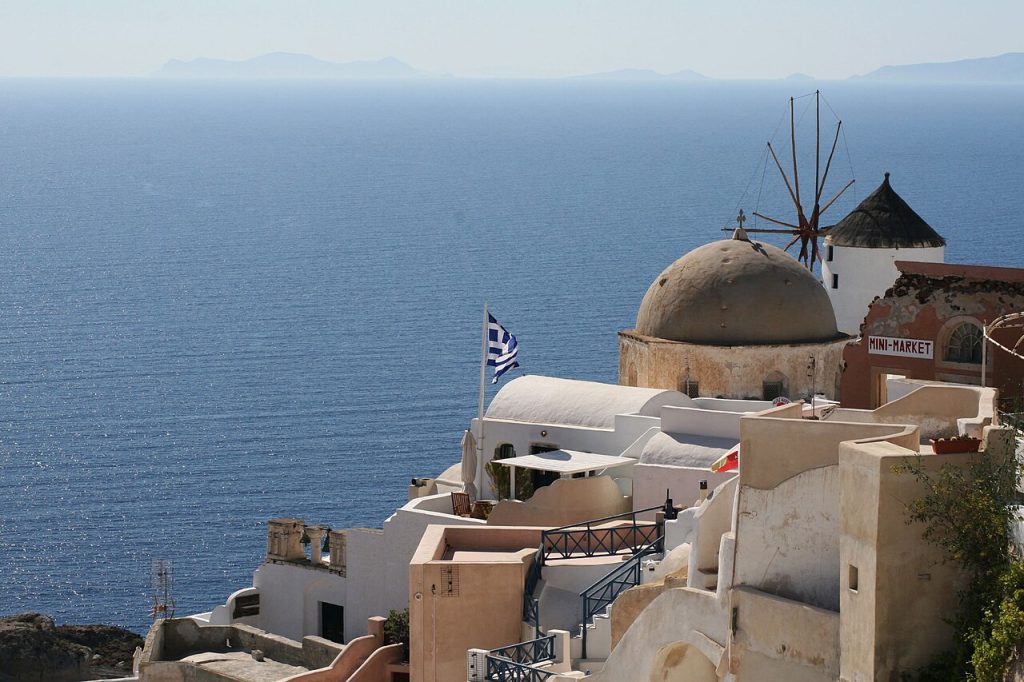
The villages of Santorini, like Oia and Imerovigli, are known for their white houses and blue churches. This creates a stunning landscape that has drawn artists and travelers for years. The narrow streets and old buildings add to the island’s charm, perfect for a romantic trip.
Oia village, Santorini. Photo: bongo vongo (CC BY-SA 2.0) via Wikimedia Commons.
Sunset Views from Oia and Fira
Santorini is famous for its amazing sunsets, best seen from Oia and Fira. The views from these spots are breathtaking, with the sun setting over the Aegean Sea. Enjoying a dinner at a cliffside restaurant makes the moment even more special.
Unique Volcanic Beaches and Wine Tasting
Santorini’s volcanic past has given it unique beaches like the black sands of Kamari and Perissa, plus the Red Beach, best seen by boat because its cliff path is landslide-prone and often closed. The island is also known for its great wines, with the Assyrtiko grape being a favorite. Visitors can taste local wines and learn about the island’s winemaking history.
Sicily, Italy: A Cultural Melting Pot
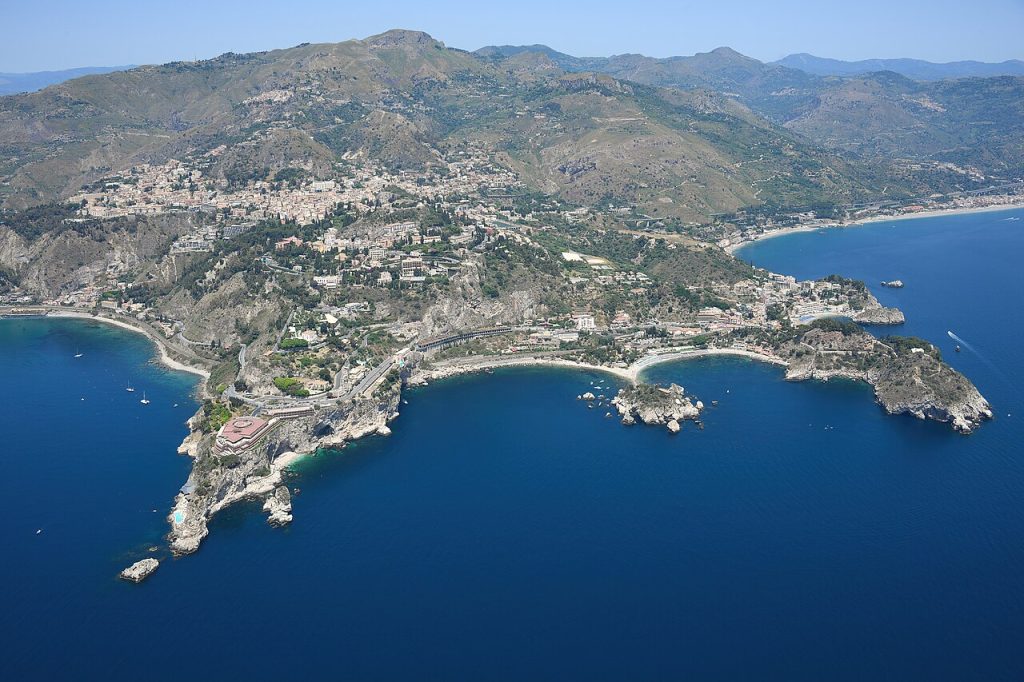
The coastline of Taormina, Sicily. Photo: Carsten Steger (CC BY-SA 4.0) via Wikimedia Commons.
✈️ Getting there: fly to Catania (CTA) or Palermo (PMO) · 📅 Days: 5–7 · 🏨 Base in: Catania, Taormina or Palermo
Sicily, Italy, is a gem among Mediterranean destinations. It boasts rich culture, stunning landscapes, and tasty food. This island reflects the Mediterranean’s diverse history and beauty.
Valley of the Temples and Ancient Greek Heritage
The Valley of the Temples in Agrigento is a key archaeological site in Sicily. It showcases the island’s ancient Greek roots. Here, you’ll find several temples, including the Temple of Concordia, known for its preservation.
Exploring this site, you’ll learn about the lives of ancient Greeks. It’s a journey back in time.
Mount Etna Adventures and Natural Wonders
Mount Etna, one of the world’s most active volcanoes, is in Sicily. It’s a hotspot for adventure. Guided tours let you see the volcano up close.
The area around Mount Etna is filled with craters and lava flows. It’s a unique and breathtaking sight.
Sicilian Gastronomy and Street Food Experiences
Sicilian food is a must-try when visiting. The island’s street food, like arancini and cannoli, offers a taste of its history and culture. It’s a culinary adventure.
At markets and street food stalls, you can taste authentic Sicilian dishes. It’s a true culinary experience.
Mallorca, Spain: Beyond the Beach Resorts
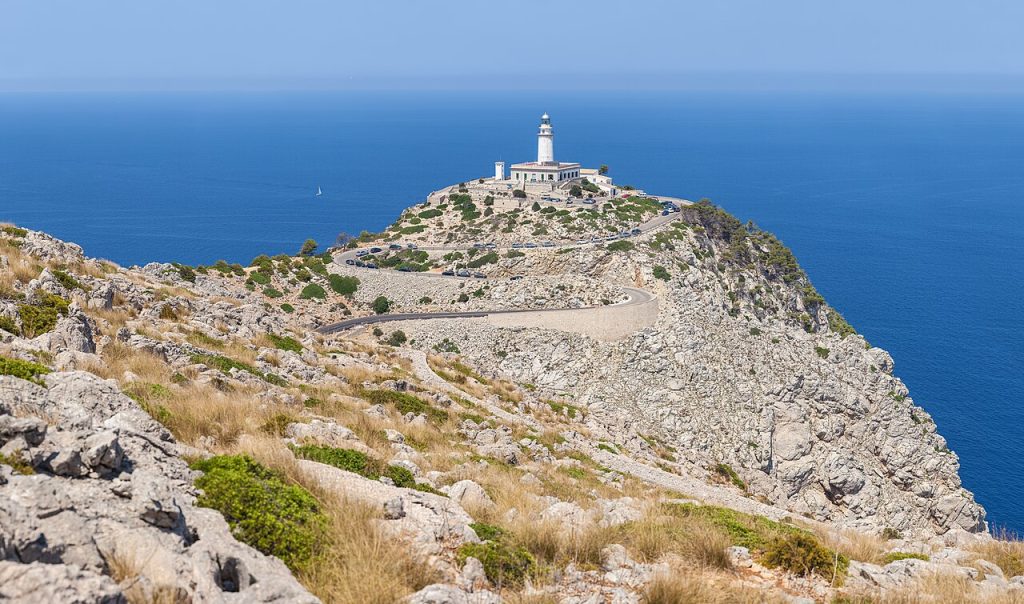
Cap de Formentor, Mallorca. Photo: Thomas Wolf, www.foto-tw.de (CC BY-SA 3.0 de) via Wikimedia Commons.
✈️ Getting there: fly to Palma (PMI) · 📅 Days: 4–6 · 🏨 Base in: Palma or the west coast (Sóller/Deià)
Mallorca, Spain, is more than a beach spot. It’s full of natural beauty, culture, and history. This island offers something for everyone, making your visit rich and varied.
Serra de Tramuntana's UNESCO Landscapes
The Serra de Tramuntana mountains are a UNESCO World Heritage Site. They’re perfect for nature lovers and hikers. The trails, villages, and views are stunning.
Explore villages like Valldemossa and Deià. Enjoy local food in traditional restaurants.
Palma's Cathedral and Historic Quarter
Palma, the capital, has the amazing La Seu Cathedral. It’s a Gothic masterpiece that stands tall. The historic quarter is full of charming streets and squares.
Places like Plaça Major are great for shopping and dining. The city’s history is seen in its architecture, from Roman ruins to Renaissance palaces.
Secret Coves and Pristine Beaches
Mallorca has many secret coves and beaches. Cala Mondragó and Cala Varques are examples. They offer clear waters and untouched beauty.
These spots are ideal for those who want peace and nature.
Mallorca is a top popular Mediterranean travel spot and one of the best Mediterranean islands to visit. It has history, nature, and beautiful beaches for everyone.
Crete, Greece: Mythological Majesty
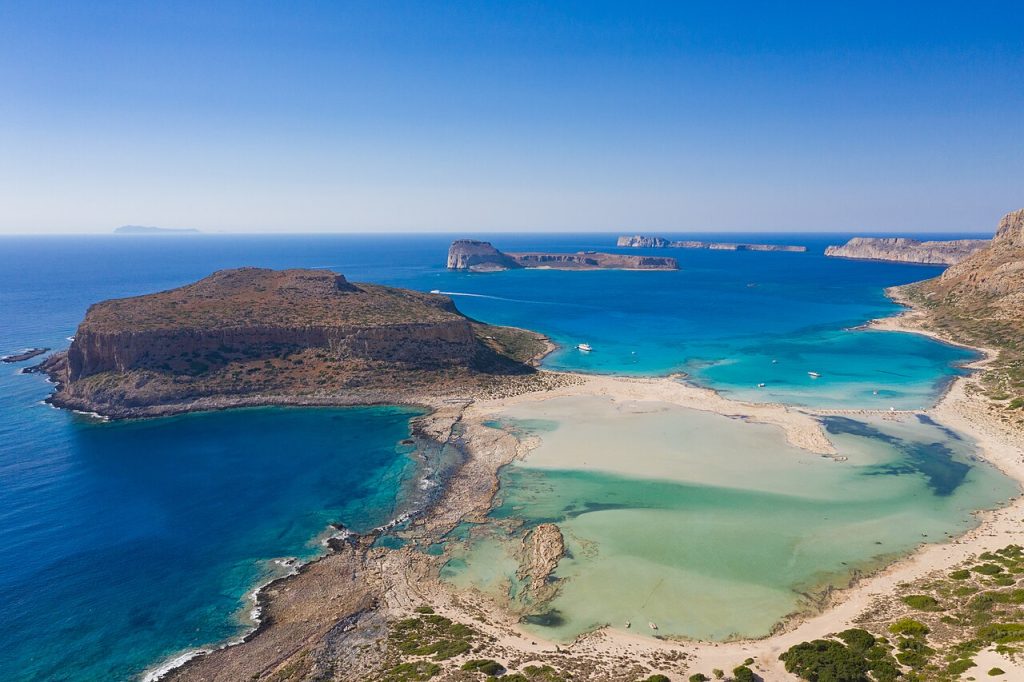
Balos lagoon, Crete. Photo: dronepicr (CC BY 2.0) via Wikimedia Commons.
✈️ Getting there: fly to Heraklion (HER) or Chania (CHQ) · ⛴️ ferry from Athens ~9 hrs · 📅 Days: 4–5 · 🏨 Base in: Chania
Crete, Greece’s largest island, is a mix of myth and nature. It’s a key cultural and historical spot. Anyone visiting the Mediterranean should see Crete.
Palace of Knossos and Minoan Civilization
The Palace of Knossos is at the heart of Crete’s history. It shows us the Minoan civilization, one of Europe’s oldest. You can see the throne room and bull-leaping frescoes, revealing the Minoans’ advanced culture.
The Palace of Knossos is more than history; it’s a dive into myth. It’s linked to the Minotaur and the Labyrinth. This makes Knossos a must-see for history and myth fans.
Hiking Samaria Gorge and Natural Exploration
Nature enthusiasts will love Crete, with Samaria Gorge as a top spot. It’s Europe’s longest and most stunning gorge. Hiking here is a challenge but rewarding, with amazing views and wildlife.
Hiking Samaria Gorge is an adventure. You’ll see rivers, old villages, and stunning mountains. It’s a chance to get close to nature.
Authentic Village Life and Cretan Cuisine
Crete is also known for its real village life. Places like Agios Nikolaos and Elounda show traditional Cretan ways. You’ll find charming streets, local tavernas, and friendly people.
Cretan food is a big deal, with fresh ingredients like olive oil, seafood, and herbs. Try dishes like moussaka, souvlaki, and local cheeses. Don’t forget the Cretan wine. The food reflects Crete’s rich culture and history.
The Best Mediterranean Islands for Every Type of Traveler
Looking to relax on beautiful beaches or explore ancient ruins? The Mediterranean islands have it all. Each island caters to different interests, making sure every traveler finds their ideal spot.
For Beach Lovers and Sun Seekers
Mykonos and Ibiza are perfect for beach lovers. Mykonos boasts vibrant beaches with clear waters. Ibiza is known for its lively nightlife and stunning beaches.
Sardinia, Italy, is also a top choice for beach enthusiasts. Its beaches are like those in the Caribbean, with crystal-clear waters. The Costa Smeralda is famous for luxury and natural beauty.
For History and Culture Enthuasiasts
Crete and Sicily are ideal for history and culture buffs. Crete has the Palace of Knossos, a key site for the Minoan civilization.
Sicily is rich in culture, with landmarks like the Valley of the Temples and Taormina’s ancient Greek theater. These sites reveal the island’s complex history and cultural influences.
For Adventure and Nature Explorers
Corsica and Sardinia are great for adventure seekers. Corsica’s GR20 hiking trail is a challenging yet rewarding experience, with stunning views.
Sardinia offers many outdoor activities, like hiking, rock climbing, and water sports. Its diverse landscapes, from mountains to coastlines, are a nature lover’s dream.
In conclusion, the Mediterranean islands offer a wide range of experiences for all types of travelers. Whether you seek relaxation, cultural exploration, or adventure, there’s an island for you.
Corsica, France: Wild Beauty and Mountain Landscapes
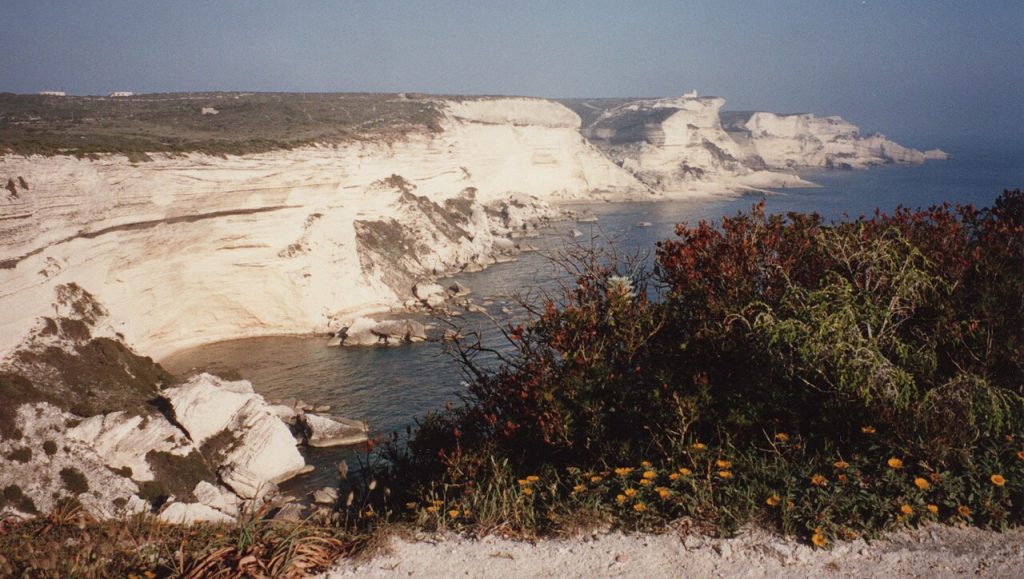
The cliffs of Bonifacio, Corsica. Photo: JopkeB (CC BY-SA 4.0) via Wikimedia Commons.
✈️ Getting there: fly to Ajaccio (AJA) or Bastia (BIA) · ⛴️ ferries from Nice, Marseille & Italy · 📅 Days: 5–7 · 🏨 Base in: Ajaccio or Calvi
Corsica, France’s rugged island gem, is a mix of wild beauty and mountain landscapes. It’s a top spot for adventure, culture, and stunning natural views. Located in the Mediterranean, it’s perfect for those who love to explore.
GR20 Hiking Trail and Outdoor Adventures
The GR20 hiking trail is famous in Europe. It crosses Corsica’s varied landscapes. Hikers get to see amazing views of mountains, valleys, and forests.
But Corsica has more than just the GR20. You can also rock climb, canyoneer, and paraglide. There’s something for every adventure lover.
Bonifacio's Dramatic Clifftop Setting
Bonifacio sits on a limestone peninsula. It’s a beautiful town with a dramatic view. The old town has narrow streets, historic buildings, and views of the sea.
Explore the citadel, see the Gothic Church of Saint-Dominique, and try local seafood. There are many restaurants to choose from.
Distinctive Corsican Culture and Cuisine
Corsica’s culture is unique, blending Mediterranean and Italian styles. The food is famous, with dishes like aziminu and caccaveddu. You can taste it all at local restaurants.
Experience the island’s culture at festivals, markets, and historic sites. Corsica is a top Mediterranean spot for a real and memorable trip. Hike the GR20, see Bonifacio, or dive into the culture. Corsica will surely impress you.
Malta: Compact Island with Monumental History
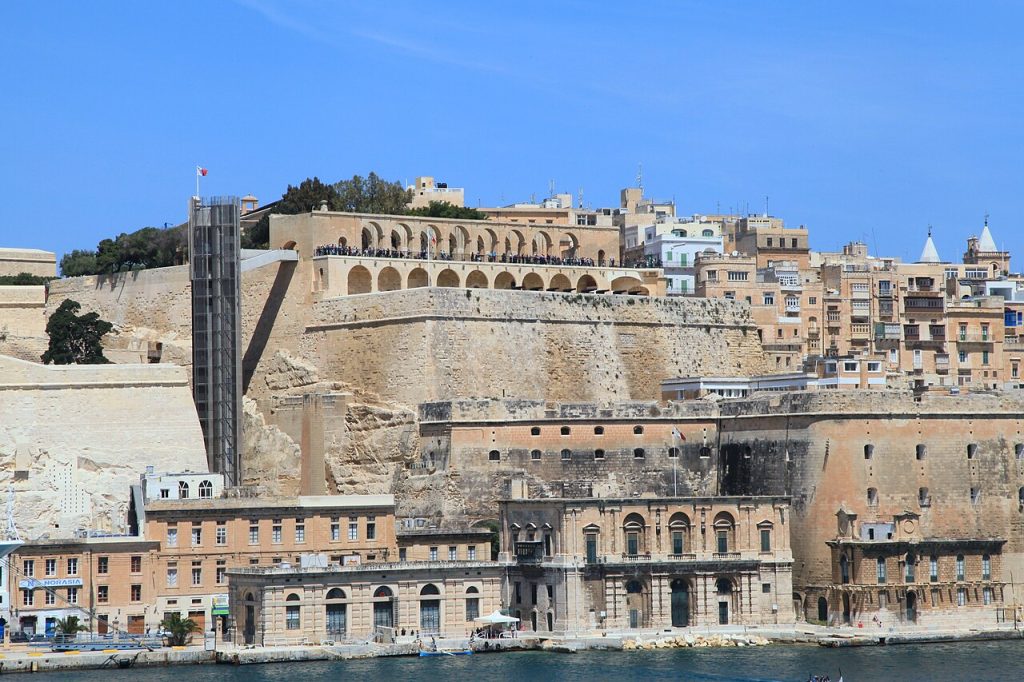
Valletta, Malta. Photo: Frank Vincentz (CC BY-SA 3.0) via Wikimedia Commons.
✈️ Getting there: fly to Malta (MLA) · 📅 Days: 3–4 · 🏨 Base in:Valletta or Sliema
Malta is a Mediterranean gem with a rich history and beautiful landscapes. It’s a small island nation filled with cultural and natural wonders. It’s perfect for those who love history, culture, and relaxing.
Valletta's Baroque Splendor
Valletta, Malta’s capital, is a UNESCO World Heritage Site known for its Baroque architecture. It has historic landmarks like the Grand Master‘s Palace and St. John’s Co-Cathedral. These show Malta’s deep cultural roots.
Walking through Valletta’s narrow streets and alleys is an adventure. You’ll find hidden spots and feel the city’s lively vibe.
Prehistoric Temples and Archaeological Wonders
Malta has prehistoric temples, like the Megalithic Temples of Ggantija on Gozo. They are among the oldest structures in the world. The island’s archaeological sites, like Hagar Qim and Mnajdra, give a peek into ancient lives.
Gozo and Comino's Natural Attractions
Gozo and Comino are known for their natural beauty. They have stunning landscapes, clear waters, and untouched beaches. Visitors can explore the countryside, see the Citadel in Victoria, and enjoy the peaceful islands.
In conclusion, Malta is a small island with a big history. It offers a mix of culture, history, and nature. It’s a top spot to visit in the Mediterranean.
Cyprus: Divided Island with United Beauty
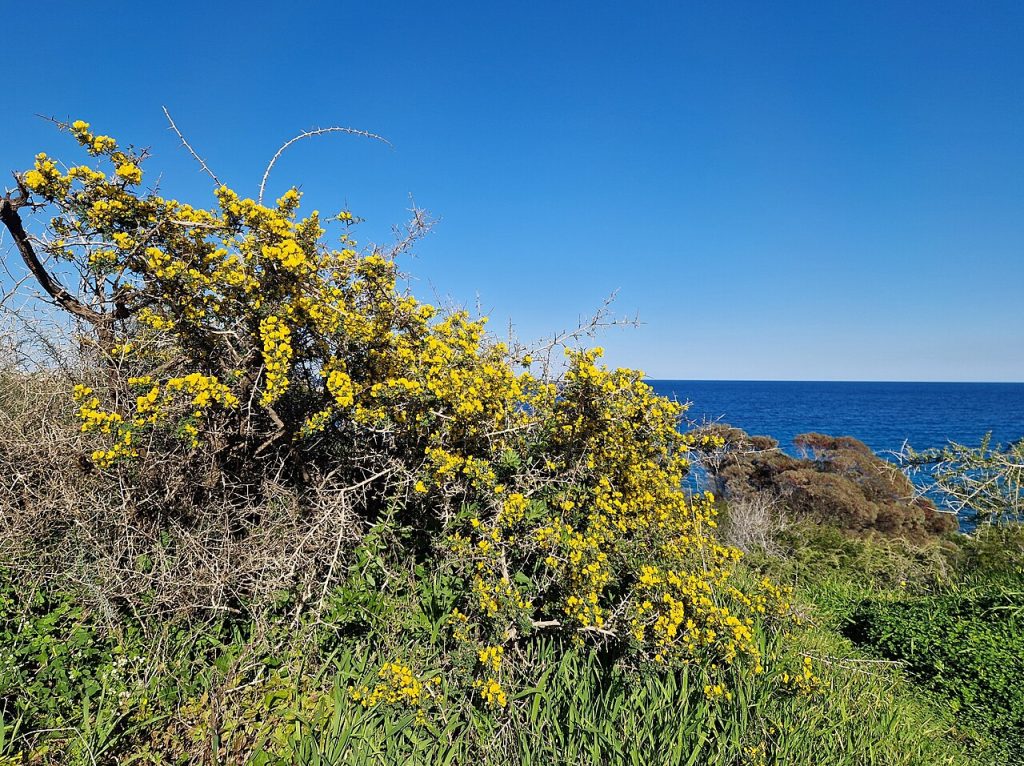
Cape Greco, Cyprus. Photo: Gerda Arendt (CC0) via Wikimedia Commons.
✈️ Getting there: fly to Larnaca (LCA) or Paphos (PFO) · 📅 Days: 5–7 · 🏨 Base in: Paphos or Limassol
Cyprus sits at the meeting point of Europe, Asia, and Africa. It’s a mix of cultures and stunning landscapes. This island offers many experiences for travelers.
Exploring Nicosia's Split Personality
Nicosia, Cyprus’s capital, is split between Greek and Turkish Cypriots. Yet, it’s a lively city with a deep history.
Historical Significance of Nicosia
Nicosia has been home for thousands of years. It’s one of the oldest cities in the world. You can see sites like the Ledra Palace and the Cyprus Museum.
Beaches of Ayia Napa and Protaras
Cyprus’s beaches are a must-see. Ayia Napa and Protaras are famous for their clear waters and fun vibe.
Troodos Mountains and Byzantine Heritage
The Troodos Mountains are a cool escape from summer heat. They have beautiful villages and historic monasteries. The area is known for its UNESCO-listed Byzantine churches and monasteries.
Cyprus is a unique blend of cultures, history, and beauty. It’s a top Mediterranean destination. Whether you love history, beaches, or nature, Cyprus has it all.
Sardinia, Italy: Caribbean-Like Beaches with Italian Flair
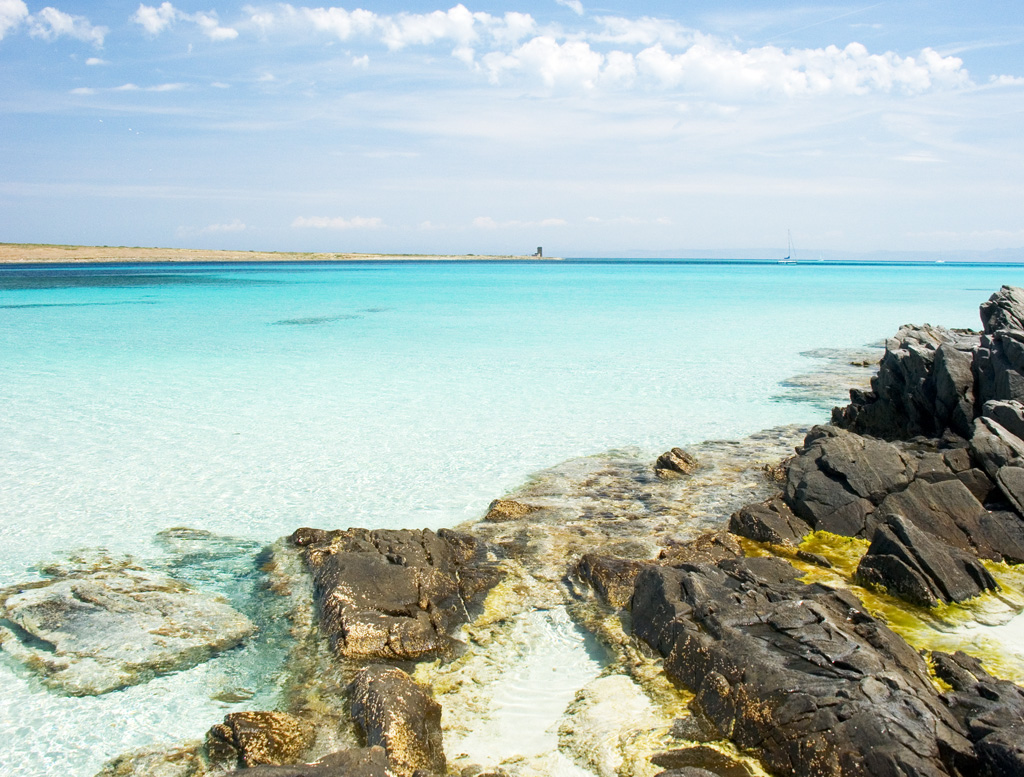
La Pelosa beach, Sardinia. Photo: David Blaikie from Hampshire, UK (CC BY 2.0) via Wikimedia Commons.
✈️ Getting there: fly to Cagliari (CAG) or Olbia (OLB) · ⛴️ ferries from mainland Italy · 📅 Days: 5–7 · 🏨 Base in: Olbia or Cagliari
Sardinia, an Italian island in the Mediterranean, is a treasure trove of Caribbean-like beaches and rich Italian heritage. This enchanting island is a perfect destination for travelers seeking a blend of relaxation, cultural exploration, and natural beauty.
Costa Smeralda's Luxury and Natural Beauty
Costa Smeralda, or Emerald Coast, is Sardinia’s most famous luxury destination. It’s known for its pristine beaches and crystal-clear waters. This upscale area attracts celebrities and travelers looking for high-end accommodations and exclusive experiences.
The natural beauty of Costa Smeralda is characterized by its granite rocks, emerald waters, and powdery white sand beaches.
Ancient Nuraghe Towers and Mysterious Past
Sardinia is home to numerous ancient nuraghe towers. These mysterious stone structures date back to the Nuragic period, around 1500 BCE. These towers, found throughout the island, are a testament to Sardinia’s rich and enigmatic past.
Visitors can explore these historical sites to gain insight into the island’s unique cultural heritage.
Authentic Sardinian Villages and Traditions
Beyond its beaches and luxury resorts, Sardinia is also known for its authentic villages and traditional way of life. Places like Alghero and Castelsardo offer a glimpse into the island’s history and culture. They have medieval architecture, local cuisine, and vibrant festivals.
Visitors can immerse themselves in Sardinian traditions by participating in local events and sampling the island’s delicious food and wine.
Whether you’re looking for a luxurious getaway, an adventure through history, or an authentic cultural experience, Sardinia has something to offer. Its unique blend of Italian flair and Caribbean-like beauty makes it one of the best Mediterranean islands to visit.
Rhodes, Greece: Knights, Castles, and Ancient Wonders
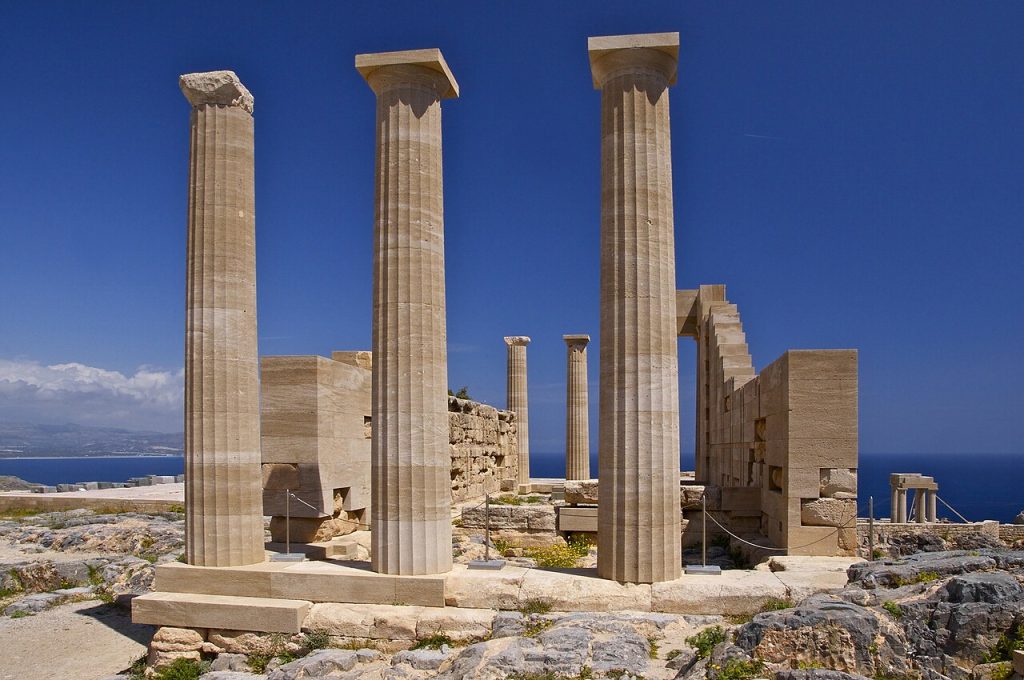
The Acropolis of Lindos, Rhodes. Photo: Jebulon (CC0) via Wikimedia Commons.
✈️ Getting there: fly to Rhodes (RHO) · ⛴️ ferries from Athens & the Dodecanese · 📅 Days: 3–4 · 🏨 Base in: Rhodes Town or Lindos
Rhodes, Greece, is a treasure trove of history and beauty. It’s a top spot for travelers. The island is famous for its ancient and medieval sites, beautiful beaches, and lively culture.
Medieval Old Town and Palace of the Grand Master
The medieval Old Town of Rhodes is a UNESCO World Heritage Site. It has some of the best architecture from the Knights’ era. The Palace of the Grand Master is a stunning example of the island’s history.
Visitors can wander the cobblestone streets and see historic buildings. They can also visit the iconic palace. It’s a great way to dive into Rhodes’ rich history.
Lindos Acropolis and Ancient History
Lindos, a beautiful village on Rhodes, has the ancient Acropolis. This site is very important in history. The Acropolis sits on a hill, giving amazing views.
People can see ancient ruins like the Temple of Athena Lindia. Lindos has a unique charm that visitors love.
Beach Life and Water Activities
Rhodes is also great for beach lovers and water sports fans. It has some of the Mediterranean’s most stunning beaches, like Faliraki and Lindos. There’s a lot to do in the water, from snorkeling and diving to windsurfing.
In short, Rhodes is a special island that mixes history, culture, and fun. It’s perfect for anyone who wants to see ancient ruins, relax on beautiful beaches, or try water sports. Rhodes has something for everyone.
More Mediterranean Islands Worth Visiting
Beyond the classics, the Mediterranean holds dozens more islands that rival the famous names for beauty — often with fewer tourists and better value. Here are ten more Mediterranean islands that deserve a place on your itinerary.
Corfu, Greece: Lush Greenery and Venetian Elegance
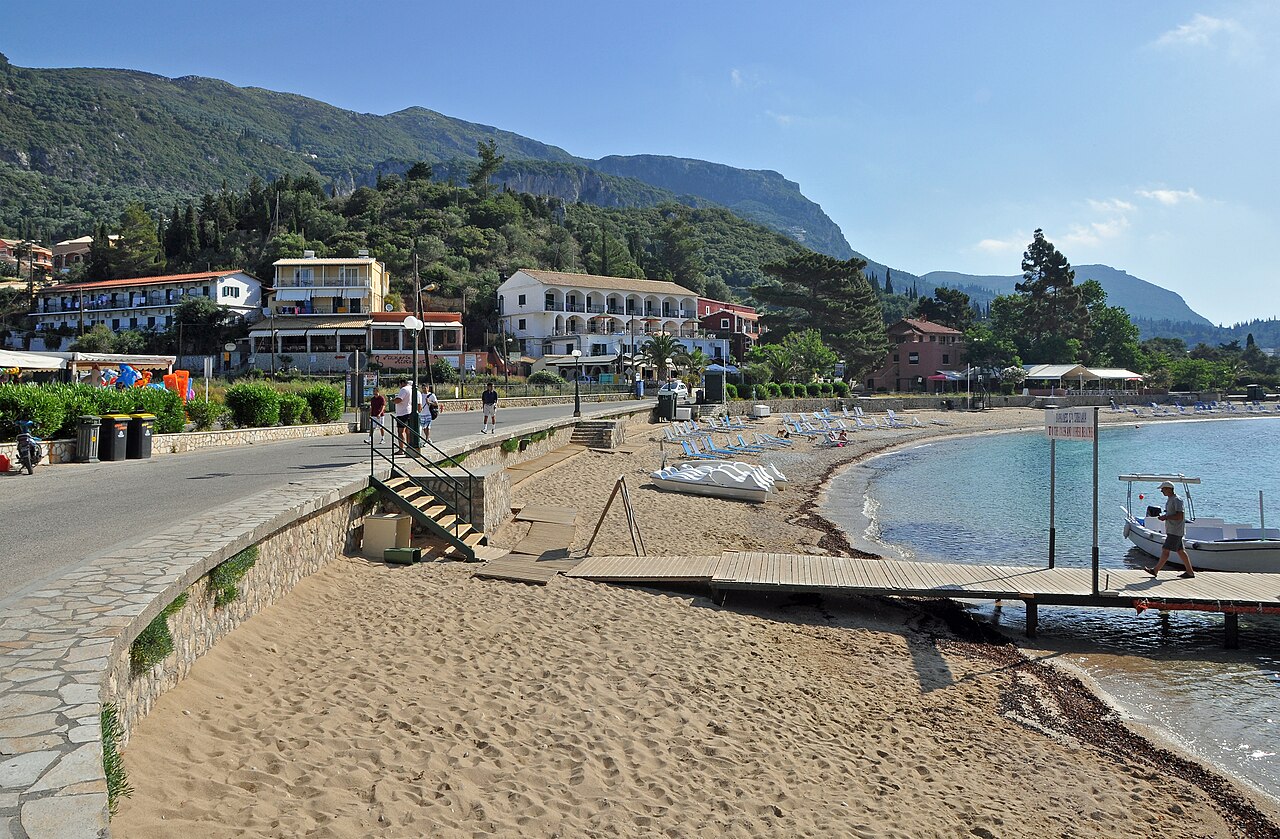
Paleokastritsa, Corfu. Photo: Marc Ryckaert (MJJR) (CC BY 3.0) via Wikimedia Commons.
Corfu stands apart from other Greek islands for one reason: it’s green. Centuries of Venetian, French, and British rule left behind an architecture unlike anywhere else in Greece — cobblestone streets, pastel townhouses, and a UNESCO-listed old town that feels more like Italy than the Aegean. The island’s northwest coast has some of the most dramatic clifftop scenery in the Mediterranean, while beaches like Paleokastritsa offer crystal-clear water in a sheltered bay. Best time to visit: May to early October, with May and September ideal for avoiding peak crowds.
Zakynthos (Zante), Greece: Navagio Beach and Sea Turtles
Navagio (Shipwreck) Beach, Zakynthos. Photo: Wilnel José Verdú Guerrero (CC BY-SA 4.0) via Wikimedia Commons.
Zakynthos punches well above its size in iconic images. Navagio Beach (Shipwreck Beach) — a rusted freighter stranded on a white pebble cove accessible only by boat, surrounded by towering white cliffs — is one of the most photographed spots in all of Greece. The island’s south coast is a protected nesting ground for loggerhead sea turtles, and responsible turtle-watching tours run from Laganas from June through August. The north is quieter and more authentically Greek. Best for couples, photographers, and wildlife enthusiasts.
Kefalonia, Greece: Dramatic Scenery and Cave Beaches
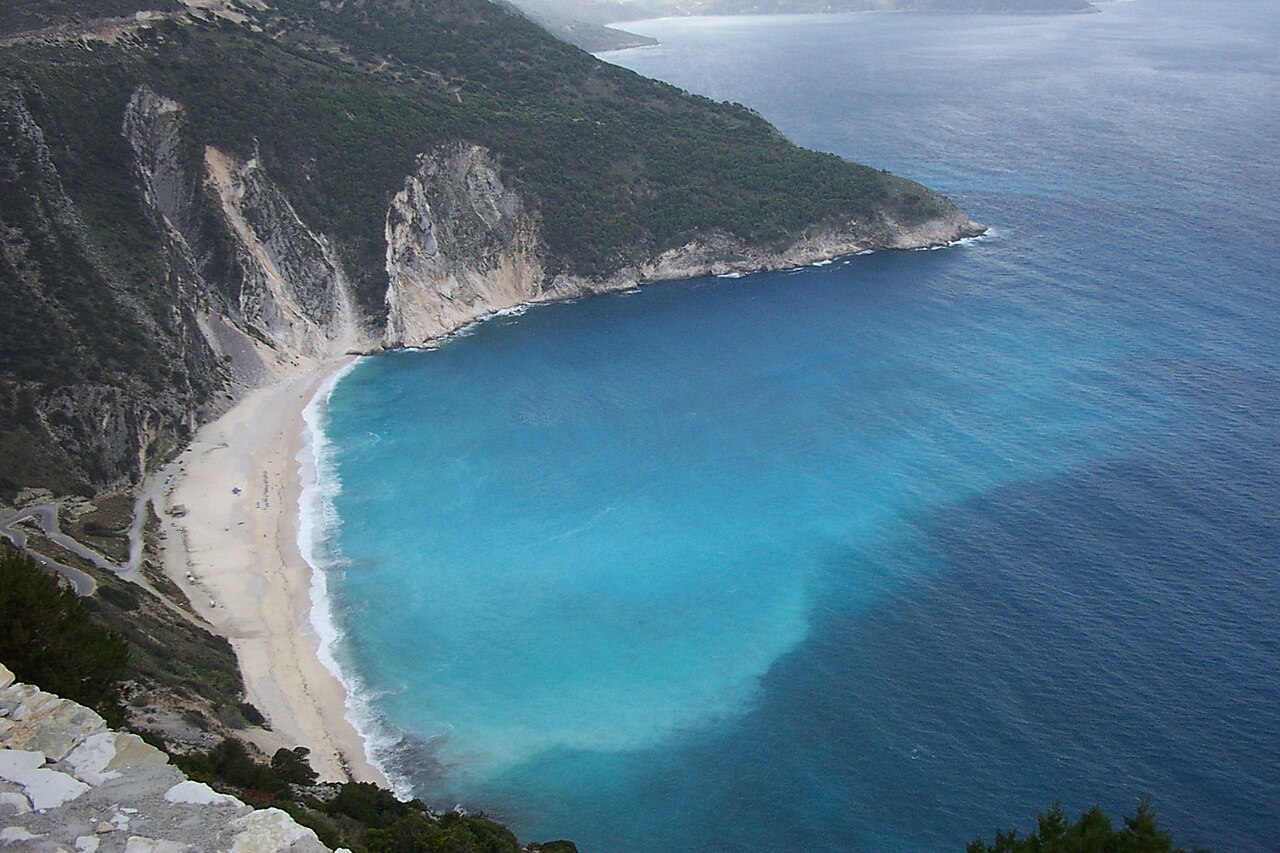
Myrtos Beach, Kefalonia. Photo: Dan Taylor from London, UK (CC BY 2.0) via Wikimedia Commons.
The largest of the Ionian Islands, Kefalonia offers a scale that most Greek islands can’t match — towering limestone mountains, vast olive groves, and the famous Melissani Cave Lake, where a sunken underground lake turns turquoise in the midday light. Myrtos Beach is widely considered one of Greece’s finest: a curved strip of white stones between sheer white cliffs and electric-blue water. Kefalonia inspired Louis de Bernieres’ novel Captain Corelli’s Mandolin, and that romantic, unhurried atmosphere still pervades the island.
Naxos, Greece: The Best Family Island in the Aegean
Often overlooked in favour of its flashier Cycladic neighbours, Naxos is arguably the best all-round Greek island for families and longer stays. It produces its own food (cheese, potatoes, citrus, spirits), has the longest sandy beaches in the Cyclades, and — unlike Santorini or Mykonos — hasn’t been overtaken by tourism. The marble Portara gateway (an unfinished ancient temple) standing on a promontory overlooking the port is an image that stays with you. Naxos Town has a Venetian castle quarter worth a full afternoon’s exploration.
Paros, Greece: The Practical Alternative to Mykonos
Paros offers almost everything Mykonos does — beautiful Cycladic architecture, clear turquoise water, good beaches, lively nightlife in Parikia and Naoussa — at roughly half the price and with half the crowds. The village of Naoussa, built around a crumbling Venetian harbour, is one of the most charming in the Cyclades. Paros is also a windsurfing and kitesurfing hub; the Bay of Paros consistently ranks among Europe’s top spots for both sports. Best visited in June, early July, or September.
Ibiza, Spain: More Than Just Nightlife
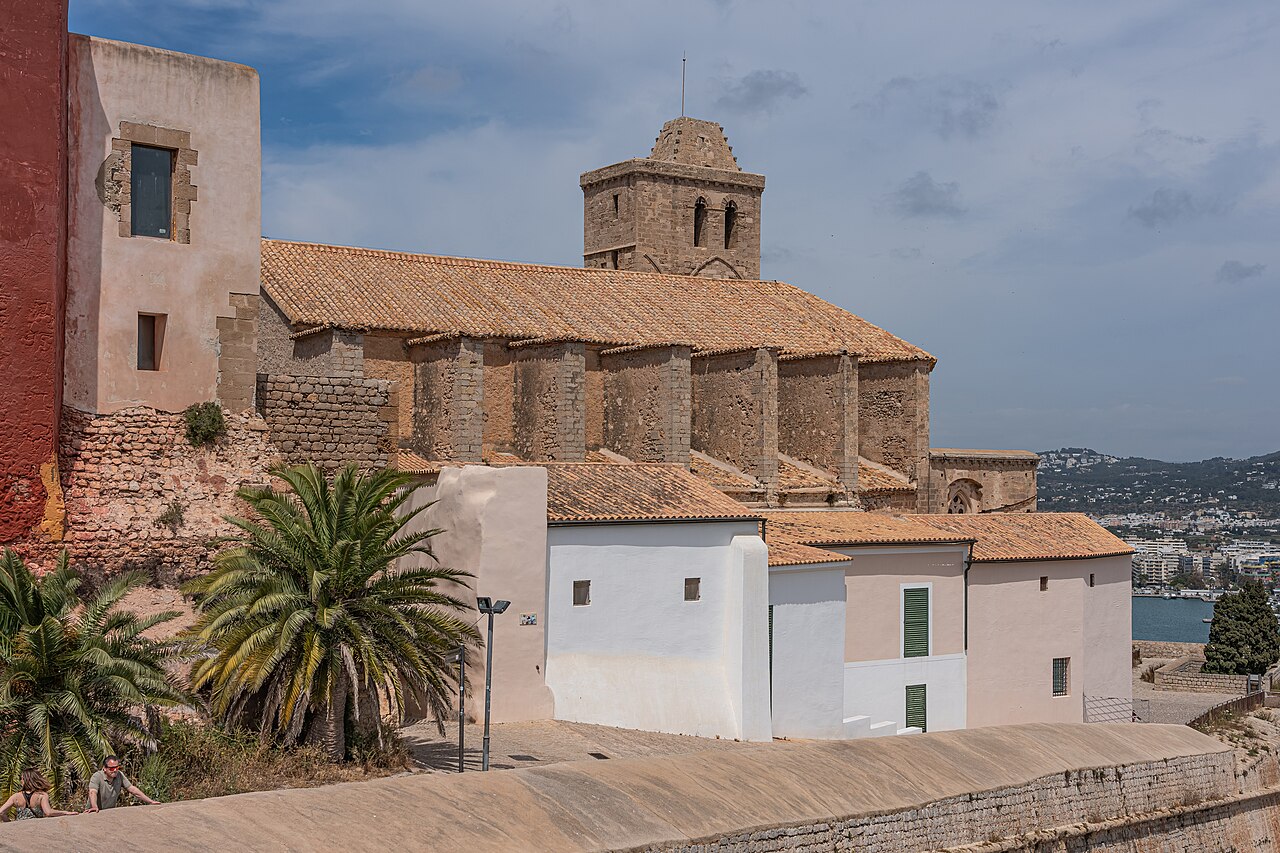
Dalt Vila, Ibiza’s old town. Photo: A.Savin (FAL) via Wikimedia Commons.
Ibiza’s reputation as a party island is earned but incomplete. Beyond the nightclubs of San Antonio — where street drinking now carries fines up to EUR 3,000 and shops stop selling alcohol at 21:30 — and the DJ culture of Playa d’en Bossa, Ibiza has a genuinely beautiful interior — pine-covered hills, whitewashed villages, and hippie markets that trace back to the 1960s counterculture. The island’s old town (Dalt Vila) is a UNESCO World Heritage Site with a Roman wall, medieval cathedral, and panoramic views over the sea. Es Vedra, a dramatic sea stack rising from the water near the southwest coast, has an almost mystical atmosphere at sunset. Visit in May–June or September for beach beauty without the August crowds.
Menorca, Spain: The Balearic Island That Got Away
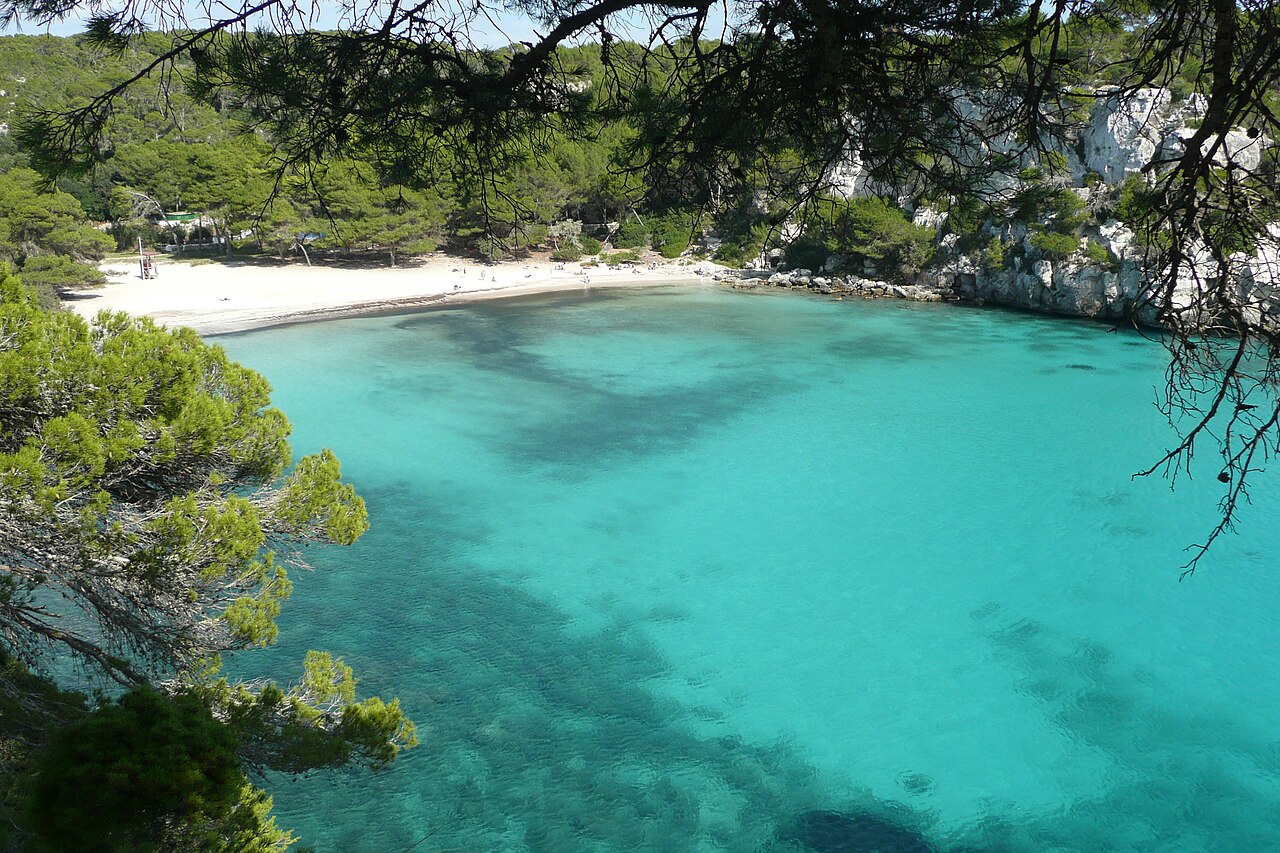
Cala Macarella, Menorca. Photo: Paul Stephenson (CC BY 2.0) via Wikimedia Commons.
While Mallorca and Ibiza were developed into mass-tourism destinations, Menorca stayed quiet — deliberately so. The entire island is a UNESCO Biosphere Reserve, and development is tightly controlled. The result: 216km of coastline with pristine beaches accessible only by footpath (the famous Cami de Cavalls horse path), Bronze Age megalithic monuments scattered across the interior, and two distinct characters — the whitewashed, British-influenced Ciutadella in the west and the Georgian-influenced Mao (Mahon) in the east. Ideal for families, cyclists, and anyone who wants beaches without crowds.
Ischia, Italy: Thermal Spas and Volcanic Beaches
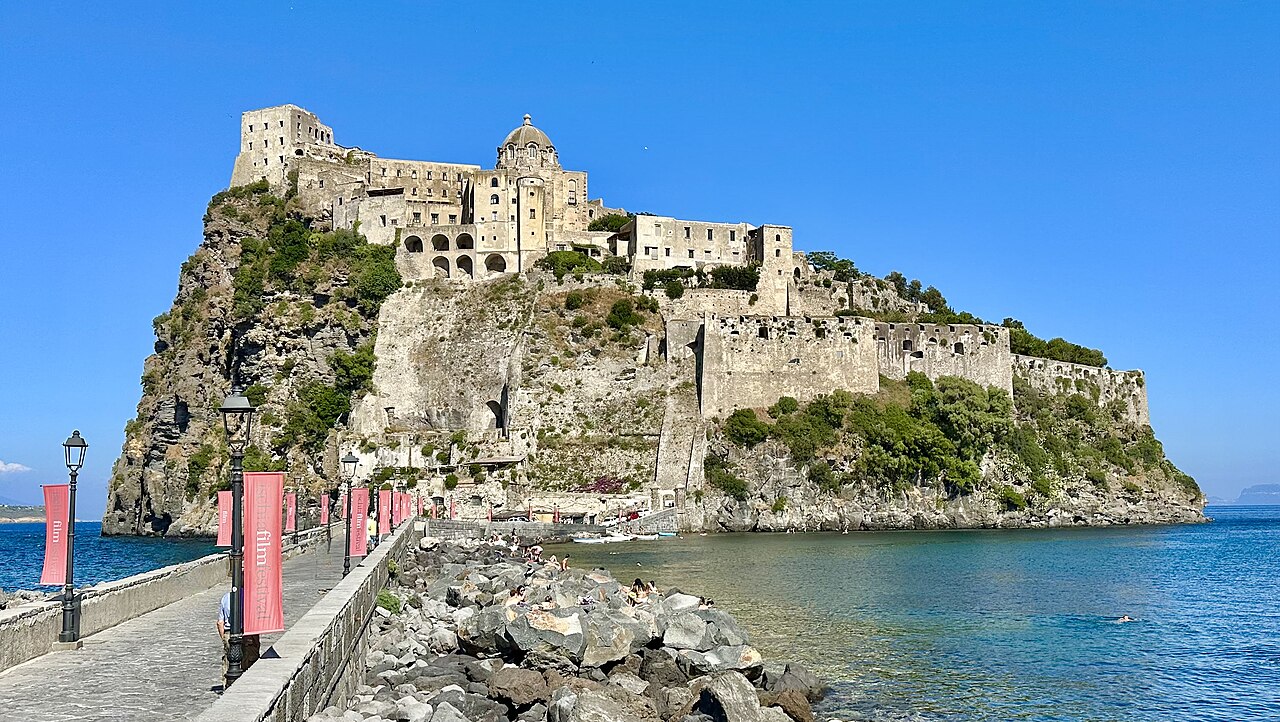
The Aragonese Castle, Ischia. Photo: Steve Jurvetson (CC BY 2.0) via Wikimedia Commons.
Just under an hour by hydrofoil from Naples, Ischia is Italy’s thermal island — a volcanic outcrop where hot springs bubble up across the coastline, and dozens of thermal parks channel the geothermal heat into pools, mud treatments, and spa experiences. It has none of Capri’s glamour or price tag, but considerably more authenticity. Castello Aragonese, a medieval fortress on a sea rock connected to the island by a causeway, is one of southern Italy’s most dramatic sights. The town of Sant’Angelo on the south coast has a carless pedestrian village feel that’s genuinely lovely.
Elba, Italy: Napoleon’s Island on the Tuscan Coast
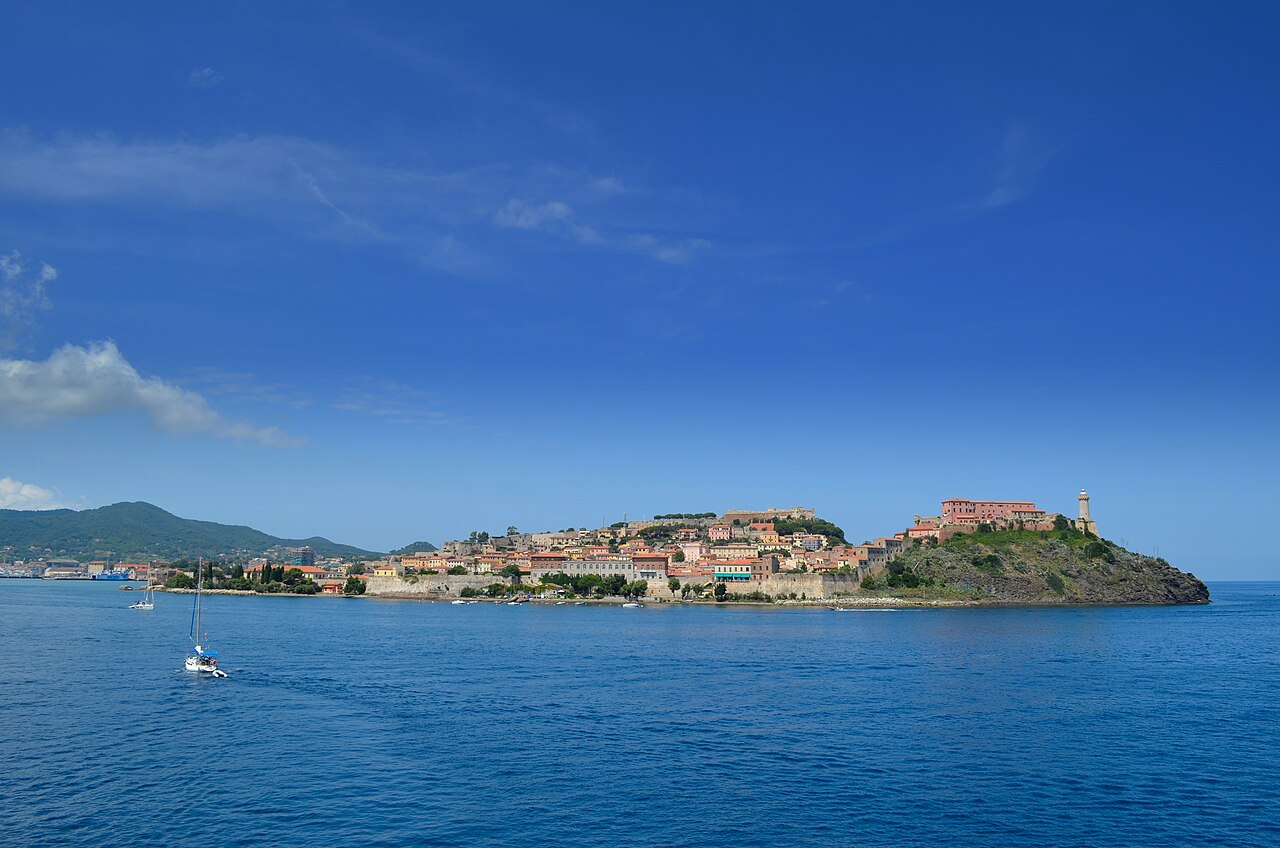
Portoferraio, Elba. Photo: SDKmac (CC BY-SA 4.0) via Wikimedia Commons.
Napoleon spent his first exile on Elba in 1814-1815, and the island’s small museum of Napoleonic history is one of its draws — but the real reason to visit is the scenery. Elba has some of Tuscany’s best beaches with none of the mainland crowds: crystalline water at Fetovaia, the dramatic granite boulders of Cavoli, and calm family-friendly bays around Lacona. The island is also excellent for cycling, with challenging climbs to Monte Capanne (the highest point) and easier coastal routes. Best visited in June or September; August fills with Italian families.
Skiathos, Greece: Pine Forests and Party Beaches
The smallest of the Northern Sporades islands, Skiathos is Greece’s answer to a forest beach destination — unusual for the Aegean. Dense pine trees roll down to long sandy beaches (Koukounaries is regularly ranked among Greece’s finest), and the combination of green hills and blue water creates a very different aesthetic from the barren, volcanic look of the Cyclades. Skiathos Town has a genuine party atmosphere in summer with bars and clubs that stay open until sunrise. The island inspired the setting for the film Mamma Mia! (though scenes were also shot on Skopelos). Best visited in June or September.
Korčula, Croatia: The Walled Island That Rivals Dubrovnik
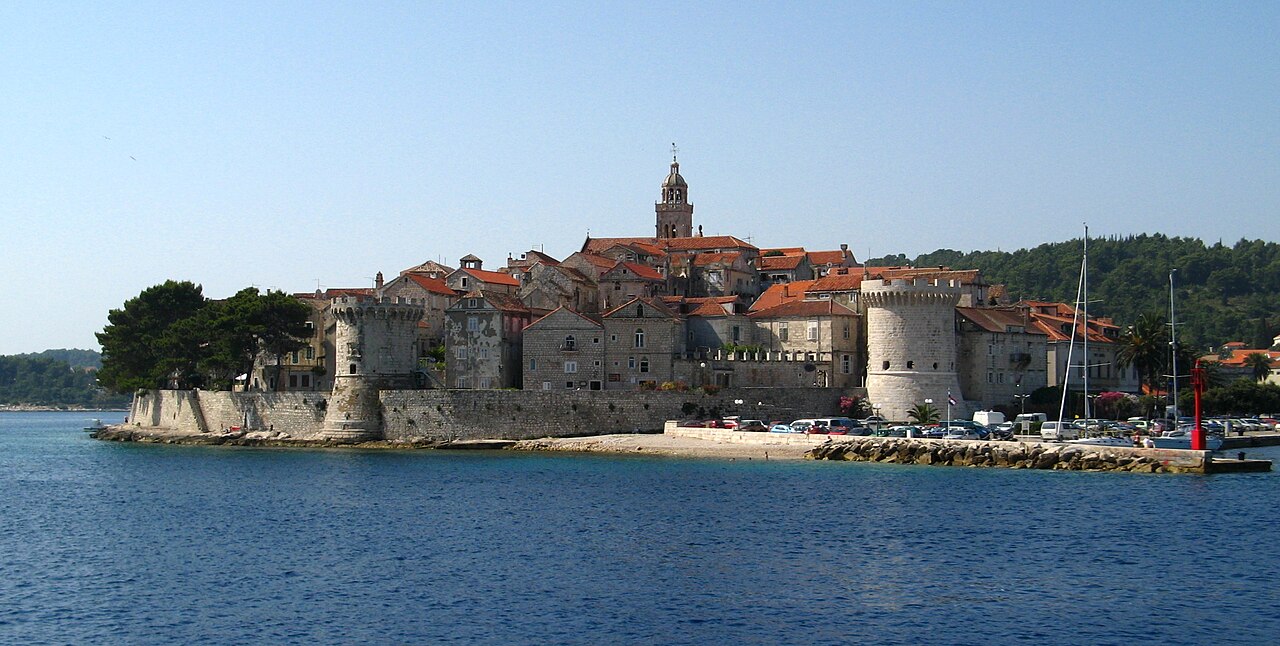
Korcula old town. Photo: Patrick Rouzet (CC BY-SA 3.0) via Wikimedia Commons.
Korčula is often called “Little Dubrovnik” — and it earns the comparison. A walled medieval town occupies the tip of a pine-forested peninsula on Croatia’s southern Dalmatian coast, with the same honey-coloured stone towers and herringbone street grid as its famous neighbour, but with a fraction of the foot traffic. The old town is famously claimed as the birthplace of Marco Polo, and a house museum marks the alleged site. Beyond the walls, the island produces excellent wine — Pošip (white) and Plavac Mali (red) thrive in the island’s limestone soil, and small konobas (family-run tavernas) pour both alongside fresh Adriatic seafood. A catamaran from Hvar takes approximately two hours; from Split, the crossing runs around three hours by car ferry. Best time to visit: May to early October; the Moreška sword dance performances run throughout July and August.
Folegandros, Greece: The Cycladic Island Without the Crowds
Folegandros sits in the Cyclades between Santorini and Milos, but feels entirely removed from the tourist circuit that connects them. The island’s most striking feature is its capital, Chora, perched dramatically on a 200-metre cliff above the ferry port — an architectural ensemble of blue-shuttered houses, bougainvillea-draped alleys, and a castro (fortified quarter) dating to the 13th century. There are no crowds, no nightclubs, no ATM-lined harbours. Beaches require a hike or a water taxi, which keeps them pristine. A fast ferry from Santorini takes approximately 45 minutes; from Piraeus, roughly four hours. Best time to visit: May–June and September, when the island stays open and the atmosphere remains tranquil. Not recommended for travellers seeking nightlife or heavy tourist infrastructure — that is precisely its appeal.
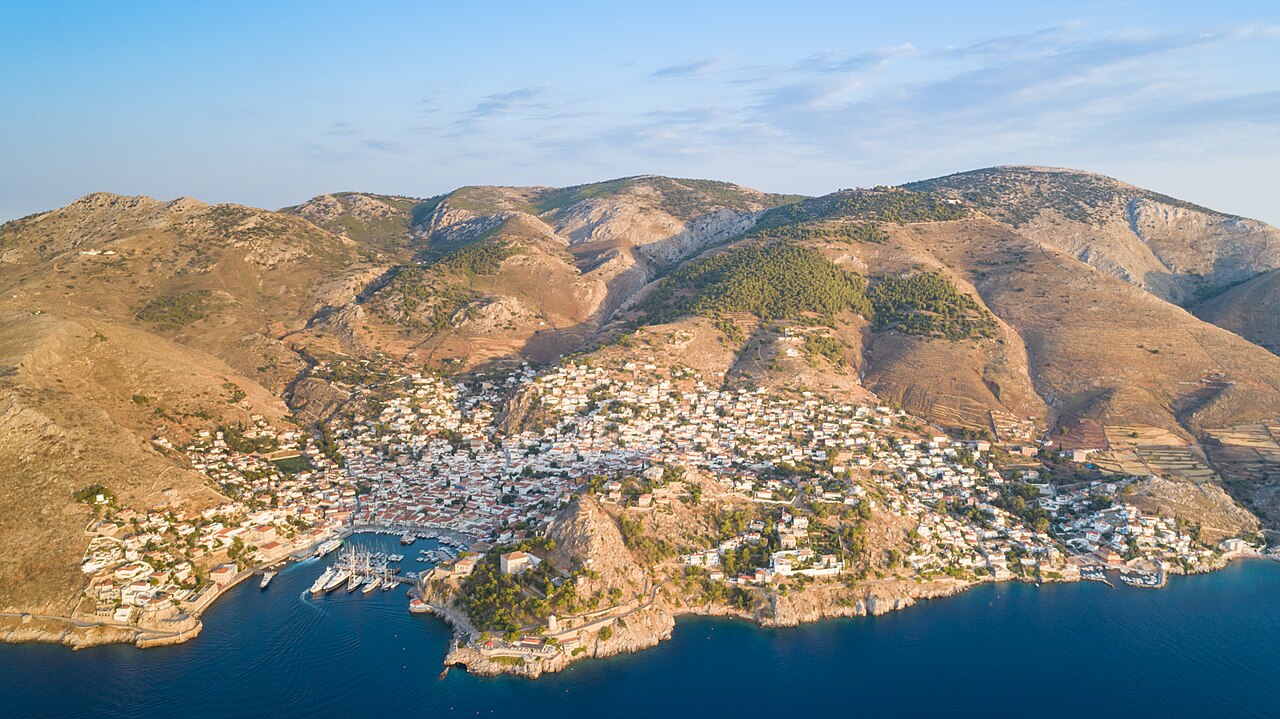
Hydra, Greece: The Car-Free Island of Artists and Writers
Hydra harbour. Photo: dronepicr (CC BY 2.0) via Wikimedia Commons.
Hydra is the Aegean’s most radical experiment in preservation: no cars, no motorbikes, no ATVs. Transport runs entirely on foot, donkey, or water taxi, giving the island a timeless quality that has drawn writers and artists since the 1960s — Leonard Cohen lived here for years. The port town is an amphitheatre of neoclassical stone mansions rising above a horseshoe harbour, and stone-paved lanes lead to some of the quietest corners in Greek island travel. A Flying Dolphin hydrofoil from Athens’ Piraeus port reaches Hydra in approximately 90 minutes — day trips are possible, but an overnight stay reveals a completely different, quieter island after the day-trippers leave. Best for: couples, artists, walkers, and travellers who prioritise atmosphere over beach infrastructure.
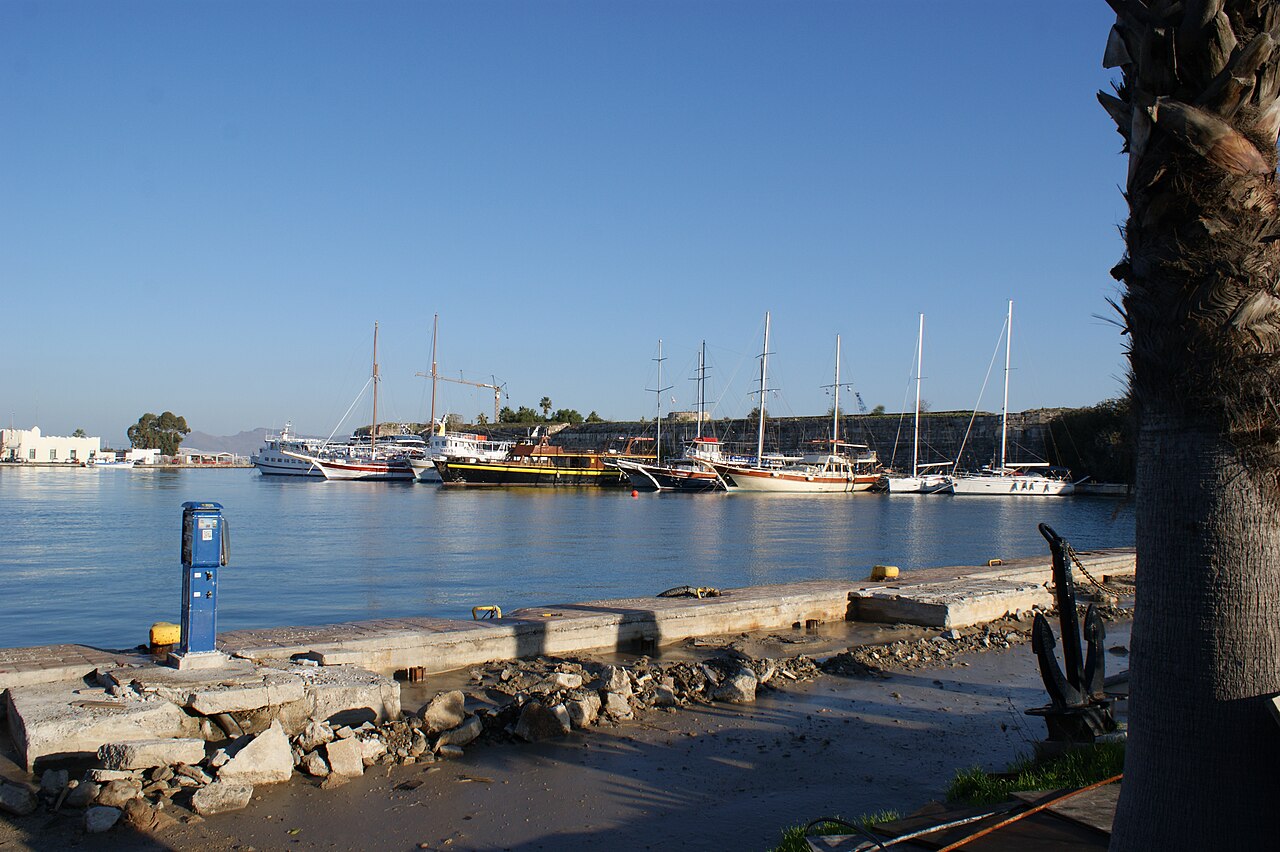
Kos, Greece: Ancient History and Long Sandy Beaches in the Dodecanese
Kos harbour. Photo: Asurnipal (CC BY-SA 4.0) via Wikimedia Commons.
The second-largest island in the Dodecanese chain, Kos blends ancient history with some of the best beaches in the eastern Aegean. The island is the birthplace of Hippocrates — a gnarled ancient plane tree in Kos Town is traditionally linked to him — and the ruins of the Asklepion (an ancient healing centre) sit on a pine-covered hillside with views to the Turkish coast. Beaches range from the calm, shallow water at Tigaki (ideal for families) to the kitesurfing flat-water at Marmari. Kos Town has an energetic nightlife strip, but interior villages — Zia for mountain sunsets, Asomatos for local tavernas — are genuinely peaceful. Summer charter flights from major European hubs make access straightforward. Best time to visit: May–June and September for warmth without peak-season crowds.
Djerba, Tunisia: The Mediterranean’s African Island
Djerba is the only Mediterranean island that sits in Africa, and its character is entirely distinct from anything in the European or Greek island tradition. The island has been inhabited since Phoenician times, and its El Ghriba Synagogue — among the oldest in the world — still hosts a spring Lag Ba’Omer pilgrimage, which resumed in 2026 under heavy security after a fatal 2023 attack. Whitewashed houses with blue doors cluster in the villages of Houmt Souk and Midoun, and the northeast coast’s beaches are wide, calm, and largely uncrowded. For US travellers, Djerba is dramatically more affordable than any European Mediterranean island: a mid-range hotel runs approximately €40–70 per night, and a full dinner costs €8–15. No Schengen visa is required; US passport holders receive 90 days visa-free. Access is via Tunis (one-hour flight from major European hubs) or direct summer charter service. Best time to visit: April–June and September–October for beach weather without the August heat.
Hidden Gems Among the Best Mediterranean Islands
There are hidden treasures beyond the famous Mediterranean islands. While many people visit places like Santorini and Mykonos, there are many other islands to explore. These islands offer unique and authentic experiences.
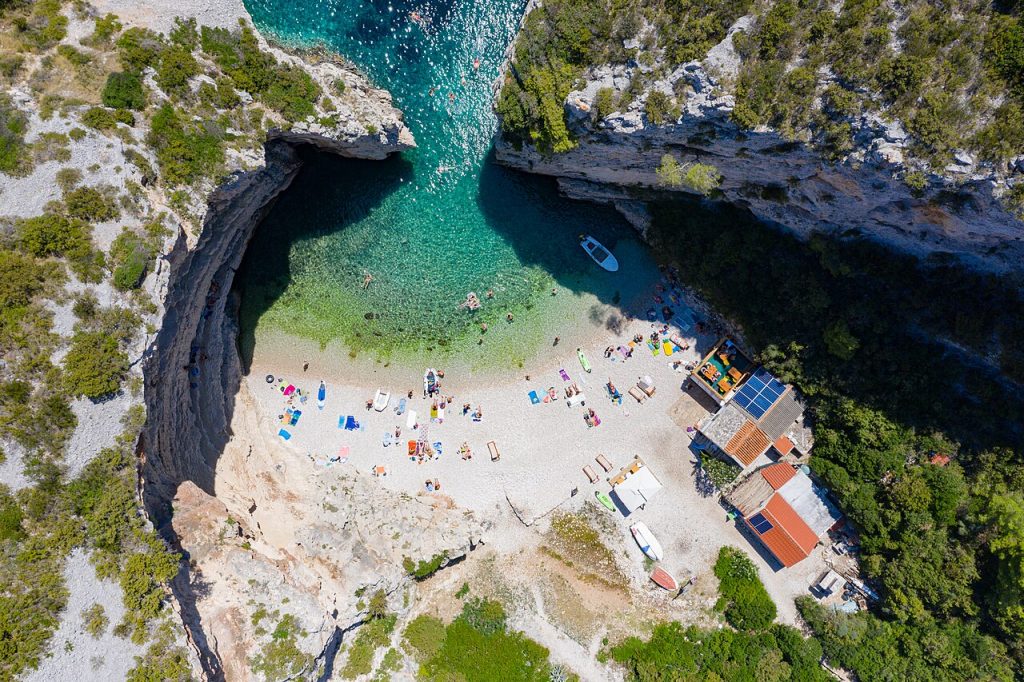
Vis, Croatia: Untouched Adriatic Paradise
Stiniva Cove, Vis. Photo: dronepicr (CC BY 2.0) via Wikimedia Commons.
Vis, Croatia, is a peaceful island in the Adriatic Sea. It’s untouched by mass tourism. With its beautiful beaches, secluded spots, and clear waters, Vis is perfect for a calm getaway.
The island has a relaxed vibe and untouched nature. It’s great for those who want to relax and explore.
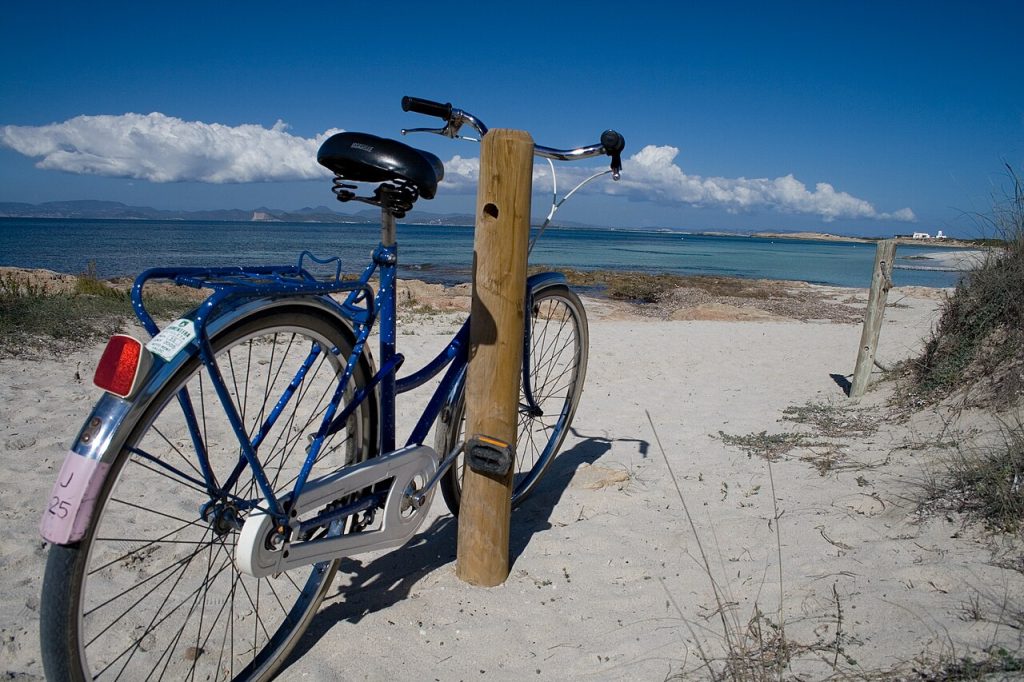
Formentera, Spain: Pristine Beaches Without Crowds
Ses Illetes beach, Formentera. Photo: Ana Ulin (CC BY-SA 2.0) via Wikimedia Commons.
Formentera, the smallest of Spain’s Balearic Islands, is a quiet escape. It has stunning beaches, blue waters, and green landscapes. Formentera is ideal for those who love beaches and want a peaceful vacation.
Lesbos, Greece: Authentic Island Experience
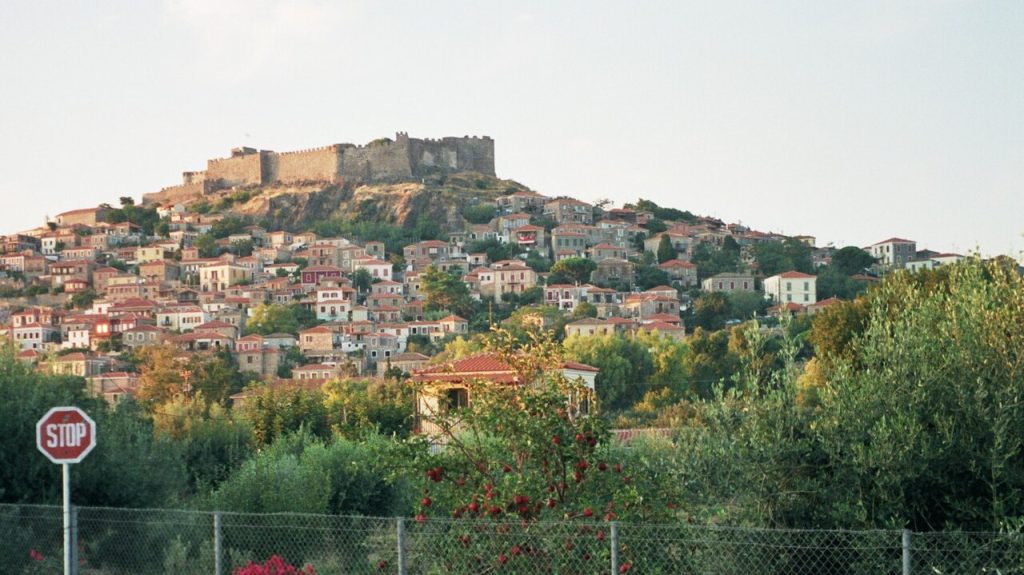
Molyvos, Lesbos. Photo: Afbeelding4 (CC BY-SA 4.0) via Wikimedia Commons.
Lesbos, Greece, is full of history, culture, and beauty. It has ancient ruins, traditional villages, and lively cultural events. Visitors can see the island’s landscapes, try local food, and feel the real Greek island life.
These hidden gems in the Mediterranean offer a chance to see the region’s beauty without the crowds. Whether you’re after relaxation, adventure, or culture, these places will make a memorable impression.
Island-Hopping Adventures in the Mediterranean
Island-hopping in the Mediterranean is a dream for travelers. It combines history, natural beauty, and vibrant cultures. The region’s many islands are linked by ferries and boats, making it perfect for exploring.
Greek Island Combinations
The Greek islands are the Mediterranean’s most popular island-hopping network, linked by an extensive network of conventional ferries and high-speed catamarans from Piraeus (Athens’ main port). Two classic 7-day routes work well for first-timers:
Route 1 — Cyclades Classic: Athens (1 night) → Mykonos (2 nights, 2.5-hr high-speed catamaran or 5-hr conventional ferry from Piraeus) → Paros (1 night, 45-min fast ferry from Mykonos) → Santorini (3 nights, 3-hr fast ferry from Paros). Fly home from Santorini’s Thira airport via Athens. Approximate inter-island ferry cost: €50–100 per leg by fast boat.
Route 2 — Quieter Cyclades: Athens → Naxos (4.5-hr ferry, family-friendly beaches and local food culture) → Folegandros (2.5-hr ferry, dramatic clifftop Chora, no crowds) → Santorini (45-min fast ferry). This route works especially well in May or September when the islands feel uncrowded. Book ferries in advance at least 2–3 weeks ahead for July and August travel.
Balearic Island Circuit
A 5-day Balearic circuit is one of the Mediterranean’s most practical island-hopping itineraries. Fly into Palma de Mallorca and spend two days exploring the island (Palma’s Gothic cathedral, the Serra de Tramuntana mountain road, secluded northwest coves). Then take the overnight inter-island ferry to Menorca (6 hrs, book ahead in summer) for two nights of quiet beaches and Bronze Age megalithic sites. Finally, hop to Ibiza (1.5-hr ferry from Menorca, or a short flight) for a final night before flying home. Ferries between Balearic islands cost approximately €35–65 per person.
Menorca’s entire coastline is a UNESCO Biosphere Reserve, and the contrast with Ibiza couldn’t be sharper: 216 km of coastline with beaches accessible only by footpath, Bronze Age taula and talayot monuments scattered across the interior, and two distinct towns — whitewashed Ciutadella in the west and Georgian-influenced Maó (Mahon, birthplace of mayonnaise) in the east. The Camí de Cavalls footpath circles the entire island in roughly 5–7 days if walked in full.
Croatian Island Exploration
A classic 7-day Dalmatian island route runs south from Split: arrive in Split (1 night, explore Diocletian’s Palace) → Brač (50-min car ferry to Supetar; 1 night; visit Zlatni Rat beach) → Hvar (1-hr catamaran; 2 nights; explore Hvar Town’s Venetian fortress and lavender fields of the interior) → Korčula (2-hr catamaran from Hvar; 2 nights; walk the medieval old town, wine tastings). Return to Split by ferry from Korčula via the Drvenik crossing. Local ferries and catamarans operate most routes; costs average €8–20 per leg for foot passengers.
The key logistics: Split’s airport (SPU) has good summer connections from London, Amsterdam, and Frankfurt, and is reachable from major US cities via one stop. Catamaran services between islands run more frequently in summer (May–September); in October the frequency drops and some routes become car-ferry only. Book the Hvar–Korčula catamaran at least a week ahead in July–August — it sells out fast.
Island-hopping in the Mediterranean is perfect for those seeking luxury or adventure. It offers a unique and enriching travel experience.
Best Mediterranean Islands for Families
The best family islands balance generally calm, shallow beaches that suit young children when the daily flag is green, activities beyond sunbathing, and accommodation that works for groups. These six consistently deliver on all three.
Sardinia, Italy is the top pick for families with young children. Two of Sardinia’s calmest family beaches — Cala Brandinchi at San Teodoro and La Pelosa at Stintino — are so shallow that toddlers can wade far out, though it is worth checking the daily flag and any jellyfish notices before they do, and both cap daily numbers and require an advance online booking in summer. The island offers genuine variety: beaches, mountains, ancient Nuraghe towers, and inland villages where local cheese and cured meats are produced. Italian family culture means children are warmly welcomed in restaurants at any hour.
Rhodes, Greece is the most family-friendly major Greek island. Faliraki and Prasonisi have purpose-built beach infrastructure, reliable summer weather, and the walled medieval old town turns history into an adventure that engages older children.
Mallorca, Spain has invested heavily in family tourism: water parks, accessible cove beaches reachable by boat, and a strong English-language presence that eases logistics for American families. Port de Pollènça in the north offers generally calm water that suits young swimmers, though it is worth checking the local flag system before they swim unsupervised.
Naxos, Greece stands out among the Cyclades for its long sandy beaches, self-sufficiency (the island grows its own food), and unpretentious atmosphere. Unlike Mykonos or Santorini, Naxos hasn’t priced out families, and the port town has good variety for all ages.
Gozo, Malta is a compact, English-speaking island with a slower pace than main Malta. Easy to navigate, excellent clarity of water for snorkelling, and the Ggantija temples — older than Stonehenge — engage curious older children. Accommodation is generally more affordable than comparable Greek islands.
Cyprus works well for shoulder-season families. The warm season extends April through November, resorts around Ayia Napa and Protaras have purpose-built facilities, and English is widely spoken throughout the island.
Best Mediterranean Islands for Honeymoons
A Mediterranean honeymoon works best when an island delivers genuinely romantic scenery, quality accommodation, and enough to do beyond sitting on a beach. These five earn consistent top marks for couples.
Santorini, Greece is the default Mediterranean honeymoon destination for good reason. The caldera view from Oia at sunset — one of the most photographed in the world — delivers a genuinely cinematic moment. Cave hotels cut into the volcanic cliff face offer private plunge pools overlooking the sea. The island is expensive and crowded in peak summer, but in May or September the experience is identical with fewer people and lower prices.
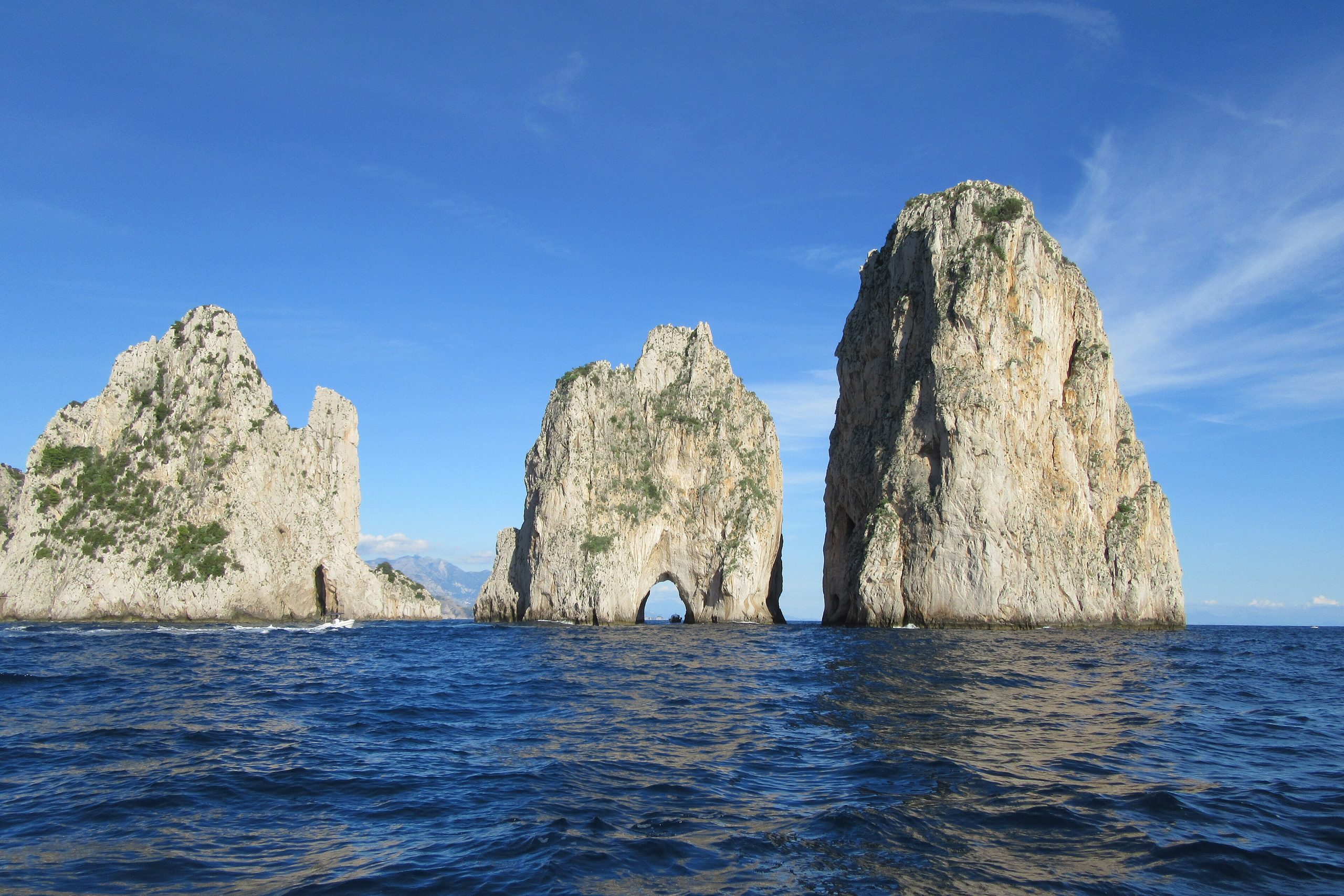
Capri, Italy has a refined glamour that Santorini lacks. The island functions as Italy’s answer to Monaco — a floating playground of high-end boutiques, Michelin-starred restaurants, and yacht-filled harbours — but its natural landscape (the Faraglioni sea stacks, the Blue Grotto, the Villa San Michele gardens) provides genuine wonder beyond the shopping. Staying overnight reveals a more intimate island after the day-trippers leave by evening ferry.
Hvar, Croatia combines Adriatic beauty with an upscale-but-unpretentious atmosphere (cover up before leaving the beach — Hvar Town fines swimwear in the centre up to EUR 600). The lavender fields of the island’s interior, the Renaissance loggia in Hvar Town, and secluded coves accessible only by boat create genuinely romantic backdrops. The island produces some of the Adriatic’s best wine, and boutique hotels here offer privacy and style at roughly half the cost of Capri.
Formentera, Spain is Ibiza’s quieter, car-optional neighbour — a 30-minute ferry connects them, but the atmosphere is dramatically different. Turquoise waters the colour of the Caribbean, white-sand beaches accessible by bicycle, and a bohemian local culture since the 1960s. No nightclubs, no resorts: just beaches, fish restaurants, and exceptional light. Best for couples who prioritise beauty and quiet over luxury.
Paros, Greece offers a more affordable Cycladic honeymoon without compromising on beauty. The village of Naoussa — a whitewashed port with a crumbling Venetian harbour — is one of the most genuinely romantic settings in the Cyclades. Kolymbithres beach, with its sculpted granite boulders and calm blue water, feels otherworldly. Paros is also a practical base for day trips to Naxos and Antiparos.
How Much Does a Mediterranean Island Trip Cost?
The cost of a Mediterranean island holiday varies enormously by destination, season, and travel style. Here’s what US travellers should budget across the main island groups.
Budget travellers (hostel or basic guesthouse, local taverna meals, public transport):
Greek islands (Crete, Rhodes, Corfu): €55–80 per person per day
Italian islands (Sicily, Sardinia): €60–90 per person per day
Spanish Balearics (Mallorca, Menorca): €70–100 per person per day
Croatia (Hvar, Korčula): €55–85 per person per day
Malta and Gozo: €50–75 per person per day
Mid-range travellers (3-star hotel or boutique guesthouse, sit-down dinners, occasional tours):
Greek islands: €110–200 per person per day
Italian islands: €120–220 per person per day
Spanish Balearics: €130–230 per person per day
Croatia: €100–180 per person per day
Santorini, Mykonos, or Capri: €200–350 per person per day (significant premium)
Luxury travellers (boutique hotels, private excursions, fine dining):
Santorini cave hotels: €300–600 per room per night in peak season
Capri luxury hotels: €400–800 per room per night
Hvar (Adriatic luxury): €200–400 per room per night
Malta and Gozo: €150–300 per room per night (consistently better value than comparable Greek options)
Flights from the US: Budget $600–1,200 round-trip per person from major East Coast hubs (JFK, EWR, BOS) to European gateways, plus a short connecting flight to island airports. Booking 3–5 months ahead typically yields the best fares; flights booked less than 6 weeks before peak summer travel often cost 40–60% more.
Best-value islands for US travellers: Sicily, Crete, Sardinia (outside August), Malta, Gozo, and Djerba all offer exceptional quality relative to cost. Santorini, Capri, Mykonos, and Ibiza in peak August are the most expensive options, typically running two to three times the cost of comparable alternatives.
Mediterranean Islands: Essential Guide for US Travellers
Schengen Zone and visa rules
Most Mediterranean islands fall within the Schengen Area, which allows US passport holders to stay for up to 90 days in any 180-day period without a visa. The Schengen Zone covers: Greece (all Greek islands), Italy (Sicily, Sardinia, Capri, Elba, Ischia, Aeolian Islands), Spain (Mallorca, Menorca, Ibiza, Formentera), France (Corsica), and Croatia (all Dalmatian islands including Hvar and Korčula, which joined Schengen in January 2023).
Outside Schengen: Cyprus is EU but not Schengen — US citizens get 90 separate days on arrival under Cyprus’s own entry system. Malta is in the Schengen Area. Tunisia (Djerba) allows US passport holders 90 days visa-free.
Passport validity: Most Schengen countries require your passport to be valid for at least three months beyond your planned departure. Check expiry before booking — airlines enforce this at check-in.
Flights from the US
Athens (ATH): Hub for all Greek islands. Multiple US carriers operate direct transatlantic service from JFK, LAX, and Boston. Connect onward to island airports via domestic Greek carriers, or take the ferry from Piraeus port.
Rome (FCO) or Catania (CTA): For Sicilian and Italian islands. Delta and American operate direct JFK–Rome routes.
Barcelona (BCN): Hub for the Balearic islands. Several major carriers connect US cities to Barcelona via one stop.
Dubrovnik (DBV) or Split (SPU): For Croatian islands. No direct US service; connect via London, Amsterdam, or Frankfurt.
Malta (MLA): Connect via London, Amsterdam, or Rome.
Paris (CDG): For Corsica; regional carriers serve Ajaccio and Bastia from Paris.
Currency: All Eurozone islands use the Euro (Greece, Italy, Spain, France, Croatia since 2023, Malta, Cyprus). Tunisia uses the Tunisian Dinar. Credit cards are widely accepted on major islands; cash is preferred at smaller tavernas and local markets. A no-foreign-transaction-fee travel card eliminates conversion fees.
Travel insurance: Strongly recommended. Ferry delays and cancellations — particularly in the Greek islands during meltemi wind season (July–August) — can disrupt carefully planned itineraries. US health insurance typically has no coverage in Europe.
Luxury Mediterranean Getaways: Islands for the Elite
The Mediterranean has three islands perfect for luxury and exclusivity. These places are not just for relaxing. They offer the best in luxury travel.
Capri, Italy: Playground of the Rich and Famous
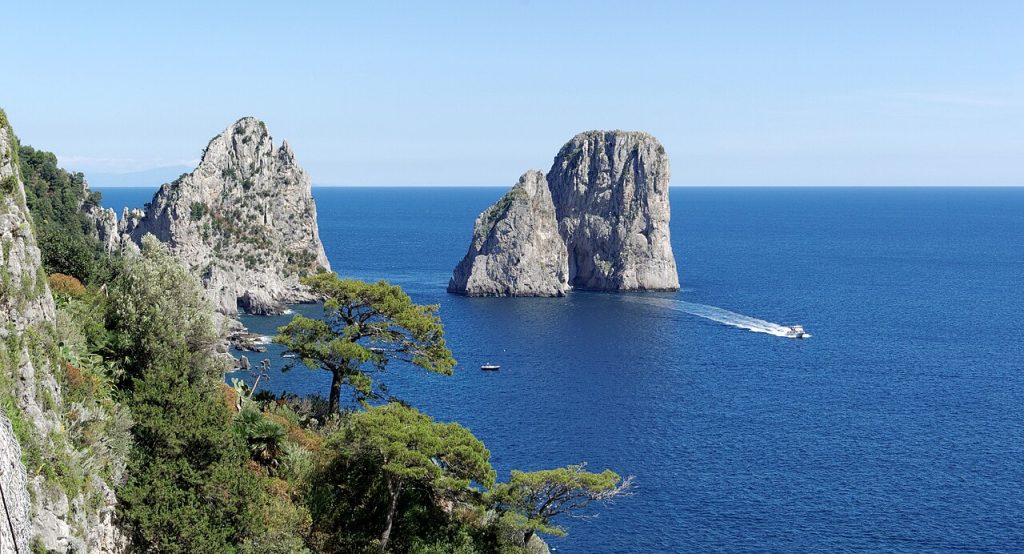
The Faraglioni rocks, Capri. Photo: Berthold Werner (CC BY-SA 3.0) via Wikimedia Commons.
Capri is known for its luxury and style. Located off Italy’s coast, it boasts high-end shops, fancy villas, and clear waters. You can take a boat ride, see the Gardens of Augustus, or enjoy secluded beaches.
The island’s piazzas and fancy restaurants offer a taste of luxury. It’s ideal for those who love the finer things.
Mykonos, Greece: Glamour and Nightlife
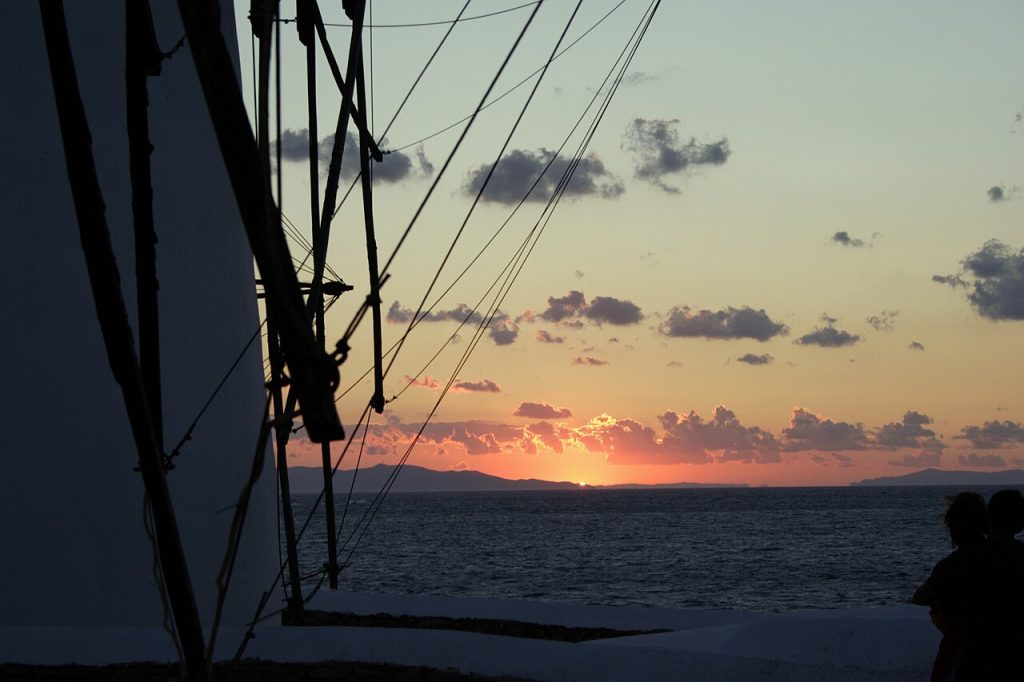
The windmills of Mykonos. Photo: Zde (CC BY-SA 4.0) via Wikimedia Commons.
Mykonos is all about glamour and fun. It’s famous for its lively nightlife, luxury resorts, and stunning beaches. Celebrities and travelers love it here. The island’s white houses, colorful markets, and landscapes are perfect for photos.
Mykonos has beach clubs open till dawn and fancy shopping areas. It’s a mix of relaxation and excitement.
Hvar, Croatia: Yachts and Exclusive Resorts
Hvar is a dream for yacht owners and those wanting a private island experience. It has beautiful, secluded beaches and luxury resorts with great amenities.
The old town of Hvar, with its Venetian buildings and green spaces, is peaceful. It’s perfect for exploring or relaxing in style.
Before you go: turn this guide into a day-by-day plan. Our partner Voyada is a free itinerary planner that builds the route with flights, hotels and a real total cost for your dates — in about a minute.
The Med has an island for every mood — picking the right one matters more than any single beach.
Know the options: the Greek isles (variety), Spain’s Balearics, Italy’s Sicily and Sardinia, Malta, Corsica and Croatia’s islands.
Best June–September; shoulder season is quieter, and many islands wind down in winter.
Ferries and flights link them — check schedules and leave buffer days.
Match the island to your style — party, quiet, family or culture.
Rent a car for hidden beaches, and book ferries ahead in peak.
The Complete List: 18 Mediterranean Islands by Style
The Mediterranean has an island for every kind of trip. Here’s a fuller rundown — from the famous to the barely-known — sorted by what they do best.
Santorini (Greece) — caldera views and sunsets; the romance icon (and the busiest).
Crete (Greece) — the largest Greek isle: beaches, gorges (Samaria) and Minoan ruins.
Mykonos (Greece) — whitewashed lanes, beach clubs and nightlife.
Rhodes & Corfu (Greece) — medieval old town (Rhodes) and lush green scenery (Corfu).
Naxos & Milos (Greece) — quieter Cyclades with great beaches and value.
Sicily (Italy) — the Med’s largest island: Etna, temples, and extraordinary food.
Sardinia (Italy) — powder-soft sand and turquoise water on the Costa Smeralda.
Capri & Ischia (Italy) — glamorous Capri and thermal-spring Ischia in the Bay of Naples.
Mallorca (Spain) — the all-rounder: beaches, hiking in the Tramuntana, and culture.
Menorca & Ibiza (Spain) — calm coves (Menorca) versus party energy (Ibiza).
Corsica (France) — rugged mountains meeting the sea; the epic GR20 trek.
Malta & Gozo — honey-stone history, blue lagoons and year-round warmth.
Hvar & Vis (Croatia) — chic Hvar and unspoilt, off-the-radar Vis.
Cyprus — long beach season, ancient sites and mountain villages.
Elba (Italy) — Napoleon’s exile island, quieter than its Tuscan neighbours.
Best time: June–September is peak; the April–May and September–October shoulders are warm with fewer crowds — and many islands wind down in winter.
The Complete List of Mediterranean Islands by Country
For quick reference, here are the Mediterranean’s main islands grouped by country — from the giants to the tiny hidden gems.
Greece: Crete, Rhodes, Corfu, Santorini, Mykonos, Naxos, Paros, Kos, Zakynthos, Milos, Lesbos and hundreds more across the Cyclades, Dodecanese and Ionian.
Italy: Sicily, Sardinia, Capri, Ischia, Elba, the Aeolian Islands (Lipari, Stromboli, Vulcano) and Pantelleria.
Spain (Balearics): Mallorca, Menorca, Ibiza and Formentera.
Croatia: Hvar, Brač, Korčula, Vis and Mljet along the Dalmatian coast.
France: Corsica and the Îles d’Hyères.
Malta: Malta, Gozo and Comino.
Others: Cyprus, Djerba (Tunisia) and the Kornati archipelago (Croatia).
How to choose: match the island to your trip — big all-rounders (Sicily, Sardinia, Mallorca, Crete), party islands (Ibiza, Mykonos), or quiet escapes (Vis, Menorca, Folegandros).
Conclusion: Creating Your Mediterranean Island Bucket List
The Mediterranean is full of diverse island experiences. You can find everything from beautiful landscapes to rich history. Islands like Santorini, Sicily, and Capri are waiting for you.
Now that you’ve seen the top Mediterranean destinations, it’s time to plan your trip. Think about what you love most about these islands. Do you enjoy ancient history, charming villages, or stunning beaches? The Mediterranean has something for everyone.
Make a list of your favorite islands and what they offer. This way, you can plan a trip that fits your style. Whether you love history, beaches, or adventure, the Mediterranean has it all. Start planning your dream trip today and get ready to explore these amazing places.
FAQ
What are the best Mediterranean islands to visit?
Top Mediterranean islands include Santorini, Sicily, Mallorca, and Crete. Corsica, Malta, Cyprus, Sardinia, and Rhodes are also great. Each offers unique cultural, historical, and natural experiences.
When is the best time to visit the Mediterranean islands?
Spring (April-May) and autumn (September-October) are best for nice weather and fewer people. Summer is the busiest time.
What are the must-visit attractions in Santorini?
Don’t miss Fira, Oia, the caldera, and black sand beaches in Santorini. Also, try local vineyards for wine tasting.
What makes Sicily a cultural melting pot?
Sicily’s rich history, from ancient Greek times, is evident in places like the Valley of the Temples. Its diverse food also shows its cultural mix.
What activities can I enjoy in Crete?
Crete offers the Palace of Knossos, Samaria Gorge hikes, and authentic village life. Don’t forget to try the local Cretan cuisine.
Which Mediterranean islands are best for beach lovers?
Mykonos, Ibiza, Sardinia, and Cyprus are great for beach lovers. They have lively beaches and stunning coastlines.
What are the top luxury Mediterranean getaways?
Capri, Mykonos, and Hvar are top luxury spots. They offer high-end amenities, luxury resorts, and exclusive island experiences.
Can I island-hop in the Mediterranean?
Yes, island-hopping is a great way to see the Mediterranean’s diversity. Popular routes include the Greek Islands, the Balearics, and the Croatian Islands.
What are some hidden gems among the Mediterranean islands?
Vis, Croatia; Formentera, Spain; and Lesbos, Greece are hidden gems. They offer untouched beauty, pristine beaches, and authentic island experiences.
How do I choose the right Mediterranean island for my trip?
Think about what you like. Are you into beaches, history, or adventure? Choose islands that match your interests.
Which Mediterranean island is cheapest to visit?
Among mainstream Mediterranean islands, Sicily, Crete, and Malta consistently offer the best value. Daily costs for a couple including accommodation, meals, and activities typically run €100–160 per day at a mid-range level — roughly half the cost of Santorini or Capri. Gozo (Malta’s quieter sister island) is even more affordable. For the most dramatic value difference, Djerba, Tunisia offers equivalent or better beach quality at 50–60% of the cost of southern European islands.
Which Mediterranean islands can you reach without flying from Europe?
Several major islands are accessible by overnight ferry from the European mainland: Sicily (overnight ferry from Naples, Genoa, or Palermo); Sardinia (overnight ferry from Genoa, Livorno, or Civitavecchia); Corsica (from Nice or Marseille on La Méridionale); Mallorca and Ibiza (overnight from Barcelona on Baleàlia); Corfu and other Ionian islands (overnight from Brindisi, Italy); and most Greek islands (ferry from Piraeus, Athens’ main port).
Which Mediterranean islands are good to visit in October and November?
Several islands have mild enough weather in autumn for comfortable, crowd-free visits. Malta and Gozo average 22–25°C (72–77°F) in October with rarely cold conditions before December. Cyprus stays warm through late October with beach weather extending into November. Crete is excellent through October and pleasant through November. Sicily and Sardinia are also good through October for sightseeing and mild beach days. Prices typically drop 30–50% compared to peak summer, and the autumn light is a bonus for photographers.
Do US citizens need a visa to visit Mediterranean islands?
US passport holders do not need a visa to visit any mainstream Mediterranean island as tourists. The key rule for European islands is the Schengen Area 90/180-day limit: you can spend a maximum of 90 days within any 180-day period across all Schengen countries combined (Greece, Italy, Spain, France, Croatia, and Malta all count toward this total). Cyprus runs its own entry system — US citizens receive 90 separate days there. Tunisia (Djerba) is visa-free for US citizens for up to 90 days. Note: the EU’s biometric Entry/Exit System (EES) has been fully in force since 10 April 2026, so expect fingerprint and photo registration on arrival; the separate ETIAS authorisation has not launched yet, with no confirmed start date — check current requirements before booking.
What is the best Mediterranean island for a first-time visitor?
For a first trip to the Mediterranean, Crete offers the most balanced experience: it’s large enough to have genuine variety (beaches, mountain villages, ancient ruins, urban dining in Heraklion and Chania), yet manageable enough to navigate without feeling overwhelmed. It has excellent flight connections, infrastructure across all budget levels, and a longer season than smaller Cycladic islands. Travellers who want a more visually dramatic first experience often choose Santorini (for the iconic caldera views, though it’s expensive) or Malta (for English-language convenience and compact size).
How many days should I spend on each Mediterranean island?
Ideal visit lengths vary by island size and pace of travel: Santorini: 3–4 days. Mykonos: 2–3 days. Crete: 5–7 days minimum (east and west coasts feel like different islands). Sicily: 7–10 days for a proper road trip. Sardinia: 5–7 days. Mallorca: 4–5 days. Malta: 3–4 days (include a day trip to Gozo). Corsica: 5–7 days. Hvar: 2–3 days. Capri: 1–2 days. Smaller islands like Folegandros, Hydra, or Formentera reward slower travel — 2–3 days lets you see everything without rushing.
Pedro Guzman
Pedro Guzmán is a seasoned traveler and eloquent writer whose unquenchable thirst for discovery has carried him through the untamed beauty of South America. From the mist-shrouded peaks of the Andes to the sun-drenched shores of Patagonia, his immersive narratives blend heartfelt reflections with sage advice on elusive sanctuaries, indigenous traditions, and daring escapades, urging fellow adventurers to surrender to the continent's wild, soul-stirring essence.