Table of Contents
ToggleDid you know the Mediterranean draws well over 300 million visitors a year? Yet, most head to just a few famous spots. These popular places can be overwhelming, with long lines and crowded beaches. You deserve a break from the chaos, a true escape. For official, up-to-date visitor information, see Visit Greece, the official tourism site.
Seeking tranquility is possible by venturing off the beaten path. Exploring hidden gems allows you to reclaim your time and experience the Aegean Sea’s authentic beauty. These quiet Greek islands offer a peaceful retreat where you can unwind and recharge. Let us guide you to your own secluded paradise.
Key Takeaways
- Discover how to avoid overtourism by visiting lesser-known destinations.
- Learn the benefits of choosing travel spots that prioritize local culture.
- Gain confidence in planning a trip that focuses on relaxation and peace.
- Understand why smaller locations provide a more authentic travel experience.
- Unlock expert tips for navigating travel without the stress of large crowds.
Why Quiet Greek Islands Offer a Superior Travel Experience
For those seeking authentic travel, the quiet Greek islands are the key. These islands, often overlooked by tourists, offer a chance to deeply connect with local culture. Unlike the crowds in popular spots, you become part of the island’s rhythm, not just a spectator.
Popular tourist areas can be overwhelming, with long lines and crowded spaces. This can turn a dream vacation into a stressful task. Choosing quieter spots eliminates the stress of dealing with large groups.
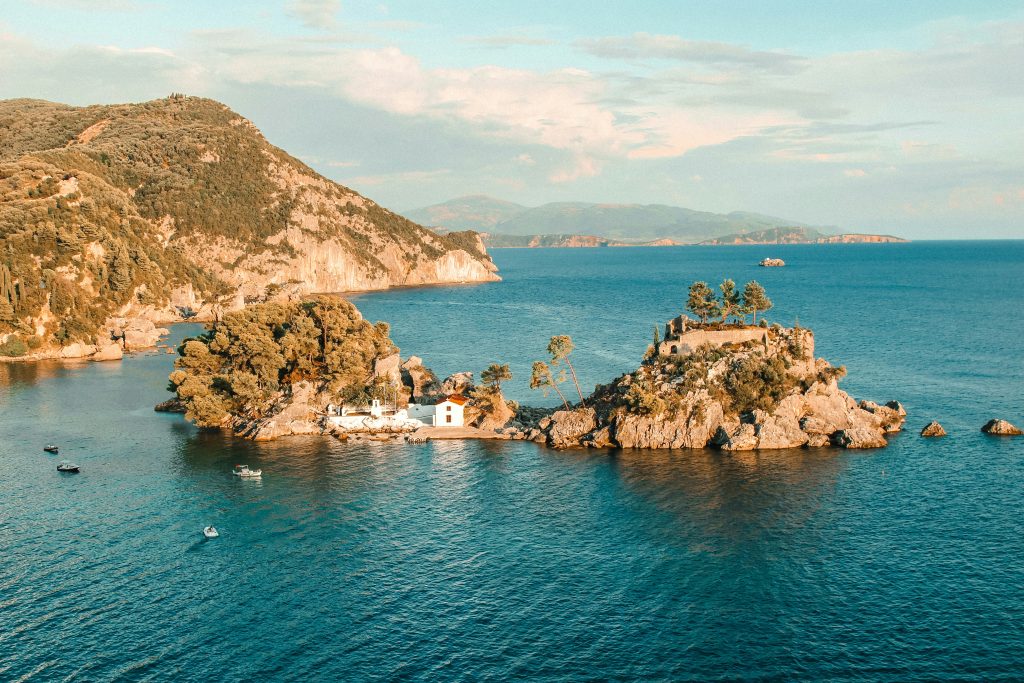
Quiet Greek islands provide a serene atmosphere where you can truly hear yourself think. Imagine starting your day with the Aegean breeze, not the noise of cruise ships. This peace is vital for anyone looking to relax and recharge.
By focusing on these hidden gems, your trip becomes a rejuvenating experience, not a tiring one. You can explore at your own pace, without the need for a strict schedule. Choosing quiet Greek islands means creating memories filled with tranquility and real discovery.
✈️ TripToGo Travel Deals
Get notified about great travel deals
Hand-picked flight, hotel and destination deals, straight to your inbox. No spam, unsubscribe anytime.
🎉 Thank you for subscribing!
You’re all set — the best travel deals are on their way.
The Best Months for Secluded Greece Vacations
Imagine strolling through quiet cobblestone streets. The first step is choosing the right month. Timing is key to a peaceful Mediterranean getaway. By avoiding summer peaks, you find secluded Greece vacations.
Visit from mid-April to mid-June for the best island experience. The landscape is vibrant and green before summer’s heat. It’s ideal for exploring hidden paths and enjoying local warmth without crowds.
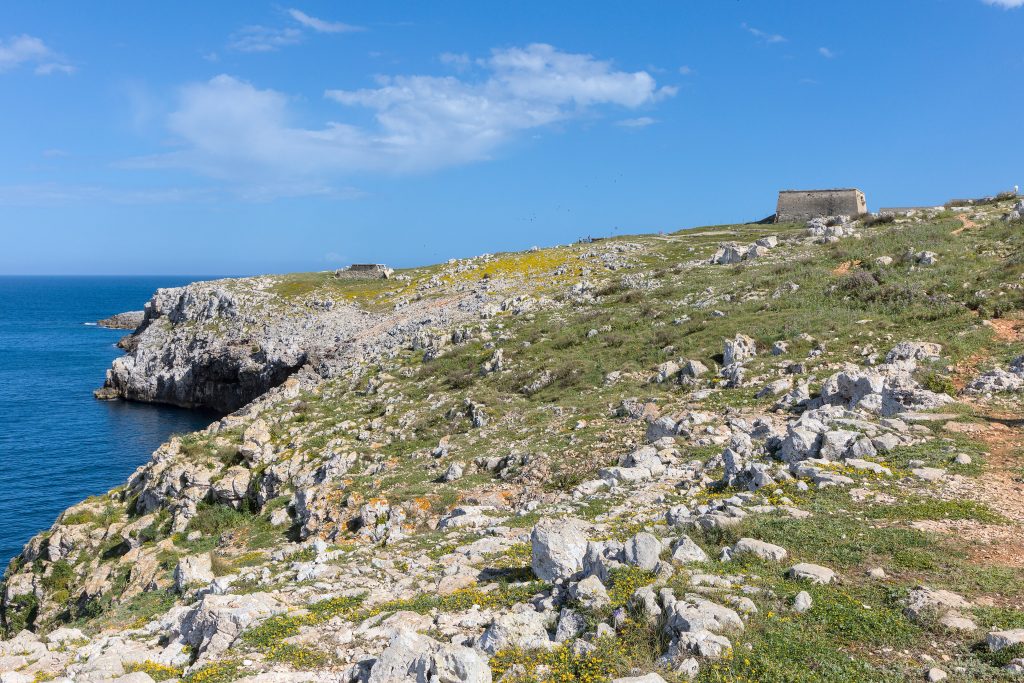
September and October offer a great travel balance. The sea is warm for swimming, and the air is cool. These months provide a relaxed atmosphere for serene Greece getaways.
Planning for these shoulder seasons ensures a quiet trip. Whether you love spring flowers or autumn’s golden light, these periods offer a deeper connection with the islands. They help you plan serene Greece getaways and unforgettable secluded vacations.
Navigating the Logistics of Remote Greece Escapes
Reaching the Aegean’s secluded spots is part of the adventure. The journey might be longer than a flight to a major hub. Yet, the reward of untouched beaches makes every minute worth it. Understanding island hopping logistics is key for a smooth journey to your destination.
Some islands have small regional airports for quick hops from Athens. Yet, most travelers use the extensive ferry network to reach their destination. Departing from Piraeus, travel times vary greatly based on vessel type and island distance.
High-speed catamarans can halve your travel time, but they’re sensitive to rough seas. Conventional ferries offer a slower, more relaxed pace, perfect for enjoying the salty air. Planning these escapes requires checking schedules well in advance, as routes change seasonally.
If coordinating multiple connections seems daunting, consider a professional travel planner. They can streamline your itinerary and handle boat transfers. They often know the best routes to avoid long layovers at busy ports.
Preparation is key to a stress-free trip. By mastering travel basics, you can enjoy the beauty of your remote greece escapes without stress. Embrace the slow pace of island life from the moment you step onto the deck.
Quiet Greek Islands at a Glance
Beyond the eight islands below, here is a fuller list of Greece’s most peaceful islands — sortable by island group, what they are known for, how to reach them and just how quiet they are.
| Island | Group | Known for | Getting there | Crowds |
|---|---|---|---|---|
| Folegandros | Cyclades | Cliffside Chora, quiet alleys | Ferry from Athens / Santorini | Very low |
| Anafi | Cyclades | Remote beaches, hiking | Ferry from Santorini | Very low |
| Sikinos | Cyclades | Wine, untouched villages | Ferry from Athens | Very low |
| Kimolos | Cyclades | Volcanic beaches | Ferry via Milos | Very low |
| Donousa | Lesser Cyclades | Beaches, off-grid calm | Ferry from Naxos | Very low |
| Amorgos | Cyclades | Big Blue cliffs, hiking | Ferry from Naxos | Low |
| Syros | Cyclades | Neoclassical Ermoupoli | Ferry from Athens | Low |
| Tinos | Cyclades | Marble villages, food | Ferry from Athens / Mykonos | Low |
| Kythira | Ionian / Aegean | Venetian & Aegean charm | Flight or ferry from Athens | Low |
| Hydra | Saronic | Car-free, artists’ island | Ferry from Athens (1.5 hrs) | Low |
| Alonissos | Sporades | Marine national park | Ferry via Skiathos / Volos | Low |
| Ikaria | NE Aegean | Longevity, slow living | Flight or ferry from Athens | Low |
| Samos | NE Aegean | Green, Pythagoreion (UNESCO) | Flight from Athens | Low-Med |
| Patmos | Dodecanese | Monastery of St John (UNESCO) | Ferry via Kos / Samos | Low |
| Lipsi | Dodecanese | Tiny, sleepy beaches | Ferry via Patmos | Very low |
| Tilos | Dodecanese | Wildlife, hiking | Ferry via Rhodes / Kos | Very low |
| Symi | Dodecanese | Pastel harbour town | Ferry from Rhodes | Low |
| Kasos | Dodecanese | Remote, authentic | Flight / ferry via Karpathos | Very low |
| Astypalaia | Dodecanese | Butterfly shape, hilltop castle | Flight from Athens | Very low |
| Kastellorizo | Dodecanese | Remote, near the Turkish coast | Flight via Rhodes | Very low |
Tap a column to sort. Official inspiration: Visit Greece.
Island-hop the quiet Aegean
Our partner Voyada’s AI vacation planner turns your Greek island picks into a realistic route with flights, hotels and a real total cost — in about a minute, free.
Help me plan a trip→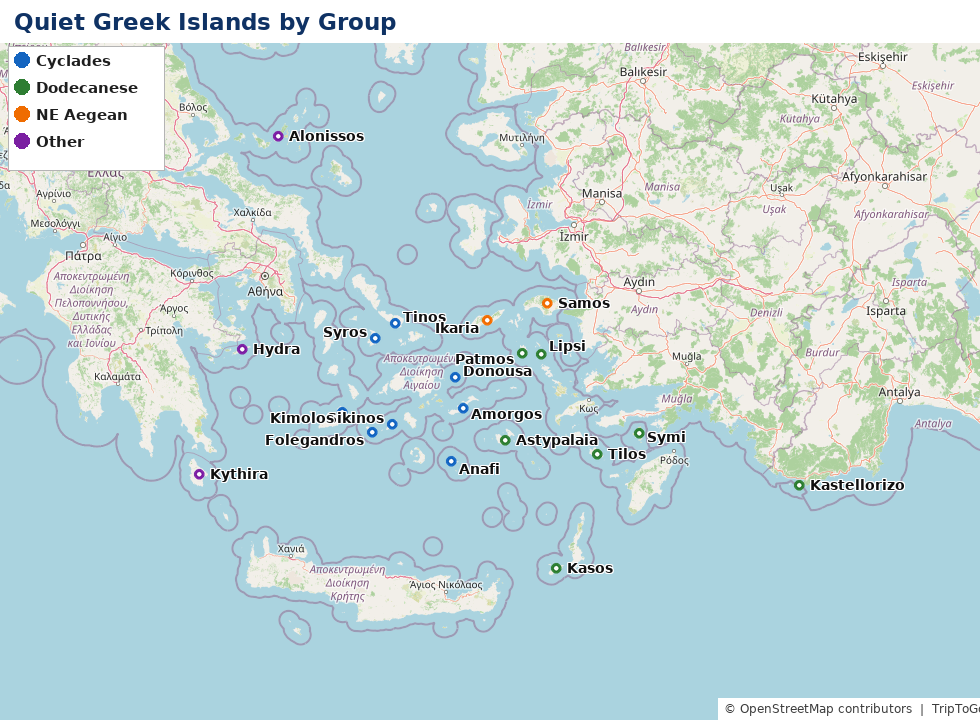
Escaping the Crowds in Greece: Key Facts
When to go for calm: late May–June and September–early October — warm seas, everything open, and a fraction of the August crowds. Avoid mid-July to mid-August. Budget the levies: a per-room, per-night climate resilience fee on every stay, and a €20 cruise passenger fee at Santorini and Mykonos in summer.
Getting there: most quiet islands need a ferry (sometimes two hops); a handful have small airports (Astypalaia, Kastellorizo, Ikaria, Kythira, Samos). Book summer ferries well ahead.
Quietest of all: the smallest Cyclades (Donousa, Sikinos, Anafi) and the far Dodecanese (Tilos, Lipsi, Kasos) see the fewest visitors.
Quiet islands with UNESCO heritage: Patmos (the Monastery of St John and Cave of the Apocalypse) and Samos (Pythagoreion and the Heraion); tiny Delos near Mykonos is a UNESCO archaeological island.
Folegandros: The Dramatic Cliffside Haven
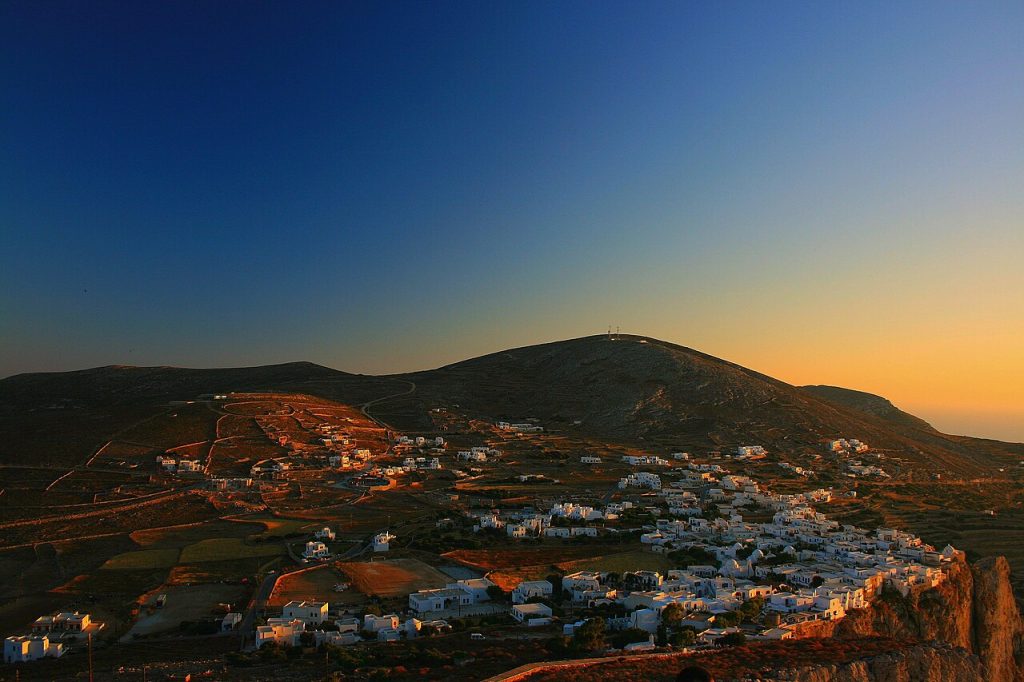
Imagine waking up to the sight of whitewashed houses perched on the edge of a sheer cliff overlooking the deep blue sea. Folegandros offers a truly cinematic experience that feels worlds away from the typical busy vacation spots. This island captures the heart of every traveler who values raw, natural beauty over commercialized resorts.
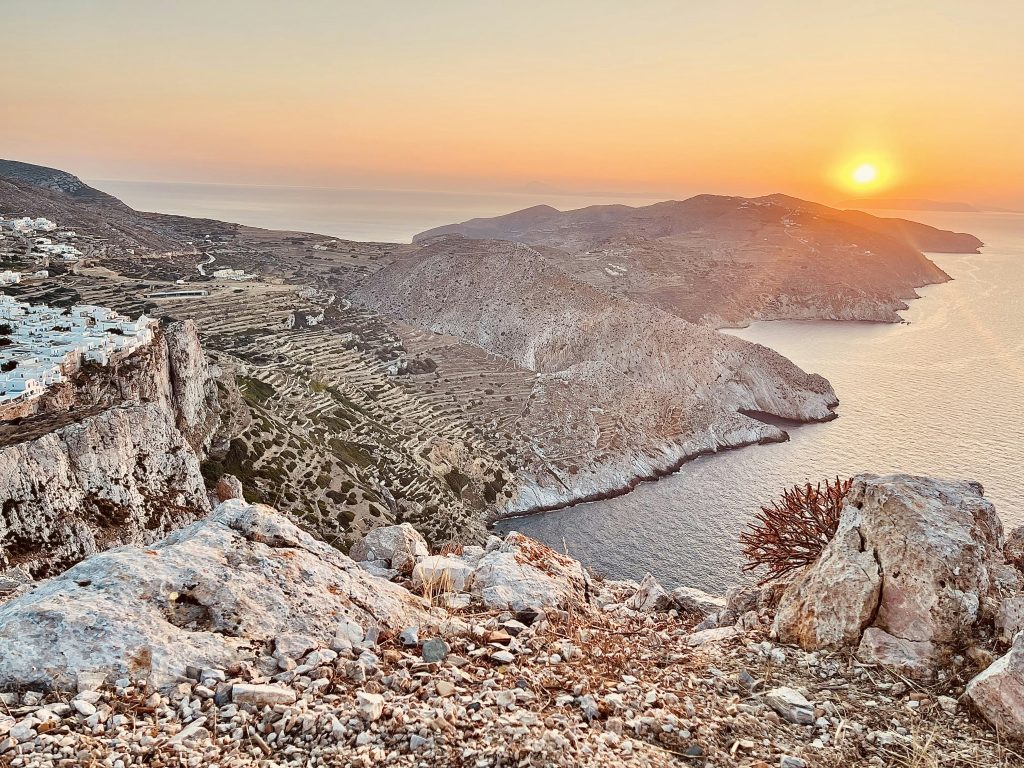
The main town, known as Chora, serves as the island’s peaceful soul. Its winding alleys and quiet squares provide the perfect backdrop for evening strolls. It is an ideal place to enjoy long, leisurely dinners while watching the sunset paint the sky in vibrant colors.
To truly uncover the magic of this destination, you should consider renting a scooter or a car. Having your own set of wheels allows you to reach the most secluded beaches and hidden viewpoints with ease. These remote spots offer a level of privacy that is becoming increasingly rare in the modern world.
Folegandros stands as a prime example of how to enjoy dramatic scenery without the overwhelming presence of mass tourism. By choosing to explore this cliffside haven, you support a more authentic and sustainable way to travel. It is a place where time seems to slow down, inviting you to simply breathe and take in the view.
Anafi: The Ultimate Peaceful Mediterranean Retreat
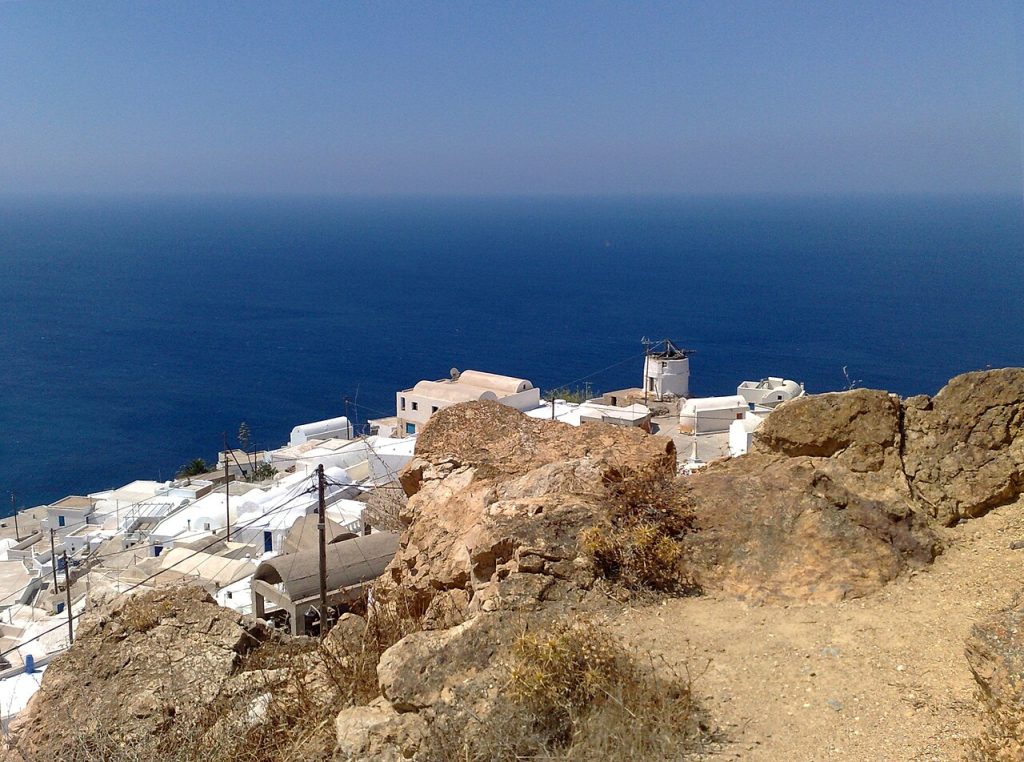
Seeking a place where time pauses? Anafi’s rugged shores are your answer. This island, one of the Aegean’s most untouched, is ideal for those desiring solitude. It stands out for resisting modernization, unlike many other places.
Anafi’s dramatic terrain and traditional architecture have seen little change over the years. Life here moves at a slower pace, allowing you to escape the world’s din. Walking through its quiet paths feels like a journey back in time.
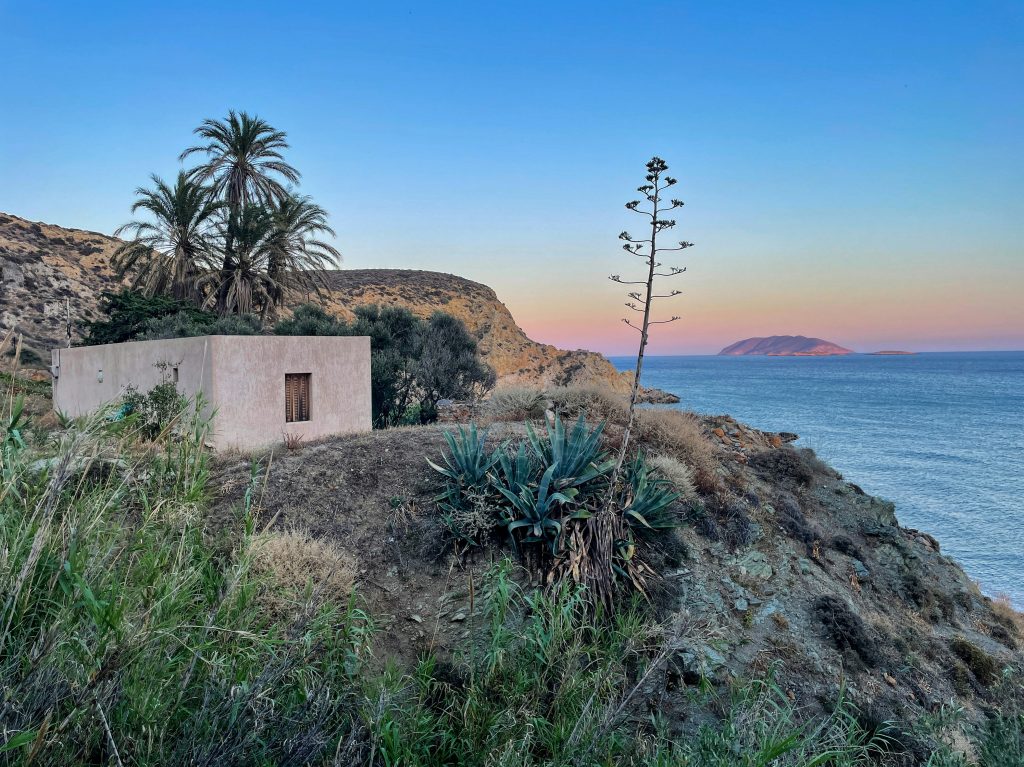
For those who love adventure, Anafi offers hiking trails to ancient chapels. These paths reveal stunning sea and landscape views. After hiking, you can enjoy the crystal-clear waters almost to yourself.
Such solitude is rare in today’s travel scene. Anafi is perfect for those who value quiet and natural beauty. It’s a genuine peaceful Mediterranean retreat in Greece.
Kythira: A Blend of Venetian and Aegean Charm
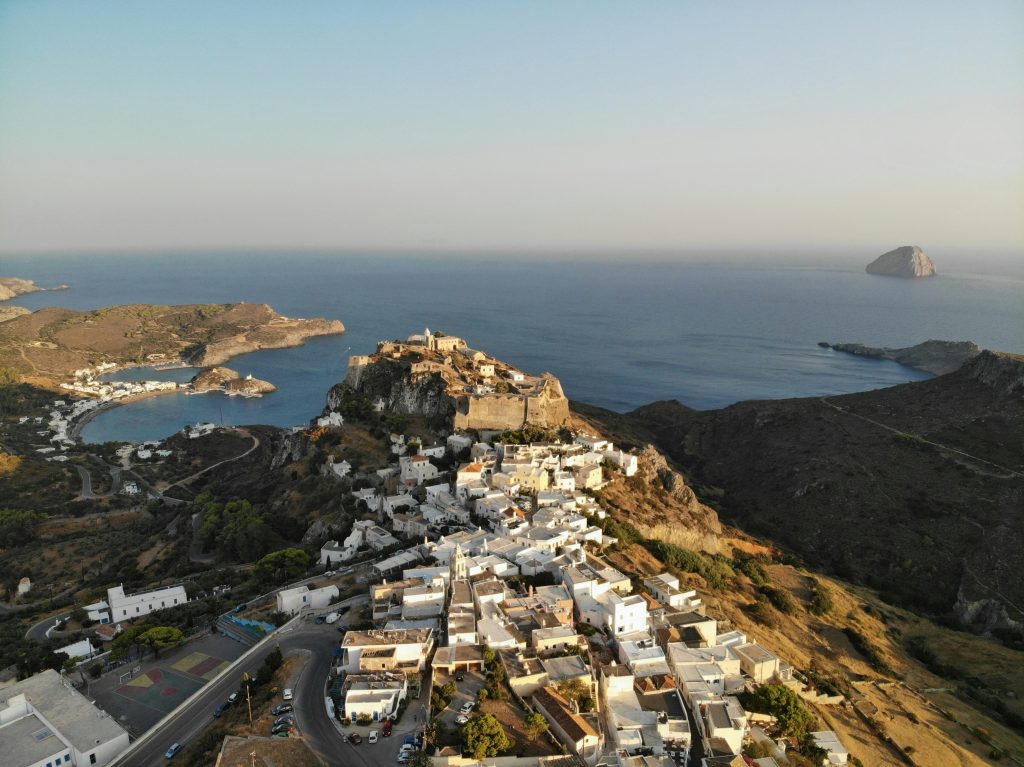
Kythira sits at the intersection of the Ionian and Aegean seas, creating a unique getaway. It differs from its neighbors with its rich history and distinct culture.
The island’s landscape is marked by Venetian architecture, blending with the classic white-washed buildings of the area.
Kythira’s size offers a variety of landscapes for all travelers. You can explore lush valleys in the morning and dramatic cliffs by afternoon.
Local villages are the heart of Kythira. Here, you’ll find a strong sense of community and traditional hospitality, making visitors feel like family.
For a true island experience, adopt a slow pace. Explore hidden paths and quiet squares instead of rushing to major sights.
Relax in a local cafe and immerse yourself in the island’s daily life. This way, you connect with Kythira’s authentic spirit and enjoy its natural beauty.
Alonissos: Nature and Marine Conservation
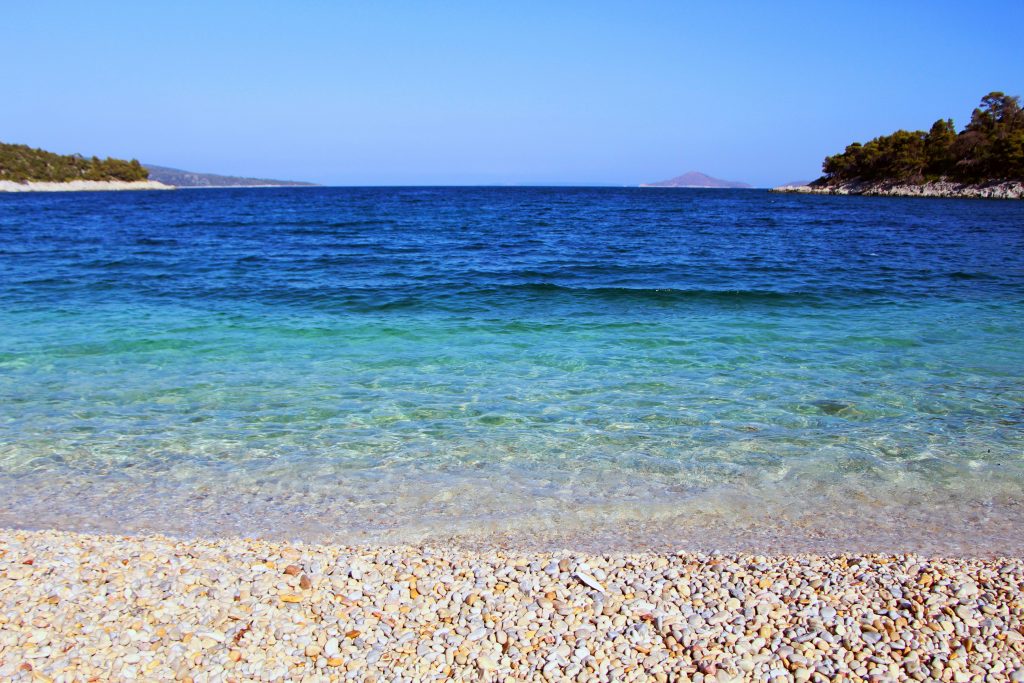
Alonissos exemplifies the perfect blend of tourism and environmental preservation. It’s a haven for nature enthusiasts seeking refuge from the chaos of commercial spots. The island’s dedication to marine conservation ensures its ecosystem thrives, safeguarding it for future generations.
The waters surrounding Alonissos are part of a protected national park, Greece’s first. This designation protects rare species, including the Mediterranean monk seal. By visiting, you support a community that prioritizes its natural heritage.
For those who love diving, Alonissos offers unparalleled snorkeling and diving experiences. The clear waters reveal a vibrant underwater world. Always choose operators who adhere to strict ecological standards to preserve these reefs.
The old town of Alonissos exudes a timeless charm. Its narrow alleys invite exploration, supporting the local economy. By minimizing your environmental footprint and embracing sustainable practices, you contribute to the island’s preservation.
Tinos: Authentic Culture Beyond the Pilgrimage
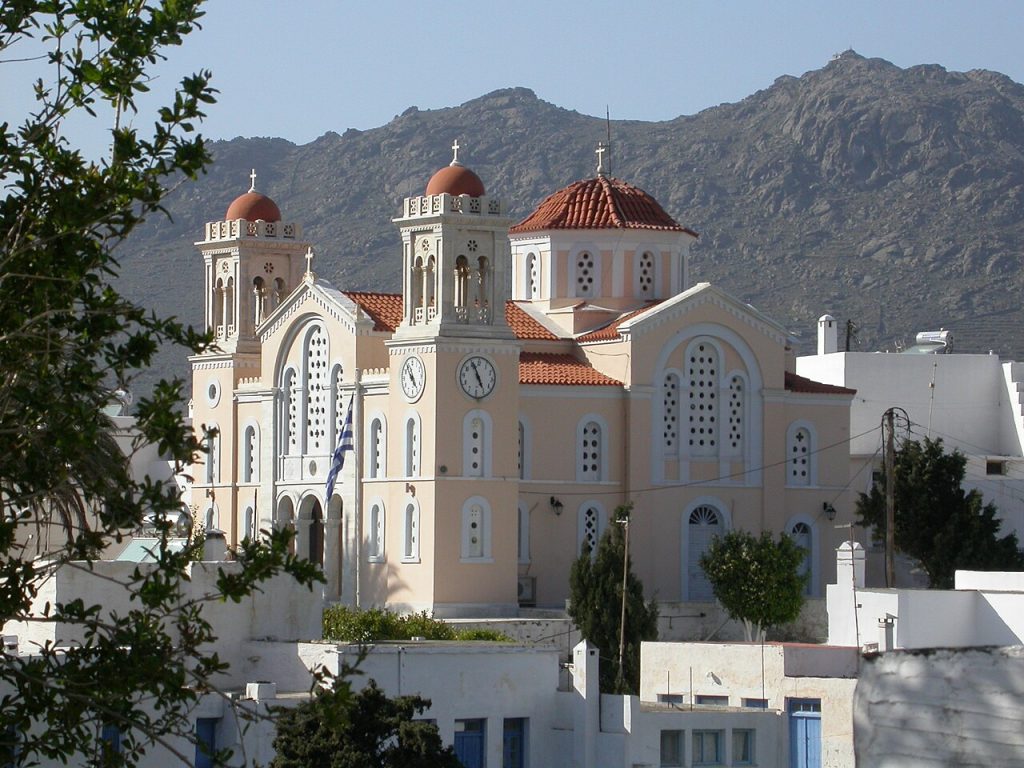
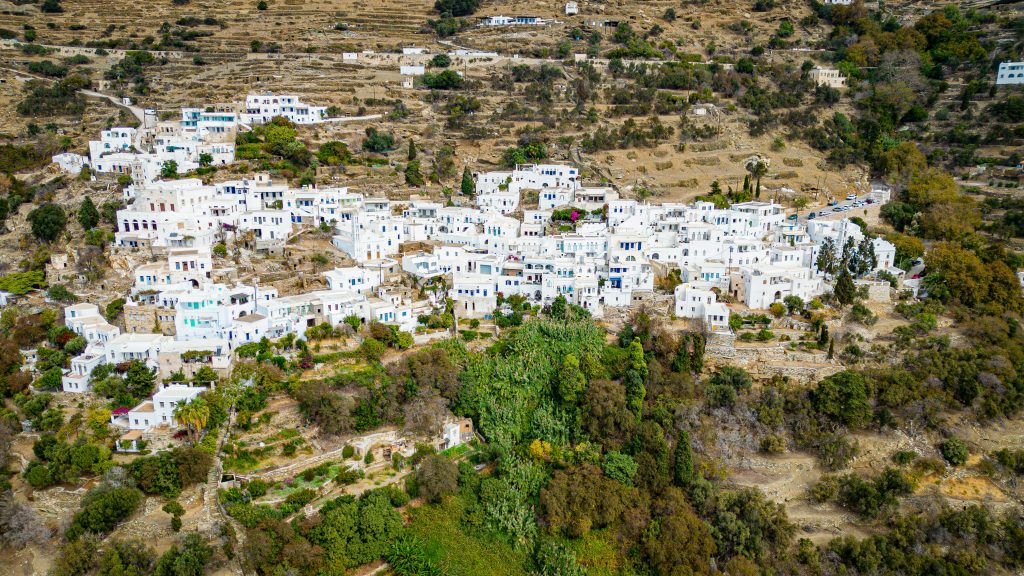
Tinos offers more than just pilgrimage routes; it’s a haven of quiet villages and genuine island life. Many flock here for religious reasons, but the island’s true essence lies in its rugged heart. Exploring beyond the main areas uncovers a world of timeless allure.
The island boasts dozens of traditional villages, each with its own unique character and history. Stroll through stone-paved alleys where the aroma of wild herbs pervades the air. These villages are renowned for their exquisite marble carvings, a skill passed down through generations.
Food enthusiasts will be delighted by the local cuisine. The island’s fertile soil ensures fresh ingredients are readily available. Seek out family-run tavernas serving seasonal produce, local cheeses, and artisanal honey.
Renting a vehicle is advisable to reach the island’s remote mountain hamlets. These areas offer a serene look into a life unchanged for decades. Interacting with the locals here deepens your connection to Tinos’ essence.
It’s important to respect local customs while exploring these intimate spaces. Supporting small-scale producers and artisans helps preserve Tinos’ unique heritage. This Aegean gem rewards those who dig deeper to uncover its hidden treasures.
Prefer to travel it with a guide?
There are 13 Greece tours on TripToGo, from short city breaks to multi-week routes.
View Greece tours →Ikaria: The Island of Longevity and Slow Living
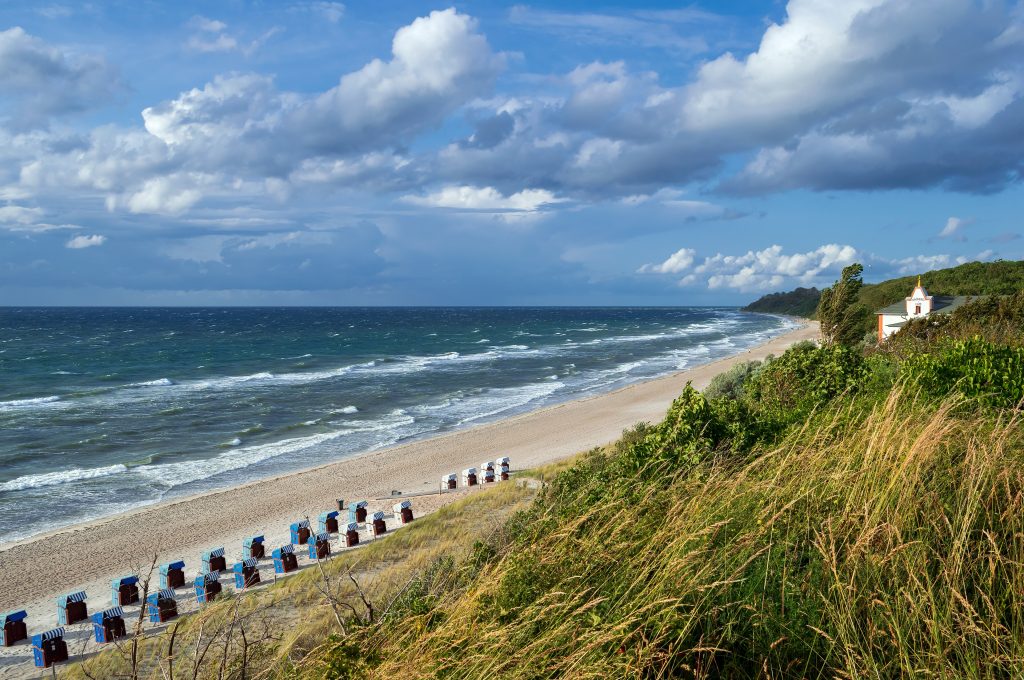
Seeking refuge from the fast-paced world? Look no further than Ikaria’s rugged shores. Renowned for its residents’ remarkable longevity, Ikaria’s unique approach to life is key. Experts attribute this to its slow living ethos.
The island’s dramatic landscape nurtures an independent spirit, far from tourist crowds. Here, time stretches differently, inviting you to disconnect from screens and reconnect with yourself. The local culture values presence over productivity.
To embrace the Ikarian lifestyle, slow down your pace. Ditch the rush and enjoy long, social meals at tavernas. These gatherings are the community’s heart, perfect for savoring fresh, seasonal dishes.
Explore the island’s wild trails and thermal springs to deepen your connection with nature. Hiking through the mountains offers a peace that’s rare. Letting go of your tight schedule, you’ll follow the island’s natural rhythm.
Visiting Ikaria is about recharging your spirit, not just ticking off a list. Engage with the locals, listen to their tales, and appreciate their simple lives. You’ll depart feeling revitalized, inspired, and perhaps more mindful of your own pace.
Astypalaia: The Butterfly of the Aegean
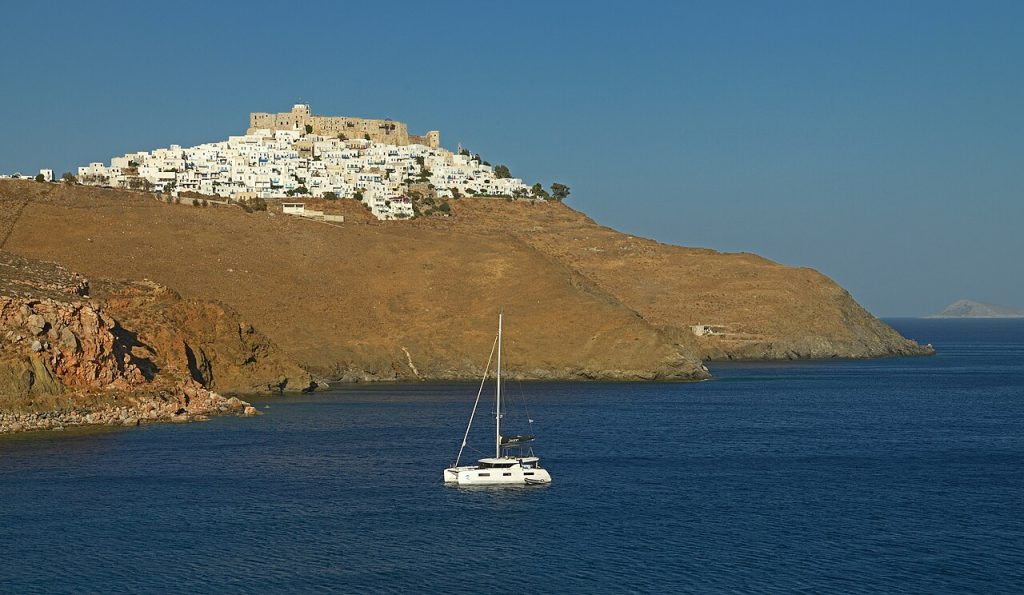
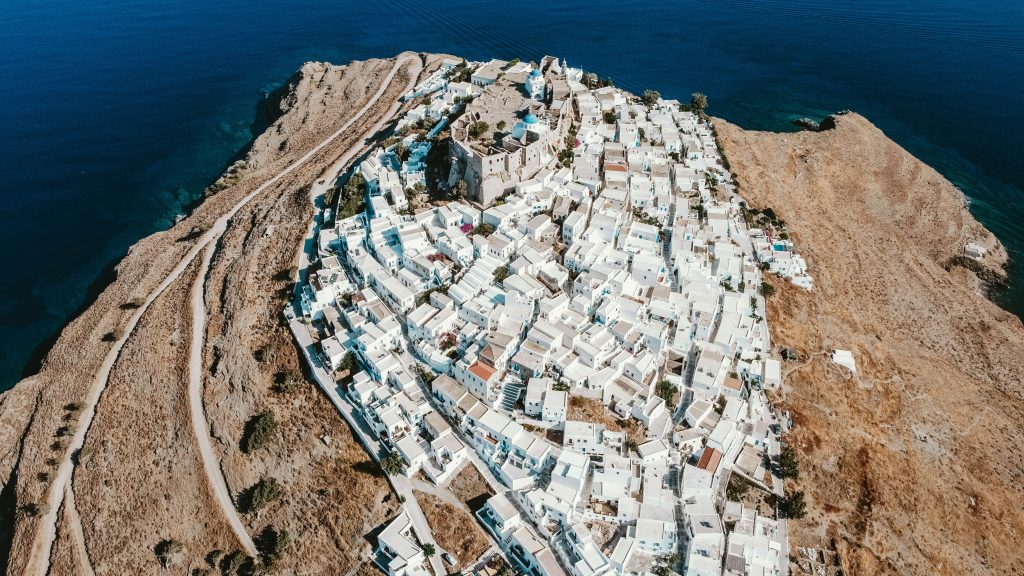
The island of Astypalaia, shaped like a butterfly, offers a unique escape. It’s where the Cyclades meet the Dodecanese, blending two distinct island cultures. This creates a diverse experience for all travelers. Its geography produces a stunning landscape, both remote and welcoming.
The island’s shape offers a variety of coastal experiences. Spend your morning in calm, sheltered bays with crystal-clear water. Or, if you prefer more action, the open, windswept beaches suit confident swimmers who love the sea’s power, though these stretches have no lifeguards, so it is worth checking conditions locally before going in.
Exploring Astypalaia is now easy thanks to modern technology. The island runs Volkswagen’s electric mobility scheme: astyGO for self-drive car, scooter and e-bike sharing, and the astyBUS ride-share service, both booked through the astyMOVE app.
With astyGO, you can enjoy the peace and quiet of your stay. It’s perfect for those who desire modern convenience without losing the serene atmosphere of a secluded getaway. Whether strolling through white-washed streets or relaxing by the shore, Astypalaia offers a seamless, memorable experience.
Kastellorizo: A Remote Gem Near the Turkish Coast
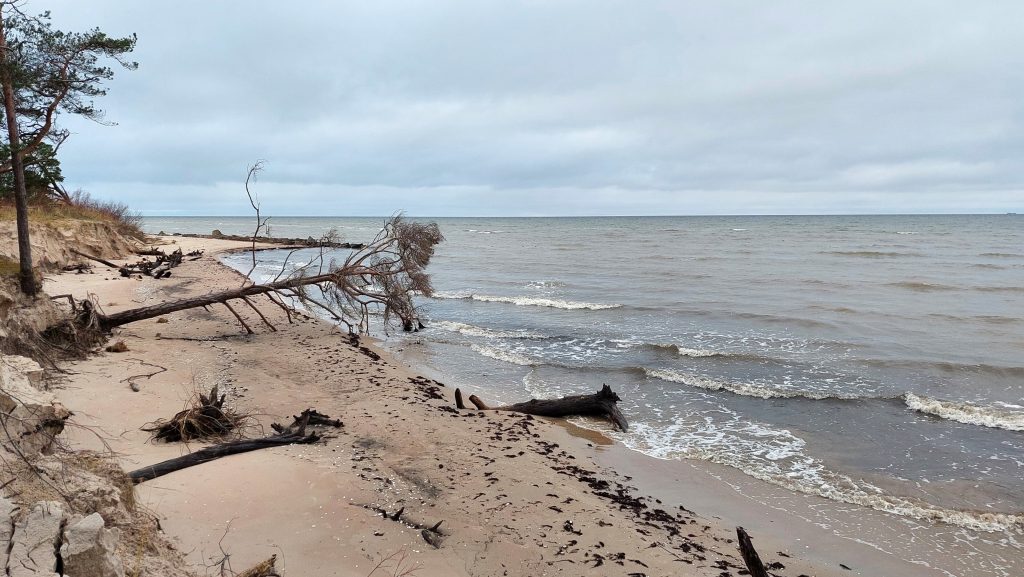
The Mediterranean’s shores hold few places as captivating as Kastellorizo’s vibrant, remote beaches. This small island stands apart from the crowded tourist spots, making it ideal for those seeking genuine remote Greece escapes. Its colorful, neoclassical houses mirror perfectly in the clear harbor, creating a timeless scene.
Its close proximity to the Turkish coast imbues Kastellorizo with a unique cultural essence. The mainland is often visible across the water, adding a captivating geopolitical dimension to your visit. This location ensures the island remains tranquil, untouched by the masses.
Planning a trip here demands patience, but the payoff is immense. Due to its isolation, flexible travel dates and extra time for ferry connections are essential. Upon arrival, embracing the island’s slow pace is key. Explore its narrow alleys and savor fresh local dishes at the waterfront tavernas.
For a serene remote Greece escape, Kastellorizo is the ultimate retreat. Travel light, bring a book, and disconnect from the digital world. Visiting this hidden gem supports a slower, more meaningful Mediterranean experience.
Estimating Costs for Your Tranquil Greek Isles Trip
€28 is Dodekanisos Seaways’ own Rhodes-to-Symi day-trip fare, cut from €48, though the operator limits the offer to set dates and a fixed number of seats.
Traveling to the tranquil Greek isles can be surprisingly affordable. Unlike popular spots, less-visited islands offer great value for your money. Local tavernas and family-run guesthouses provide authentic experiences at lower costs than major tourist areas.
Effective budgeting involves understanding both fixed and variable expenses. Fixed costs include flights and ferry tickets, which can be cheaper if booked early. Variable costs, like meals and activities, depend on your travel style and choices.
It’s wise to allocate a part of your budget for local transport. Renting a car or scooter lets you access hidden beaches and villages not reached by buses. Having your own transport means you can explore at your pace, avoiding pricey taxis.
Planning your expenses in advance keeps your trip affordable and stress-free. Prioritize what’s important to you, like a sunset dinner or a private boat tour. With careful planning, you can have a memorable trip that fits your budget.
Essential Packing Tips for Calm Greek Archipelagos
Smart packing is the key to enjoying your time in the Aegean’s most peaceful spots. For secluded greece vacations, pack items that serve multiple purposes. They should be suitable for both rugged daytime activities and relaxed evenings. Opt for lightweight, breathable fabrics to stay cool under the Mediterranean sun.
Footwear is a critical part of your luggage. Many hidden beaches are only accessible via rocky, unpaved paths. These paths require footwear with good grip and ankle support. A sturdy pair of hiking sandals or lightweight trail shoes is essential for exploring these remote areas comfortably.
Remember, simplicity is vital when visiting these archipelagos. A small daypack is ideal for carrying essentials like water, sunscreen, and a camera. This way, you’ll be ready to fully embrace the island’s slow pace of life.
How to Find Serene Aegean Islands on Your Own
Creating a unique island itinerary lets you avoid the crowds and find true peace. You don’t need a travel agent to discover the Aegean’s most beautiful hidden gems. By planning yourself, you can find authentic spots that are off the beaten path.
Begin by using digital map tools to find locations without large cruise ports or major airports. These gaps often keep mass tourism away. Focusing on these criteria is the best way to find quiet Greek islands for a genuine local experience.
Look beyond the standard top-ten lists in travel magazines. Instead, zoom in on the Aegean Sea on your map and find smaller islands away from main ferry routes. This method helps you locate serene Aegean islands that feel like your own private discovery.
After finding some spots, check the ferry schedules to ensure they’re accessible but not too convenient for day-trippers. This balance is key to planning serene Greece getaways that focus on relaxation. With a bit of curiosity, you’ll find the perfect quiet Greek islands for your next adventure.
Remember, the joy of travel often starts with the planning. By trusting your instincts and doing your own research, you ensure your serene Greece getaways match your personal preferences. Now, you’re ready to explore the most serene Aegean islands with confidence and ease.
Avoiding Tourist Traps During Peak Season
Nearly 34 million overnight stays were logged in Greek tourist accommodation in August 2025, against 1.6 million in January — the crush you are dodging is compressed into a few weeks.
Discovering solitude in the Aegean is achievable with the right approach to avoiding crowds. Even on secluded islands, you might find small areas of congestion if you’re not strategic. The key to a stress-free journey is planning your day to avoid the peak tourist hours.
Day-trippers usually flock to main ports during the middle of the day. We recommend steering clear of these busy spots between 11:00 AM and 4:00 PM. By avoiding the docks during these times, you can explore the calm greek archipelagos without feeling swamped.
Seek out the interior villages or hidden coves instead of staying near the harbor. These spots often maintain their local pace and are less frequented by tourists. Here, the islands’ true essence is revealed, away from the usual tourist trails.
Adopting a more leisurely pace allows you to uncover the serene aegean islands‘ hidden beauty. Opt for early morning hikes or late afternoon swims to enjoy your solitude. These simple tactics help you savor the calm greek archipelagos in peace, keeping your trip serene and personal.
Keep an eye on local ferry schedules to predict when crowds might move. By staying ahead of the main tourist groups, your visit to these serene aegean islands will remain a tranquil retreat. Trust your instincts and uncover the quiet spots that most overlook.
Before you go: turn this guide into a day-by-day plan. Our partner Voyada is a free travel itinerary generator that builds the route with flights, hotels and a real total cost for your dates — in about a minute.
Create an itinerary →Finding Greece's Quiet Islands
Beyond the famous few, Greece has dozens of islands where you’ll find the same beauty without the crowds.
- Swap the icons: trade Santorini and Mykonos for Naxos, Milos, Folegandros, Amorgos, Tinos or Sifnos, or the Dodecanese and Sporades.
- Mind the connections: smaller islands rely on ferry links — check schedules and leave buffer days.
- Go late spring or early autumn for warm seas, open tavernas and few crowds.
- Rent a car or scooter to reach the hidden beaches.
- Embrace the slower pace — long taverna lunches and local life are the whole point.
The Complete List: 15 Quiet Greek Islands
Beyond Santorini and Mykonos, Greece has dozens of islands where you can still find peace. Here’s a fuller list of the calmest.
- Hydra — car-free, artsy and calm by evening; an easy hop from Athens.
- Sifnos — a foodie Cycladic gem with gentle village life.
- Folegandros — a dramatic clifftop Chora with few crowds.
- Amorgos — towering cliffs and timeless villages (the ‘Big Blue’ island).
- Naxos — big, green and great value, with superb beaches and a laid-back feel.
- Milos — lunar coves and colourful fishing villages.
- Tinos — marble villages, dovecotes and a famous pilgrimage church.
- Serifos & Kythnos — raw, quiet, under-the-radar Cyclades.
- Ikaria — the famously slow-living ‘blue zone’ island.
- Symi — a pastel harbour in the Dodecanese.
- Kythira — remote and romantic, between the Peloponnese and Crete.
- Skopelos & Alonnisos — green Sporades with a marine park (and Mamma Mia scenery).
- Karpathos — wild beaches and the traditional village of Olympos.
- Astypalea — a butterfly-shaped island far off the beaten track.
- When to go: May–June and September–October for warm seas and open tavernas — and check ferry links, as small islands have fewer connections.
Conclusion
Exploring Greece’s lesser-known islands offers a unique chance to rediscover the true joy of travel. These peaceful mediterranean retreats ensure your vacation is filled with authentic experiences, not long queues.
You now have the opportunity to uncover a side of Greece that most tourists overlook. The tranquil greek isles provide a rare chance to immerse yourself in local culture and untouched landscapes on your own terms.
It’s time to choose one of the islands mentioned and start checking ferry schedules for the upcoming shoulder season. Booking your tickets ahead through an official ferry operator will secure your spot on these serene shores.
Pack with curiosity and a sense of adventure. A trip to these hidden gems will leave you feeling refreshed and inspired, long after you return home.
FAQ
When is the best time to visit the quieter Greek islands?
September is the pick: Rhodes averages a 28.0°C daytime high in Hellenic National Meteorological Service 1991-2020 normals, fractionally warmer than June’s 27.8°C, so the shoulder season costs you nothing in warmth.
How do I get to the more remote Greek islands?
Five hours and 27 minutes is the total journey the Greek National Tourism Organisation quotes for Athens to Kastellorizo, flying via Rhodes — remoteness here is measured in connections.
Is it difficult to get around Astypalaia without a rental car?
What makes Folegandros a top choice for quiet greek islands?
Why should I consider Kastellorizo for my next vacation?
How can I find other calm greek archipelagos on my own?

Olivia Carter
Which is the quietest Greek island?
Among the smallest and least-visited are Anafi, Sikinos, Donousa and Kasos, all seeing markedly fewer visitors even than other quiet islands, largely because none has a large airport or cruise port. Kastellorizo, right on the edge of Greek territory near the Turkish coast, is another contender for the title thanks to its isolation. Quietest shifts a little with the season, since even these islands see more visitors in July and August than in the shoulder months.
What is the Greek climate resilience fee?
The climate resilience fee is a per-room, per-night charge added to accommodation stays across Greece, replacing the old hotel overnight tax, with revenue earmarked for infrastructure like wildfire and flood prevention. In peak season (April–October) it runs from around €2 a night for budget rooms up to around €15 for five-star hotels, dropping to a fraction of that over winter. It applies whether you are staying on a famous island or one of the quieter ones covered here.
Is there a cruise passenger fee in Santorini and Mykonos?
Yes, Greece charges a cruise passenger levy at Santorini and Mykonos, currently around €20 per person during peak summer (June–September), dropping to around €12 in the shoulder months and €4 over winter. It applies specifically to cruise passengers stepping ashore, rather than travellers arriving by ferry or air, and is intended to help manage the huge day-tripper numbers these two islands receive. If your ship calls at Mykonos, our guide to the best things to do in Mykonos covers Little Venice, the windmills and the beaches. It does not affect the quieter islands covered here, none of which see comparable cruise traffic.
Where can you see the Mediterranean monk seal in Greece?
The waters around Alonissos, part of Greece’s first marine park, the National Marine Park of Alonissos, Northern Sporades, are one of the best places to encounter the Mediterranean monk seal, one of the world’s most endangered marine mammals. Sightings are never guaranteed, since the seals are naturally shy and elusive, but the park’s protected status has helped the local population recover. Responsible boat operators keep a respectful distance to avoid disturbing them.
Which quiet Greek islands have their own airport?
A handful of the calmer islands have small regional airports with flights from Athens, including Astypalaia, Kastellorizo, Ikaria, Kythira and Samos. Flying cuts a multi-hour ferry journey down to under an hour in most cases, though schedules are limited compared with major hubs like Santorini or Mykonos and flights can be pricier for the distance covered. Most other quiet islands are ferry-only, reached from Piraeus or a connecting island port.
Is Naxos a quiet alternative to Santorini and Mykonos?
Naxos is quieter and considerably better value than Santorini or Mykonos, while still being large enough to have a proper airport, varied beaches and a lively-but-manageable main town. It is not as silent as the smallest Cyclades like Anafi or Donousa, since it is a popular stop for families and independent travellers, but it offers a good middle ground between remoteness and convenience. Its size also means more accommodation and dining options than the tiniest islands.
What is Ikaria famous for?
Ikaria is best known as one of the world’s Blue Zones, regions studied for unusually high rates of residents living active lives past 90, which researchers link partly to its slow-paced, socially connected way of life. Beyond the longevity angle, it has a rugged, mountainous landscape, thermal springs and a strong local wine tradition. It has both a small airport and ferry connections from Athens, making it one of the more accessible quiet islands.
Is Hydra car-free?
Yes, Hydra bans motor vehicles entirely; the only transport on the island is on foot, by donkey or mule, or by water taxi between coves. This gives the island a distinctly calm, old-world atmosphere even though it is only around a 1.5-hour ferry ride from Athens, making it one of the most accessible quiet islands for a shorter trip. Its car-free harbour town has also long attracted artists and writers.
What are the Small Cyclades?
The Small Cyclades (Mikres Kyklades) are a cluster of tiny islands, including Donousa, Koufonisia, Schinoussa and Iraklia, tucked between the larger islands of Naxos and Amorgos. They see some of the lowest visitor numbers in the whole island group, with limited accommodation, few cars and a handful of tavernas per island. Ferry connections generally run through Naxos, and most travellers visit as an add-on to a longer Cyclades itinerary rather than a standalone destination.
Which quiet Greek islands have UNESCO World Heritage sites?
Patmos, in the Dodecanese, is a UNESCO site for the Monastery of St John and the Cave of the Apocalypse, where the Book of Revelation is said to have been written. Samos, also in the north-east Aegean, holds UNESCO status for the archaeological site of Pythagoreion and the Heraion temple complex. Both islands combine genuine historical weight with a far calmer atmosphere than Greece’s more famous heritage sites.
Can you combine several quiet Greek islands in one trip?
Yes, and it is a popular approach, since many of the calmer islands sit within a similar ferry network and can be linked with a few hours of travel between stops, for example Folegandros, Sikinos and Milos in the western Cyclades. The main planning consideration is that ferry frequency drops sharply outside peak summer, so island-hopping itineraries in the shoulder season need more buffer time between connections. Basing an itinerary around one ferry company’s regional routes usually simplifies logistics.
What should I pack for visiting Greece's quieter islands?
Lightweight, breathable clothing and a swimsuit are the basics, but sturdy sandals or trail shoes matter more here than on well-developed islands, since many of the best beaches are reached by rough, unpaved paths. A dry bag and reef-safe sunscreen are useful for boat trips to remote coves, and a portable charger is worth having given the patchier infrastructure on the smallest islands. Cash is also worth carrying, since some tavernas and small guesthouses on quieter islands do not take cards.
How do I get to Symi?
One hour by air from Athens to Rhodes, then 1 hour 30 minutes by ferry, is the route to Symi the Greek National Tourism Organisation lists.
Symi is reached by ferry from Rhodes, generally taking under an hour on a fast boat, making it an easy day trip or short stay for anyone already visiting Rhodes. There is no airport on the island itself, so most visitors fly into Rhodes first and continue by sea. Its pastel-coloured harbour town, Gialos, is one of the most photogenic in the Dodecanese despite its small size.
Are quiet Greek islands more affordable than Santorini or Mykonos?
Generally yes, accommodation, food and activities on the lesser-visited islands tend to cost noticeably less than on Santorini or Mykonos, where high demand has pushed prices up considerably. Family-run guesthouses and tavernas dominate on quieter islands rather than international hotel chains and destination restaurants, which keeps prices closer to local Greek levels. Flights and ferries to reach them can occasionally cost more per mile given lower frequency, but overall trip costs are usually lower. For a fuller picture, our guide to Greece trip costs breaks down daily budgets, ferry fares and taverna meals.
Is Syros a good quiet alternative in the Cyclades?
Yes, Syros offers a different kind of calm: rather than whitewashed cliffside villages, its capital Ermoupoli is a grand 19th-century neoclassical town that functions as a real, year-round Greek city rather than a purely seasonal resort. It is easily reached from Athens by ferry and has a genuine local food and cultural scene alongside its quieter beaches. It suits travellers who want authentic island life without sacrificing decent restaurants and infrastructure.
Is Milos a quiet island?
Milos is quieter than Santorini or Mykonos but has grown considerably more popular in recent years thanks to its striking volcanic coastline and photogenic coves like Sarakiniko, so it sits somewhere between a hidden gem and an established destination. Visiting in the shoulder season, or basing yourself away from the busiest beaches during midday, still delivers a noticeably calmer experience than peak-season Santorini. Nearby Kimolos, reached by a short ferry hop, offers an even quieter extension to a Milos trip.
Is it easy to find accommodation on Greece's quieter islands in peak summer?
It gets tighter than it looks, since these islands have far fewer rooms overall than Santorini or Mykonos, so the limited supply can sell out even without matching those islands’ visitor numbers. Booking accommodation several months ahead for July and August travel is strongly advised, especially on tiny islands like Kastellorizo, Anafi or Kasos, where a single closed guesthouse noticeably reduces the available options. Shoulder-season travel avoids this issue almost entirely.