
Table of Contents
ToggleKey Takeaways
- The City of Arts and Sciences — with Europe’s largest aquarium — is Valencia’s futuristic showpiece.
- The compact old town holds the Cathedral (and its Miguelete tower), the UNESCO silk exchange, and the beautiful Mercado Central.
- The Turia Gardens turned an old riverbed into a nine-kilometer park — best explored by bike.
- Valencia has a wide city beach (Malvarrosa) and the magical Albufera lagoon, the birthplace of paella, just south.
- Eat authentic paella valenciana (rabbit and chicken, not seafood) — and always at lunch.
- Visit in spring or autumn for the best weather, or during Las Fallas (March 15–19) for the famous fire festival.
Valencia’s Top Sights at a Glance
| Sight / experience | Why go |
|---|---|
| City of Arts and Sciences | Calatrava’s futuristic complex |
| Oceanogràfic | Europe’s largest aquarium |
| Cathedral & Miguelete tower | Holy Grail claim, rooftop views |
| Lonja de la Seda | UNESCO Gothic silk exchange |
| Mercado Central | A vast Modernista food market |
| Turia Gardens | A 9km park in an old riverbed |
| Malvarrosa beach | A wide city beach & paella row |
| The Albufera lagoon | Sunset boat trips, rice paddies |
| Authentic paella | Eaten where it was invented |
| Las Fallas (March) | A UNESCO fire-and-fireworks festival |
✈️ TripToGo Travel Deals
Get notified about great travel deals
Hand-picked flight, hotel and destination deals, straight to your inbox. No spam, unsubscribe anytime.
🎉 Thank you for subscribing!
You’re all set — the best travel deals are on their way.
The City of Arts and Sciences
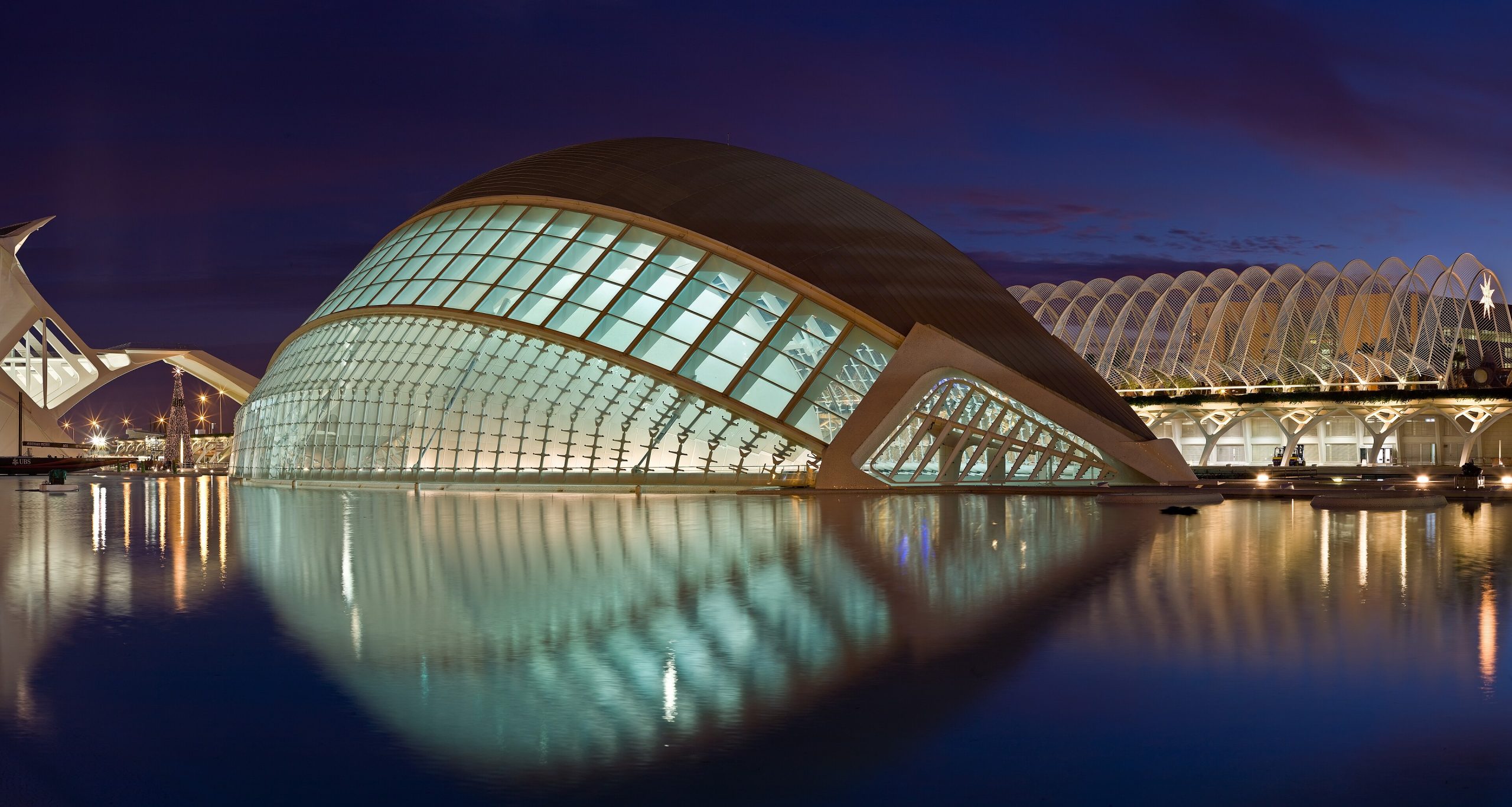
Valencia’s showstopper is the Ciudad de las Artes y las Ciencias — a complex of gleaming white, futuristic buildings by local architect Santiago Calatrava that looks beamed in from the next century. Inside are the Oceanogràfic (Europe’s largest aquarium, with sharks, belugas and a walk-through tunnel), the Hemisfèric planetarium-cinema, and a hands-on science museum. Even from outside, reflected in its shallow blue pools, it’s one of Europe’s great modern sights.
The Old Town: Cathedral, Silk Exchange & Market
Valencia’s historic core is compact and golden. Climb the Miguelete bell tower beside the Cathedral (which claims to hold the Holy Grail) for rooftop views, then admire the Gothic Lonja de la Seda — a UNESCO-listed silk exchange with soaring twisted columns. Next door, the Mercado Central is one of Europe’s largest and most beautiful food markets, a Modernista hall piled high with produce, jamón and seafood.
The Turia Gardens: A Park in a Riverbed
After a catastrophic 1957 flood, Valencia rerouted its river and turned the old bed into the Turia Gardens — a nine-kilometer ribbon of green curving through the city, filled with cyclists, joggers, orange trees, fountains and playgrounds (don’t miss the giant Gulliver climbing structure). Rent a bike and ride it from the old town all the way to the City of Arts and Sciences. It’s the lungs and joy of the city.
Beaches & the Albufera Lagoon
Valencia has the rare gift of a wide city beach: Playa de la Malvarrosa, a broad golden strand backed by a promenade of paella restaurants, a short tram ride from the center. Just south, the Albufera nature reserve — a vast freshwater lagoon and the rice paddies where paella was born — is magical at sunset from a traditional flat-bottomed boat. See our Spain beaches guide for more coast.
Planning a trip to Valencia?
Our partner Voyada’s trip planning AI builds a day-by-day plan with flights, hotels and a real total cost for your dates — in about a minute, free.
Plan trip with AIEat Valencia: The Birthplace of Paella
This is where paella was invented, and Valencians are fiercely proud of the original: paella valenciana, made with rabbit, chicken and beans (not seafood) and cooked over a wood fire — eaten at lunch, never dinner. Beyond it, graze the Mercado Central, cool off with horchata (a sweet tiger-nut drink) and fartons, and toast the city with an Agua de Valencia cava-and-orange cocktail. It’s one of Spain’s most underrated food cities.
Las Fallas & the Best Time to Visit
If you can, time a visit for Las Fallas (March 15–19), a UNESCO-listed festival where giant satirical papier-mâché monuments fill the streets before being spectacularly burned, amid nonstop fireworks — unforgettable, but book far ahead. Otherwise, Valencia is glorious in spring and autumn, warm and sunny with a swimmable Mediterranean into October; summers are hot and humid. For the wider view, see our best time to visit Spain guide.
The Best of Valencia for Your Kind of Trip
Prioritize by what you love:
| If you love… | Don’t miss | Tip |
|---|---|---|
| Modern architecture | City of Arts and Sciences | Reflections are best at dusk |
| History & markets | Cathedral, Lonja, Mercado Central | Climb the Miguelete tower |
| The outdoors | Turia Gardens by bike | Ride it end to end |
| Beaches | Malvarrosa, the Albufera | Paella lunch by the sand |
| Food | Authentic paella valenciana | Eat it at lunch, wood-fired |
| Festivals | Las Fallas (March) | Book months ahead |
Related Guides
Frequently Asked Questions
What are the top things to do in Valencia?
Visit the City of Arts and Sciences and its Oceanogràfic aquarium, explore the old town’s Cathedral, silk exchange and Mercado Central, cycle the Turia Gardens, relax on Malvarrosa beach, and eat authentic paella.
How many days do you need in Valencia?
Two to three days is ideal — one for the old town and markets, one for the City of Arts and Sciences and the Turia Gardens, and time for the beach and the Albufera lagoon. It pairs well with a wider Spain trip.
Where was paella invented?
In the region around Valencia and its Albufera lagoon, where rice is grown. Authentic paella valenciana is made with rabbit, chicken and beans (not seafood), cooked over a wood fire, and traditionally eaten at lunch.
Is Valencia worth visiting?
Absolutely — it combines a medieval old town, one of Europe’s most futuristic building complexes, a huge riverbed park, a city beach and the home of paella, all at lower prices and with fewer crowds than Barcelona or Madrid.
When is the best time to visit Valencia?
Spring and autumn offer warm, sunny weather and a swimmable sea into October, without the summer heat and humidity. For a spectacular (if crowded) experience, visit during Las Fallas, March 15–19.
Is Valencia safe to visit?
Yes, Valencia is one of Spain’s safer big cities, with low rates of violent crime. The main risk is petty theft in busy tourist spots like the Central Market, the old town and the beachfront, so keep bags zipped and stay alert on crowded trams and buses. Compared with Barcelona, which has a well-documented pickpocketing problem, Valencia feels noticeably calmer, and normal city precautions are enough for most visitors.
Is Valencia safe at night?
Yes, central Valencia — the old town, Ruzafa and the area around the Turia Gardens — is generally safe to walk at night, with a relaxed street life common to Spanish cities. As anywhere, stick to busier, well-lit streets, keep valuables out of sight, and take a taxi rather than walking through quiet backstreets alone late on. Petty theft near nightlife areas is the main concern, not violent crime.
Is Valencia safe for solo female travellers?
Yes, Valencia is considered one of Spain’s more comfortable cities for solo female travellers, with a compact, walkable centre and a lively evening street culture that keeps areas busy after dark. Standard precautions apply — watch your drink in bars, use licensed taxis late at night, and stay alert around crowded markets and the beach, where pickpocketing is the main risk. Many solo women find it more relaxed than Barcelona or Madrid.
Is Valencia safer than Barcelona?
Generally, yes. Valencia has a much smaller pickpocketing problem than Barcelona, which reports among the highest rates of petty theft of any major Spanish city, concentrated around Las Ramblas, the Gothic Quarter and the metro. Valencia’s slower pace and less crowded old town mean visitors typically encounter far fewer scams and thefts. Violent crime is rare in both cities, so the real difference for tourists is petty theft, not personal safety.
Is Valencia worth visiting in December?
Yes — December brings mild days (highs around 16C/61F), festive markets around the Cathedral and City Hall square, and far fewer crowds and lower hotel prices than spring or autumn. It is too cool for the beach but ideal for exploring the old town, the City of Arts and Sciences and tapas bars without queues. Evenings turn chilly, so pack layers. It will not have the buzz of Las Fallas in March, but it is a relaxed, good-value time to go.
Is Valencia worth visiting in November?
Yes, though November is one of Valencia’s wetter months, so pack a light rain jacket for the odd heavy autumn downpour. Temperatures stay mild, typically in the high teens Celsius (60s F), and the old town, museums and City of Arts and Sciences are all excellent without summer crowds. It is not really beach weather, and hotel and flight prices drop noticeably compared with the busier shoulder-season months of April, May and October.
Is Valencia worth visiting with kids?
Yes — Valencia is one of Spain’s best family destinations. The City of Arts and Sciences alone could fill a day, with its Oceanogràfic aquarium, Europe’s largest, and a hands-on science museum, and the nine-kilometre Turia Gardens park has playgrounds and a giant Gulliver-shaped slide. Add a wide, calm city beach, an easy tram and metro system, and more manageable summer heat than inland Spain, and it is a simple city to explore with children of any age. Lifeguards usually cover the city beaches only from June to mid-September, roughly 10am to 8pm, so check the warning flags and keep small children within arm’s reach.
Is Valencia expensive to visit?
No — Valencia is one of the better-value big cities in Spain, noticeably cheaper than Barcelona or Madrid for hotels, food and transport. A budget traveller can get by on around $60-80 a day, and a mid-range visitor around $120-180, including a hotel, sit-down meals and attractions like the City of Arts and Sciences. Public transport is inexpensive, and the old town and beach cost nothing to enjoy, keeping overall costs down.
Is it expensive to eat out in Valencia?
No — eating out in Valencia is good value by European standards. A fixed-price weekday lunch menu (menu del dia) typically costs around 12-18 euros for three courses, a coffee is around 1.50-2 euros, and a plate of authentic paella valenciana at a proper restaurant runs roughly 15-20 euros per person. Tapas bars and the Mercado Central offer even cheaper options; prices climb near the main tourist sights.
How much does a trip to Valencia cost?
A week in Valencia typically costs around $700-1,000 per person for a budget trip, $1,200-2,000 mid-range, and upwards of $2,500 for a luxury stay, excluding international flights. This covers accommodation, three meals a day, local transport and entry to sights like the City of Arts and Sciences. Valencia runs noticeably cheaper than Barcelona or Madrid, so a tight budget can comfortably stretch further here.
How far is Valencia from Barcelona?
Around 350 kilometres (217 miles). The fastest way is the high-speed AVE train, which takes about 3 hours direct; regular trains and long-distance buses take roughly 4-4.5 hours. Flying takes about an hour but rarely saves time once airport transfers are factored in, so the train is usually the better choice for this route.
How far is Valencia from Madrid?
Around 350 kilometres (217 miles). The high-speed AVE train is the quickest option, covering the route in as little as 1 hour 40 minutes, which makes Valencia an easy day trip or short break from the capital. Driving takes around 3.5-4 hours depending on traffic, and long-distance coaches take roughly 4 hours.
How far is Valencia from Alicante?
Around 170 kilometres (105 miles) down the coast. Trains take roughly 1.5-2 hours depending on the service, while driving along the AP-7 motorway takes about 1 hour 45 minutes. Regular coaches also run the route in around 2-2.5 hours, making it an easy day trip or a natural stop while touring Spain’s eastern Costa Blanca coastline.
How far is Valencia from Benidorm?
Around 130 kilometres (80 miles), roughly 1.5 hours by car or coach along the coastal motorway. There is no direct train, so travelling by rail means changing at Alicante or Gandia, which takes longer than driving. Most visitors combining the two book a direct coach or a private transfer, since Benidorm’s train station is not on Valencia’s main line.
How far is Valencia from Malaga?
Around 640 kilometres (400 miles) — far enough that flying is usually the better option, taking around 1 hour 15 minutes. By train, the journey typically involves a change and takes roughly 5.5-7 hours, and driving takes around 6-7 hours. Most travellers pairing the two cities choose to fly rather than go overland.
Do you need a visa to visit Valencia?
It depends on your nationality. Spain is in the Schengen area, so most Western passport holders, including US, UK, Canadian and Australian citizens, can visit visa-free for up to 90 days in any 180-day period. Since April 2026, all Schengen borders use the digital Entry/Exit System instead of passport stamps, and once ETIAS launches, many visa-exempt travellers will also need to register for it, a low-cost online travel authorisation, before arrival.
What should you wear in Valencia?
Light, breathable clothing for most of the year — Valencia has a Mediterranean climate with hot, humid summers (highs around 30-33C/86-91F from June to September) and mild winters rarely below 8C (46F). In shoulder months like April and October, pack layers: a light jacket for evenings and comfortable shoes for the old town’s cobbled streets. Modest dress, covering shoulders and knees, is expected inside the Cathedral.
Planning Your Trip to Valencia
Before you go: turn this guide into a day-by-day plan. Our partner Voyada is a free itinerary creator that builds the trip with flights, hotels and a real total cost for your dates — in about a minute.
Build a travel itinerary →