Table of Contents
ToggleDid you know most summer visitors crowd onto a handful of famous coasts, leaving thousands of miles of Spanish shoreline almost empty? If you crave a quiet escape, you are in the right place. We are here to help you discover the secret gems that most tourists overlook during their travels.
Planning a perfect beach vacation spain requires more than just a map. It demands an explorer’s spirit and a desire to find authentic beauty away from the crowded resorts. Whether you seek turquoise waters or rugged cliffs, these secluded spots offer the peace you deserve.
Let’s dive into the most breathtaking coastal treasures across the Iberian Peninsula. Get ready to pack your bags for an unforgettable journey into the heart of Mediterranean tranquility.
Key Takeaways
- Discover secluded coastal spots that remain free from heavy tourist crowds.
- Learn how to plan a unique beach vacation spain with expert local tips.
- Explore hidden coves that offer authentic cultural experiences.
- Find the best times to visit these quiet, pristine shorelines.
- Gain confidence in navigating off-the-beaten-path destinations.
Essential Logistics for Exploring Hidden Spain Beaches
Discovering Spain’s best beaches is a thrilling quest that requires meticulous planning. The allure of untouched sand and turquoise waters is undeniable. Yet, reaching these gems often necessitates some extra effort. Understanding the local terrain can transform a simple outing into a memorable escapade.
Best Months for Secluded Travel
Timing is key for a beach vacation in Spain. The peak months of July and August draw crowds, making shores and parking spots scarce. For a more secluded experience, consider May, June, or September.
These shoulder seasons offer warm weather for swimming without the summer rush. The atmosphere is more relaxed and genuine. You can enjoy the coastline’s natural splendor without the stress of finding a spot.
Budgeting for Remote Coastal Access
Exploring remote areas requires more than just booking flights and hotels. You’ll need a rental car, which adds fuel and parking costs. Access to some of the most untouched areas involves rugged paths, so budget for hiking gear or sturdy shoes.
If your destination involves a ferry or a hidden cove, check schedules and prices early. Planning these expenses in advance prevents unexpected costs during your trip. By setting aside extra for transport and gear, your journey to Spain’s hidden gems will be smooth and worry-free.
All 10 Hidden Beaches at a Glance
Here is the full list mapped and summarised — details, access and costs for each below.
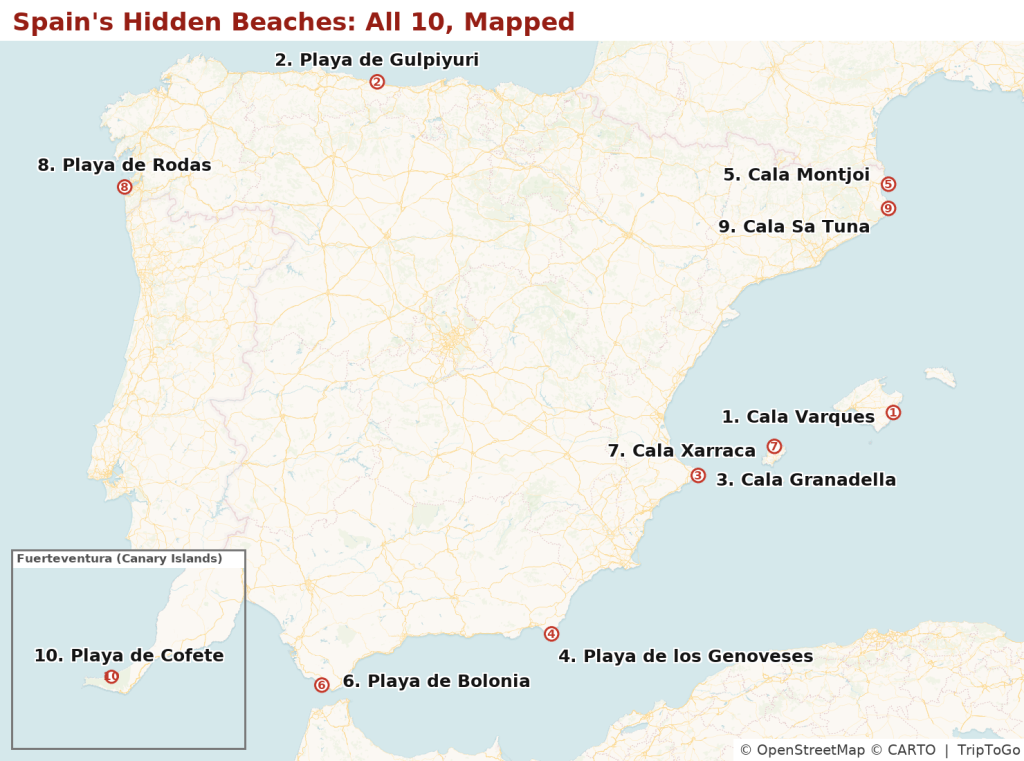
| # | Beach | Region | Why it’s worth the detour |
|---|---|---|---|
| 1 | Cala Varques | Mallorca | Turquoise cove reached by pine-forest walk |
| 2 | Playa de Gulpiyuri | Asturias | A beach 100 m inland — the sea arrives underground |
| 3 | Cala Granadella | Costa Blanca | Snorkelling in gin-clear water between cliffs |
| 4 | Playa de los Genoveses | Almería | Wild dunes in Cabo de Gata natural park |
| 5 | Cala Montjoi | Costa Brava | Hike-in cove near Roses |
| 6 | Playa de Bolonia | Cádiz | Giant dune plus Roman ruins on the sand |
| 7 | Cala Xarraca | Ibiza | The quiet north the party crowd never sees |
| 8 | Playa de Rodas | Cíes Islands, Galicia | Caribbean-white crescent — permit required |
| 9 | Cala Sa Tuna | Begur, Costa Brava | Fishing-hut cove on the coastal path |
| 10 | Playa de Cofete | Fuerteventura | 12 km of untamed Atlantic behind a mountain wall |
✈️ TripToGo Travel Deals
Get notified about great travel deals
Hand-picked flight, hotel and destination deals, straight to your inbox. No spam, unsubscribe anytime.
🎉 Thank you for subscribing!
You’re all set — the best travel deals are on their way.
Before You Chase Hidden Sand: Key Facts
When to go: June and September are the sweet spot — sea warm enough to swim, without the July–August crowds that make even “hidden” coves busy. Month-by-month detail in our best time to travel to Spain guide.
You’ll need wheels: eight of the ten are only practical by rental car, and Cofete requires confident driving on a rough mountain track. The exceptions: Playa de Rodas (ferry) and Cala Sa Tuna (bus + walk from Begur).
The one permit: the Cíes Islands cap daily visitors — you must get a free authorisation from the Xunta de Galicia before buying your ferry ticket. In summer, do both weeks ahead.
Leave no trace: Genoveses sits inside Cabo de Gata-Níjar Natural Park — no facilities is the point. Pack out everything. Official trip-planning resources: Spain.info.
Building a bigger trip? Several of these slot into our 7-day Spain itinerary as coastal detours.
Cala Varques: The Balearic Escape
Turn this into a coastal road trip
Our partner Voyada’s trip planning AI turns your Spanish hidden-beach picks into a realistic route with flights, hotels and a real total cost — in about a minute, free.
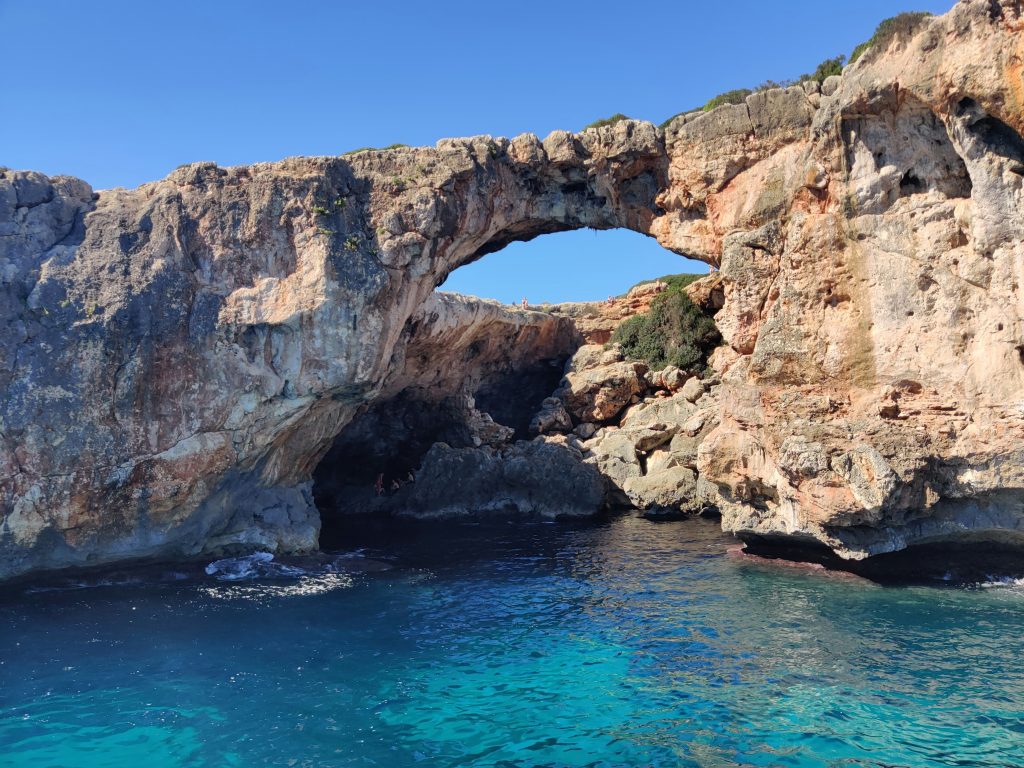
Plan my trip for me→Cala Varques, nestled on Mallorca‘s eastern coast, is a hidden gem for those seeking solitude. It’s a standout among Spain’s top beach destinations, favored by those who prefer nature over crowded resorts. This secluded cove offers a rare look at the Balearic Islands’ untouched beauty.
Getting There and Travel Times
Accessing this secluded paradise requires effort. Since March 2026 parking on the Ma-4014 is banned and patrolled, so park at Cala Romàntica and walk in along the coast, or take a boat from Porto Cristo. The journey, about 20 to 30 minutes, depends on your pace.
Wearing sturdy footwear is critical due to the uneven path. Flip-flops or sandals are not recommended. Taking your time allows you to appreciate the Mediterranean scenery as you approach the turquoise waters.
Cost Considerations and Local Tips
Given its natural state, Cala Varques lacks facilities. There are no beach bars, restrooms, or rental shops. So, it’s essential to come prepared with fresh water and snacks to stay hydrated and comfortable.
Practicing responsible tourism is vital to preserve this natural wonder. Pack out all trash to keep the coastline pristine. By doing so, you help maintain Cala Varques’ beauty for future visitors.
Playa de Gulpiyuri: The Inland Wonder
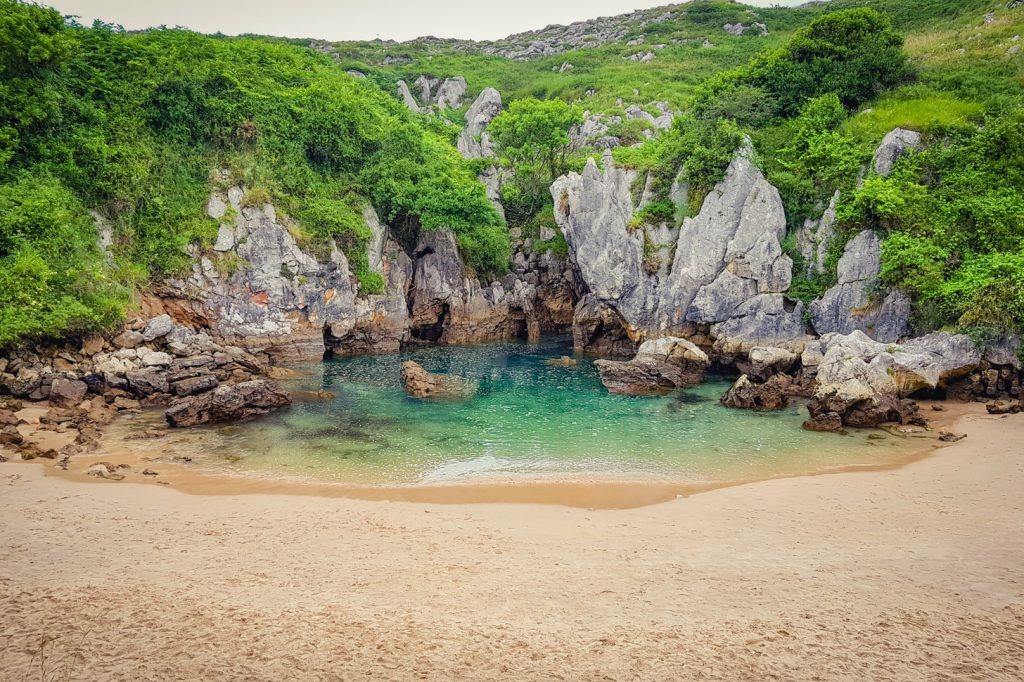
Seeking a unique beach experience in Spain? Look no further than Playa de Gulpiyuri. This sinkhole beach, nestled in Asturias’ countryside, is a rare gem. It’s hidden from the sea but boasts crystal-clear saltwater and golden sand.
Navigating the Asturian Coast
Getting to this hidden gem requires some planning. It’s located off the beaten path, away from main coastal roads. Your journey begins in Llanes, heading towards Naves. Park near the designated spot and follow the path through the green meadows.
The fifteen-minute walk offers breathtaking views of the rugged landscape. Watch for local signs, as the beach is only visible at the sinkhole’s edge. It’s a journey that feels like entering a secret world.
Optimal Viewing Times
Timing is key at Playa de Gulpiyuri. The beach’s water level depends on the tides, entering through underground tunnels from the Cantabrian Sea. Check tide charts before you go to ensure the sinkhole is filled.
High tide is the best time to see its full beauty. Low tide reveals a sandy basin, unlike the typical Spanish beach. Visit in spring or early autumn to avoid crowds and enjoy the peace of this natural haven.
Cala Granadella: Mediterranean Coast Spain Gems
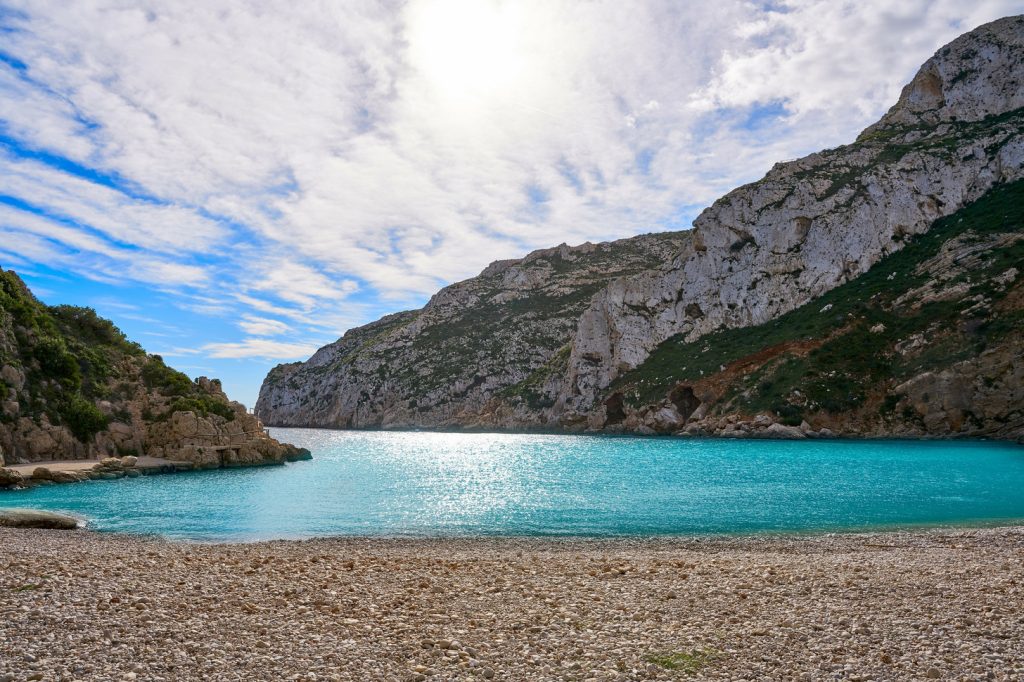
Cala Granadella, nestled between dramatic cliffs, is a standout among the Mediterranean’s most picturesque spots. Unlike the famous sandy beaches in Spain, this hidden cove offers a more intimate connection with nature. Its turquoise waters and rugged landscape make it a postcard-perfect setting for your next adventure.
Accessing the Cove
Getting to this stunning location requires some planning, more so during the busy summer months. Local authorities often restrict vehicle access to protect the environment. Using the shuttle bus service provided by the town is a good option. Arriving early in the morning is the best way to secure a spot and enjoy the tranquility before the crowds arrive.
The road down to the cove is winding and narrow, with spectacular views of the coastline. Once you arrive, a short walk from the parking area leads you to the water’s edge. Be prepared for a trek, but swimming in such pristine conditions is well worth the effort.
Equipment and Safety Recommendations
Safety is a top priority when exploring remote coastal areas. The shore is pebbly, not sandy, so wearing water shoes is highly recommended. They protect your feet and make entering and exiting the water more comfortable, preventing slips.
The vibrant marine life here is spectacular, making it ideal for underwater exploration. Pack high-quality snorkeling gear to fully appreciate the colorful fish and clear visibility beneath the surface. Always check the tide and local weather conditions for a safe and enjoyable day by the sea.
Playa de los Genoveses: Almeria’s Natural Sanctuary
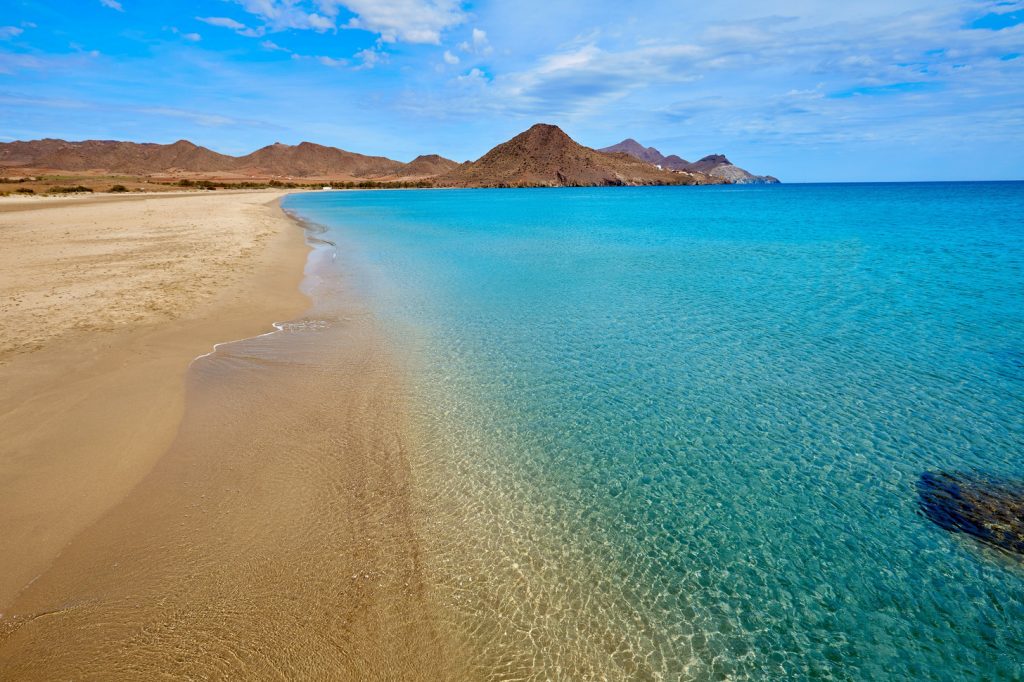
The golden shores of Playa de los Genoveses embody the raw spirit of the Mediterranean. This vast bay stands out among Spain’s sandy beaches, celebrated for its untouched dunes and lack of buildings. It’s a true gem, untouched by human development.
Distance and Transportation Logistics
Most visitors begin their journey in San José, a 15-minute drive or a scenic 30-minute walk away. Getting to this remote haven requires some planning. It’s nestled within the Cabo de Gata-Níjar Natural Park.
In the peak summer months, private vehicles are often restricted to protect the environment. A shuttle bus service runs regularly from the village center to the beach. It’s wise to check the current schedule to ensure a smooth journey.
Preservation and Visitor Guidelines
As a protected natural site, preserving its cleanliness is a priority. Stay on the marked wooden paths to avoid damaging the dune vegetation. This vegetation is vital for the coastline’s stability.
Always remove everything you bring, including food wrappers and plastic bottles. By following these simple guidelines, you help preserve the beauty of this iconic beach for future generations.
Cala Montjoi: The Costa Brava Secret
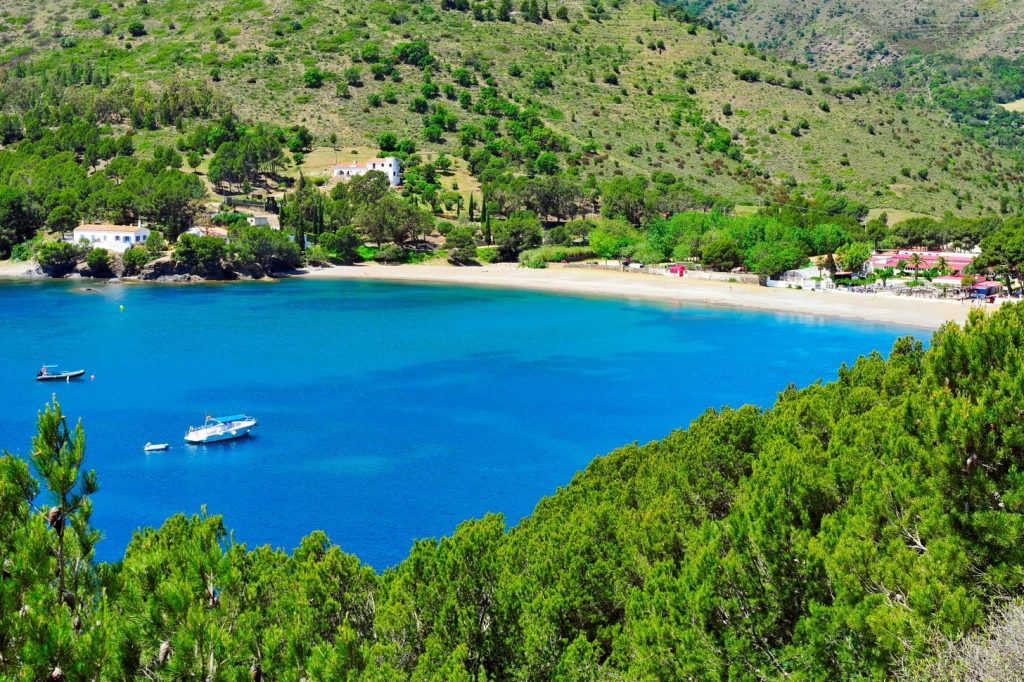
Seeking a quiet retreat along the mediterranean coast Spain? Look no further than Cala Montjoi, a hidden gem. This secluded cove offers a rare chance to escape the din of modern life. It’s ideal for those who cherish tranquility and a deep connection with nature.
Hiking Trails and Accessibility
Reaching Cala Montjoi means a winding 7 km drive from Roses through the Cap de Creus park, or a scenic walk in along the coastal path if you would rather earn the view.
Wear sturdy footwear for the uneven, rocky terrain. Bring lots of water and sun protection, as services are scarce. This journey caters to those who prefer an active travel experience.
Best Times to Avoid Crowds
Timing is key to experiencing Cala Montjoi’s magic. The mediterranean coast Spain is busy in summer, but shoulder seasons like May, June, or September offer peace. These months have nice weather without the weekend tourist rush.
If summer is your only option, arrive early to beat the day-trippers. Mid-week visits are quieter than weekends, giving you a private beach experience. With these tips, your visit to this stunning cove will be peaceful and rejuvenating.
Playa de Bolonia: Dunes and Roman Ruins
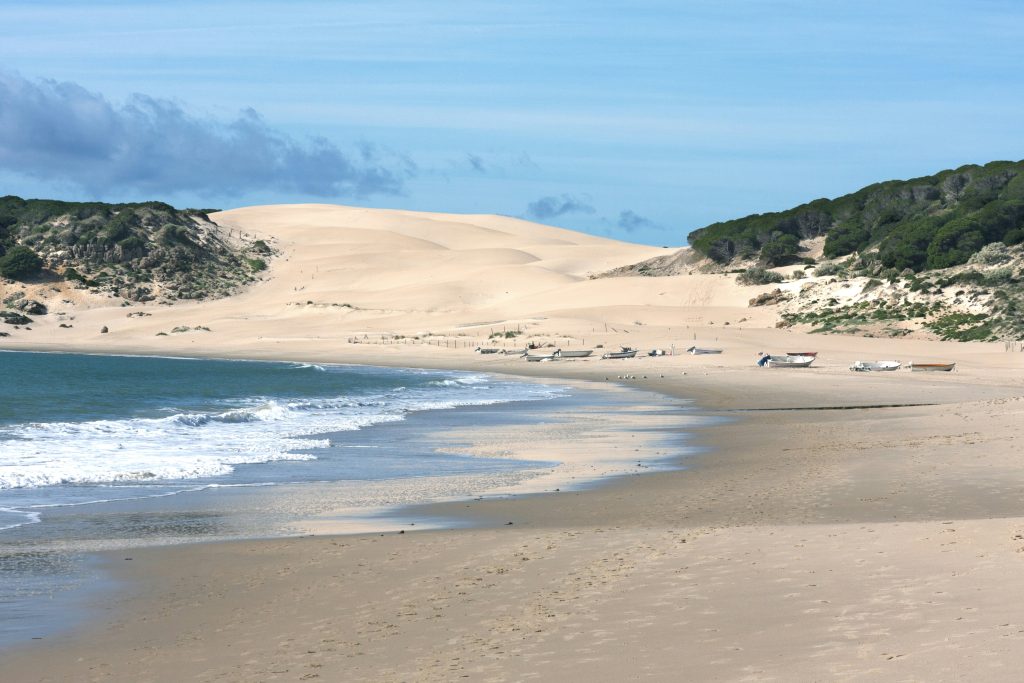
Playa de Bolonia offers a rare chance to walk through Roman ruins while feeling the Atlantic breeze on your skin. This stunning location stands out from the typical mediterranean coast spain destinations by providing a deep dive into history right on the sand. You can explore the ancient city of Baelo Claudia before cooling off in the turquoise waters.
Travel Tips for the Cadiz Coast
The Cadiz coast is famous for its strong winds, known locally as the Levante. It is wise to check the weather forecast before you head out to ensure a comfortable day on the beach. If the wind is too strong, the sand can become quite abrasive, so bring a windbreak or plan your visit for a calmer day.
Parking can fill up quickly during the peak summer months. Try to arrive before 10:00 AM to secure a spot near the entrance. This early start also helps you avoid the midday heat while you wander through the archaeological site.
Prefer to travel it with a guide?
There are 6 Spain tours on TripToGo, from short city breaks to multi-week routes.
View Spain tours →Budgeting for a Full Day Trip
Planning a full day at this site is very affordable for most travelers. Entry to the Baelo Claudia ruins is often free for European Union citizens, while others pay a very small nominal fee. You should set aside about 10 to 15 dollars for parking and a light snack from the nearby beach bars.
Packing your own lunch is a great way to save money while enjoying the scenery. Many visitors prefer to bring a cooler with drinks and sandwiches to maximize their time on the beach. This approach keeps your costs low while you enjoy one of the most unique spots along the mediterranean coast spain.
Cala Xarraca: Ibiza’s Quiet Northern Shore
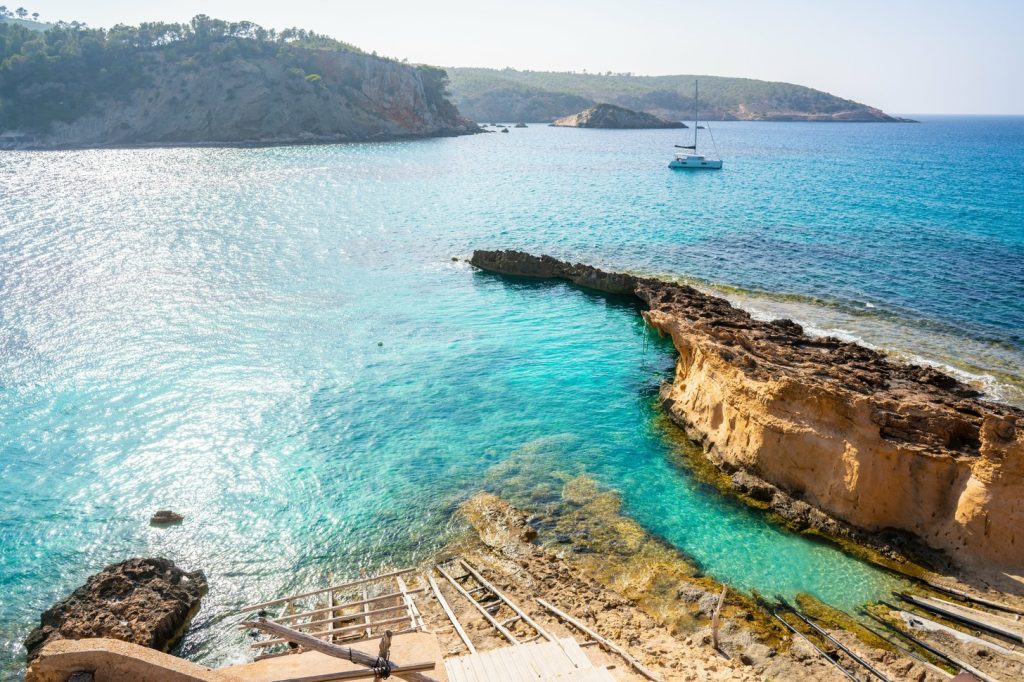
Exploring Spain’s must-visit beaches, Cala Xarraca stands out for its quiet charm. Nestled on Ibiza’s northern tip, it offers a peaceful retreat away from the island’s vibrant party scene. It’s ideal for those seeking a serene, natural escape.
Reaching the Hidden Cove
Reaching Cala Xarraca requires some planning, as it’s secluded from main tourist areas. Rent a car and head to Portinatx’s northern village. Follow signs for Cala Xarraca, leading through pine forests.
Upon arrival, a small parking area awaits near the cliff. A short, steep path then descends to the beach. Wear sturdy footwear, as the path is rocky and uneven.
What to Pack for Remote Beaches
Being remote, self-sufficiency is key for a day of relaxation. Bring fresh water and healthy snacks, as facilities are limited. A high-quality sun umbrella is also essential, as natural shade is scarce in the afternoon.
Don’t forget snorkeling gear to explore the vibrant marine life. Pack a waterproof bag for electronics and a light towel to keep things dry. Proper preparation ensures a comfortable, stress-free visit to this hidden gem.
Playa de Rodas: The Galician Paradise
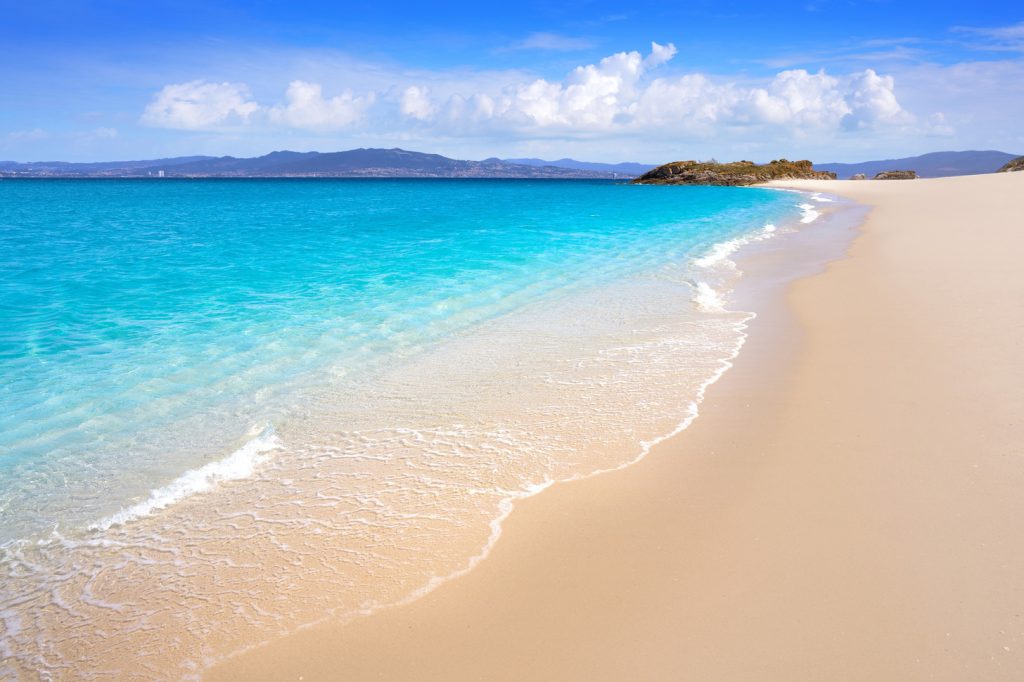
Playa de Rodas, nestled in the Cíes Islands, is a gem among Spain’s must-visit beaches. Its crescent shape, white sand, and turquoise waters evoke a tropical paradise. Located in the rugged Atlantic of Galicia, it’s a protected national park, keeping it pristine and untouched by commercial development.
Ferry Logistics and Costs
Accessing this island gem requires some planning. There are no bridges to the mainland. You must take a ferry from Vigo, Cangas, or Baiona during summer. Booking ferry tickets in advance is critical, as they often sell out weeks before the peak season.
A round-trip ticket costs between 15 and 25 euros, depending on your departure and the season. Always have your ticket ready for boarding and return. Missing your ferry can ruin your day, as ferries are the only way to reach the beach.
Seasonal Restrictions and Planning
The local authorities enforce strict visitor caps to protect the ecosystem. Before buying a ferry ticket, you must secure an authorization permit from the Xunta de Galicia website. This system prevents overcrowding, preserving the island for future generations.
Visiting in late June or early September can offer a quieter experience with fewer crowds. Always take out all trash, as there are no bins on the island. Following these guidelines helps maintain the island’s beauty for years to come.
Cala Sa Tuna: The Hidden Jewel of Begur
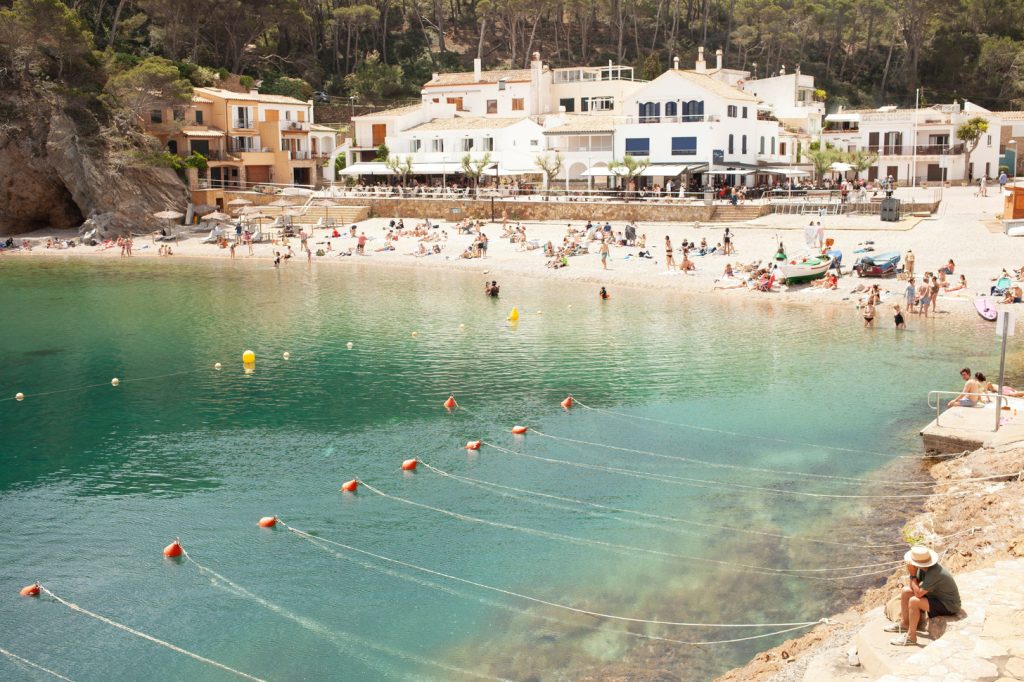
Cala Sa Tuna, nestled in the heart of Costa Brava, is a true gem among Spain’s beaches. Its crystal-clear waters and traditional whitewashed houses evoke the Mediterranean’s essence. It’s ideal for those seeking a tranquil escape from crowded tourist spots.
Navigating the Coastal Paths
The journey to this gem is part of the adventure. Begin in Begur’s historic town, where narrow streets lead to the coast. The coastal trails, marked with breathtaking views, await you.
The descent to the water involves stairs and uneven paths. Comfortable shoes are essential for a safe and enjoyable walk. The sight of fishing boats in the harbor makes every step worthwhile.
Local Amenities and Cost Estimates
Meals here range from $25 to $45, depending on wine and seafood choices. Cala Sa Tuna offers a cozy setting with a few restaurants serving fresh seafood. It’s a great way to support local businesses and experience authentic Catalan culture.
Arriving early and budgeting for parking, around $10 to $15 daily, ensures a stress-free visit. Parking can be a challenge in summer. With proper planning, you can fully appreciate this serene beach without any hassle.
Playa de Cofete: Fuerteventura’s Untamed Frontier
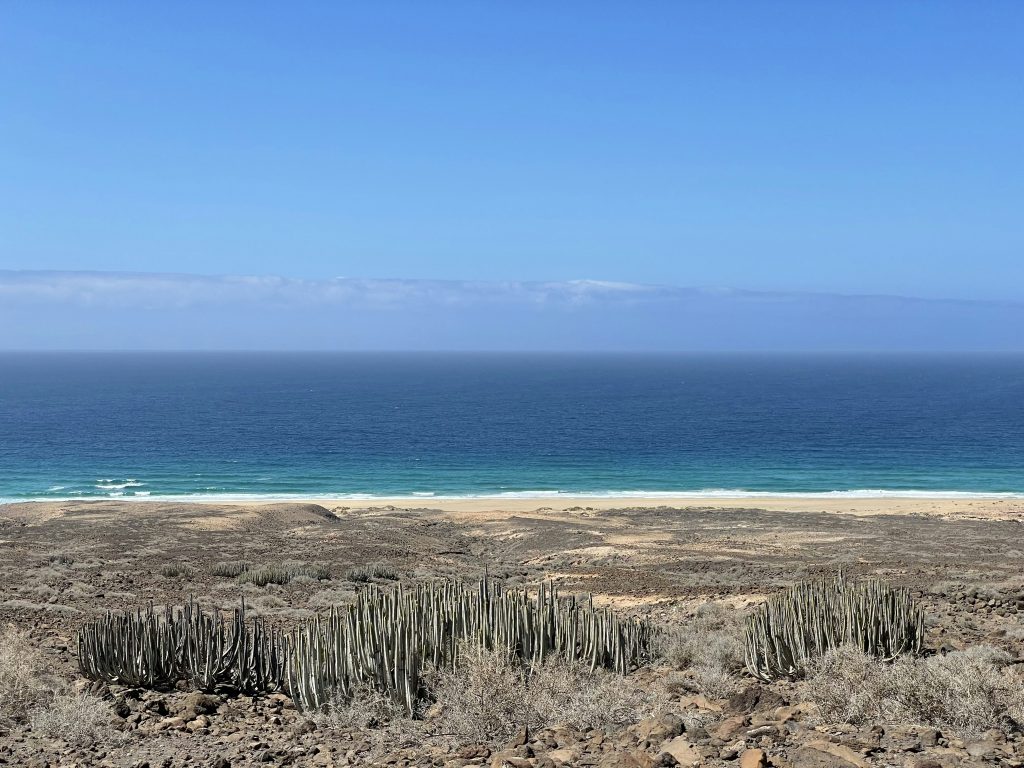
Seeking out hidden gems in Spain’s beaches, Cofete is a journey worth taking. Located on the Jandia Peninsula, it’s far from the usual tourist spots. Here, you’re surrounded by towering mountains and the mighty Atlantic Ocean.
Driving Requirements and Safety
Getting to Cofete is an adventure in itself, with a long, unpaved road leading to it. Rent a vehicle with high clearance to handle the rough terrain. Drive slowly and keep a safe distance from the edge to avoid accidents.
Cell phone service is scarce in this area. Before you leave, check your spare tire and fuel levels. Safe driving is key to enjoying these beaches without stress.
Preparing for Remote Conditions
The Atlantic currents at Cofete are strong and dangerous for swimmers. It’s safer to watch the waves from the shore. Always stay back from the tide line for your safety.
There are no shops or restaurants nearby, so pack everything you need. Bring fresh water, snacks, and sun protection for the intense heat. Being prepared lets you fully enjoy the beauty of this hidden gem.
Must-Visit Beaches Spain: Tips for Off-the-Beaten-Path Travel
Exploring Spain’s hidden beaches is a thrilling adventure for any traveler. These secluded spots offer unparalleled beauty but often lack the amenities of popular tourist areas. Embracing a sense of adventure is key to a successful journey.
Managing Expectations for Remote Locations
Visiting a hidden cove means no cell service, no lifeguards, and no cafes nearby. You’ll need to hike over uneven terrain, so be ready for physical effort. Flexibility is vital when weather or trail conditions change your plans.
Always check local weather and tide charts before you go. These areas are wild and untouched, so carry out everything you bring in. Respecting the environment ensures these beaches stay pristine for others to enjoy.
Essential Gear for Hidden Coastal Exploration
The right equipment is critical for comfort. Wear sturdy hiking sandals or water shoes for rocky paths and to protect your feet from sharp shells. A high-quality dry bag will safeguard your electronics and dry clothes from sand and water.
Remember to pack fresh water and high-energy snacks, as you’ll be far from shops. A portable power bank and a physical map are also smart additions. With the right gear and a positive attitude, your remote coastal visit will be unforgettable.
Before you go: turn this guide into a day-by-day plan. Our partner Voyada is a free itinerary creator that builds the route with flights, hotels and a real total cost for your dates — in about a minute.
Build a travel itinerary →Choosing Spain's Best Beaches
Spain’s coasts each have a distinct character — picking the right one for your trip matters more than any single beach.
- Match the coast to your style: rugged Costa Brava coves, resort-lined Costa del Sol, windswept Atlantic Costa de la Luz, the Balearics, or the year-round Canaries.
- Time it: the Canaries are the winter-sun option; the mainland and Balearics are best June–September.
- Hidden coves need a car — and an early start for parking in summer.
- Blue-flag beaches have facilities; wilder stretches trade those for solitude.
- Respect Atlantic currents on the Costa de la Luz — the surf is stronger than the Med.
The Complete List: 14 Hidden Beaches Across Spain
Spain’s best-kept beaches take a little effort to reach — which is exactly why they stay quiet. Here’s a fuller list, region by region.
- Ses Illetes (Formentera) — Caribbean-white sand and turquoise shallows; the Balearics’ finest.
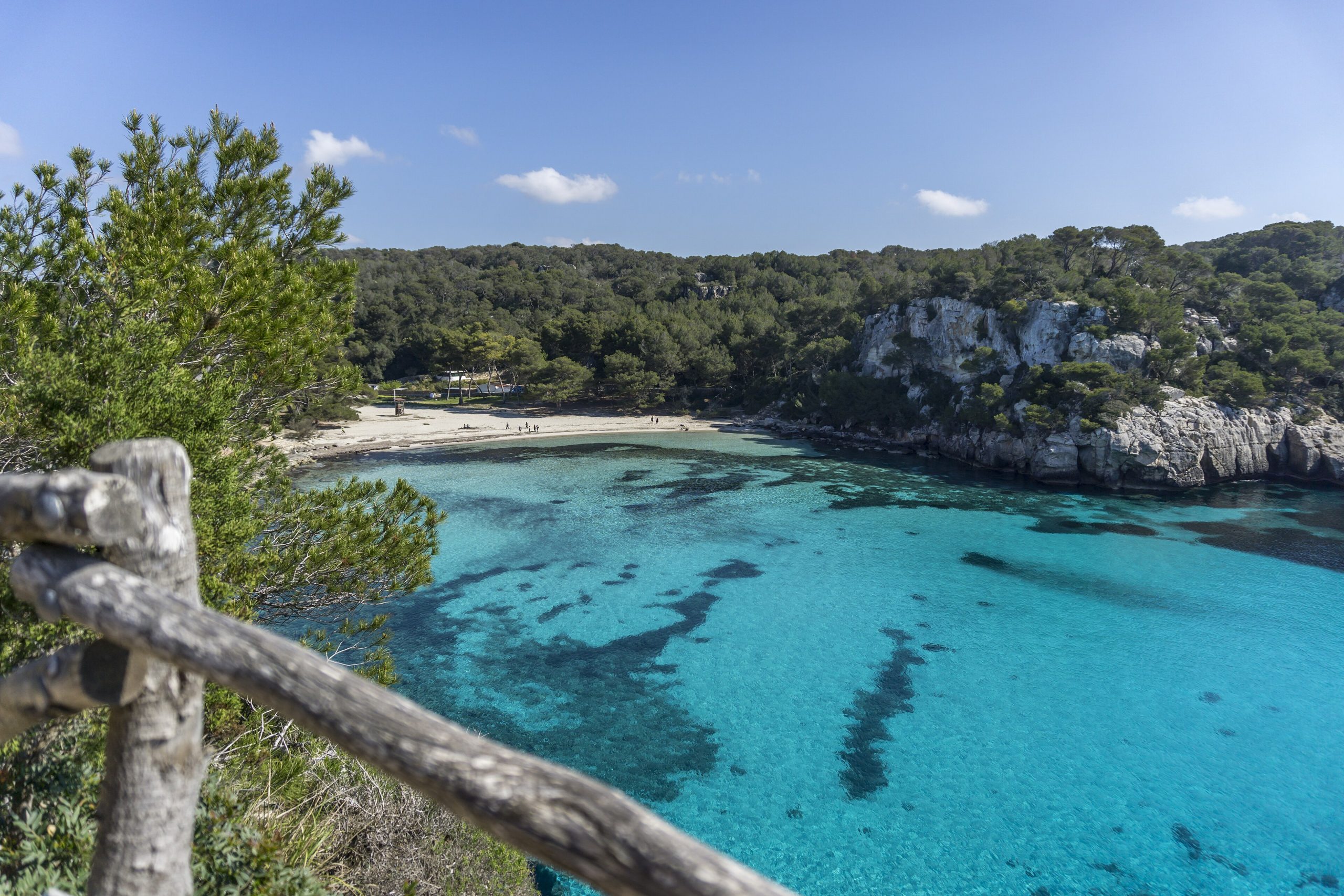
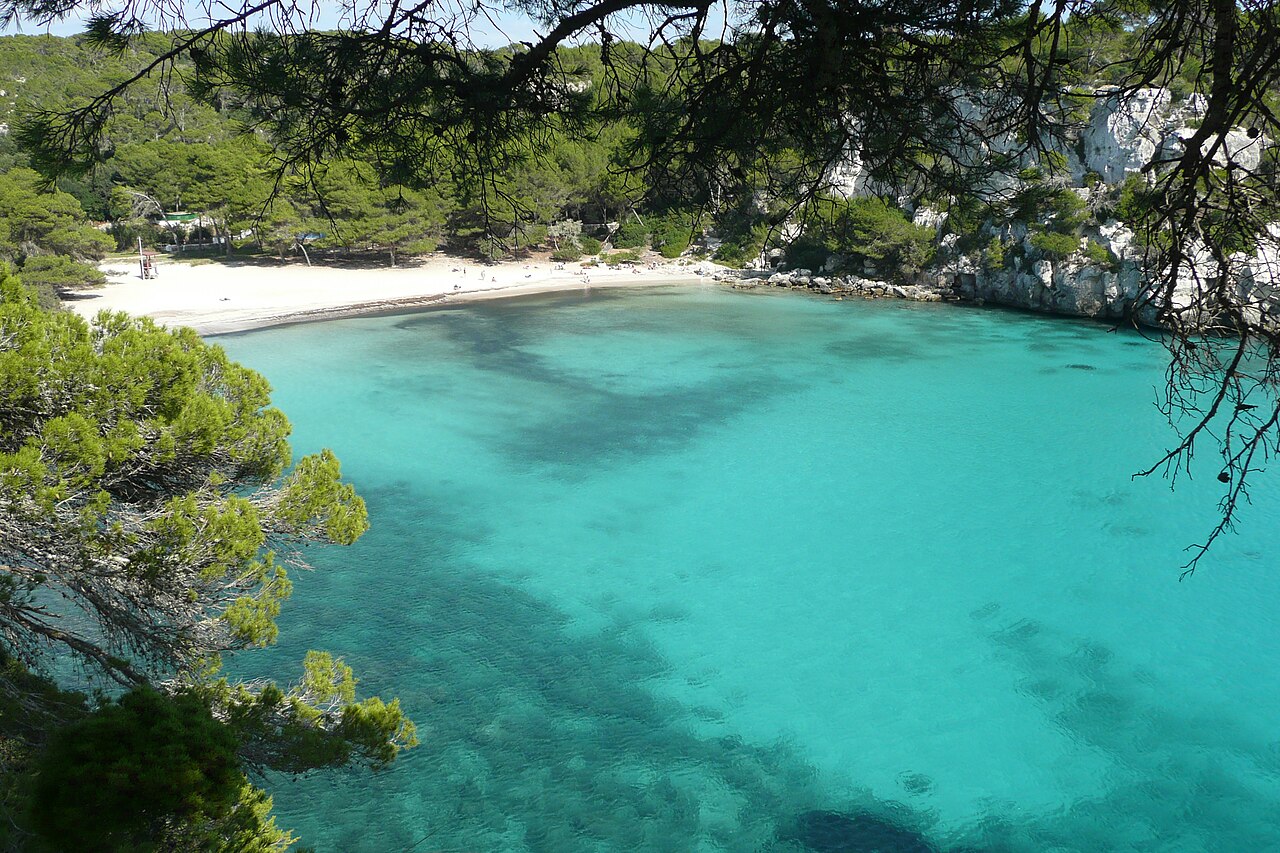
- Cala Macarella & Macarelleta (Menorca) — postcard coves ringed by pine-topped cliffs.
- Cala Pregonda (Menorca) — reddish, Martian-looking sand; the walk in deters the crowds.
- Playa del Silencio (Asturias) — a cliff-cradled crescent on the wild green north coast.
- Playa de Rodas, Cíes Islands (Galicia) — tropical-looking sand; you’ll need a permit and ferry.
- Cala Estreta (Costa Brava) — reachable only by coastal trail or boat.
- Cala del Cañuelo (near Nerja) — a pristine Andalusian cove, foot or shuttle access.
- Cala del Moraig (Benitatxell, Alicante) — snorkelling beneath dramatic limestone cliffs.
- Cala de Enmedio (Cabo de Gata, Almería) — white rock, golden sand and crystal shallows in a desert park.
- Playa de Bolonia (Cádiz) — huge dunes and Roman ruins on the Atlantic Costa de la Luz.
- Playa de Gulpiyuri (Asturias) — a tiny inland beach fed by the sea through sinkholes.
- Playa de los Muertos (Almería) — wild, pebbly and brilliantly blue in Cabo de Gata.
- Cala S’Almunia & Caló des Moro (Mallorca) — jewel-like coves on the south coast.
- Getting there: most need a walk, boat or shuttle — arrive early for parking, bring water and shade (few facilities), and respect Atlantic currents in the north and west.
Conclusion
Exploring the quiet corners of the Iberian Peninsula offers a rare chance to connect with nature away from busy urban centers. You can find peace along the rugged northern cliffs or relax in the turquoise coves of the Balearic Islands. Each spot provides a distinct and authentic experience for every traveler.
Finding the best beaches in spain requires a bit of preparation and a sense of adventure. Start your planning by checking local tide charts and securing your transportation early. These small steps ensure your trip remains smooth and stress-free.
Pack your bags with care and remember to respect the local environment during your visit. Protecting these natural sanctuaries keeps them beautiful for everyone who follows in your footsteps. You are now ready to discover the secret shores that make this country a world-class destination.
Pick one of these hidden gems and start your travel itinerary today. The best beaches in spain are waiting for you to explore their untouched beauty. Grab your gear and head out to create your own coastal memories.
FAQ
When is the best time to plan a beach vacation in Spain to avoid the crowds?
Do I need a permit to visit the Cíes Islands and Playa de Rodas?
What should I know before driving to Playa de Cofete in Fuerteventura?
How do I see the water at Playa de Gulpiyuri if it’s located inland?
Are there any facilities at hidden gems like Cala Varques in Mallorca?
Can I combine history with a beach day at Playa de Bolonia?
Why do I need water shoes for places like Cala Granadella?
Is it expensive to visit the hidden gems of Spain's beaches in the Costa Brava?

Olivia Carter
Do these hidden beaches have lifeguards, and what do the flags mean?
Mostly they do not. Lifeguard cover in Spain is arranged by each town council and concentrated on serviced urban beaches in the summer season, so remote coves such as Cofete, Cala Varques and Genoveses are typically unguarded. Where a beach is staffed you will see the standard flags: green for normal conditions, yellow for caution, red meaning bathing is prohibited, and purple for a marine hazard such as jellyfish. A red flag is not advice. Councils and the maritime authority can fine swimmers who ignore it. Check the flag at the lifeguard post, and treat an unflagged beach as swim at your own risk.
What should I do if I get caught in a current on an Atlantic or Canary beach?
Take this seriously. The Atlantic coasts of Cadiz, Galicia and Asturias, and much of the Canaries, produce rip currents and shore break far stronger than the Mediterranean, and Spain’s lifesaving federation reports drownings every summer, most of them on beaches with no lifeguard. If you are pulled out, do not fight straight back against the flow. Stay afloat, raise one arm to signal, swim parallel to the shore until you are clear of the channel, then come in at an angle. At Cofete the safest choice is not to swim at all. Check the flag, swim near other people, and never go in alone.
Which of these beaches can I reach without a rental car?
Two of the ten genuinely work without one. Playa de Rodas is reached only by ferry from Vigo, Cangas or Baiona, so no car is involved beyond getting to the port, and Cala Sa Tuna can be done by bus to Begur followed by a walk or a short taxi down to the cove. Playa de los Genoveses and Cala Granadella run seasonal shuttles from the nearest village, so both are possible without driving when the shuttle is operating. Everything else, Cofete above all, assumes your own vehicle. Without a car, base yourself in a coastal town and plan one beach a day.
Which Spanish coast works for a beach trip outside the summer?
The Canaries. They lie far enough south to stay mild through the winter, which is why they are the one part of Spain where a beach holiday works in January. On the mainland and in the Balearics the sea holds its warmth into October but is cold by midwinter, so a November trip to the Costa Brava or Mallorca is for walking the coast path rather than swimming. Bear in mind that Canary beaches facing the open Atlantic, Cofete among them, can be rough and unguarded even on a calm bright day, so choose a sheltered southern beach if you actually want to swim.
Are dogs allowed on Spanish beaches?
Usually not in summer. Dog rules are set by each town council, and the common pattern is a ban on all beaches from around the start of June to the end of September, with designated dog beaches open outside those months or only at early and late hours. Fines are real and can run well into the hundreds or thousands of euros, and enforcement steps up in high season. Protected areas add their own rules, so inside natural parks such as Cabo de Gata expect dogs to be restricted or excluded. Check the relevant council’s own beach page for the exact municipality before you travel.
Can I camp overnight or sleep in a campervan at these coves?
No. Camping on the beach is prohibited across Spain, and wild camping inside natural and national parks is prohibited too, which rules out Cabo de Gata, Cap de Creus and the Cies Islands. Councils and environmental agents patrol popular stretches overnight in summer, and fines in protected areas can be steep. Parking a campervan legally is not the same as camping, but the moment you put out an awning, chairs or waste you are camping in the eyes of the law. Use a licensed campsite or a designated motorhome area, and check the park authority’s own rules before you set off.
Are jellyfish a problem, and what do I do if I am stung?
They come and go. Blooms drift inshore mainly in the warmer months and more often on the Mediterranean side, and a staffed beach flies a purple flag when dangerous marine life is in the water. If you are stung, leave the water calmly, rinse the area with seawater rather than fresh water, lift off any tentacle with the edge of a card instead of your fingers, and go to the lifeguard post, which usually carries a first aid kit for stings. Get medical help for a large sting, a sting to the face, or any breathing difficulty. Never touch a stranded jellyfish, which can still sting.