
Table of Contents
ToggleHong Kong is one of the world’s most exciting cities to stay in — a vertical, neon-lit metropolis where soaring financial districts, buzzing night markets and harbour views all sit within a few MTR stops of each other. But with 333 hotels and about 93,500 rooms (the government’s count at the end of 2025) spread across Hong Kong Island, Kowloon, the New Territories and Lantau, deciding where to stay in Hong Kong can be daunting.
This guide breaks down the best areas to stay in Hong Kong — from view-blessed Tsim Sha Tsui to upscale Central, shopper’s Causeway Bay and budget-friendly Mong Kok — with who each area suits, its pros and cons, named hotels at every budget, what rooms really cost and how to get around. Because the transport is so good, the right choice is really about vibe and budget.
✈️ TripToGo Travel Deals
Get notified about great travel deals
Hand-picked flight, hotel and destination deals, straight to your inbox. No spam, unsubscribe anytime.
🎉 Thank you for subscribing!
You’re all set — the best travel deals are on their way.
Key Takeaways
- Best all-round base: Tsim Sha Tsui — harbour views, the 8pm Symphony of Lights and every budget from guesthouses to The Peninsula.
- Nightlife & dining: Central, SoHo and Sheung Wan; shopping: Causeway Bay.
- Budget & local: Mong Kok, Yau Ma Tei and Jordan in Kowloon.
- What it costs: the official average achieved room rate ran from HK$1,088 to HK$1,502 a night, month by month, in 2025 (roughly US$140–195). Expect a 10% service charge and the 3% hotel tax on most bills.
- Rooms are small everywhere — prioritise a good MTR link over size.
- Early flight? The Regal Airport Hotel is a two-minute walk from Terminal 1.
Best Areas to Stay in Hong Kong at a Glance
The main areas at a glance — who each suits, the MTR lines that serve it and how prices compare, from $ for the cheapest to $$$$ for the priciest, based on the mix of hotels in each area.
| Area | Side | Best for | Price level | MTR line(s) | Vibe |
|---|---|---|---|---|---|
| Tsim Sha Tsui | Kowloon | First-timers, harbour views | $–$$$$ | Tsuen Wan; Tuen Ma (East TST) | Scenic, busy, every budget |
| Central & Sheung Wan | Island | Nightlife, dining, business | $$$–$$$$ | Island, Tsuen Wan; Airport Express (Hong Kong stn) | Upscale, buzzy |
| Admiralty | Island | Business, five-star comfort | $$$$ | Island, Tsuen Wan, South Island, East Rail | Polished, quiet at weekends |
| Causeway Bay & Wan Chai | Island | Shopping, conventions, food | $$–$$$ | Island; East Rail (Exhibition Centre) | Frenetic, neon, local markets |
| Mong Kok, Yau Ma Tei & Jordan | Kowloon | Budget, street food, markets | $–$$ | Tsuen Wan, Kwun Tong | Intense, local, cheapest |
| North Point & Tin Hau | Island | Value, local life | $$ | Island; Tseung Kwan O (North Point) | Residential, old-school |
| Kennedy Town & Sai Ying Pun | Island | Cafes, a local feel | $$ | Island | Laid-back, harbourfront |
| West Kowloon | Kowloon | Museums, mainland trains, airport runs | $$$–$$$$ | Airport Express, Tung Chung; high-speed rail | Modern, art-filled |
| Tung Chung & the airport | Lantau | Early flights, layovers, Disneyland | $$–$$$ | Tung Chung; Airport Express | Quiet, practical |
| Southside | Island | Beaches, Ocean Park | $$$ | South Island (Ocean Park); buses | Resort-like |
| Sai Kung & Sha Tin | New Territories | Nature, space, value | $–$$ | East Rail (Sha Tin); buses to Sai Kung | Green, suburban |
How to Choose Where to Stay in Hong Kong
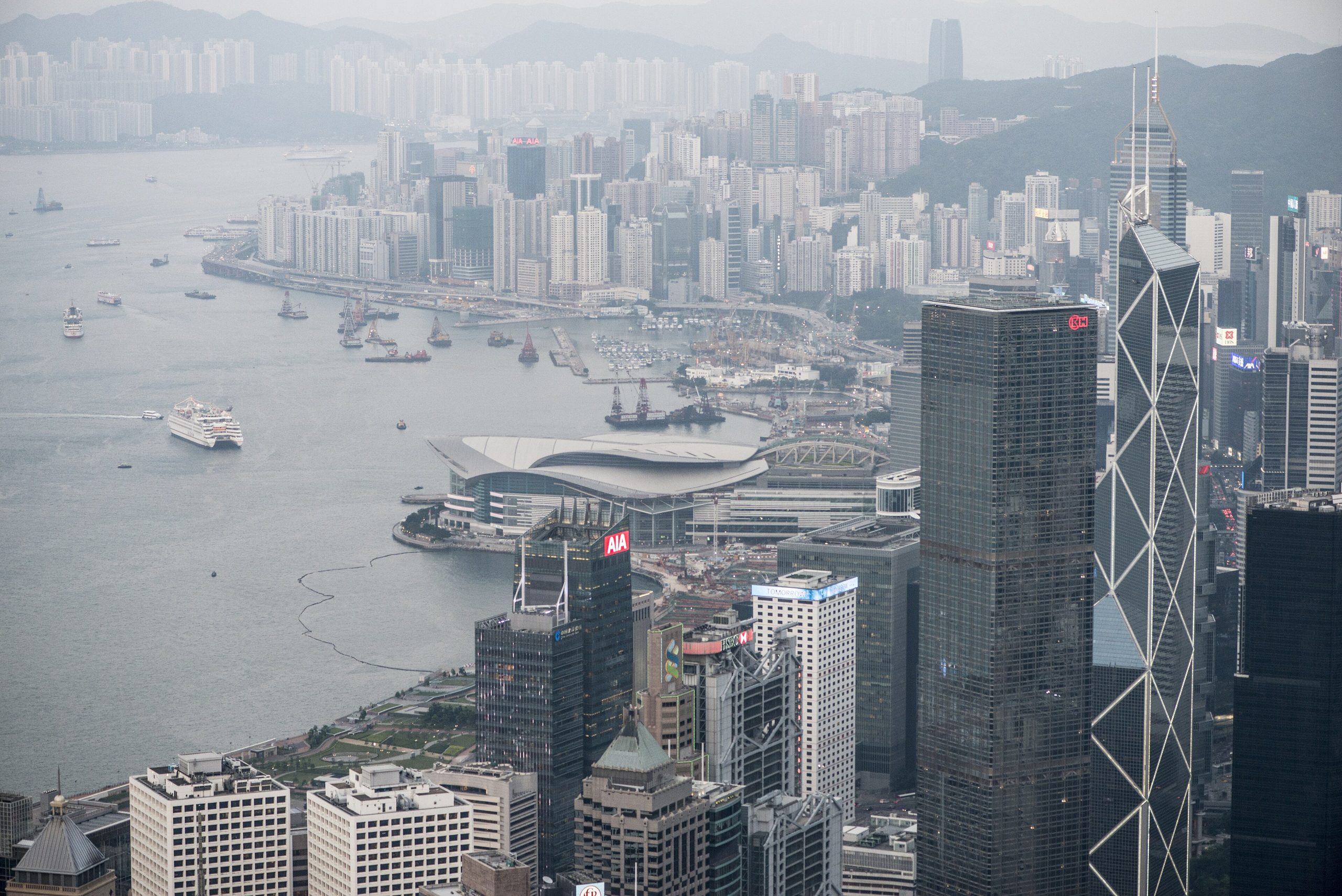
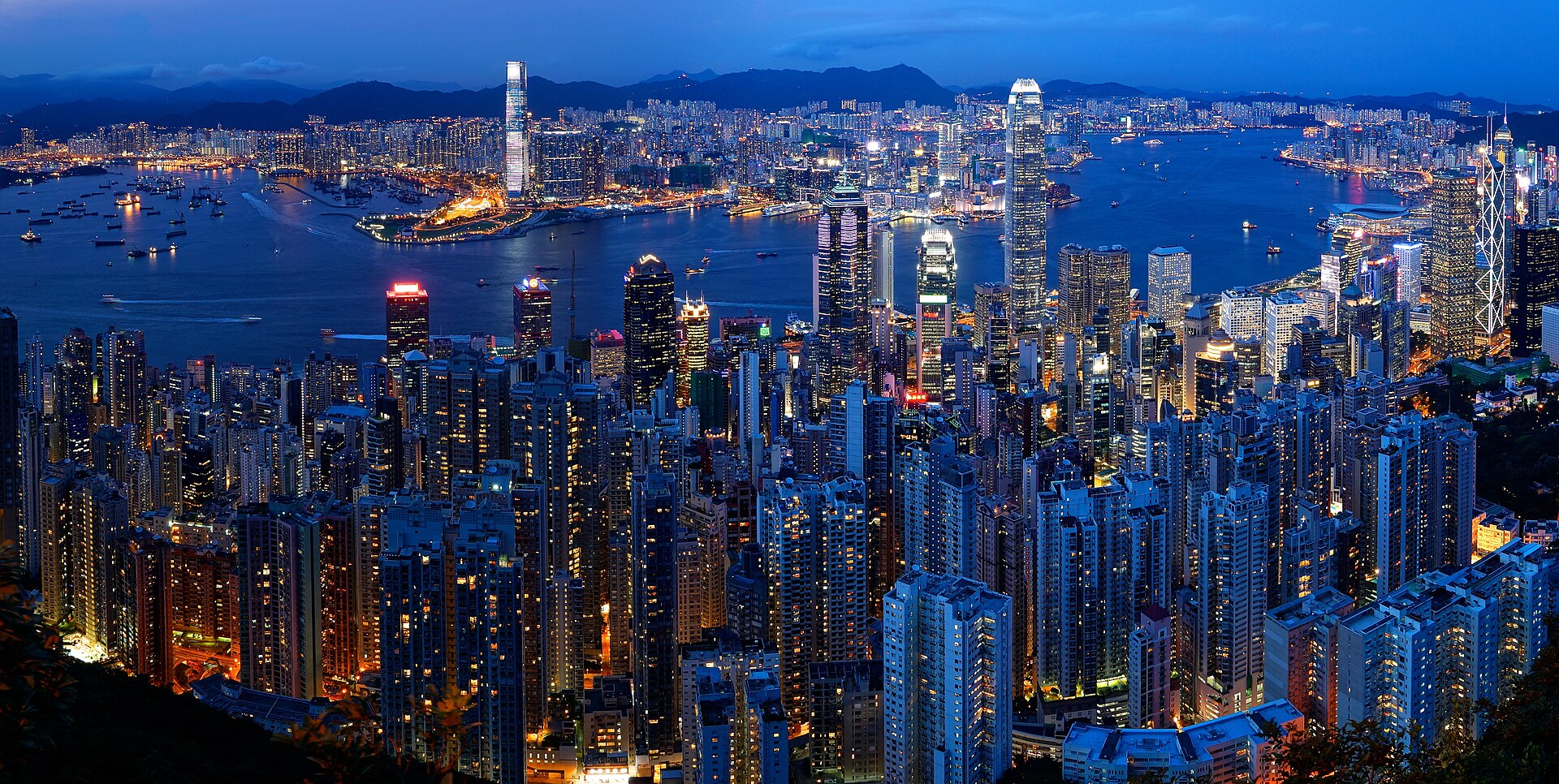
Hong Kong splits broadly into two halves: Hong Kong Island, home to the financial district, upscale nightlife and the famous skyline, and Kowloon across the harbour, which is denser, more local, better value and offers those postcard views back at the island. Both are superbly connected by the MTR metro and the Star Ferry, so wherever you stay, the whole city is within easy reach.
Two things to keep in mind: rooms are small at every price point (space is scarce here, so compare floor area as well as price), and proximity to an MTR station matters more than which side of the harbour you’re on. Pick a well-connected neighbourhood that matches your budget and vibe, and you’re set.
Kowloon vs Hong Kong Island: Which Side Should You Stay On?
The first choice most visitors face is Hong Kong Island or Kowloon. Kowloon (Tsim Sha Tsui, Jordan, Yau Ma Tei, Mong Kok) faces the skyline across Victoria Harbour, generally offers better hotel value and has a denser, more ‘classic Hong Kong’ street buzz. Hong Kong Island (Central, Sheung Wan, Wan Chai, Causeway Bay) puts you among the business towers, the bars of Lan Kwai Fong and the Peak Tram, generally at higher prices. The Star Ferry and several cross-harbour MTR lines link the two sides in minutes, so neither choice is a mistake.
| Factor | Kowloon | Hong Kong Island |
|---|---|---|
| Skyline views | Looks across at the island’s towers and the 8pm light show | Looks back at Kowloon; the Peak has the classic view |
| Hotel value | Generally better, especially Jordan and Mong Kok | Generally higher, especially Central and Admiralty |
| Nightlife | Hotel bars and late-night street food | Lan Kwai Fong, SoHo and Wan Chai |
| Street life | Temple Street Night Market, Ladies’ Market | Trams, the Mid-Levels Escalator, old Sheung Wan lanes |
| Airport Express | Kowloon station (West Kowloon) | Hong Kong station (Central) |
| Best for | First-timers, budget travellers, market lovers | Nightlife, business, return visitors |
Tsim Sha Tsui: Best for First-Timers and Harbour Views
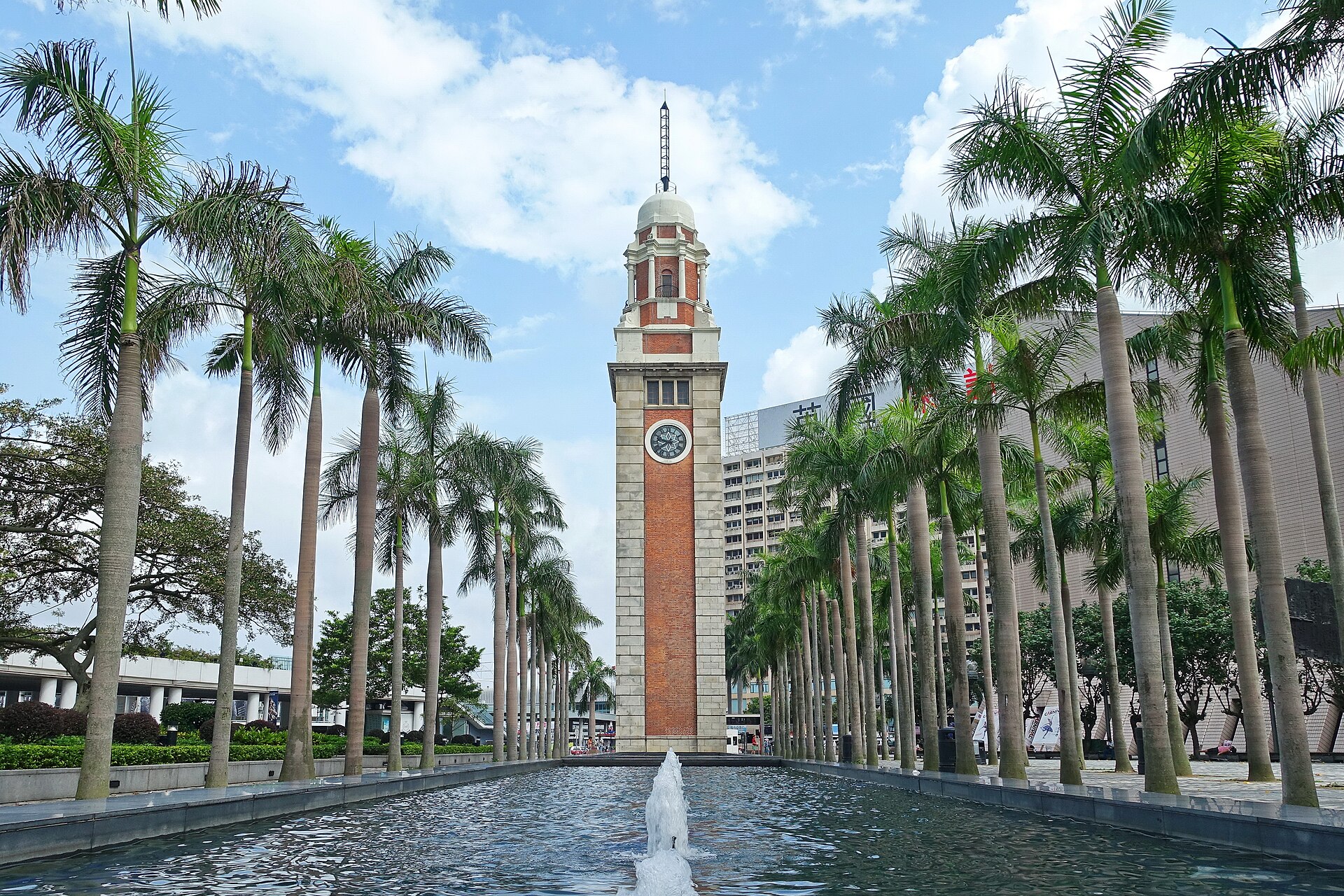
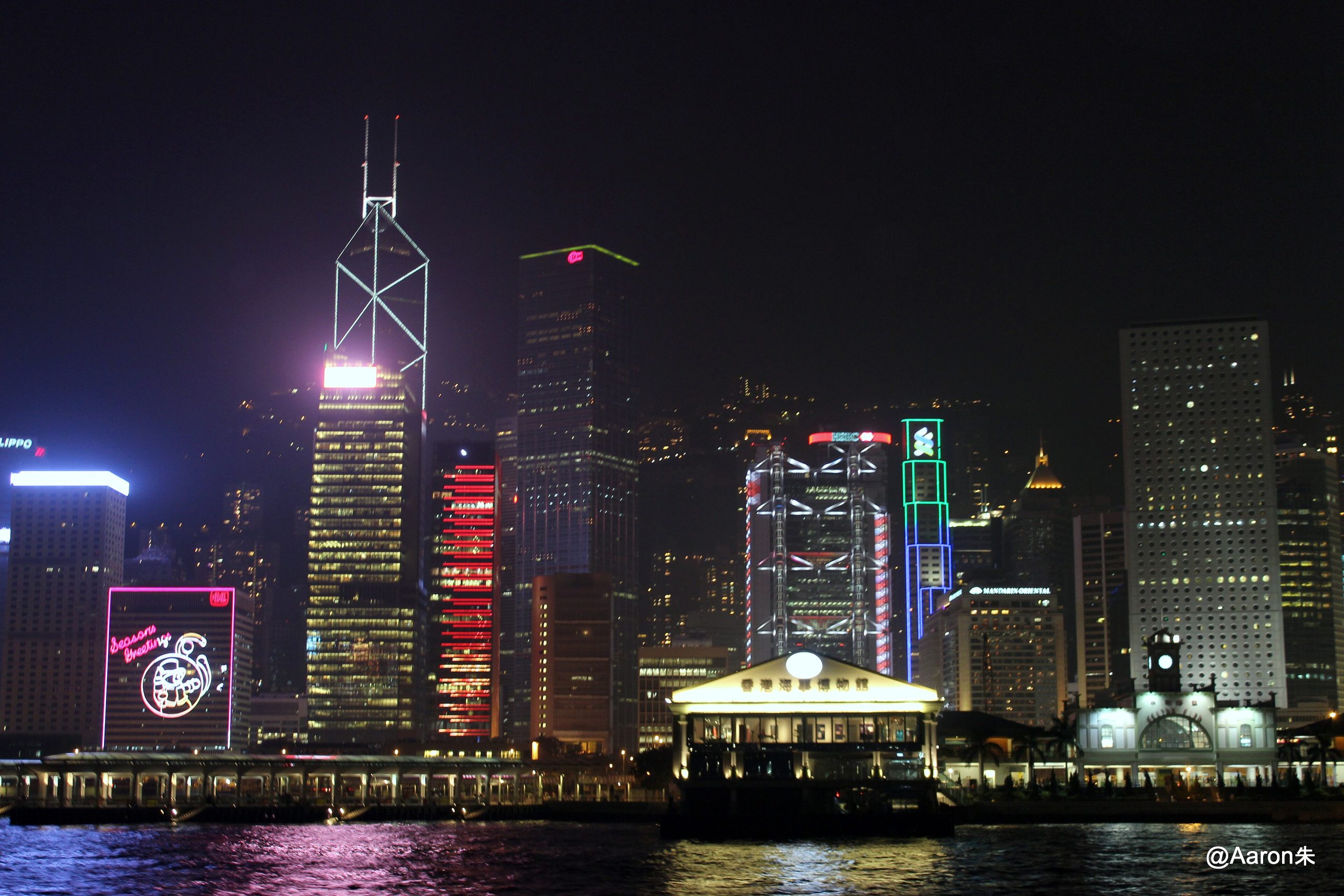
Tsim Sha Tsui (TST), on the Kowloon waterfront, is the best all-round base for most visitors. It faces Hong Kong Island across Victoria Harbour, so it has the best skyline views — including front-row seats for A Symphony of Lights, staged every night at 8pm and best seen from the promenade outside the Hong Kong Cultural Centre and the Avenue of Stars. It also packs in museums, Harbour City and K11 Musea, endless dining and two MTR stations: Tsim Sha Tsui on the Tsuen Wan Line and East Tsim Sha Tsui on the Tuen Ma Line. It has the widest range of hotels in the city, from guesthouses to harbour-view luxury.
For a skyline room, book a genuine ‘harbour view’ category rather than ‘city view’ — higher floors cost more but are worth it on a first visit, and if the budget won’t stretch, the Star Ferry gives you the same view for a few dollars. Quieter TST East, along the promenade towards Hung Hom, is home to several big harbourfront hotels, the Hong Kong Science Museum and the Hong Kong Museum of History.
- Pros: the classic skyline view, the Star Ferry, museums and promenade on foot, hotels at every budget and two MTR lines.
- Cons: crowds on Nathan Road and Canton Road, touts around Chungking Mansions, and a steep premium for harbour-view rooms.
Tsim Sha Tsui Hotels by Budget
- Luxury: The Peninsula Hong Kong, the city’s grande dame on Salisbury Road; Rosewood Hong Kong at Victoria Dockside, where most rooms face the harbour; and Kowloon Shangri-La at 64 Mody Road, a short walk from East Tsim Sha Tsui station.
- Upper mid-range: Hotel Icon on Science Museum Road in TST East, a 262-room design hotel with an outdoor pool.
- Mid-range: The Salisbury – YMCA of Hong Kong at 41 Salisbury Road, a waterfront hotel with an indoor pool, a short walk from the Star Ferry.
- Budget: the guesthouses of Chungking Mansions on Nathan Road — the cheapest beds in TST, tiny and basic, in a famously chaotic building.
Central and Sheung Wan: Nightlife, Dining and Business
On Hong Kong Island, Central is the glossy heart of the city — skyscrapers, luxury hotels, high-end shopping, and the buzzing nightlife of Lan Kwai Fong and the bars and restaurants of SoHo (reached by the famous Mid-Levels Escalator). Neighbouring Sheung Wan is a little more characterful and calmer, with trendy cafes, antique shops and temples.
This is the priciest part of the city and the best pick if you want upscale dining and nightlife on your doorstep. It is also the easiest base for the airport: Hong Kong station, under the IFC towers, is the Airport Express terminus, while Central station serves the Island and Tsuen Wan lines.
- Pros: Lan Kwai Fong and SoHo on foot, the Peak Tram and Star Ferry close by, the Airport Express at Hong Kong station and some of the city’s finest hotels.
- Cons: the highest room rates in the city, few mid-range choices, steep streets in Sheung Wan and the Mid-Levels, and noisy weekend nights around Lan Kwai Fong.
Central and Sheung Wan Hotels by Budget
- Luxury: Mandarin Oriental, Hong Kong on Connaught Road Central; Four Seasons Hotel Hong Kong, linked to the IFC mall and Hong Kong station; and The Upper House or Island Shangri-La above Pacific Place in neighbouring Admiralty.
- Boutique and mid-range: the compact design hotels and converted heritage buildings of Sheung Wan and Sai Ying Pun give more character for less than Central’s towers — confirm the room size before you book.
- Budget: true budget beds are rare on this side of the harbour; most backpackers stay in Kowloon and cross by MTR or Star Ferry.
Admiralty: Five-Star Business Base
Wedged between Central and Wan Chai, Admiralty is Hong Kong’s polished business core — home to some of the city’s finest luxury hotels above the Pacific Place mall, with walkways to Central and an MTR interchange for the Island, Tsuen Wan, South Island and East Rail lines. It’s spotless, convenient and quiet at weekends, making it ideal for business travellers and anyone who wants five-star comfort with harbour or Peak views and the whole city minutes away.
Kennedy Town and Sai Ying Pun: Local and Laid-Back
Since the MTR reached it, Kennedy Town at the western tip of Hong Kong Island has become one of the city’s coolest places to stay — a former dockside neighbourhood now full of harbourfront bars, cafes and a genuine local buzz, minus the tourist crowds. Neighbouring Sai Ying Pun adds hip restaurants and the harbourfront cargo pier nicknamed ‘Instagram Pier’. You’re a quick tram or MTR ride from Central, with a more residential, authentic feel and often better value.
The Mid-Levels and The Peak: Calm and Views
For cooler air, greenery and the city’s most exclusive addresses, the Mid-Levels and the slopes toward Victoria Peak offer a leafy, upscale retreat above the downtown crush. A handful of hotels and serviced apartments here reward you with hillside calm and spectacular views, reached by the famous Mid-Levels escalator or the Peak Tram. It suits travellers who prize tranquillity and scenery over being in the middle of the action.
Causeway Bay and Wan Chai: Shopping, Food and Conventions
Further east on the island, Causeway Bay is Hong Kong’s shopping and dining epicentre — frenetic, lively and packed with malls, restaurants and hotels, with excellent MTR links. Between it and Central, Wan Chai offers a lively mix of local markets, restaurants and nightlife at generally more moderate prices, and sits handily in the middle of the island.
Both are great for travellers who want to be in the thick of the action, with shopping and food around the clock. Causeway Bay and Wan Chai sit on the Island Line, Exhibition Centre station in Wan Chai North puts the East Rail Line across the harbour within reach, and the island’s trams run along the whole north shore for a flat fare.
- Pros: malls, department stores and late-night food on every block, Victoria Park for a morning run, fairer prices than Central and easy trams west to Central.
- Cons: Causeway Bay is packed at weekends, rooms facing the main roads can be noisy, and there is no harbourfront promenade to match Tsim Sha Tsui’s.
Causeway Bay and Wan Chai Hotels by Budget
- Upscale: Grand Hyatt Hong Kong on Harbour Road, next to the Hong Kong Convention and Exhibition Centre, with harbour views.
- Mid-range: The Park Lane Hong Kong, a Pullman Hotel, on Gloucester Road opposite Victoria Park; and Hotel Indigo Hong Kong Island on Queen’s Road East, known for its glass-bottomed rooftop pool.
- Budget: compact hotels and guesthouses fill the side streets of both areas; for real savings, look one or two stops east in Tin Hau and North Point.
Planning your Hong Kong stay?
Our partner Voyada’s travel itinerary generator builds a day-by-day plan with flights, hotels and a real total cost for your dates — in about a minute, free.
Plan trip with AI →Mong Kok, Yau Ma Tei and Jordan: Budget and Local Life
For the cheapest rooms and the most local, high-energy Hong Kong, base yourself in Mong Kok (often written Mongkok), Yau Ma Tei or Jordan, just north of Tsim Sha Tsui. This is the Hong Kong of neon-lit street markets (the Ladies’ Market, the Temple Street Night Market), dai pai dong food stalls and dense, buzzing streets — a full-on sensory experience, and the best value in the city.
Rooms are small and basic and the streets intensely busy, but the area is superbly served by the MTR — Mong Kok and Yau Ma Tei are on both the Tsuen Wan and Kwun Tong lines, Jordan on the Tsuen Wan Line — and it’s unbeatable for budget travellers and anyone who wants to be immersed in local life. Yau Ma Tei and Jordan are a notch calmer than Mong Kok and close to Tsim Sha Tsui.
- Pros: the cheapest rooms in the urban core, night markets and street food on the doorstep, and direct trains to TST and Central.
- Cons: relentless crowds and noise, some of the smallest rooms you will find, and older buildings where lifts and soundproofing vary.
Mong Kok, Yau Ma Tei and Jordan Hotels by Budget
- Upscale: Cordis, Hong Kong at 555 Shanghai Street, connected to the Langham Place mall a few minutes from Mong Kok station.
- Mid-range: Hotel Madera Hong Kong on Cheong Lok Street, a small design hotel a short walk from Jordan station.
- Budget: YHA Mei Ho House in Shek Kip Mei, a youth hostel in the city’s only surviving Mark I H-shaped resettlement block, a Grade II historic building; plus the guesthouses and capsule-style hostels of Mong Kok and Jordan.
Sham Shui Po, Kowloon City and Hung Hom
For deep local flavour, Sham Shui Po — electronics and fabric markets, and some of the cheapest noodle and dim sum shops in town — and Kowloon City, long known for its Thai restaurants, reward the curious. Hotels are sparse and basic, but staying among the wet markets, the bird and flower streets of Prince Edward and the dai pai dong of ‘real’ Kowloon gives a trip an authenticity the tourist zones can’t match. Sham Shui Po and Prince Edward are on the Tsuen Wan Line, and Kowloon City is a short walk from Sung Wong Toi station on the Tuen Ma Line.
Hung Hom, east of TST, is quieter and good value, with East Rail and Tuen Ma line trains from Hung Hom station. It is also handy before a cruise: ships use either Ocean Terminal or Kai Tak Cruise Terminal. Ocean Terminal is part of Harbour City in Tsim Sha Tsui, so any TST hotel is a walk from the gangway. Kai Tak has no MTR station at the door; Citybus route 20X runs there from Jordan and Tsim Sha Tsui and route 22M from Kowloon City, or take a taxi on embarkation day.
North Point, Tin Hau and Quarry Bay: Local Value on the Island
East of Causeway Bay, Tin Hau, North Point and Quarry Bay offer an authentic, local Hong Kong at friendlier prices. Tin Hau, one stop from Causeway Bay, sits beside Victoria Park and its namesake temple; North Point is old-school HK, with wet markets and the tram that trundles right through Chun Yeung Street market; and Quarry Bay has the photogenic ‘Monster Building’ apartment blocks. All three are on the Island Line, North Point and Quarry Bay are also on the Tseung Kwan O Line, and ferries cross from North Point to Hung Hom and Kowloon City.
- Pros: lower rates than Causeway Bay a few minutes away, harbourfront hotels with views across to Kowloon, and real neighbourhood life.
- Cons: few big sights of its own, a quieter evening scene and a longer ride to TST and the Peak.
- Hotels to consider: Harbour Grand Hong Kong on Oil Street beside Fortress Hill station and Hyatt Centric Victoria Harbour on the North Point waterfront, both with harbour views; and TUVE, a small minimalist design hotel on Tsing Fung Street in Tin Hau.
West Kowloon: Museums, the Airport Express and High-Speed Rail
West Kowloon has been transformed by the waterfront West Kowloon Cultural District — home to the M+ museum of visual culture and the Hong Kong Palace Museum — and by Hong Kong West Kowloon station, the high-speed rail terminus for mainland China. Kowloon station, on the Airport Express and Tung Chung Line, sits beneath The Ritz-Carlton, Hong Kong (floors 102 to 118 of the International Commerce Centre) and W Hong Kong, while hotels in neighbouring Jordan and Austin cost less. It’s a smart base for art lovers, mainland day trips and a smooth airport run, though the streets are newer and quieter than TST’s.
Lantau Island and Tung Chung: Near the Airport and the Big Buddha
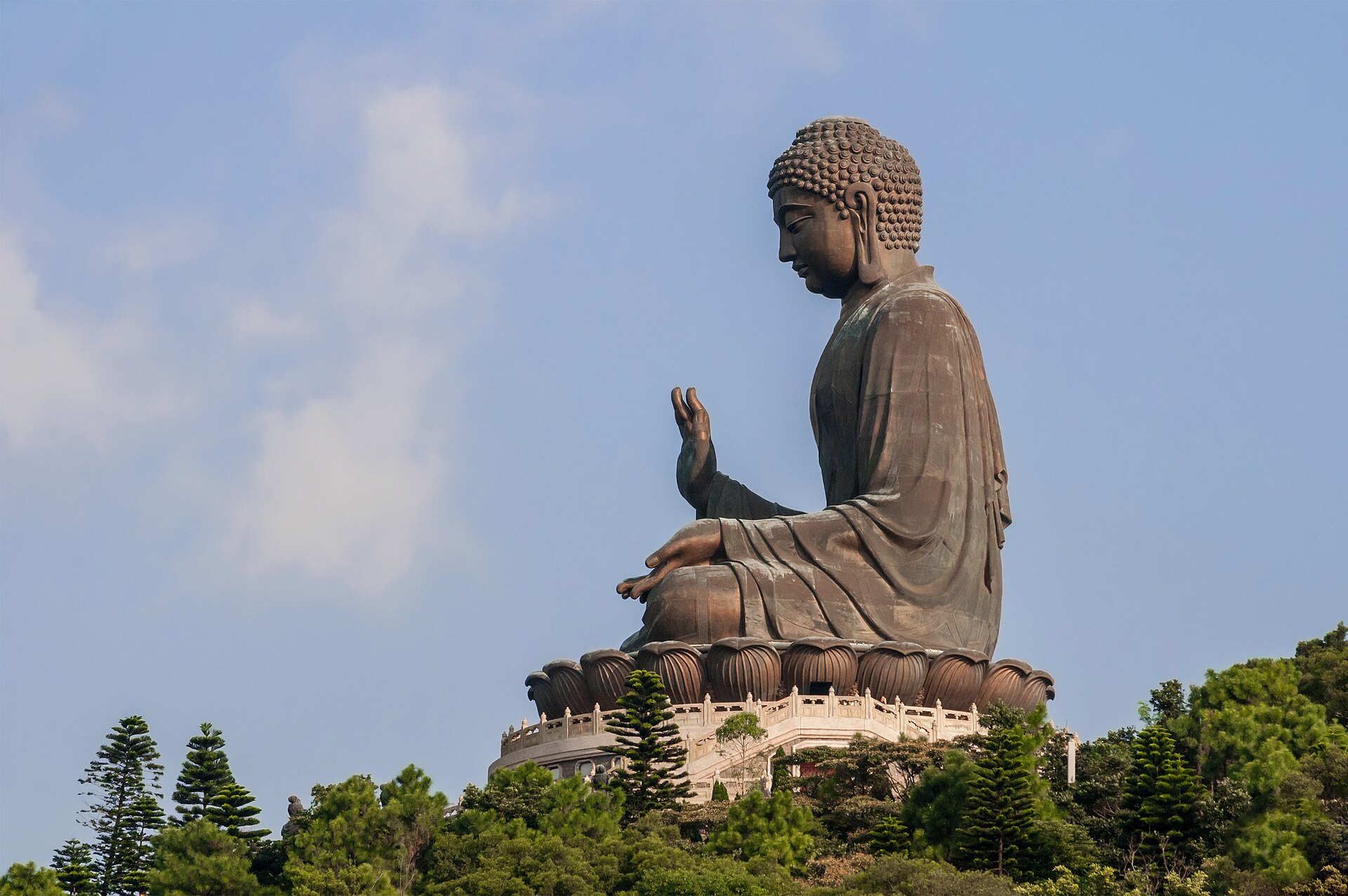
Hong Kong International Airport and Hong Kong Disneyland both sit on Lantau Island, the largest island in Hong Kong. Tung Chung, the new town at the end of the Tung Chung Line, has outlet shopping, the Ngong Ping 360 cable car up to the Big Buddha and hotels a short ride from the terminals, and the stilt-house fishing village of Tai O is a bus ride away. It suits an early flight, a layover or a slower stay with trails on the doorstep, but the main city sights are 30–40 minutes away by MTR.
Where to Stay in Hong Kong Near the Airport
If you are working out where to stay in Hong Kong near airport terminals for an early flight or a short layover, the Regal Airport Hotel is directly connected to Terminal 1, a two-minute walk away, with 1,171 rooms. Hong Kong SkyCity Marriott and Regala Skycity Hotel sit beside AsiaWorld-Expo on the airport island, and in Tung Chung, Novotel Citygate and the Sheraton Hong Kong Tung Chung are a short ride from the terminals. Otherwise, a hotel near Hong Kong or Kowloon station gets you to the airport in about 24 or 22 minutes on the Airport Express, and both stations offer in-town check-in, so you can drop your bags before a last day of sightseeing. With a daytime layover of more than seven hours, you may not need a hotel at all: transit passengers who meet Hong Kong’s entry requirements can join a free city tour run by the airport.
| Your situation | Where to stay | Why |
|---|---|---|
| Dawn departure | Regal Airport Hotel, Hong Kong SkyCity Marriott or Regala Skycity Hotel | A walk or short shuttle to check-in |
| Late arrival, Lantau sightseeing next day | Tung Chung | Lower rates; Ngong Ping 360 and the Big Buddha nearby |
| One night, want to see the city | Central (Hong Kong station) or West Kowloon (Kowloon station) | Airport Express and in-town check-in next day |
| Daytime layover of 7+ hours | No hotel needed | Free transit city tour, or the Airport Express into town |
Where to Stay in Hong Kong Near Disneyland
Hong Kong Disneyland Resort has three themed hotels a short ride or walk from the gates, which suit families wanting full immersion and easy park days. The flagship Hong Kong Disneyland Hotel closed for refurbishment from 12 October 2026, while Disney Explorers Lodge and Disney’s Hollywood Hotel stay open, so check its reopening status before you plan around it. For cheaper rooms, stay in Tung Chung and change at Sunny Bay for the Disneyland Resort Line. Either keeps park days easy; just note you’ll be out on Lantau, 30–40 minutes from the main city sights.
Southside: Repulse Bay, Stanley and Ocean Park
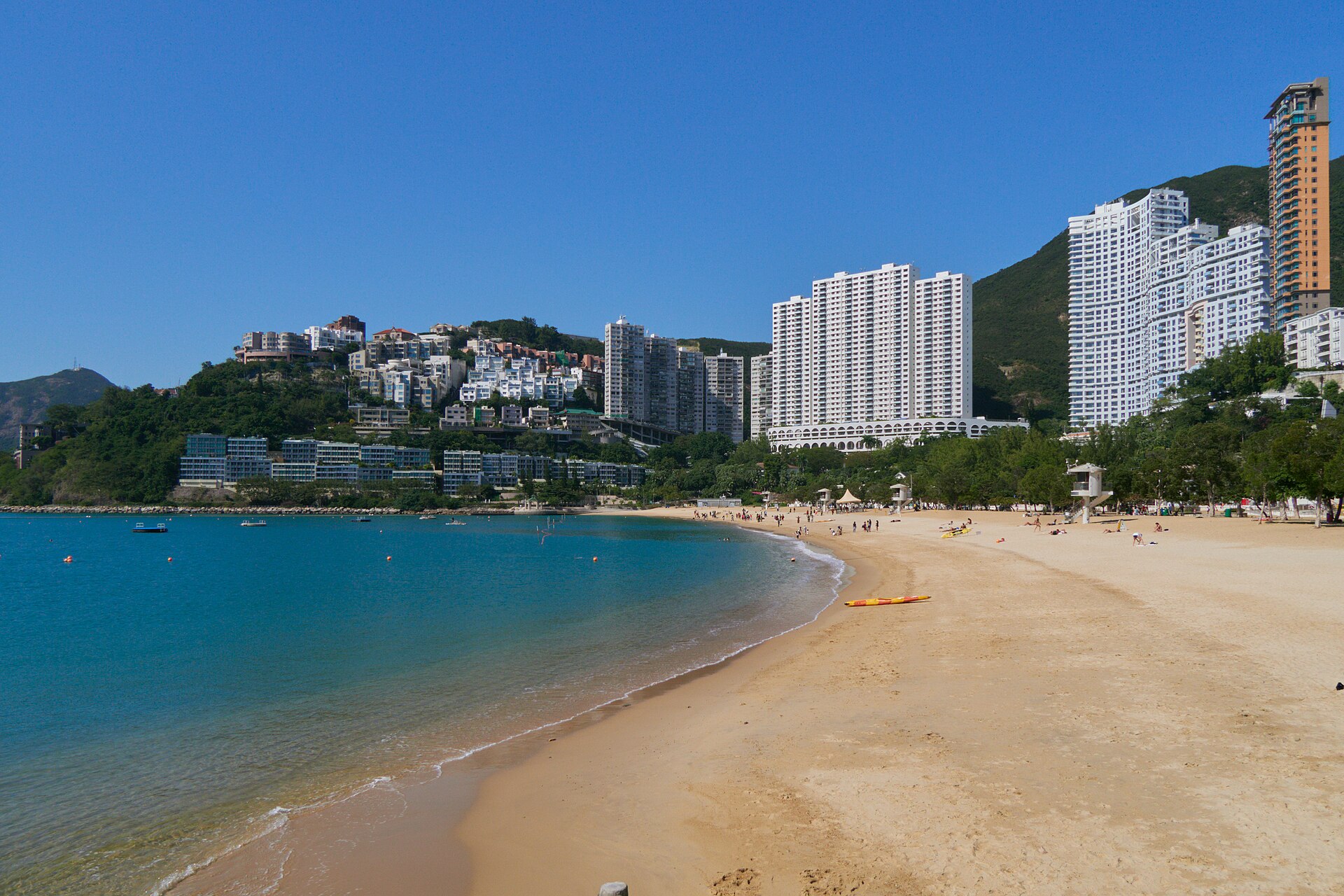
For a resort-like escape, head to the island’s Southside. Repulse Bay offers a curving beach and upscale apartment-style stays, while the seaside village of Stanley charms with its market, waterfront restaurants and relaxed pace. Families can sleep beside Ocean Park, home to six giant pandas, at the Hong Kong Ocean Park Marriott Hotel by Ocean Park station or The Fullerton Ocean Park Hotel Hong Kong on the waterfront. Ocean Park is one stop from Admiralty on the South Island Line, but Repulse Bay and Stanley rely on buses and taxis, so this side suits a slower, beach-leaning stay. Panda fans heading further afield can read up on where to see giant pandas in China.
The Outlying Islands: Lamma Island, Cheung Chau and Peng Chau
For something completely different, base yourself on one of the car-free outlying islands. Bohemian Lamma Island has seafood restaurants and easy hikes; Cheung Chau is a bustling fishing island with a beach and temples; and tiny Peng Chau is peaceful and local. Ferries into Central take 25–60 minutes, so it’s a trade-off — but waking to sea air and village life is a magical, very different side of Hong Kong.
Sai Kung, Sha Tin and the New Territories
For nature-lovers, the New Territories offer a green, uncrowded alternative. The seaside town of Sai Kung — Hong Kong’s ‘back garden’ — has seafood restaurants, boat trips to clear-water beaches and the volcanic coastline of the Hong Kong UNESCO Global Geopark. There is no MTR station in Sai Kung town, so you rely on buses and minibuses, and hotel choice is thin. It’s a longer haul from the city sights, but for hikers it’s a refreshing, very different base.
Sha Tin is the family-friendly pick in the New Territories: a riverside new town on the East Rail Line, which runs through Kowloon and across the harbour to Admiralty, with the Hong Kong Heritage Museum, the Ten Thousand Buddhas Monastery, big malls and racing at Sha Tin Racecourse. The Hyatt Regency Hong Kong, Sha Tin sits beside University station. Further west, Tsuen Wan, at the end of the Tsuen Wan Line, has good-value hotels in an everyday local town.
Where to Stay in Hong Kong by Traveller Type
Match your base to your trip — the table gives the quick pick, and the notes below explain the trade-offs.
| You are… | Best area | Why |
|---|---|---|
| A first-timer | Tsim Sha Tsui | Views, walkable sights, every budget |
| After nightlife & dining | Central, SoHo or Wan Chai | Lan Kwai Fong, bars, restaurants |
| A shopper | Causeway Bay or Tsim Sha Tsui | Malls, department stores, markets |
| On a budget | Mong Kok, Yau Ma Tei or Jordan | Cheapest rooms, street food |
| Travelling solo | Jordan, Yau Ma Tei or Sheung Wan | Hostels and small hotels near the MTR |
| A family | Tsim Sha Tsui, Causeway Bay, Ocean Park or Disneyland | Family rooms, pools, easy attractions |
| A couple | TST harbourfront or high floors in Central | Skyline views, rooftop bars |
| On business | Central, Admiralty or Wan Chai | Offices, convention centre, Airport Express |
| Staying a week or more | Serviced apartments in Sheung Wan, Wan Chai or North Point | Kitchenettes, more space, no hotel tax from 28 nights |
| Catching an early flight | The airport island or Tung Chung | Regal Airport Hotel is linked to Terminal 1 |
| Boarding a cruise | TST (Ocean Terminal) or Jordan and Kowloon City (Kai Tak) | A walk or a direct bus to the ship |
| After nature and hiking | Sai Kung, Sha Tin or an outlying island | Trails, beaches, quieter nights |
Where to Stay in Hong Kong with Family
Families do well in Tsim Sha Tsui, where the promenade, the Hong Kong Science Museum and the Star Ferry are walkable and family rooms are easier to find, or in Causeway Bay, with malls, Victoria Park and trams on the doorstep. With younger kids keen on theme parks, stay beside Ocean Park on the Southside or at the Disneyland hotels on Lantau and treat the city as day trips. Rooms are compact everywhere, so book connecting or family rooms rather than counting on an extra bed.
Older properties and guesthouses can be tight and stair-heavy, so filter carefully: the Hong Kong Tourism Board’s accommodation finder lets you search by accessible rooms, connecting rooms, family rooms and baby cots. The MTR is largely step-free with lifts, which helps with prams and wheelchairs, but always confirm specific accessibility needs directly with the hotel before booking.
Couples and Honeymooners: Harbour Views and the Peak
For romance, prioritise the view. A harbourfront room in Tsim Sha Tsui frames the nightly Symphony of Lights, while a high floor in Central or near The Peak delivers the glittering skyline. Couples who want calm might choose the beaches of the Southside or an outlying island. Pair a stylish hotel with a rooftop bar, a Star Ferry crossing at dusk and a Peak Tram ride for an effortlessly romantic Hong Kong stay.
Best Area for Nightlife: Central, SoHo and Wan Chai
Night owls should base themselves on Hong Kong Island. Central puts you in the thick of the bars and clubs of Lan Kwai Fong and the more relaxed, restaurant-lined lanes of SoHo (reached by the Mid-Levels escalator). Neighbouring Wan Chai keeps going later and grittier, while Kennedy Town offers a cooler, local scene. Staying here means you can stumble home rather than hunt for a late-night taxi across the harbour.
Business Travellers: Central, Admiralty and Wan Chai
Business visitors are best served on Hong Kong Island. Central and Admiralty sit at the heart of the financial district, with luxury hotels, express airport links and walkways connecting the towers; Wan Chai is handy for the Convention and Exhibition Centre. Hong Kong station in Central, the Airport Express terminus, is about 24 minutes from the airport and offers in-town check-in, and Admiralty and Wan Chai are one or two MTR stops away — ideal for a fly-in, fly-out trip. For fairs at AsiaWorld-Expo beside the airport, the SkyCity hotels are closer.
Where to Stay in Hong Kong on a Budget or Solo
Hong Kong is pricey, but budget beds exist. The cheapest area to stay in Hong Kong’s urban core is Mong Kok, Jordan and Yau Ma Tei in Kowloon, with the densest cluster of guesthouses and hostels, close to street markets, cheap eats and the MTR. The notorious Chungking Mansions in Tsim Sha Tsui offers the very cheapest (and most basic) rooms in a fascinating, chaotic building — fine for the adventurous. Stick to licensed guesthouses (the tourism board’s finder lists them), expect tiny rooms whatever you pay, and book ahead for the best value.
For solo travellers, capsule-style hostels and dorms offer clean pods and beds at the city’s lowest prices, mostly around Mong Kok, Jordan and Sham Shui Po, plus a few near Causeway Bay. Jordan and Yau Ma Tei are the easiest solo bases: busy until late, on the Tsuen Wan Line and a short walk from TST. Sheung Wan suits solo travellers with a bigger budget who want cafes and bars nearby. First solo trip? These tips on travelling alone for the first time cover the essentials.
The Best Hotels in Hong Kong for a Splurge
Hong Kong is a world capital of luxury hotels, and there is no single best hotel in Hong Kong — it depends on the view you want. On the Kowloon side, the legendary Peninsula and the Rosewood pair old-world glamour and new-build polish with knockout skyline views, and The Ritz-Carlton in West Kowloon puts its Ozone bar on the 118th floor of the International Commerce Centre. On the island, the Mandarin Oriental, Four Seasons and The Upper House set the standard for spas, fine dining and sky-high rooms. Rooftop pools are a signature indulgence too — Hotel Indigo in Wan Chai has a glass-bottomed one. For a splurge, a high-floor harbour-view room is one of the great hotel experiences anywhere.
Long Stays: Serviced Apartments
Staying a week or more? Serviced apartments make excellent sense in space-starved Hong Kong — more room than a hotel, a kitchenette, and often laundry and gym facilities, at better long-stay rates. They cluster in Central, Causeway Bay, Wan Chai and Kowloon, and suit families, remote workers and anyone wanting to cook and settle in. Look at areas like Sheung Wan and North Point for the best space-for-money. A bonus for long stays: rooms occupied by the same guest for 28 consecutive nights or more count as long-term accommodation, so the 3% hotel accommodation tax does not apply.
Where to Stay in Hong Kong for First Timers: One, Three or Five Nights
Deciding where to stay in Hong Kong for 3 nights on a first visit? Keep it simple: book Tsim Sha Tsui, ideally with a harbour view. You’ll wake to the skyline, walk to the Star Ferry, the museums and the promenade, and have the MTR at your feet for the Peak, the markets and Lantau. One well-chosen base means no mid-trip hotel change — the city is compact and fast enough that everything is a short ride away. Choose Central instead for luxury and nightlife, or Causeway Bay for shopping. A 3-night stay covers the essentials and a fourth night makes it relaxed; a fifth or sixth adds beaches, an outlying island, New Territories hiking or a Macau day trip. Combining cities? See how Hong Kong pairs with Korea in this Hong Kong and Seoul starter itinerary.
| Trip length | Best base | Why |
|---|---|---|
| One night or a stopover | Central or West Kowloon (Airport Express stations), or the airport hotels | Fast airport link and in-town check-in |
| 3 nights | Tsim Sha Tsui | The Peak, harbour, markets and a Lantau day from one base |
| 5–6 nights | TST or Central, plus a night on Lantau or an outlying island | Adds beaches, hiking or a Macau day trip |
| A week or more | A serviced apartment in Sheung Wan, Wan Chai or North Point | More space, a kitchen and long-stay rates |
Hong Kong Hotel Prices: What a Night Really Costs
The average achieved hotel room rate published by the Tourism Commission is the best official yardstick for what rooms actually sell for across all hotels. So is it expensive to stay in Hong Kong? Plan a mid-range budget around that average and expect to pay noticeably less only in hostels, guesthouses and the outer districts. Hotels are busy too — occupancy averaged 87% across 2025 — so good-value rooms go quickly. The cheapest month was June in both years, and in 2025 October to December were the priciest (the 2026 figures ran only to July when we checked in November 2026).
| Month | 2025 average (HK$ per night) | 2026 average (HK$ per night) |
|---|---|---|
| January | 1,317 | 1,343 |
| February | 1,194 | 1,432 |
| March | 1,283 | 1,410 |
| April | 1,253 | 1,356 |
| May | 1,182 | 1,227 |
| June | 1,088 | 1,108 |
| July | 1,138 | 1,205 |
| August | 1,219 | Not yet published |
| September | 1,146 | Not yet published |
| October | 1,393 | Not yet published |
| November | 1,443 | Not yet published |
| December | 1,502 | Not yet published |
- Budget: hostels, capsule-style beds and licensed guesthouses in Mong Kok, Jordan, Sham Shui Po and Chungking Mansions — tiny rooms, sometimes shared bathrooms.
- Mid-range: compact, clean hotels near the MTR in Tsim Sha Tsui, Jordan, Causeway Bay, Wan Chai and North Point — the sensible choice for most visitors.
- Boutique: design-led rooms in heritage and converted buildings in Sheung Wan, Sai Ying Pun, Wan Chai and Tin Hau, with more character than space.
- Luxury: harbourfront and sky-high hotels in Tsim Sha Tsui, Central, Admiralty and West Kowloon, where a harbour-view room is the classic splurge.
Rates also jump around major trade fairs and conventions, Chinese New Year and big sporting weekends such as the Hong Kong Sevens, so shifting your stay by a few days can save a lot. The cheaper summer months are hot, humid and wet, and it’s typhoon season: the Hong Kong Observatory notes that tropical cyclones can strike from May to November, most often July to September, and a No. 8 signal closes ferries, most buses, many shops and attractions at short notice, so leave slack in your dates and check the cancellation terms. November and December, which the Observatory says many people regard as the best months of the year, are the most comfortable — and, as the table shows, among the priciest. Book two to three months ahead for harbour-view and business-district hotels. For a full trip budget, including food and transport, see this Hong Kong travel cost guide.
Hotel Taxes, Service Charges and Deposits
Most Hong Kong hotels add a 10% service charge to the room rate, and since 1 January 2025 hotels and guesthouses also collect a 3% hotel accommodation tax on the accommodation charge (the service charge itself is exempt). Check whether a quoted price includes both before you compare properties. Most hotels take a card pre-authorisation at check-in for incidentals, released after checkout. Tipping isn’t obligatory given the service charge, though rounding up for porters and housekeeping is appreciated. Free wifi is near-universal, and breakfast is often charged separately.
Booking Tips That Save Money
A few pointers before you book:
- Expect small rooms — it’s normal here; compare floor area as well as price, and prioritise location and a good MTR link over size.
- Stay in Kowloon (TST, Jordan, Mong Kok) for better value than Hong Kong Island.
- Book a genuine harbour-view room if the skyline matters — ‘partial’ views can be a slice between buildings, so check photos.
- Check MTR proximity — a station within a few minutes’ walk makes the whole trip easier.
- Book two to three months ahead for peak seasons and big conventions, and compare nearby neighbourhoods, since prices vary sharply from street to street.
- Read recent reviews for room size and noise, and confirm the hotel is still operating — hotels open, close and change brands regularly.
Getting Around from Your Base: Octopus, MTR, Star Ferry and Airport Express
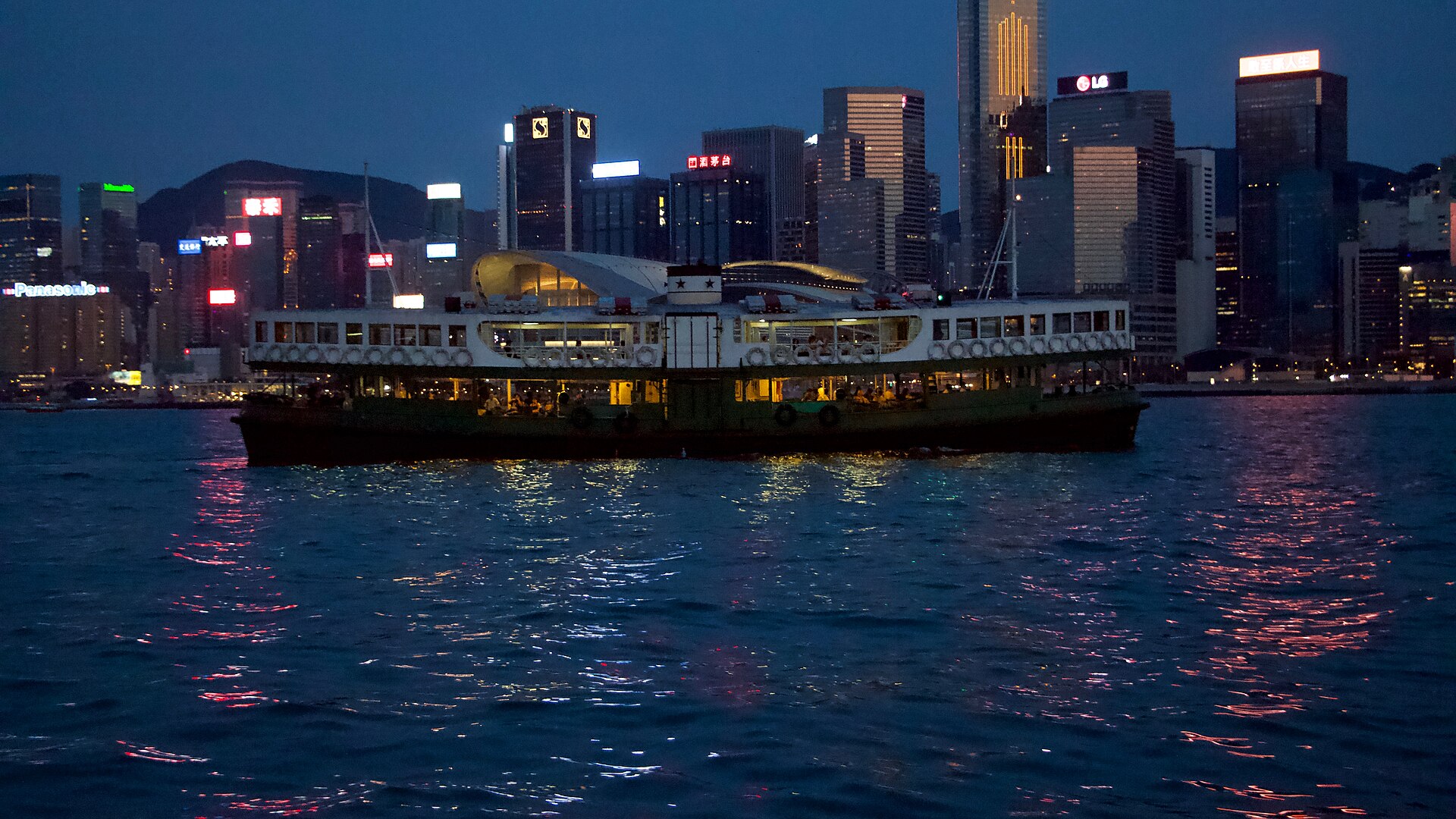
Wherever you stay, getting around Hong Kong is a breeze. The MTR is fast, spotless and reaches nearly everywhere; the Star Ferry links Kowloon and the island in a scenic few minutes; and the island’s vintage trams trundle along the north shore for a few dollars. Get an Octopus card on arrival and tap through all of it.
Because the network is so good, you don’t need to obsess over being central — just stay near an MTR station and the whole city opens up. Cross-harbour trips take only minutes.
For the airport, the Airport Express is the fastest link, and its two city stations with in-town check-in are the ones worth staying near. The MTR system map shows every line mentioned in this guide.
| Airport Express station | Handy for | Ride to the airport | In-town check-in |
|---|---|---|---|
| Hong Kong | Central, Sheung Wan, Admiralty | About 24 minutes | Yes |
| Kowloon | West Kowloon, Jordan, Austin | About 22 minutes | Yes |
| Tsing Yi | Tsing Yi and the Tsuen Wan side | Shortest of the three | No |
Combining Hong Kong with Macau, Shenzhen and the Mainland
Hong Kong pairs easily with its neighbours. Ferries and the Hong Kong–Zhuhai–Macao Bridge reach Macau — casinos, Portuguese heritage and egg tarts — in roughly an hour, doable as a day trip or an overnight; check the US State Department’s current advisory for Macau before you go, as its level can differ from Hong Kong’s. High-speed trains from Hong Kong West Kowloon station reach Shenzhen’s Futian station in as little as 14 minutes and Guangzhou South in under an hour on the fastest services, so staying in West Kowloon or Jordan makes an early train easy. Is it better to stay in Hong Kong or Shenzhen? For a Hong Kong trip, stay in Hong Kong: a Shenzhen hotel means clearing immigration twice a day. US passport holders can visit Hong Kong visa-free for up to 90 days, but mainland China has its own entry rules — check them, and this list of visa-free countries for US citizens, before you plan a border crossing.
Is Hong Kong Safe? Areas to Avoid and What to Expect
Hong Kong is a safe city for visitors, and every area in this guide is fine to stay in, day or night. The usual caution against pickpockets applies in crowded spots like Mong Kok, Temple Street and busy MTR interchanges — these tips on how to avoid pickpockets cover the basics. Even the nightlife of Lan Kwai Fong and Wan Chai is generally trouble-free. US travellers should also read the State Department’s Hong Kong advisory, which has rated the city Level 2, ‘Exercise increased caution’, citing the arbitrary enforcement of local laws; check the latest version before you go.
So it’s less about areas to avoid than expectations to set. The cheapest rooms — especially in Chungking Mansions and older Kowloon guesthouses — can be extremely small, worn or noisy, so read recent reviews. Mong Kok is thrillingly busy but relentless if you crave quiet, and Lan Kwai Fong is loud late on weekends. And ‘harbour view’ is sometimes a slice between buildings — always check photos and confirm exactly which room category you’re booking.
Related Guides
Frequently Asked Questions
What is the best area to stay in Hong Kong for first-timers?
Tsim Sha Tsui (TST) on the Kowloon waterfront is the best all-round base — it has the finest skyline views (including the nightly Symphony of Lights), a huge range of hotels, endless shopping and dining, museums, and two linked MTR stations. It’s central, scenic and puts a bit of everything within walking distance.
Where should I stay in Hong Kong on a budget?
The cheapest area to stay in Hong Kong’s urban core is Mong Kok (often written Mongkok), Jordan and Yau Ma Tei in Kowloon, where guesthouses, hostels and capsule-style beds cluster around the night markets and street food. Chungking Mansions in Tsim Sha Tsui has the very cheapest, most basic rooms. Rooms are small and the streets intensely busy, but the MTR links are excellent and the value and atmosphere are hard to beat for budget travellers.
Where is the best nightlife in Hong Kong?
Central on Hong Kong Island is the nightlife hub — Lan Kwai Fong is the famous bar-and-club quarter, and the SoHo district (up the Mid-Levels Escalator) is packed with restaurants and bars. Wan Chai and Causeway Bay also have lively scenes. Stay in or near Central if nightlife is a priority, though it’s the priciest area.
Are hotel rooms in Hong Kong small?
Yes — Hong Kong has some of the highest real-estate prices in the world, so hotel rooms are compact at every price point, and even luxury rooms can feel snug. It’s completely normal, so prioritise a good location with a nearby MTR station over room size, and book a harbour-view room in TST if the skyline matters to you.
How do you get around Hong Kong from your hotel?
Very easily. The MTR metro is fast, spotless and reaches nearly everywhere; the Star Ferry links Kowloon and the island in minutes; and vintage trams run along the island’s north shore. Get an Octopus card on arrival to tap through all of it. Because transport is so good, just stay near an MTR station and the whole city is within easy reach.
Is it better to stay in Kowloon or on Hong Kong Island?
Both are excellent and just minutes apart by MTR or the Star Ferry. Kowloon (especially Tsim Sha Tsui) offers the famous skyline views, better hotel value and a bustling, local feel. Hong Kong Island (Central, Sheung Wan, Wan Chai) is sleeker and closer to the Peak, nightlife and finance district. Choose Kowloon for value and views, the Island for polish.
How many nights do you need in Hong Kong?
Three or four nights suits most first visits, which covers the Peak, Victoria Harbour, the markets, a day out on Lantau and a great deal of eating. A fifth or sixth night lets you add the Southside beaches, an outlying island, hiking in the New Territories or a day trip to Macau. Because the MTR crosses the city so quickly, there is rarely any need to change hotels partway through, so one well connected base will cover the whole trip. Stopover travellers can still get a worthwhile taste of the city in a single night.
Where should you stay for a short layover or a very early flight?
For a dawn departure, the Regal Airport Hotel is a two-minute walk from Terminal 1, and the SkyCity hotels beside AsiaWorld-Expo are a short shuttle away; Tung Chung is a cheaper alternative a little further out. For a layover of a full day or more, a city base is usually the better use of time: hotels near Hong Kong or Kowloon station on the Airport Express let you use in-town check-in to drop bags early and sightsee unencumbered.
Which areas of Hong Kong suit families with children?
Causeway Bay works well, with malls, food and easy MTR links in every direction. Tsim Sha Tsui is the other strong pick, because the waterfront, museums and Star Ferry are walkable and family configurations are easier to find. Families focused on the theme park on Lantau often stay out that way for quick access, accepting a longer ride to the main sights. Rooms are compact everywhere, so look for connecting or family rooms and confirm bed set-ups directly with the property. Lifts make most MTR stations step free, which helps enormously with prams.
Is Hong Kong safe to stay in, and are there areas to avoid?
Hong Kong is a very safe city by global standards, with low violent crime, and none of the districts in this guide is a no-go area after dark. The sensible cautions are ordinary ones: watch your pockets in crush points such as Mong Kok, Temple Street and busy MTR interchanges, and read recent reviews before booking the very cheapest guesthouse rooms. Weather is the larger disruption risk. Between roughly May and November the Hong Kong Observatory can raise a tropical cyclone or rainstorm warning at short notice, and a high signal closes ferries, many buses, shops and attractions, so watch the official warnings.
When is the cheapest time to book a Hong Kong hotel?
The cheapest months are usually early summer: in 2025 the official average room rate bottomed at HK$1,088 in June and peaked at HK$1,502 in December. Rates also climb around big trade fairs and conventions, Chinese New Year and major sporting weekends. Summer into autumn is typhoon season, when a high signal can shut transport and attractions for a day or more, so leave slack in the itinerary and check the cancellation terms before you book.
Are serviced apartments worth it for a longer stay in Hong Kong?
For a week or more they often make better sense than a hotel room in such a space-starved city. You typically get more floor area, a kitchenette and laundry, sometimes a gym, and rates that improve the longer you stay, which suits families, remote workers and anyone tired of eating every meal out. They cluster in Central, Wan Chai, Causeway Bay and across Kowloon, while Sheung Wan and North Point tend to give the most space for the money. Check what is included, since housekeeping, utilities and minimum stays vary a lot between buildings.
Where should you stay in Hong Kong if shopping is the priority?
Causeway Bay is the obvious base, with department stores, malls and street-level shops packed into a few blocks, open late and served by its own MTR station. Tsim Sha Tsui is the other strong choice, pairing large waterfront malls with the street markets of Jordan and Mong Kok a few stops north, while Central holds the designer flagships. Staying in either lets you drop bags back at the hotel between trips rather than hauling them around all day. If markets matter more than malls, Mong Kok and Jordan put the night market streets within walking distance.
Is it worth basing yourself on an outlying island or the Southside?
It can be lovely, but understand the trade-off. The car-free outlying islands offer sea air, seafood and village calm, though every trip to town means a ferry, sailings thin out late in the evening, and services can be suspended in rough weather or under a tropical cyclone signal. The Southside around Repulse Bay and Stanley is greener and quieter but relies on buses and taxis rather than the MTR. If you plan to swim, note that lifeguard cover at the gazetted beaches is seasonal and the hours change through the year, so check before anyone gets in the water.
What extra charges should you expect on a Hong Kong hotel bill?
Most hotels add a 10% service charge to the room rate, and since 1 January 2025 hotels and guesthouses also collect a 3% hotel accommodation tax on the accommodation charge; the service charge itself is not taxed. Check whether a quoted price includes both before comparing properties. Expect a card pre-authorisation at check-in for incidentals, released after checkout. Tipping is not obligatory given the service charge, and breakfast is often charged separately, so confirm exactly what your rate includes.
How much does a hotel in Hong Kong cost per night?
The best official yardstick is the Tourism Commission’s average achieved hotel room rate, which ranged from HK$1,088 in June to HK$1,502 in December 2025, roughly US$140 to US$195 a night. Hostel beds and guesthouse rooms cost well below that, and harbour-view rooms at the luxury hotels far more. Most hotels add a 10% service charge, and a 3% hotel accommodation tax has applied since 1 January 2025.
Where should I stay in Hong Kong for one night?
If you are working out where to stay in Hong Kong for one night, pick a hotel near an Airport Express station: Hong Kong station in Central or Kowloon station in West Kowloon, about 24 and 22 minutes from the airport, both with in-town check-in the next day. For a dawn flight, the Regal Airport Hotel is a two-minute walk from Terminal 1. Tsim Sha Tsui suits an evening on the harbourfront for the 8pm Symphony of Lights.
Where should I stay in Hong Kong before a cruise?
Where to stay in Hong Kong before cruise departures depends on the terminal. Ocean Terminal is part of Harbour City in Tsim Sha Tsui, so any TST hotel puts you within walking distance of the ship. Kai Tak Cruise Terminal has no MTR station at the door, but Citybus route 20X runs there from Jordan and Tsim Sha Tsui and route 22M from Kowloon City, so stay in one of those areas and allow extra time, or take a taxi.
Which area of Hong Kong is best for solo travellers?
Jordan and Yau Ma Tei are the easiest solo bases: hostels, capsule-style beds and small hotels sit on busy streets that stay lively until late, one or two Tsuen Wan Line stops from Tsim Sha Tsui. Mong Kok is cheaper but more hectic, and YHA Mei Ho House in Shek Kip Mei is a sociable hostel in a heritage building. Solo travellers with a bigger budget often prefer Sheung Wan, close to the cafes and bars of Central and SoHo.
Where should I stay in Hong Kong near Disneyland?
The resort’s own hotels are closest. Disney Explorers Lodge and Disney’s Hollywood Hotel stayed open when the flagship Hong Kong Disneyland Hotel closed for refurbishment from 12 October 2026, so check that hotel’s reopening status before booking. For lower rates, stay in Tung Chung and change at Sunny Bay for the Disneyland Resort Line, with outlet shopping and the Ngong Ping 360 cable car nearby. City hotels work too, but allow 30 to 40 minutes each way.
Can you stay overnight at Hong Kong Airport?
Yes. The Regal Airport Hotel is directly connected to Terminal 1, a two-minute walk away, and Hong Kong SkyCity Marriott and Regala Skycity Hotel sit beside AsiaWorld-Expo on the airport island; the airport lists all three as open 24 hours. They suit late arrivals and dawn departures. With a daytime layover of more than seven hours, you can instead join a free transit city tour if you meet Hong Kong’s entry requirements.
What is the best time of year to visit Hong Kong?
November and December are the most comfortable months, with pleasant breezes, plenty of sunshine and mild temperatures; the Hong Kong Observatory notes that many people regard them as the best of the year. May to August is hot, humid and wet, and tropical cyclones can strike from May to November, most often July to September. Hotel rates track demand: in 2025 the official average room rate was lowest in June and highest in December.
Is it better to stay in Hong Kong or Shenzhen?
For a Hong Kong trip, stay in Hong Kong. Shenzhen is a separate city across an immigration border, so a hotel there means clearing immigration at least twice a day and meeting mainland China’s own entry rules for your passport, which usually outweighs any saving on the room. If you want both, base yourself in West Kowloon or Jordan near the high-speed rail terminus and visit Shenzhen as a day trip, or split your nights between the two cities.
Finding Your Hong Kong Base
The best neighborhood to stay in Hong Kong is the one that fits your trip, and the superb transport network means you can’t really go wrong — so choose your base by vibe and budget. Tsim Sha Tsui suits most first-timers with its views and central location, Central delivers upscale nightlife, Causeway Bay is a shopper’s dream, and Mong Kok offers the cheapest, most local stay. Expect small rooms, stay near an MTR station, and you’ll be perfectly placed to dive into one of the world’s most electric cities.
Before you go: turn this guide into a day-by-day plan. Our partner Voyada is a free AI vacation planner that builds the trip with flights, hotels and a real total cost for your dates — in about a minute.
Build an itinerary →