
Table of Contents
ToggleThe best Christmas markets in Germany for 2026 are in 19 destinations: Nuremberg, Dresden, Berlin, Leipzig, Cologne, Frankfurt, Aachen, Augsburg, Rothenburg ob der Tauber, Treuchtlingen, Coburg, Würzburg, Iphofen, Dinkelsbühl, Regensburg, Passau, Munich, Stuttgart, and Freiburg with the Ravenna Gorge. This guide to Germany Christmas markets gives each city’s 2026 dates, what it is known for, and how to link several Christmas markets in Germany into one winter trip.
Advent is the Christian season leading up to Christmas, marked by four Sundays. Many large markets open during this period, but small-town events may last only one weekend.
Choose Nuremberg for classic traditions, Munich for variety, or Ravenna Gorge for a distinctive Black Forest outing. The right route depends on your travel dates and the kind of holiday setting you enjoy.
Key Takeaways
- Nuremberg and Dresden offer classic traditions; Dresden’s Striezelmarkt was first recorded in 1434.
- Berlin’s Gendarmenmarkt, Charlottenburg Palace and Rotes Rathaus markets stay open after Christmas, the last one until January 3, 2027.
- Cologne, Frankfurt and Aachen pair market visits with cathedrals and old-town squares.
- Bavarian towns have varied schedules, including markets that run for one weekend.
- Munich offers a central market on Marienplatz and a specialist nativity craft market.
- Ravenna Gorge in the Black Forest needs a timed ticket (€7.50-€9.50) and advance transport planning.
Let each market’s dates, setting, and local character shape the route rather than trying to see every destination.
When do German Christmas markets start and end in 2026?
Most big Germany Christmas markets 2026 open between November 16 and November 27 and close on December 22, 23 or 24, while small-town events may last only a weekend. The first Sunday of Advent falls on November 29, 2026, so most city markets open before Advent Sunday. Several close on Totensonntag (November 22), a Protestant day of remembrance, including Munich’s and Cologne’s main markets.
The usual season gives you several weeks to plan a winter visit, but it does not set one shared schedule. Each Christmas market chooses its own opening days, closing date, and hours.
The 2026 calendar is especially useful for a traditional Christmas trip built around more than one city. A town market may open only on selected days, even when a larger market nearby runs for weeks.
Before you book, make three checks:
- Verify the specific market’s official 2026 dates.
- Confirm weekday, weekend, and holiday hours.
- Match the visit to your city or regional itinerary.
These checks matter if your flight, train, or hotel dates leave little room to move. A market that opens only on a weekend may not fit a weekday stop.
When do German Christmas markets end? Most close on December 23, a few open until early afternoon on December 24, and nearly all are shut on December 25. Visitors to Christmas markets in Germany can also find smaller events that focus on a single weekend.
For a broader look at seasonal timing, compare this schedule with Christmas market dates around Europe and this guide to the best time to visit Germany. The pattern is useful for planning, but each local calendar still sets the actual visit window.
Check the official calendar again before booking transport, especially for a market that runs on selected days only.
Germany Christmas markets dates 2026 at a glance
The table lists the Germany Christmas markets dates for 2026 from each city’s official market or tourism page, plus the dates in this guide’s town sections. Hours differ by weekday, so check the city section before you go.
| Market | Region | 2026 dates | Good to know |
|---|---|---|---|
| Cologne Cathedral market | West (Rhineland) | Nov 16 - Dec 23 | Closed Nov 22; 120+ stalls |
| Munich Christkindlmarkt (Marienplatz) | Bavaria | Nov 20 - Dec 24 | Closed Nov 22; Dec 24 until 2 p.m. |
| Aachen Christmas market | West (Rhineland) | Nov 20 - Dec 23 | Nov 22 from 6 p.m. only |
| Rothenburg Reiterlesmarkt | Bavaria (Franconia) | Nov 20 - Dec 23 | Small walled town |
| Berlin Gendarmenmarkt | East | Nov 23 - Dec 31 | Open after Christmas |
| Berlin Charlottenburg Palace | East | Nov 23 - Dec 27 | Open after Christmas |
| Berlin Rotes Rathaus | East | Nov 23 - Jan 3, 2027 | Open into January |
| Frankfurt (Römerberg and old town) | West (Hesse) | Nov 23 - Dec 22 | About 250 stalls |
| Augsburg Christkindlesmarkt | Bavaria | Nov 23 - Dec 24 | Fri-Sat until 9:30 p.m. |
| Leipzig Christmas market | East (Saxony) | Nov 24 - Dec 23 | 300+ stalls in 7 areas |
| Passau Christmas market | Bavaria | Nov 24 - Dec 22 | Organ concerts at noon, Wed-Sat |
| Dresden Striezelmarkt | East (Saxony) | Nov 25 - Dec 24 | Dec 24 until 2 p.m. |
| Stuttgart Christmas market | Southwest | Nov 25 - Dec 23 | About 250 stalls |
| Ravenna Gorge | Black Forest | Nov 26 - Dec 20 (Thu-Sun) | Ticket required |
| Nuremberg Christkindlesmarkt | Bavaria (Franconia) | Nov 27 - Dec 24 | Daily 10 a.m.-9 p.m. |
| Würzburg and Coburg | Bavaria (Franconia) | Nov 27 - Dec 23 | Old-town squares |
| Treuchtlingen | Bavaria (Franconia) | Dec 4-13 (Fri-Sun) | Weekends only |
| Iphofen | Bavaria (Franconia) | Dec 5-6 | One weekend |
Planning this trip?
Our partner Voyada’s trip planner AI builds a day-by-day plan with flights, hotels and a real total cost for your dates — in about a minute, free.
Plan trip with AI →Christmas markets open after Christmas are rare, and Berlin has the best choice. According to the city of Berlin’s Christmas market listings, the Gendarmenmarkt market runs until December 31, Charlottenburg Palace until December 27, and the market at the Rotes Rathaus (Red Town Hall) until January 3, 2027. If your trip falls between December 26 and New Year, build it around Berlin.
✈️ TripToGo Travel Deals
Get notified about great travel deals
Hand-picked flight, hotel and destination deals, straight to your inbox. No spam, unsubscribe anytime.
🎉 Thank you for subscribing!
You’re all set — the best travel deals are on their way.
Germany Christmas Markets for classic traditions
For a first taste of classic German Christmas traditions, Nuremberg is the clearest pick, while Dresden stands out for its documented market history. Both regularly appear on lists of the best German Christmas markets, and both show how a traditional market can reflect local customs.
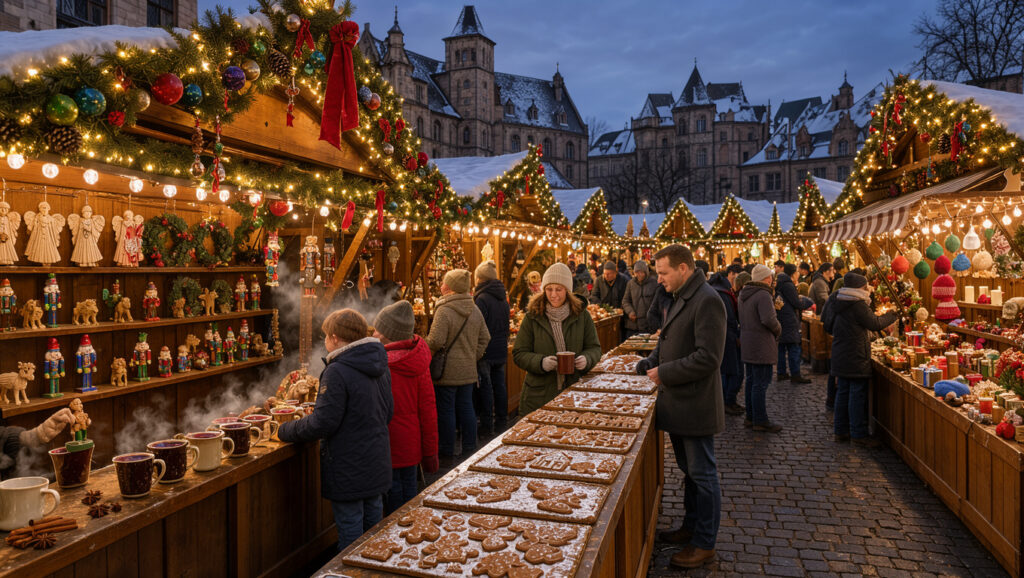
Nuremberg Christkindlesmarkt
The Nuremberg Christkindlesmarkt is a strong choice for travelers who want a famous, food-centered market. Its gingerbread and short original Nuremberg bratwurst are closely tied to the city’s holiday identity.
The small bratwurst has been associated with Nuremberg for more than 700 years. Its compact size makes it easy to try between a walk through the stalls and a look at the old town.
The Christkindlesmarkt runs November 27 to December 24, 2026. Its listed daily hours are 10 a.m. to 9 p.m., with Christmas Eve hours from 10 a.m. to 2 p.m.
If you want the best Christmas market experience for classic traditions, Nuremberg is an easy place to start. The market’s name is also the southern German term Christkindlesmarkt, a local name distinct from the broader word Weihnachtsmarkt.
Dresden Striezelmarkt
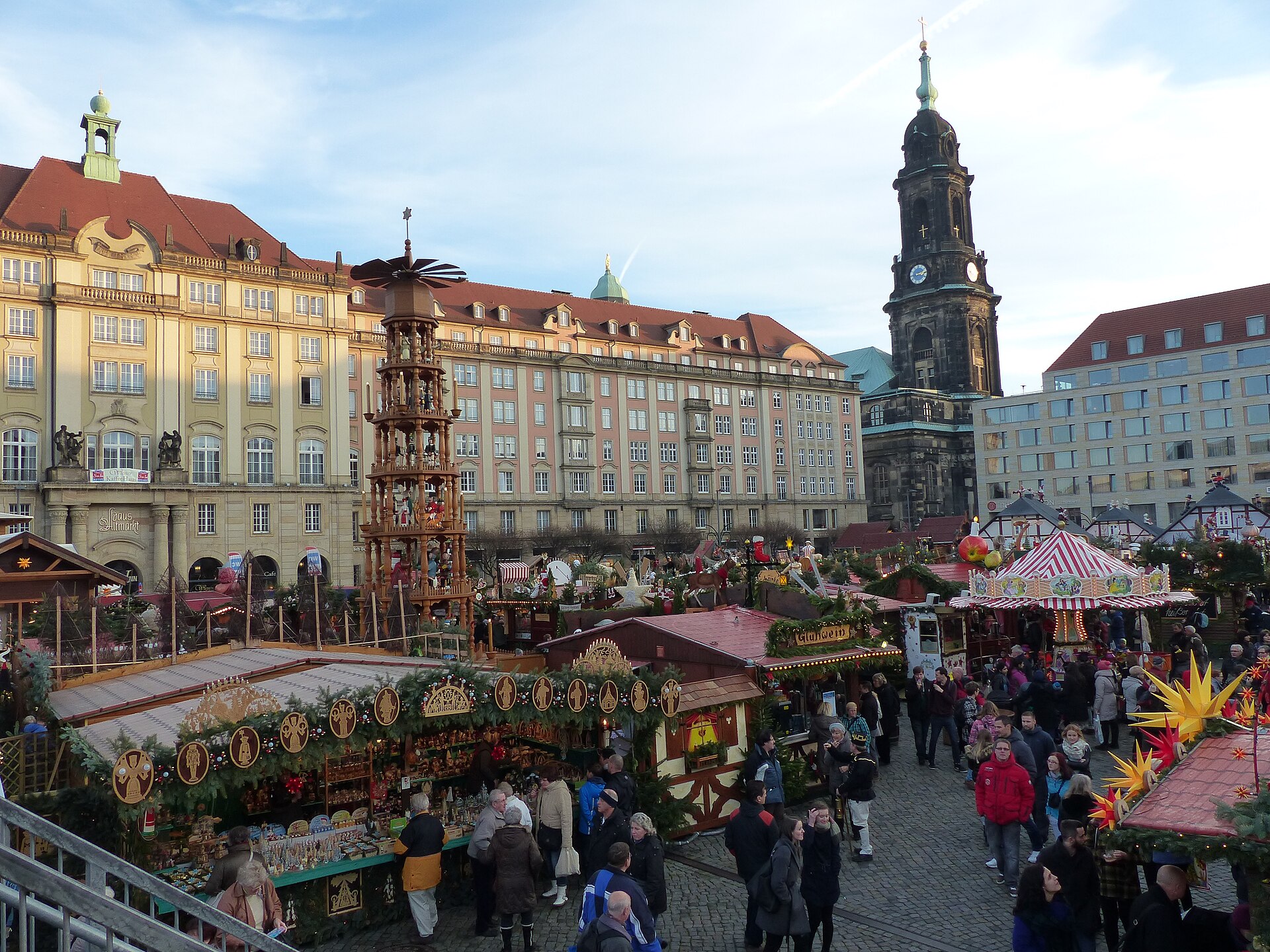
The Dresden Striezelmarkt offers a different draw: a long, documented history. It began as a one-day market on Christmas Eve in 1434, giving the Dresden Christmas market a place among the city’s most enduring traditions.
The name Striezel comes from a historic term for stollen, the rich fruit bread associated with the season. That link gives the market a local story as well as a chance to explore Dresden’s festive center.
The 2026 Striezelmarkt is the 592nd edition. It runs on the Altmarkt from November 25 to December 24, open daily from 10 a.m. to 9 p.m. (4:30 p.m. start on opening day) and until 2 p.m. on Christmas Eve. The city of Dresden, which organizes the market, awards 216 stall spaces, according to Dresden’s official Striezelmarkt page and its 2026 vendor call.
For more background on these classic German Christmas market traditions, compare the styles of Nuremberg and Dresden before choosing your stop. Nuremberg is known for its food, while Dresden’s early record gives it a distinct place in market history.
Check Nuremberg’s Christmas Eve closing time carefully if December 24 is your only chance to visit.
Berlin, Leipzig, Erfurt and Hamburg for big-city markets
Germany’s north and east have some of the country’s largest markets, and they pair well with Dresden on a rail trip.
Berlin: Gendarmenmarkt, Charlottenburg Palace and Rotes Rathaus
Berlin has dozens of Christmas markets spread across its districts rather than one main square. Three stand out for visitors. The Gendarmenmarkt market sits on one of the city’s grandest squares, framed by the concert hall and the French and German cathedrals, and runs November 23 to December 31, 2026. The Charlottenburg Palace market puts its stalls in front of the illuminated baroque palace from November 23 to December 27. The market at the Rotes Rathaus, near Alexanderplatz, runs November 23, 2026, to January 3, 2027.
Berlin is the best choice if your dates fall after December 24, because most other German markets have closed by then. Check the official Berlin Christmas market calendar for hours and any entry charges before you go.
Leipzig Christmas market
Leipzig’s market dates back to 1458, which makes it Germany’s second-oldest after Dresden by the city’s own account. In 2026 it runs November 24 to December 23 across several areas of the old town, with about 300 stalls, according to Leipzig Tourismus. The main square in front of the Old Town Hall has a stage and a tall Christmas tree, the Augustusplatz has a Ferris wheel plus Finnish and South Tyrolean villages, and the Naschmarkt hosts a medieval market. It is one of the most child-friendly markets in Germany, with a fairy-tale forest and visits from Santa on the market stage. Hours are 11 a.m. to 9 p.m., and until 10 p.m. on Fridays and Saturdays.
Erfurt and Hamburg
Erfurt’s market fills the Domplatz below the cathedral and St. Severus Church, a dramatic setting reached by a wide stone stairway. The 2026 market runs November 24 to December 22, according to Erfurt’s tourism office. In Hamburg, the historic market on the Rathausmarkt in front of City Hall runs November 23 to December 23, 2026, according to the city of Hamburg’s tourism page. It is run by the Roncalli circus family, and Hamburg has many smaller markets around the Alster and the harbor.
Cologne, Frankfurt and Aachen for landmark settings
Choose Cologne for a Christmas market framed by its cathedral, Frankfurt for a festive walk through the historic city center, or Aachen for a market wrapped around Charlemagne’s cathedral. All three make the market part of a larger downtown visit, but their settings feel different.
Cologne Cathedral and its surrounding markets
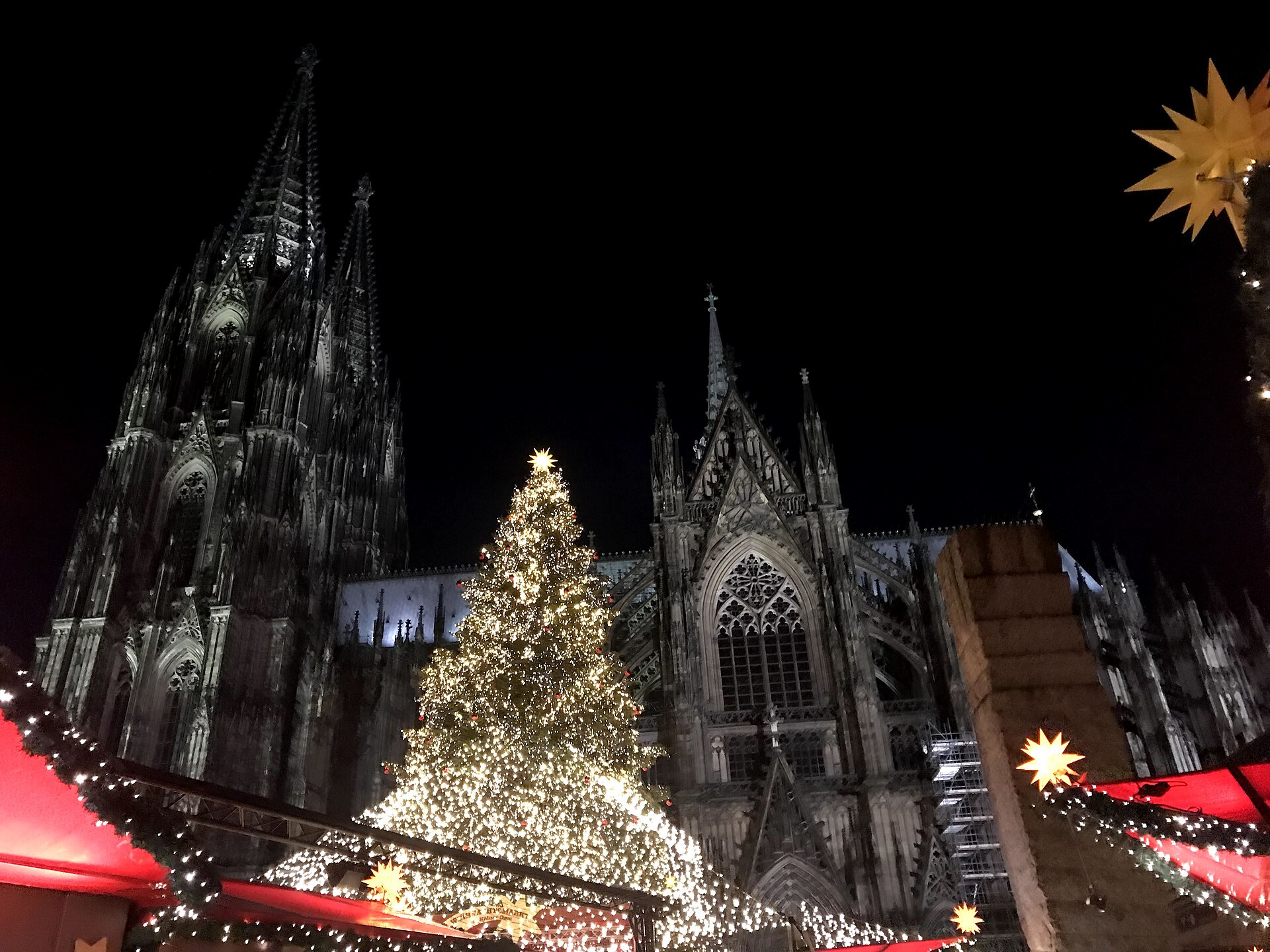
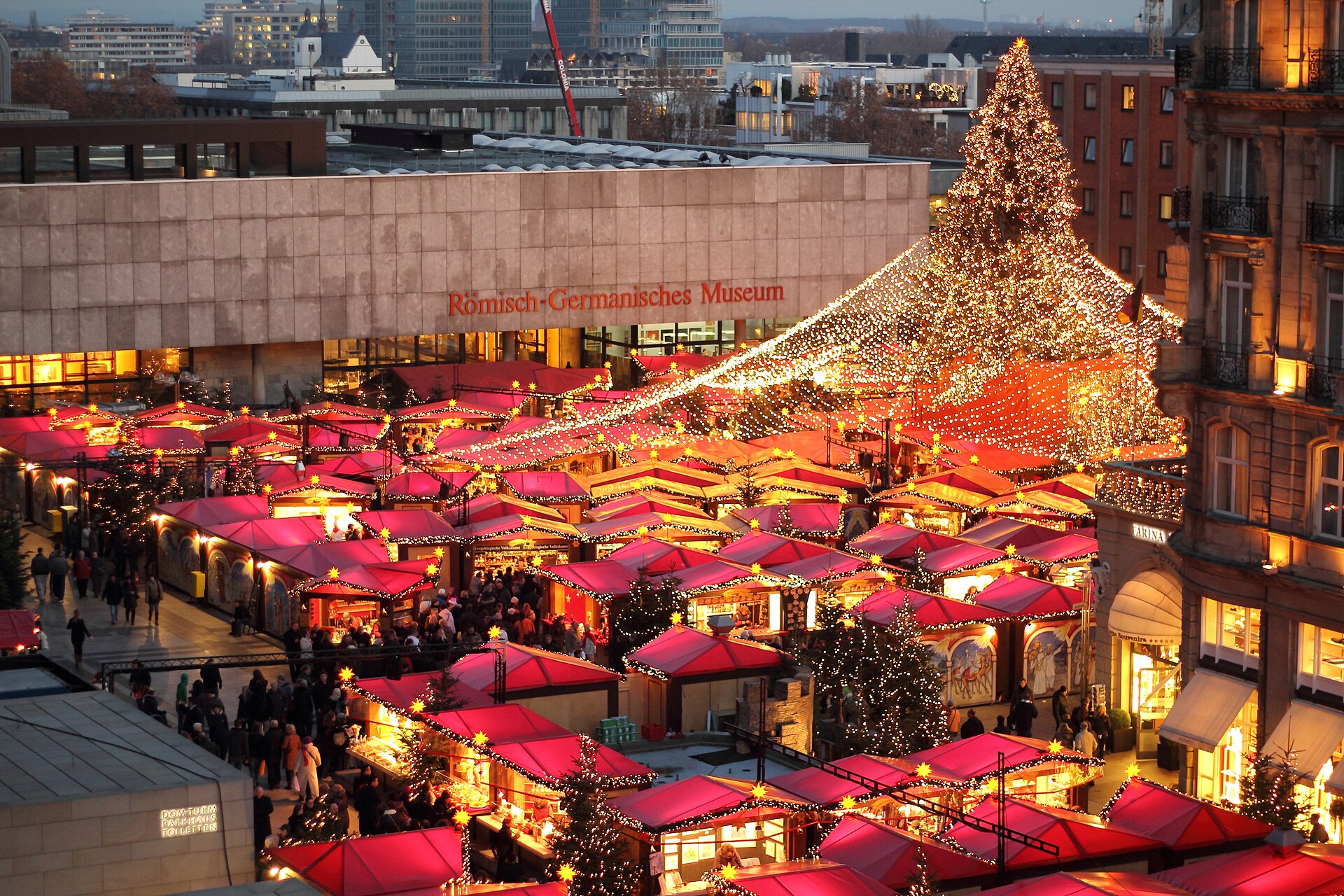
Cologne’s Cathedral Market sits around Cologne Cathedral, making the landmark part of the market experience. Its towers rise above the stalls and lights, creating a dramatic setting in the heart of the city.
Cologne has several separate markets. The Cathedral market on Roncalliplatz has more than 120 stalls and runs November 16 to December 23, 2026 (closed November 22). Heinzels Wintermärchen in the Old Town adds an open-air ice rink, a small Ferris wheel and a carousel, while the Angels’ Market (Markt der Engel) fills Neumarkt. The cathedral market sits right next to Cologne’s main train station, which makes it an easy stop between trains.
The city’s official Cologne Christmas market guide describes its range of festive locations. That makes Cologne a good fit if you want more than one market setting during a city stay.
Frankfurt’s historic city center
Frankfurt’s Christmas market runs November 23 to December 22, 2026, with about 250 stalls in the historic city center. Its main setting is around Römerberg and Paulsplatz, and it continues to the Mainkai riverbank, where there is a children’s market, as well as Hauptwache and Roßmarkt. Hours are 10 a.m. to 9 p.m. Monday to Saturday and 11 a.m. to 9 p.m. on Sundays.
This is a good choice if you prefer a traditional downtown stroll over a trip built around a single landmark. The historic center also keeps the market close to other central sights.
Frankfurt’s official market details describe its central locations and traditions. You can use the market as an evening walk or as one stop in a day spent exploring the city center.
Aachen and its Printen gingerbread
Aachen’s market wraps around the cathedral, a UNESCO World Heritage Site, and the Gothic town hall, spreading across the Markt, Katschhof and Münsterplatz. In 2026 it runs November 20 to December 23, open 11 a.m. to 9 p.m. daily. On Totensonntag (November 22) it opens only from 6 p.m., and on December 23 it closes at 8 p.m., according to the official market organizer, Aachen’s city-center traders’ association.
The local specialty is Aachener Printen, a firm, richly spiced gingerbread sold at stalls and bakeries all over town. Aachen sits on the borders with Belgium and the Netherlands, so it also works as a day trip from Cologne or as a first stop on a route through the Rhineland. Read more about the cathedral on UNESCO’s World Heritage list.
Pick the city whose central setting best matches the rest of your winter itinerary.
Bavaria’s Christmas markets beyond Nuremberg
Bavaria rewards travelers who look beyond Nuremberg, with options ranging from Augsburg’s historic Christkindlesmarkt to Regensburg’s three distinct markets. These towns are easy to add to a regional trip, but they have different settings and opening windows, so dates matter as much as the town name.
Augsburg Christkindlesmarkt
Augsburg’s market began in the 15th century and has officially used the name Christkindlesmarkt since 1949. Its setting in the city center makes it a strong choice if you want a historic market with a long local link.
For 2026, the market runs November 23 to December 24. Hours are 10 a.m. to 8 p.m. from Sunday through Thursday and 10 a.m. to 9:30 p.m. on Fridays and Saturdays; opening day (November 23) also runs until 9:30 p.m.
On December 24, the market is open from 10 a.m. to 2 p.m. These date-specific hours make Augsburg one of the best Christmas markets in Bavaria for a trip with fixed holiday plans.
Rothenburg Reiterlesmarkt
Rothenburg’s Reiterlesmarkt runs November 20 to December 23, 2026. Its historic town setting suits travelers who want a market visit alongside a walk through Rothenburg ob der Tauber’s old streets.
Artisans bring handmade work to the market, and performances by the Rothenburger Reiterle add a local touch. The Reiterle is part of the town’s market tradition, giving the event a character beyond its stalls.
This is a useful pick if you want a smaller town rather than another large city square. The long 2026 run also gives you more date options than a weekend-only event.
Treuchtlingen Christmas Market
Treuchtlingen’s Christmas market runs December 4-13, 2026, from Friday through Sunday. Its short schedule makes it a focused stop rather than a market you can assume will be open on any weekday.
The town offers a smaller-scale market you can pair with other Franconian stops. Check the exact dates against your travel days before setting your route around Treuchtlingen.
Coburg Christmas Market
Coburg’s Christmas market runs November 27 to December 23, 2026. The market gives you a seasonal reason to visit a Franconian town known for its historic center.
Its weeks-long schedule offers more flexibility than the brief events in Treuchtlingen or Iphofen. You can fit Coburg into a regional trip when the market dates line up with your stay.
Check the market’s exact calendar before you book a day trip. A city visit can still be worthwhile outside market hours, but the holiday stalls are the reason to plan around these dates.
Würzburg Christmas Market
Würzburg’s Christmas market runs November 27 to December 23, 2026, across several Old Town squares. That spread gives your visit a more open feel than a market contained in one small plaza.
The setting works well if you want to combine market browsing with a walk through the old town. It is one of the best Christmas markets in the region for travelers who enjoy moving between different central squares.
Würzburg also suits a trip that includes local wine, though the market itself is only one part of the city’s appeal. Check your route and schedule to leave time for the surrounding streets.
Iphofen Christmas Market
Iphofen’s Christmas market takes place December 5-6, 2026, on the second Advent weekend. Its brief run is best for travelers whose plans already place them nearby on those dates.
The town’s historic center gives the event a compact setting. You can make it a short stop, but it is not a market to treat as open throughout Advent.
Dinkelsbühl Christmas Bazaar
Dinkelsbühl’s Christmas Bazaar runs November 23 to December 22, 2026, in the courtyard of the Heiliggeistspital. The enclosed courtyard gives this market a distinct setting within the historic town.
The bazaar is a good match for travelers who want a smaller place with a defined market area. Its dates cover several weeks, so it can fit more easily into a regional itinerary than a two-day event.
Plan the visit around the courtyard location, then leave time to see more of Dinkelsbühl. The market’s setting is part of its appeal, not just a place to shop.
Regensburg’s three markets
Regensburg has three Christmas markets with different locations and schedules. The city’s Christmas Market runs November 23 to December 23, 2026, and the Lucrezia-Markt runs November 27 to December 23.
The Thurn und Taxis market runs November 20 to December 23, 2026. This gives you three distinct options in one city, making Regensburg a strong choice when you want variety without changing your overnight base.
Passau Christmas Market
Passau’s Christmas market runs November 24 to December 22, 2026. The market’s setting by the cathedral makes it a natural stop for visitors exploring the old town.
Cathedral organ concerts take place Wednesday through Saturday at noon during the market. That schedule gives you a specific reason to plan a daytime visit rather than arriving only for the evening lights.
Passau suits a regional itinerary with time for both the market and the city’s central sights. Check the concert day against your visit date if the music is part of your plan.
Match the town to the days you have, since Treuchtlingen and Iphofen offer especially short market windows.
Munich for variety and nativity crafts
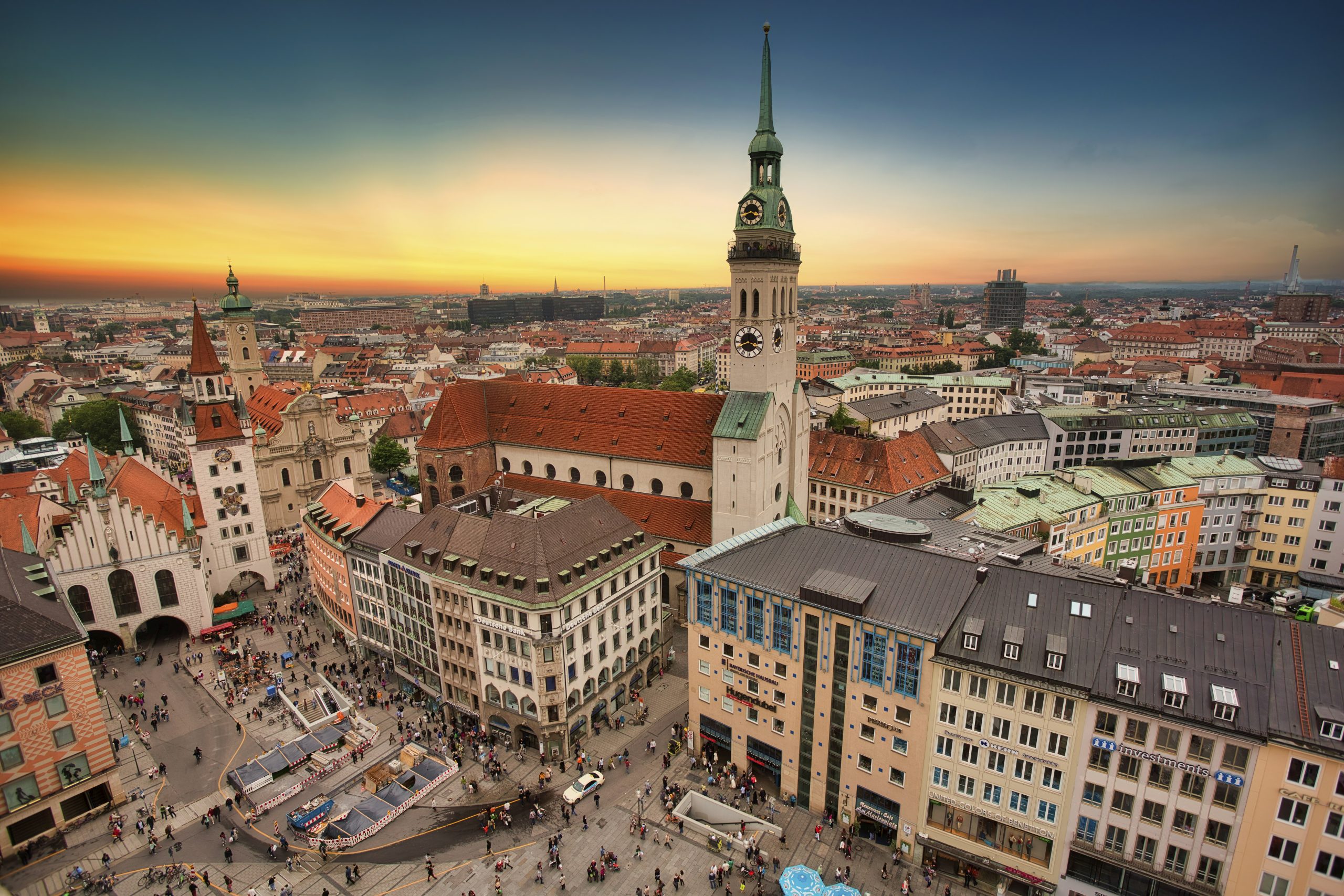
Munich suits visitors who want a central city market plus a focused stop for traditional nativity crafts. The main Christkindlmarkt on Marienplatz has 138 stalls and extends into surrounding streets. In 2026 it runs November 20 to December 24 (closed November 22), open 10 a.m. to 9 p.m. Monday to Saturday, 10 a.m. to 8 p.m. on Sundays and until 2 p.m. on Christmas Eve, according to the city of Munich.
That central setting makes it easy to fit market browsing into a day of city sightseeing. The surrounding streets add room to explore beyond the main square, giving Munich’s Christmas market a broader city feel.
For a specialist stop, visit the Kripperlmarkt outside St. Peter’s Church. It is one of Germany’s largest markets dedicated to nativity scenes, with handcrafted figures and related pieces.
The market is a good place to look for a nativity set, individual figures, or small decorations. If you want to compare German Christmas markets in one city, Munich’s mix of a central market and specialist craft stalls offers a clear reason to stay more than one evening, and our list of things to do in Munich can fill the daytime hours.
Leave room in your bag for delicate decorations if you plan to shop for handcrafted pieces.
Stuttgart, Esslingen and Heidelberg in the southwest
Stuttgart’s Christmas market is one of the oldest and biggest in Germany. It was first officially mentioned in 1692, has about 250 stalls and draws 3.5 to 4 million visitors a year, according to the official Stuttgart market site. In 2026 it runs November 25 to December 23 around the Schlossplatz, the Old Castle courtyard and the Stiftskirche. Hours are 11 a.m. to 9 p.m. Sunday to Thursday and 11 a.m. to 10 p.m. on Fridays and Saturdays; on opening day the stalls open at 5 p.m. Stall-holders compete for the most beautifully decorated roof, so look up as you walk.
Esslingen, about 15 minutes from Stuttgart main station on the S1 suburban train, combines a medieval market with a Christmas market in its old town; the 2026 run is November 24 to December 22. Costumed traders and traditional crafts set it apart from a classic market. Heidelberg spreads its market across several Old Town squares, with an ice rink on Karlsplatz beneath the castle, from late November to just before Christmas.
Freiburg and the Black Forest’s Ravenna Gorge market
For a Black Forest atmosphere, pair a Freiburg stay with a visit to the Ravenna Gorge Christmas Market. Freiburg works as a city stop, while Ravenna Gorge offers a more regional outing.
Freiburg as a Black Forest base
Freiburg is a practical base for exploring the Black Forest region. A city stay gives you access to urban sights and a starting point for regional trips, without requiring you to build the whole visit around one market.
Use Freiburg to shape a broader winter stay, especially if you want to explore towns and sights beyond the city. You can also plan other outings in the area, such as visits to castles in Germany’s Black Forest region.
Ravenna Gorge under the viaduct
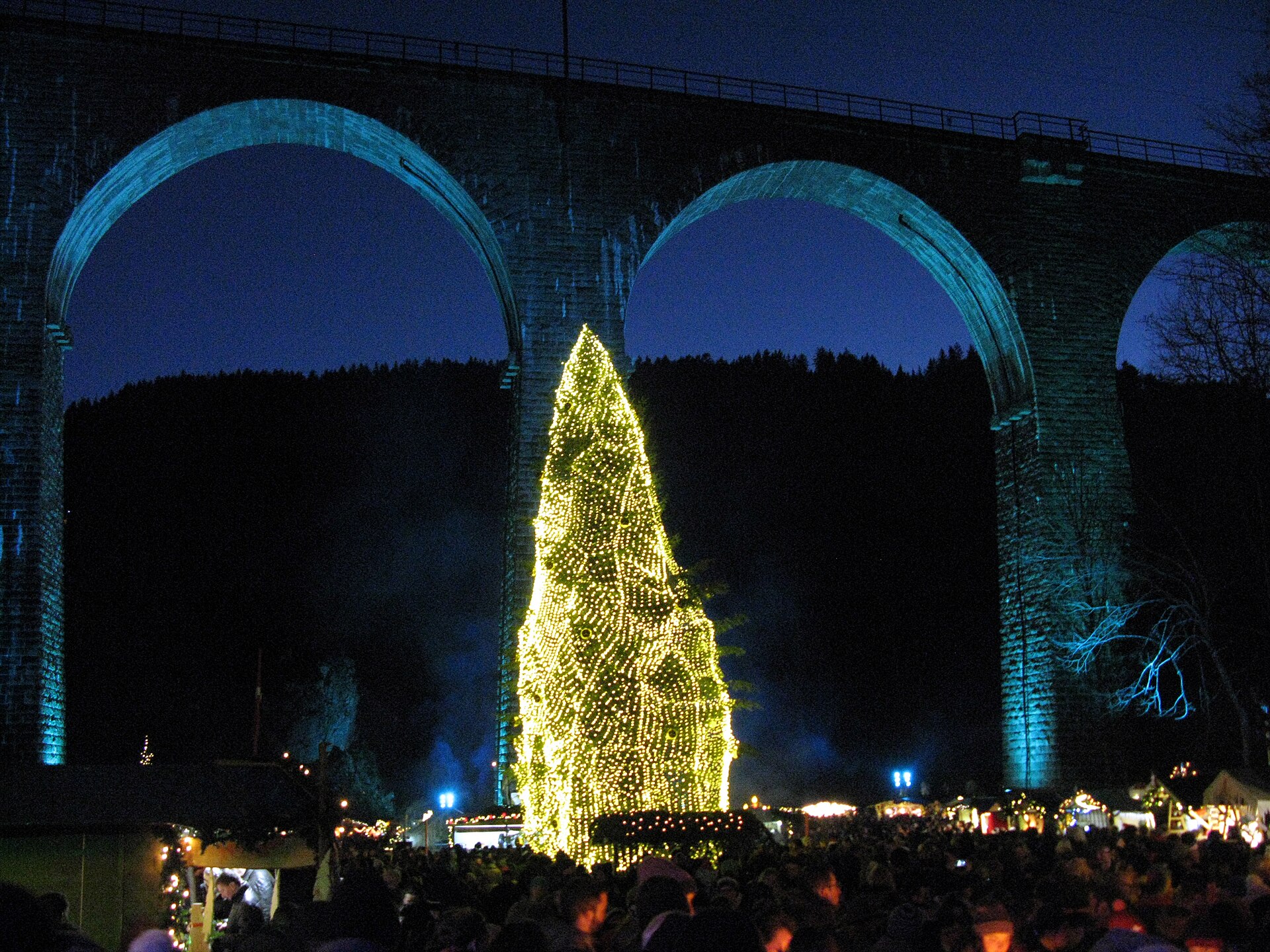
The Ravenna Gorge Christmas Market is a strong pick for a forest setting, rather than a broad city-market crawl. Stalls sit beneath a viaduct in a wooded gorge, creating a very different backdrop from a central square.
In 2026, the market runs Thursday through Sunday from November 26 to December 20. Thursday hours are 4-9 p.m., except December 10, while Friday, Saturday, and Sunday hours are 2-9 p.m.
December 10 is reserved for local residents. The Ravenna Gorge 2026 opening schedule can help you match the outing to an open date before planning the rest of your Black Forest stay.
Ravenna Gorge tickets, prices and shuttles
Ravenna Gorge needs more advance planning than a walk-in city market because entry, transport, and parking are restricted.
The 2026 ticket presale began October 14 at 10 a.m. Adult entry costs €7.50 for an afternoon slot and €9.50 for an evening slot, and children aged 6 to 15 enter free with a parent. The official Hochschwarzwald tourism page listed the market as sold out, though occasional tickets may appear through its resale feature.
Shuttle tickets include market entry. The Freiburg shuttle from central bus station platform 7 guarantees a round-trip seat, while seats on other listed shuttles are not guaranteed.
Parking is limited to vehicles the size of a VW bus. Motorhomes and larger vehicles cannot use the market parking area.
Review the official Ravenna Gorge ticket and transport details before setting out. The rules can affect both your entry plan and how you reach the market.
What to eat and drink at a German Christmas market?
Germany Christmas market food starts with a regional specialty, then a hot drink or small snack as you explore the stalls. Expect a mix of bratwurst and other savory food, baked treats such as Lebkuchen and Stollen, and warm drinks.
- Warm drinks: Glühwein is hot spiced wine, while Kinderpunsch is a warm nonalcoholic choice. You may also find hot chocolate or Feuerzangenbowle, a drink served with flaming sugar.
- Savory bites: Try potato pancakes, Käsespätzle, Flammkuchen, or Raclette. Roasted chestnuts are an easy snack as you walk between stalls.
- Sweets: Look for Stollen, Plätzchen, and other regional baked treats. Frankfurt is known for hot apple wine and local Bethmännchen pastries.
Each market’s menu varies, so a dish that feels local in one city may not appear everywhere. Ask what is made nearby if you want food tied to the region.
Frankfurt’s official Christmas market details describe local specialties such as Bethmännchen and hot apple wine. These give you a taste of local traditions beyond the familiar market staples.
Germany Christmas market mugs come with a deposit called Pfand, usually a few euros. You pay it when you order, then return the mug to get the deposit back, or keep the mug as a souvenir.
Check the displayed terms before ordering, since each stall sets its own mug rules. Ask whether the mug deposit is refundable before deciding to keep a cup as a souvenir.
Traditional gifts worth packing home
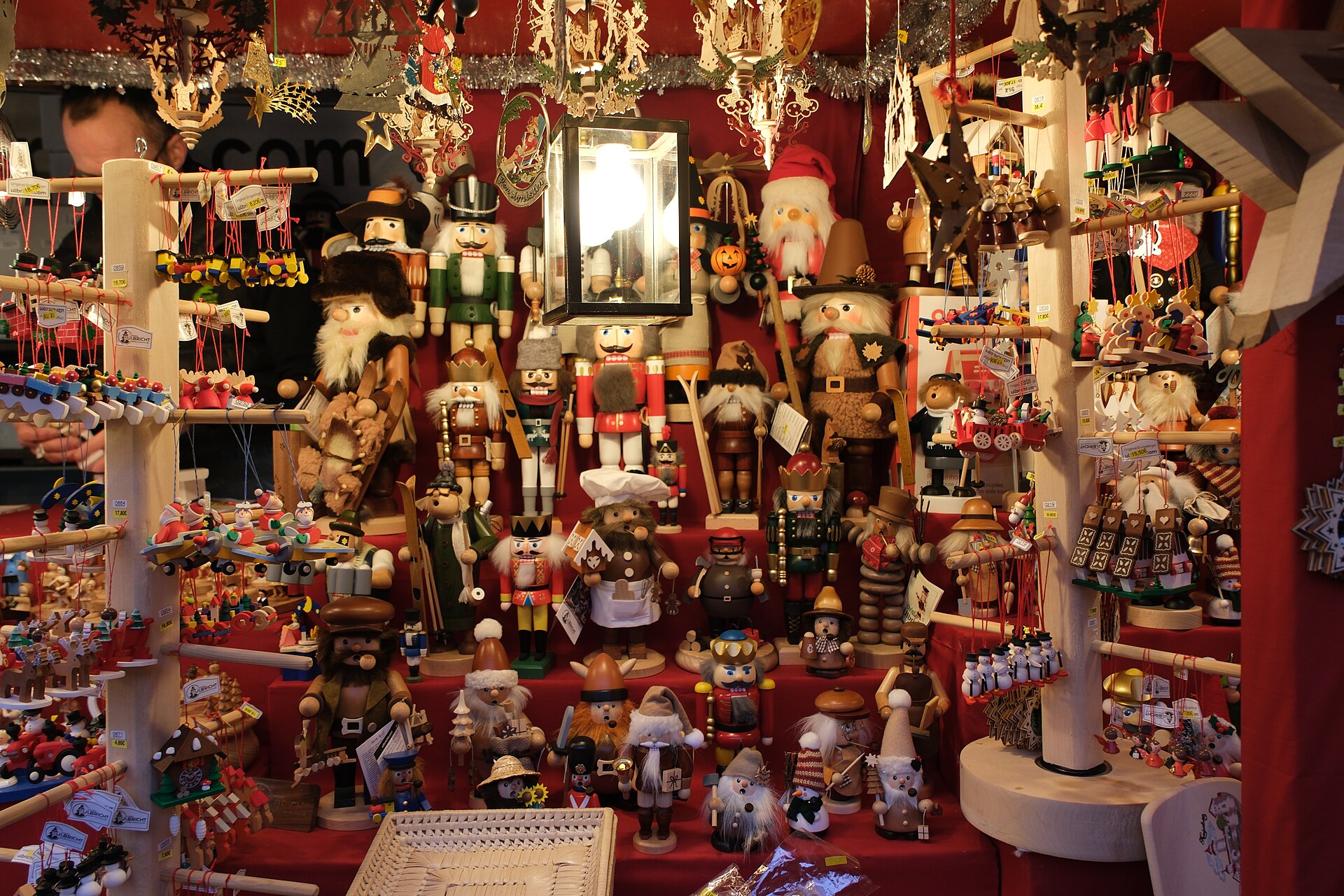
The most memorable market souvenirs are often the small crafts that reflect a local tradition. Look for useful objects and decorations that connect to the town or region you visited.
- Wooden ornaments or nutcrackers with hand-painted details.
- Candle pyramids that turn their blades with rising warm air.
- Straw ornaments that are light and easy to pack.
- Knitted or felted winter clothing for practical wear.
- Market mugs that remind you of a particular stop.
Fragile woodwork and bulky decorations need careful packing. Compare an item’s size and fragility with your luggage space before you buy it, especially if you still have several cities ahead.
Traditional German Christmas-market goods can also include Lebkuchen and regional foods. These make good gifts when you want something edible, though local rules and your travel plans may affect what you can bring home.
There is no single item you can reliably call exclusive to Germany. Look instead for regional craft and food specialties that reflect the place where you found them.
Choose one sturdy keepsake you will enjoy using or displaying after the trip.
How much do German Christmas markets cost?
Most German Christmas markets are free to enter, but some popular, specialist, or themed events charge admission. Food, drinks, souvenirs, and transport shape what you spend once you arrive.
Free entry does not mean the whole outing costs nothing. A meal, warm drink, gifts, and travel across town can add up, so set a separate budget for purchases.
Prices vary by city and stall, so treat the figures below as typical ranges rather than fixed prices. German press surveys of recent seasons have put a cup of Glühwein at roughly €4-6 in most big cities, with a mug deposit of about €2-5.
Entry is free at almost every market, including Dresden, Munich, Aachen and Leipzig. The exceptions in this guide are Ravenna Gorge, where a timed ticket costs €7.50 or €9.50, and Berlin’s Gendarmenmarkt, which charges €2 (free on weekdays from 11 a.m. to 2 p.m.). For the rest of your travel budget, see our breakdown of how much a Europe trip costs.
| Item | Typical cost | Notes |
|---|---|---|
| Entry to most markets | Free | Ravenna Gorge is ticketed |
| Ravenna Gorge entry (adult) | €7.50 afternoon / €9.50 evening | Children 6-15 free with a parent |
| Cup of Glühwein or Kinderpunsch | About €4-6 | Higher in Munich and Berlin |
| Mug deposit (Pfand) | About €2-5 | Refunded when you return the mug |
| Bratwurst in a roll, potato pancakes | A few euros per portion | Check the stall board |
| Aachener Printen, Lebkuchen | From a few euros per bag | Easy edible gift |
Some events charge because they offer a specialist or themed experience. Check each official market page for current entry terms before you plan a stop around it.
Set a spending limit for food and shopping separate from your transport budget. That makes it easier to enjoy a market without treating every stall as part of the same expense.
Confirm the official entry terms before treating a market as a no-cost stop.
Cash and cards at German market stalls
Bring some euros for stall purchases. Card acceptance varies from stall to stall: many vendors at big-city markets take cards or contactless payment, but smaller stands may be cash only.
Card acceptance varies by stall, so a card that works at one stand may not work at the next. Cash in euros is the safest backup for food, drinks, and small purchases.
At Ravenna Gorge, unstable network service means stalls often accept only cash. The location makes a cash backup especially important if you plan to buy a meal or a warm drink there.
Carry a modest amount for market spending and keep a separate backup payment method, such as a card with no foreign transaction fees.
Carry a backup payment method, but do not rely on it as your only way to pay.
Shoes and layers for long outdoor visits
Plan to spend more time on your feet than you might expect, even on a quick market visit. Walking between stalls and standing in lines can make winter outings feel longer than the itinerary suggests.
- Wear insulated, waterproof shoes for long walks and cold, wet pavement.
- Use warm layers that you can adjust as you move indoors or outdoors.
- Choose a weather-resistant outer layer for changing winter conditions.
- Pack gloves or a hat to keep exposed skin warm.
Cold, wet pavement can become uncomfortable even during a short visit. Dry feet matter more than fashion footwear when you expect to walk and stand outdoors.
Dress for the time you will spend outside, not just the distance between your hotel and the market. A warm layer and dry shoes make it easier to linger when the lights come on.
Test your shoes on a long walk before departure so you know they stay warm and dry.
For general crowd safety, secure your valuables and agree on a meeting point with your group. Follow event staff and local authority instructions if the site becomes crowded.
Safety and security at the markets
Yes. German Christmas markets are generally safe, and millions of people visit them every Advent. Since attacks on markets in Berlin in 2016 and Magdeburg in 2024, many cities have added concrete or steel vehicle barriers at entrances, more police patrols and, at some markets, bag checks.
The most common problems are pickpocketing and crowding on weekend evenings. Keep your phone and wallet in a closed inside pocket, use a crossbody bag, and avoid the busiest squares on Saturday nights if you have small children.
How to plan a Germany Christmas markets itinerary by train?
Seeing Germany Christmas markets by train is straightforward: most big markets sit in old-town centers a short walk or tram ride from the main station. A good trip pairs one anchor city with a small number of nearby stops, which leaves time to enjoy each place instead of spending the whole visit moving between cities.
- Choose one anchor city that fits your flights, interests, and available days.
- Add nearby stops only after checking transport options and market dates.
- Leave time for a smaller town or a regional experience.
On a map, the markets in this guide fall into four clusters, each of which works as a germany christmas market road trip or rail loop:
| Route | Cities | Days | Best for |
|---|---|---|---|
| Bavaria and Franconia | Munich, Augsburg, Nuremberg, Rothenburg or Würzburg | 4-5 | Classic markets, Lebkuchen, nativity crafts |
| East | Berlin, Leipzig, Dresden (plus Erfurt) | 4-5 | Big historic markets; Berlin after Christmas |
| Rhine | Cologne, Aachen, Frankfurt | 3-4 | Cathedral settings, several markets per city |
| Southwest | Stuttgart, Esslingen, Heidelberg, Freiburg and Ravenna Gorge | 4-5 | Medieval market, Black Forest gorge |
These are planning ideas, not fixed tours. Check rail connections and each market’s dates before adding a stop, and see this Europe trip planning guide for booking order and timing.
Weekday visits before evening are generally less crowded than evenings and weekends, and the last week before Christmas is the busiest. Earlier visits give you more room to browse stalls and walk through busy squares.
A longer trip can also include a regional outing beyond the city center. Keep that stop flexible if your chosen town market runs for only a few days.
Leave at least one flexible block in the itinerary so a short-run town market does not dictate the entire trip.
Conclusion
The best market trip is the one that fits your dates and the kind of winter experience you want. Choose classic traditions, a mix of city markets, or a regional setting that makes the journey part of the visit.
A good route starts with one anchor city and leaves room for a market that matches your pace. You do not need to visit every famous place to make the trip feel special, and if you want to compare Germany with other cold-weather trips, see our best winter destinations in Europe.
Choose your anchor destination, then confirm its official 2026 schedule before you book the rest of the trip.
Related Guides
Frequently Asked Questions
Where is the most famous German Christmas market?
Nuremberg’s Christkindlesmarkt is the most famous, known for Lebkuchen gingerbread, short Nuremberg bratwurst and its Christkind opening; in 2026 it runs November 27 to December 24. Dresden’s Striezelmarkt, first recorded in 1434, is the other iconic choice. Either suits a first visit, but Nuremberg is the clearest pick for a classic food-centered experience.
When do German Christmas markets start and end?
Most German Christmas markets start in the last ten days of November and end on December 22, 23 or 24. In 2026, Cologne’s cathedral market opens first on November 16, Munich’s and Aachen’s open November 20, and Nuremberg’s opens November 27. Markets that run to Christmas Eve usually close around 2 p.m. that day.
How long do Christmas markets in Germany last?
Big-city Christmas markets in Germany usually last about four weeks, from late November to just before Christmas. Small-town markets can be much shorter: in 2026, Treuchtlingen’s runs only on Friday-to-Sunday weekends from December 4 to 13, and Iphofen’s lasts one weekend, December 5-6. Ravenna Gorge opens only Thursday to Sunday.
Are any German Christmas markets open after Christmas or into January?
Yes, a few, mainly in Berlin. In 2026 the Gendarmenmarkt market runs until December 31, the Charlottenburg Palace market until December 27, and the market at the Rotes Rathaus until January 3, 2027. Most markets elsewhere close on December 23 or 24, so plan a post-Christmas trip around Berlin.
Are German Christmas markets open on Christmas Eve?
Some are, but only until early afternoon. In 2026, Nuremberg, Dresden, Munich and Augsburg stay open until about 2 p.m. on December 24. Many others, including Cologne, Leipzig, Stuttgart and Aachen, close on December 23, and Frankfurt closes on December 22. Almost all markets are closed on December 25.
Where is the biggest Christmas market in Germany?
Leipzig, Stuttgart, Frankfurt and Dresden are among the biggest. Leipzig counts about 300 stalls across its old town, Stuttgart and Frankfurt each have about 250, and Dresden’s Striezelmarkt has 216 stall spaces. Stuttgart reports 3.5 to 4 million visitors a year, among the highest totals in Germany.
What is the oldest Christmas market in Germany?
Dresden’s Striezelmarkt is usually named the oldest recorded German Christmas market: it began as a one-day market on Christmas Eve in 1434, and 2026 is its 592nd edition. Leipzig’s market dates to 1458 and calls itself the second-oldest. Stuttgart’s was first officially mentioned in 1692.
Where are the Christmas markets in Berlin?
Berlin’s markets are spread across the city. The best known are at Gendarmenmarkt in Mitte (November 23 to December 31, 2026), in front of Charlottenburg Palace (November 23 to December 27) and at the Rotes Rathaus near Alexanderplatz (November 23 to January 3, 2027). Dozens of smaller neighborhood markets run through Advent.
Where are the Christmas markets in Munich?
Munich’s main Christkindlmarkt is on Marienplatz, with 138 stalls spreading into the pedestrian streets around it, from November 20 to December 24, 2026. The Kripperlmarkt for nativity figures stands in front of St. Peter’s Church nearby with the same hours. Both are closed on November 22.
Is Cologne or Munich better for Christmas markets?
Cologne is better if you want a cathedral setting and several separate markets in one walkable center, including Heinzels Wintermärchen with its ice rink. Munich suits you if you want a central market on Marienplatz plus the Kripperlmarkt for nativity crafts. Cologne opens earlier, on November 16, 2026, while Munich stays open until Christmas Eve.
How much does Glühwein cost at a German Christmas market?
Expect roughly €4-6 for a cup of Glühwein at most big-city German markets, with Munich and Berlin at the upper end. On top of that you pay a mug deposit (Pfand) of about €2-5, which you get back when you return the mug. Children’s punch (Kinderpunsch) usually costs slightly less.
How does the mug deposit (Pfand) work?
When you buy a hot drink, the stall adds a deposit, the Pfand, for the ceramic mug, usually a few euros. Return the mug to the stall and you get the deposit back in cash. If you want a souvenir, simply keep the mug, since many markets issue a new design each year.
Do you need tickets for German Christmas markets?
No, almost every German Christmas market is free to enter. The exceptions in this guide are the Ravenna Gorge market in the Black Forest, which needs a timed ticket (€7.50 afternoon, €9.50 evening in 2026) bought in advance and sold out for 2026, and Berlin’s Gendarmenmarkt, which charges €2 except on weekdays from 11 a.m. to 2 p.m. Some ice rinks and rides charge separately.
What is the Christmas market under the train bridge in Germany?
It is the Ravenna Gorge Christmas market near Hinterzarten in the Black Forest, where stalls stand beneath a railway viaduct in a wooded gorge. In 2026 it runs Thursday to Sunday from November 26 to December 20, and visitors reach it by shuttle bus with a timed ticket. Stalls there are often cash only.
What should I buy at German Christmas markets?
Look for wooden ornaments, nutcrackers, candle pyramids, straw stars, nativity figures, winter clothing or a market mug. Regional crafts make the strongest souvenirs because they connect your purchase to a place you visited. Edible gifts such as Lebkuchen, Stollen or Aachener Printen pack easily, but check what you may bring into the US.
Do German Christmas markets take credit cards?
Many stalls at big-city markets take cards and contactless payment, but acceptance varies from stall to stall and smaller vendors may be cash only. At Ravenna Gorge, unstable network service often means cash only. Carry some euros for food, drinks and the mug deposit, and use a card without foreign transaction fees as backup.
What should I wear to a German Christmas market?
Wear insulated, waterproof shoes, warm layers and a weather-resistant outer jacket, plus gloves and a hat. You will stand outdoors more than a short stroll suggests, and cold, wet pavement makes unsuitable shoes uncomfortable within an hour. Layers let you warm up quickly when you step into a cafe or church.
Are German Christmas markets safe?
Yes, German Christmas markets are generally safe. Many cities have added vehicle barriers, police patrols and, at some markets, bag checks. The most common issue is pickpocketing in crowds, so keep valuables in a closed pocket, agree on a meeting point with your group, and follow staff and police instructions.
Which German Christmas markets are best for kids?
Leipzig is a strong pick for families, with a fairy-tale forest, a Ferris wheel and Santa visits on the market stage. Frankfurt has a dedicated children’s market on the Mainkai, and Stuttgart has a Children’s Fairyland. Visit on a weekday afternoon, when the squares are less crowded than on weekend evenings.
How many days do you need for a German Christmas market trip?
Plan four to five days for one region, such as Munich, Augsburg and Nuremberg, or Berlin, Leipzig and Dresden. That allows one anchor city plus two or three nearby stops by train. A week lets you combine two regions, for example the Rhine cities of Cologne, Aachen and Frankfurt with Bavaria.
What is the difference between a Christkindlmarkt and a Weihnachtsmarkt?
Both mean Christmas market. Weihnachtsmarkt is the general German word, while Christkindlmarkt or Christkindlesmarkt (“Christ Child market”) is the traditional name in southern Germany, used in Munich, Nuremberg and Augsburg. The difference is regional naming, not the type of market.
Before you go: turn this guide into a day-by-day plan. Our partner Voyada is a free itinerary generator that builds the trip with flights, hotels and a real total cost for your dates — in about a minute.
Create a travel itinerary →